
Curt Leviant
Author of The Great Fair: Scenes from My Childhood
About the Author
Image credit: via Goodreads
Series
Works by Curt Leviant
Masterpieces of Hebrew literature; a treasury of 2000 years of Jewish creativity (1969) 71 copies, 1 review
Diary of an Adulterous Woman: A Novel: Including an ABC Directory That Offers Alphabetical Tidbits and Suprises (2000) 29 copies
Ladies and Gentlemen, the Original Music of the Hebrew Alphabet and Weekend in Mustara: Two Novellas (Library of American Fiction) (2002) 19 copies
My life, my theater 1 copy
Associated Works
The Golem and the Wondrous Deeds of the Maharal of Prague (1909) — Translator, some editions — 52 copies
The New Diaspora: The Changing Landscape of American Jewish Fiction (2015) — Contributor — 17 copies
Tagged
Common Knowledge
- Other names
- LEVIANT, Curt
- Birthdate
- 1932
- Gender
- male
- Education
- City University of New York (BA)
Columbia University (MA)
Rutgers University (PhD) - Occupations
- university professor
novelist
translator - Short biography
- He came to the United States in 1938.
- Nationality
- Austria (birth)
USA (naturalized) - Birthplace
- Vienna, Austria
- Places of residence
- Brooklyn, New York, USA
Edison, New Jersey, USA - Associated Place (for map)
- USA
Members
Reviews
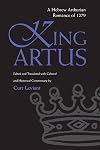
Arthurian scholars may already know the contents of this fragmentary translation of an Italian work: Uther's trickery of Igraine (here called Izerna), Lancelot's lust for Guinevere (here called Zinerva), and the quest for the Holy Grail (here transformed into a Jewish tamchuy, or charity dish).
More fascinating than the lengthy opening apology for secular literature is the translator's many conversions of the story into Biblical and Rabbinic language. Leviant might have followed his own show more footnote and rendered "This is the history of Sir Lancelot" as "These are the days of the generations of Sir Lancelot"; the text gestures towards the meaning of Lancelot's name with "is it not written in the book concerning him?"; Lancelot swears by "ha-shem," the Name, during a lascivious conversation with Guinevere; and knights during a tournament shout "Praised be the living God!." I'm a little less certain, however, about Leviant's translation of the odd ending of the work: "[there:] fell many knights, one after another like lambs, and [Lancelot:] cut throats of horses like pumpkins." Pumpkins? I'm not qualified to judge Leviant's translation, but pumpkins seems unlikely, since I doubt that pumpkins would have been known to our anonymous author.
The edition comes with a wealth of supplemental material in which Leviant discusses the Judaizing work of the translator, proposes that Malory and this work drew on a common, now lost, source for certain scenes, and, especially, argues against the clever scholars who have traced motifs in the Arthur and Tristan legends to Celtic prehistorical Gods, to subcontinental folk tales, and to classical myth; instead, he says, look closer to home, in the Bible (Uther and Igraine as David and Bathsheba, Tristan and Mark as David and Saul, Tristan and Morholt as David and Goliath, etc.), and in the Midrash, which Christian scholars would have known in the twelfth century through the work of Andrew and Hugh of St Victor and Siegebert of Gemblous. He makes a strong case for this, noting that details in the David story specific to the Midrash, to Rashi's commentary in particular, appear in the stories of Arthur and Tristan. In some cases, I think he strains his case, but I think a bit of scholarly bomb-throwing is always necessary to shift the paradigm. No doubt scholarship in the 40 years since Leviant's edition first appeared has refined his point, but I doubt the Celticists--particularly the badly disguised 'white pride' Celtic hobbyists--can ignore the evidence that Jewish storytelling and scholarship at least had something to do with the shape of these tales and their supposed preservation of the 'authentic' pre-Christian past of Europe.
I'd be happier with the edition, however, if it appeared in a larger volume of secular Jewish medieval writing. There are fabliaux, fables, and love stories, all of which could be collected in one volume that might cost as much as this one ($25) and thus be more suitable for classroom use in a good Comp Lit course. show less
More fascinating than the lengthy opening apology for secular literature is the translator's many conversions of the story into Biblical and Rabbinic language. Leviant might have followed his own show more footnote and rendered "This is the history of Sir Lancelot" as "These are the days of the generations of Sir Lancelot"; the text gestures towards the meaning of Lancelot's name with "is it not written in the book concerning him?"; Lancelot swears by "ha-shem," the Name, during a lascivious conversation with Guinevere; and knights during a tournament shout "Praised be the living God!." I'm a little less certain, however, about Leviant's translation of the odd ending of the work: "[there:] fell many knights, one after another like lambs, and [Lancelot:] cut throats of horses like pumpkins." Pumpkins? I'm not qualified to judge Leviant's translation, but pumpkins seems unlikely, since I doubt that pumpkins would have been known to our anonymous author.
The edition comes with a wealth of supplemental material in which Leviant discusses the Judaizing work of the translator, proposes that Malory and this work drew on a common, now lost, source for certain scenes, and, especially, argues against the clever scholars who have traced motifs in the Arthur and Tristan legends to Celtic prehistorical Gods, to subcontinental folk tales, and to classical myth; instead, he says, look closer to home, in the Bible (Uther and Igraine as David and Bathsheba, Tristan and Mark as David and Saul, Tristan and Morholt as David and Goliath, etc.), and in the Midrash, which Christian scholars would have known in the twelfth century through the work of Andrew and Hugh of St Victor and Siegebert of Gemblous. He makes a strong case for this, noting that details in the David story specific to the Midrash, to Rashi's commentary in particular, appear in the stories of Arthur and Tristan. In some cases, I think he strains his case, but I think a bit of scholarly bomb-throwing is always necessary to shift the paradigm. No doubt scholarship in the 40 years since Leviant's edition first appeared has refined his point, but I doubt the Celticists--particularly the badly disguised 'white pride' Celtic hobbyists--can ignore the evidence that Jewish storytelling and scholarship at least had something to do with the shape of these tales and their supposed preservation of the 'authentic' pre-Christian past of Europe.
I'd be happier with the edition, however, if it appeared in a larger volume of secular Jewish medieval writing. There are fabliaux, fables, and love stories, all of which could be collected in one volume that might cost as much as this one ($25) and thus be more suitable for classroom use in a good Comp Lit course. show less
King Artus brings together an edition (in Hebrew and English translation) and an analysis of an interesting fragment: a few folios of "The book of the destruction of King Artus’ round table", an incomplete Arthurian tale as written by an anonymous Italian Jew in the late thirteenth century. The translator didn't produce a word-for-word translation, but a Judaising one, with the Grail replaced by a tamchuy (a platter from which food was dispensed to the needy on Shabbat), Lancelot swearing show more by ha-Shem, and so on. It tells us both of a vibrant Jewish intellectual culture (the text is full of scriptural allusions) and of story-telling across ethnic/religious divides in the Middle Ages.
Curt Leviant's translation of the text is clear and accessible. While King Artus is not a wholly transformative work, or a startlingly subversive take on the Arthurian mythos—it's fairly faithful abridgement of familiar tales; the Christian elements are reduced or transliterated, but this is still clearly a story about Christians—for those with an interest in the topic or the period, it's worth a read as the only surviving Arthurian romance in Hebrew from the Middle Ages. show less
Curt Leviant's translation of the text is clear and accessible. While King Artus is not a wholly transformative work, or a startlingly subversive take on the Arthurian mythos—it's fairly faithful abridgement of familiar tales; the Christian elements are reduced or transliterated, but this is still clearly a story about Christians—for those with an interest in the topic or the period, it's worth a read as the only surviving Arthurian romance in Hebrew from the Middle Ages. show less

This is really an excellent compendium of Jewish literature from the Apocrypha to the 18th century. It includes a wide variety of literature, from reflections on the Bible and other holy writings to truly secular poetry. I doubt it is the best such collection, for to begin with how would one judge that exactly, but nevertheless it is valuable. Its value is increased by the deft historical summaries at the beginning of the section on each writer or block of literature.
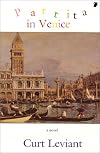
I decided to jump right to the end- it was such a boring read that took forever. Also, I had figured out the ending well before I read it (but that always happens...). I think the shocking ending is one of the few good things about this book.
I give it 2 stars instead of 1 because I like the Italian sentences/words sprinkled throughout the book and the descriptions of Venice - it all made me travel in my mind.
Other than that, the writing is beautiful, almost melodic; however, the story goes show more nowhere. There's not much dialogue, mostly thoughts, and no action whatsoever.
Unfortunately, I don't recommend this book. And to say I was so excited to dive into the story when I first saw it at the library... Such a shame. show less
I give it 2 stars instead of 1 because I like the Italian sentences/words sprinkled throughout the book and the descriptions of Venice - it all made me travel in my mind.
Other than that, the writing is beautiful, almost melodic; however, the story goes show more nowhere. There's not much dialogue, mostly thoughts, and no action whatsoever.
Unfortunately, I don't recommend this book. And to say I was so excited to dive into the story when I first saw it at the library... Such a shame. show less
Lists
Awards


You May Also Like


Associated Authors
Statistics
- Works
- 23
- Also by
- 11
- Members
- 472
- Popularity
- #52,189
- Rating
- 3.7
- Reviews
- 7
- ISBNs
- 45
- Languages
- 5
- Favorited
- 1