
Celeste Davidson Mannis
Author of Who Was William Shakespeare?
About the Author
Works by Celeste Davidson Mannis
Tagged
Common Knowledge
- Gender
- female
- Education
- University of Southern California (BA|history and history of art)
University of Southern California (MBA)
University of London - Nationality
- USA
- Birthplace
- Los Angeles, California, USA
- Associated Place (for map)
- California, USA
Members
Reviews

Part alphabet book, part biography, part historical study, The Queen's Progress is the ideal picture-book introduction to the subject of Queen Elizabeth I, and of the Elizabethan period in England. Following the queen's caravan, on one of her annual summer trips through the English countryside - known as the "Queen's Progress," these yearly journeys allowed Elizabeth a holiday from London, and the cares of government, while also keeping her in the hearts and minds of the people, with whom show more she freely mixed - Celeste Davidson Mannis' rhyming narrative touches upon some of the important social and political realities of the day, including the ever-present threat upon the monarch's life.
This really is an outstanding work of history for the younger set, informative but also entertaining, with beautiful artwork by Bagram Ibatoulline, and a dual narrative - a simple rhyming text uses the alphabet as an organization tool ("J is for Jester," etc.), while more extensive prose selections fill in some of the historical details - that can be appreciated by readers of different ages and levels. I loved Ibatoulline's decorative letters, the costumes and pageantry in each scene, and the overall idea conveyed by both artwork and text, that this was an exciting moment in history. Obviously, it was! Highly recommended to young history buffs, particularly those with an interest in Elizabethan times! show less
This really is an outstanding work of history for the younger set, informative but also entertaining, with beautiful artwork by Bagram Ibatoulline, and a dual narrative - a simple rhyming text uses the alphabet as an organization tool ("J is for Jester," etc.), while more extensive prose selections fill in some of the historical details - that can be appreciated by readers of different ages and levels. I loved Ibatoulline's decorative letters, the costumes and pageantry in each scene, and the overall idea conveyed by both artwork and text, that this was an exciting moment in history. Obviously, it was! Highly recommended to young history buffs, particularly those with an interest in Elizabethan times! show less
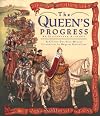
The artwork is glorious - all gilded and gleaming.
The text though is lacking significant meaning.
I'm sure could use this book, if hard I tried,
but I fear that young readers would soon run and hide.
Okay so that ending is a bit harsh. Sometimes we sacrifice meaning for the sake of rhyme scheme. I love the concept, but I wasn't drawn into the text, and while mixing facts with poetry definitely CAN work, in this case the facts detract from the flow of the poem. It's also a big sing-songy for my show more taste, like the author was trying to make an alphabet book and needed make the material fit the medium. I wonder if free verse would have better served the purpose. Low on my list, but certainly could appear in my classroom as guided reading. I could also see reading a letter a day so that students absorb the lush landscape of these detailed illustrations. show less
The text though is lacking significant meaning.
I'm sure could use this book, if hard I tried,
but I fear that young readers would soon run and hide.
Okay so that ending is a bit harsh. Sometimes we sacrifice meaning for the sake of rhyme scheme. I love the concept, but I wasn't drawn into the text, and while mixing facts with poetry definitely CAN work, in this case the facts detract from the flow of the poem. It's also a big sing-songy for my show more taste, like the author was trying to make an alphabet book and needed make the material fit the medium. I wonder if free verse would have better served the purpose. Low on my list, but certainly could appear in my classroom as guided reading. I could also see reading a letter a day so that students absorb the lush landscape of these detailed illustrations. show less
An alphabet picture book that gives a rhyme for each letter to do with Queen Elizabeth I's summer holiday royal progress ("An A for adventure. Our spirits are high! Fare thee well London. All's ready. Let's fly!") and then provides a short paragraph explaining a historical aspect of the royal progress. The pictures illustrate the rhyme and the information, often with a little "extra" narrative thrown in. Fascinating and lavishly illustrated, though I am a little "hmm?" about who this book is show more for. The information and illustrations seem 8+, while the overall format (alphabet book) seems a good deal younger. Perhaps I underestimate older children's willingness to return to "younger" formats if executed well. show less
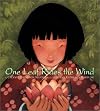
In her picture book debut, Mannis uses the underlying structure of a little girl in a Japanese garden as the theme for a lyrical counting book with arresting illustrations by Hartung (One Dark Night, 2001, etc.). The author uses haiku as her format to count elements of the garden: one leaf, two carved temple dogs, three bonsai trees, and so on, up to ten lanterns lighting the way into the garden at twilight. The final double-page spread shows all the previously counted items integrated into show more the idyllic garden, with the little girl catching the leaf that eluded her grasp on the first page. The thoughtful design includes a full-page illustration on the left-hand pages, the appropriate numeral and the haiku in large type on the right-hand pages, and a related textual note in smaller type at the bottom of the page. This format imparts additional information about Japanese gardens and culture without intruding on the effectiveness of the haiku. Hartung’s delicate illustrations with varying perspectives effectively complement the haiku and add touches of visual humor throughout. Just as each element of a Japanese garden contributes to a calming, satisfying whole, the elements of this work—poetry, subtly integrated additional text, illustration, design, and even the endpapers—all meld together into a lovely whole that both entertains as successful poetry and educates as an introduction to several aspects of ancient Japanese culture. Teachers in elementary school classrooms will find this volume useful when studying Japan or the haiku format. (author’s note) (Picture book/poetry. 4-10)
-Kirkus Review show less
-Kirkus Review show less
Lists
Awards


You May Also Like


Associated Authors
Statistics
- Works
- 6
- Members
- 1,557
- Popularity
- #16,553
- Rating
- 4.3
- Reviews
- 33
- ISBNs
- 26
- Languages
- 2
- Favorited
- 1