
Clem Martini
Author of The Mob: Feather and Bone (The Crow Chronicles)
About the Author
Image credit: Jessica Blaine Smith
Series
Works by Clem Martini
Tagged
Common Knowledge
Members
Reviews
Rating: 3.5* of five
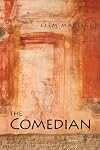
The Publisher Says: (from Goodreads) Titus Maccius Plautus' career is on the decline. Once renowned for bringing Greek comedies to the Roman world, now he struggles to stage a single play. Unlucky with money and unlucky in love, Plautus faces the world with wry dignity. This could be the performance that brings back fame and fortune, or the one that ends it all.
Engaging, thoughtful, and funny, The Comedian dives into the rough and tumble world of arts in its infancy. Clem show more Martini draws on his talent and experience to bring to life the signs and sounds of a world where playwrights suffered and succeeded--but mostly suffered.
(from the book's webpage) In the Roman Republic, comedy is a serious business. Nobody knows this better than Titus Maccius Plautus, the principal comic playwright of his time. Licking his wounds after a series of artistic flops and financial disasters, Plautus returns from his refuge in the country to Rome, desperate to produce a new play.
With limited financial backing provided by tough and striking bar owner Casina, Plautus recruits a company of actors from the amateurs and cast-offs he can afford. Led by a disreputable drunk who just happens to have a pedigree with one of the most respected traveling Greek acting guilds, the motley company unites an eccentric cast of characters on and off the stage. From Orestes, Plautus’ dour, thrifty director to the eager but untrained neophyte, Fronto, to the debt-plagued Plautus himself, each has a role to play, and each is not quite what they seem.
Can this company of misfits come together in time – and remain together long enough – to find success on the stage? With his creditors closing in, can Plautus stay one step ahead, or will he be finished, once and for all? Redolent with the sights and scents of the ancient world, this novel is a rowdy, boisterous ride through the realm of theater in its infancy.
THE PUBLISHER GAVE ME A DRC OF THIS BOOK THROUGH EDELWEISS. THANK YOU.
My Review: I salute you, Clem Martini, for taking a lifetime's interest in theater, its history and its incredible impact on each of us, and turning it into yet more (thirty plays authored and/or produced, standard texts on theatrical history authored, a graphic memoir with his older brother as artist) than you could reasonably be expected to. Plautus would approve: humor, tension, a spicing of sex, and an ending to break a smile on the reader's face.
If you've ever been in a play, you'll recognize every single beat of that peroration; if you haven't, you'll recognize that the author has and does. Bonus points to Author Martini for getting a good likeness of Plautus in his dialogue, as well.
Reflecting on the self-evident to writers impossibility of making others laugh, of conveying subtleties of meaning across language and time barriers, Martini's Plautus wryly says:
So beautifully done...anyone who's tried to write, or translate, or perform humor gets it instantly; Plautus (and of necessity Martini) belongs to our fraternity; the bucolic ancestry of the Roman playwright is reinforced in such a way as to remind the reader of the temporal displacement of the story from us as well. After all, not a lot of twenty-first century people pull out sheep-death similes in pursuit of a point.
It isn't perfect. At times the impression is of reading a novelized play, with action taking place offstage or being relegated to "the chorus" to narrate:
All of that reads as though it's stage directions and actor asides. It isn't bad, it isn't flawed in some way, but it distances the reader by removing us from the immediacy of experiencing the story with the characters (dialogue plus some of that narration) into straight narration of the story to us. Further distancing, at least for some very tradition-minded readers of my acquaintance, comes from Author Martini's use of non-standard dialogue tags:
This is one example among many where I found myself wishing that he'd simply left off these tags entirely. However, the times when they're useful, what's wrong with "said" and, when something's a question, simply allowing this dingus: "?" to alert the attentive reader that an interrogative tone is to be used in their sub-vocal verbalization? (See what I did there?) (Oops, did it again!)
However, that very quality of stageiness is used to marvelous effect when Plautus has the creative soul's inevitable Dark Night of Self-Doubt:
Success or failure, triumph or humiliation, every single writer who has ever lived will recognize this moment. You're released from the divine madness of creation; the human side of you has no bloody clue what to do now, or next; and yet the chasm of Reality yawns at your feet and you're suddenly subject to gravity again. That. Rots. On. Ice.
The effect of the whole is, I think I've shown, engrossing and entertaining. Definitely recommended for classic-aged audiences and cautiously so for those of middle years. It's strong meat indeed Author Martini serves us, a taste of what we're in for, and that's probably not going to go down well with younger audiences (it made my Young Gentleman Caller cry):
The Publisher Says: (from Goodreads) Titus Maccius Plautus' career is on the decline. Once renowned for bringing Greek comedies to the Roman world, now he struggles to stage a single play. Unlucky with money and unlucky in love, Plautus faces the world with wry dignity. This could be the performance that brings back fame and fortune, or the one that ends it all.
Engaging, thoughtful, and funny, The Comedian dives into the rough and tumble world of arts in its infancy. Clem show more Martini draws on his talent and experience to bring to life the signs and sounds of a world where playwrights suffered and succeeded--but mostly suffered.
(from the book's webpage) In the Roman Republic, comedy is a serious business. Nobody knows this better than Titus Maccius Plautus, the principal comic playwright of his time. Licking his wounds after a series of artistic flops and financial disasters, Plautus returns from his refuge in the country to Rome, desperate to produce a new play.
With limited financial backing provided by tough and striking bar owner Casina, Plautus recruits a company of actors from the amateurs and cast-offs he can afford. Led by a disreputable drunk who just happens to have a pedigree with one of the most respected traveling Greek acting guilds, the motley company unites an eccentric cast of characters on and off the stage. From Orestes, Plautus’ dour, thrifty director to the eager but untrained neophyte, Fronto, to the debt-plagued Plautus himself, each has a role to play, and each is not quite what they seem.
Can this company of misfits come together in time – and remain together long enough – to find success on the stage? With his creditors closing in, can Plautus stay one step ahead, or will he be finished, once and for all? Redolent with the sights and scents of the ancient world, this novel is a rowdy, boisterous ride through the realm of theater in its infancy.
THE PUBLISHER GAVE ME A DRC OF THIS BOOK THROUGH EDELWEISS. THANK YOU.
My Review: I salute you, Clem Martini, for taking a lifetime's interest in theater, its history and its incredible impact on each of us, and turning it into yet more (thirty plays authored and/or produced, standard texts on theatrical history authored, a graphic memoir with his older brother as artist) than you could reasonably be expected to. Plautus would approve: humor, tension, a spicing of sex, and an ending to break a smile on the reader's face.
"I admit," {the elderly actor} says, "I got a little lost—"
"A little??"
"—for a moment," he allows, "for a few moments, but we recovered—"
"Recovered?" Orestes continues, his lips hitting each consonant. "Is that what you call it? Recovered? You," he says poking the old actor in the chest, "are an ancient, derelict billy goat, burping, farting, baaing, and in general eating up the scenery. If you were more intent upon your actions, your actions as we have rehearsed them, rather than upon preening for the audience, you wouldn't forget your lines. And by all that's holy, if you can't remember the lines, then at least improvise something clever. By Jupiter Maximus and all his punishing power, that stammering and umming and awing was pitiful."
If you've ever been in a play, you'll recognize every single beat of that peroration; if you haven't, you'll recognize that the author has and does. Bonus points to Author Martini for getting a good likeness of Plautus in his dialogue, as well.
Reflecting on the self-evident to writers impossibility of making others laugh, of conveying subtleties of meaning across language and time barriers, Martini's Plautus wryly says:
It's irksome how essentially untranslatable humour can prove. Lines that cause great hilarity in Greek lie down like sheep with colic, to sicken and die, in Latin.
So beautifully done...anyone who's tried to write, or translate, or perform humor gets it instantly; Plautus (and of necessity Martini) belongs to our fraternity; the bucolic ancestry of the Roman playwright is reinforced in such a way as to remind the reader of the temporal displacement of the story from us as well. After all, not a lot of twenty-first century people pull out sheep-death similes in pursuit of a point.
It isn't perfect. At times the impression is of reading a novelized play, with action taking place offstage or being relegated to "the chorus" to narrate:
Orestes urges me to keep writing, stay healthy, and abstain from garum. With that he claps me on the back, drains his cup, stands, and bids us both good night. Naevius nods as my Greek friend slips past him. I reflect as he leaves that there's always been a certain reserve between those two that I honestly don't understand. I know Orestes respects Naevius as a poet, and Naevius has praised Orestes's musical abilities to me many times. Still it's undeniable, there's tension when they sit together.
All of that reads as though it's stage directions and actor asides. It isn't bad, it isn't flawed in some way, but it distances the reader by removing us from the immediacy of experiencing the story with the characters (dialogue plus some of that narration) into straight narration of the story to us. Further distancing, at least for some very tradition-minded readers of my acquaintance, comes from Author Martini's use of non-standard dialogue tags:
"I think so," I admit.
He nods a moment, then takes another drink. "And you're satisfied with that?" he asks.
"What?" I reply.
This is one example among many where I found myself wishing that he'd simply left off these tags entirely. However, the times when they're useful, what's wrong with "said" and, when something's a question, simply allowing this dingus: "?" to alert the attentive reader that an interrogative tone is to be used in their sub-vocal verbalization? (See what I did there?) (Oops, did it again!)
However, that very quality of stageiness is used to marvelous effect when Plautus has the creative soul's inevitable Dark Night of Self-Doubt:
Let all the gods strip me naked and flail me with a leather lash if I ever pick up a wax tablet to write again, let the god Dionysus plunge me deep in a vat of wine and hold me under if I ever pick up a stylus again, I am done, I am done, by all the gods who ever pulled their togas aside to piss on humans, I am done with this.
Success or failure, triumph or humiliation, every single writer who has ever lived will recognize this moment. You're released from the divine madness of creation; the human side of you has no bloody clue what to do now, or next; and yet the chasm of Reality yawns at your feet and you're suddenly subject to gravity again. That. Rots. On. Ice.
The effect of the whole is, I think I've shown, engrossing and entertaining. Definitely recommended for classic-aged audiences and cautiously so for those of middle years. It's strong meat indeed Author Martini serves us, a taste of what we're in for, and that's probably not going to go down well with younger audiences (it made my Young Gentleman Caller cry):
The body is simply a leather mask that the spirit slips on when we are born. This is never so evident as when a person passes away, and you observe the shell stripped of its animating inner force.show less
I hate to speak indelicately about a delicate subject, but many books and films about mental illness resemble one another to the point of seeming formulaic. Maybe that’s a testament to their accuracy; they all document a similar experience. Reflecting on [book:One Flew Over the Cuckoo’s Nest|332613], [book:Girl Interrupted|68783] and [book:I Never Promised You a Rose Garden|45220], the following list represents what I have come to expect from mental illness literature:
1) A show more surprisingly-relatable protagonist who describes his/her disease in the first person, in surprisingly-relatable terms.
2) A tour of a hospital inpatient psych ward, with introductions to various other patients, who inevitably range from mildly- sometimes comically- off-kilter to profoundly debilitated, some of whom act as cautionary tales about how badly things can end.
3) Usually a “good” doctor/nurse/attendant, who shows the positive side of the healthcare system, and a “bad” doctor/etc who illustrates the negative.
4) Some sort of resolution or therapeutic breakthrough which allows the story to end with a sense of a completed plot
That list looks callous, but it’s also about right. Bitter Medicine breaks from this pattern, and actually brings something new to the table. It is a nonfictional account of Oliver (“Liv” ) Martini’s struggle with schizophrenia from 1986-2010 (the publication date). Although Oliver himself provides illustrations, the text is entirely authored by his younger brother, Clem, who doesn’t always understand what Oliver is experiencing, but makes an earnest attempt to document it objectively. He’s a devoted brother who goes to great lengths to support Liv, but is frequently unsure what he should do. When Liv first experiences paranoia -imagining he is being followed by masked figures- it is painful for Clem to ask him to seek help. Ten years prior, their youngest brother Ben had similar delusions, but he committed suicide before he could get any substantial treatment. That experience left the Martini family with a lot of guilt, fear and uncertainty, which understandably surfaces in this story several times.
Most of the narration follows Liv in and out of therapy, and details his difficulty finding work when he isn’t hospitalized. Little is said about the psych wards he frequently checks into. Much more attention is paid to the side effects of his medications (muscle spasms, poor balance, slurred speech, blackouts, weight gain). Those are real-life issues that other books never seem to touch on, but they can be a great concern to long-term psych patients. Another real-life issue is how Liv’s disease affects the family. Clem doesn’t sugarcoat the fact that Liv’s condition probably pushed his parents’ already-problematic marriage beyond its limits. He doesn’t blame Liv for the disease, but he does show the enormous demands schizophrenia makes on family members of the afflicted. Living with Oliver through trials with ineffective therapies, or trials of medications with intolerable side effects, through periods of unemployment… these all require a lot of cooperation, communication and understanding. Lacking those skills was a proximal cause of his parents’ divorce. That’s a tough message to deliver diplomatically, but it sounds credible coming from Clem. Instead of being bitter about it, though, Clem also cites ways his family benefited from the experience. Now that’s something new. Liv and his father had always been distant, but the disease did somehow bring them together. The father was the most outwardly shaken by Ben’s suicide, and when Oliver was diagnosed with schizophrenia, his father reached out in a way that surprised everybody. Likewise, there are instances where the brothers come together in ways they otherwise wouldn’t have. This isn’t being Pollyanna; Clem admits the disease takes more than it gives, but insists there are silver linings to be found, if you’re looking for them. That’s an unusual perspective for this kind of book.
It’s also refreshing that there aren’t really any white-hat or black-hat doctor figures in this story. In fact, the doctors are hardly mentioned at all. There is however, a long discussion about how under funded/undermanned hospital-based and community psychiatric services are, and how many of the mentally ill are consequentially homeless or in prison. I was surprised to hear this, since the Martinis are living in Canada, where I assumed social services and community-based outpatient therapy was better. Apparently not.
The last third of the book follows Oliver’s attempts -eventually successful- to qualify for a trial regimen of a then-new drug (clozapine), which he responds to remarkably well. At the end, the Martini family sees Oliver spontaneously smiling for the first time in twenty-five years. The smile is a much-needed sign of encouragement to a family desperately in need of one, but it isn’t a Hollywood resolution like I put on my list above. Clem makes it clear that schizophrenia is never cured and gone forever.
If this subject holds interest for you, I highly recommend this book. There is a realism here which I have not seen surpassed in this genre. show less
1) A show more surprisingly-relatable protagonist who describes his/her disease in the first person, in surprisingly-relatable terms.
2) A tour of a hospital inpatient psych ward, with introductions to various other patients, who inevitably range from mildly- sometimes comically- off-kilter to profoundly debilitated, some of whom act as cautionary tales about how badly things can end.
3) Usually a “good” doctor/nurse/attendant, who shows the positive side of the healthcare system, and a “bad” doctor/etc who illustrates the negative.
4) Some sort of resolution or therapeutic breakthrough which allows the story to end with a sense of a completed plot
That list looks callous, but it’s also about right. Bitter Medicine breaks from this pattern, and actually brings something new to the table. It is a nonfictional account of Oliver (“Liv” ) Martini’s struggle with schizophrenia from 1986-2010 (the publication date). Although Oliver himself provides illustrations, the text is entirely authored by his younger brother, Clem, who doesn’t always understand what Oliver is experiencing, but makes an earnest attempt to document it objectively. He’s a devoted brother who goes to great lengths to support Liv, but is frequently unsure what he should do. When Liv first experiences paranoia -imagining he is being followed by masked figures- it is painful for Clem to ask him to seek help. Ten years prior, their youngest brother Ben had similar delusions, but he committed suicide before he could get any substantial treatment. That experience left the Martini family with a lot of guilt, fear and uncertainty, which understandably surfaces in this story several times.
Most of the narration follows Liv in and out of therapy, and details his difficulty finding work when he isn’t hospitalized. Little is said about the psych wards he frequently checks into. Much more attention is paid to the side effects of his medications (muscle spasms, poor balance, slurred speech, blackouts, weight gain). Those are real-life issues that other books never seem to touch on, but they can be a great concern to long-term psych patients. Another real-life issue is how Liv’s disease affects the family. Clem doesn’t sugarcoat the fact that Liv’s condition probably pushed his parents’ already-problematic marriage beyond its limits. He doesn’t blame Liv for the disease, but he does show the enormous demands schizophrenia makes on family members of the afflicted. Living with Oliver through trials with ineffective therapies, or trials of medications with intolerable side effects, through periods of unemployment… these all require a lot of cooperation, communication and understanding. Lacking those skills was a proximal cause of his parents’ divorce. That’s a tough message to deliver diplomatically, but it sounds credible coming from Clem. Instead of being bitter about it, though, Clem also cites ways his family benefited from the experience. Now that’s something new. Liv and his father had always been distant, but the disease did somehow bring them together. The father was the most outwardly shaken by Ben’s suicide, and when Oliver was diagnosed with schizophrenia, his father reached out in a way that surprised everybody. Likewise, there are instances where the brothers come together in ways they otherwise wouldn’t have. This isn’t being Pollyanna; Clem admits the disease takes more than it gives, but insists there are silver linings to be found, if you’re looking for them. That’s an unusual perspective for this kind of book.
It’s also refreshing that there aren’t really any white-hat or black-hat doctor figures in this story. In fact, the doctors are hardly mentioned at all. There is however, a long discussion about how under funded/undermanned hospital-based and community psychiatric services are, and how many of the mentally ill are consequentially homeless or in prison. I was surprised to hear this, since the Martinis are living in Canada, where I assumed social services and community-based outpatient therapy was better. Apparently not.
The last third of the book follows Oliver’s attempts -eventually successful- to qualify for a trial regimen of a then-new drug (clozapine), which he responds to remarkably well. At the end, the Martini family sees Oliver spontaneously smiling for the first time in twenty-five years. The smile is a much-needed sign of encouragement to a family desperately in need of one, but it isn’t a Hollywood resolution like I put on my list above. Clem makes it clear that schizophrenia is never cured and gone forever.
If this subject holds interest for you, I highly recommend this book. There is a realism here which I have not seen surpassed in this genre. show less
The Unravelling: How our caregiving safety net came unstrung and we were left grasping at threads, struggling to plait a new one by Clem Martini
A beautiful portrait of the family experience of care-giving with mental health. Both a very detailed examination of the situations families find themselves in, and a heartwrenching meditation on the effect the whole experience has on the family.
Very cool. I haven't read the other reviews, but it wouldn't surprise me if comparisons were made to [b:Watership Down|76620|Watership Down|Richard Adams|http://photo.goodreads.com/books/1298434234s/76620.jpg|1357456]. On the basis of page numbers, though, you'd have to read Martini's whole trilogy to approach Adams' book.
This too, is for all ages, though marketed to Young Adult. This too is gracefully written, exciting, and includes explorations of the birds' mythologies and political & show more social lives. This too is an allegory to help us humans see ourselves more clearly. This is a little simpler, more accessible & appealing to modern readers who may not be avidly interested in a classic about talking bunnies.
I was intrigued, and it was a fun quick read, but I won't bother to seek out the next two books. I think that's more a reflection on me, though, as I don't care for series in general. show less
This too, is for all ages, though marketed to Young Adult. This too is gracefully written, exciting, and includes explorations of the birds' mythologies and political & show more social lives. This too is an allegory to help us humans see ourselves more clearly. This is a little simpler, more accessible & appealing to modern readers who may not be avidly interested in a classic about talking bunnies.
I was intrigued, and it was a fun quick read, but I won't bother to seek out the next two books. I think that's more a reflection on me, though, as I don't care for series in general. show less
Lists
Awards


You May Also Like


Associated Authors
Statistics
- Works
- 17
- Members
- 290
- Popularity
- #80,655
- Rating
- 4.1
- Reviews
- 13
- ISBNs
- 51
- Languages
- 4
- Favorited
- 4