
Édith Thomas (1909–1970)
Author of The Women Incendiaries
Édith Thomas is Edith Thomas (1). For other authors named Edith Thomas, see the disambiguation page.
Works by Édith Thomas
Associated Works
Cardinal de Retz : Mémoires - La Conjuration du Comte Jean-Louis de Fiesque - Pamphlets (1939) — Editor, some editions — 4 copies
Tagged
Common Knowledge
- Canonical name
- Thomas, Édith
- Birthdate
- 1909-01-23
- Date of death
- 1970-12-07
- Gender
- female
- Education
- École Nationale des Chartes
- Occupations
- journalist
novelist
historian
French resistance fighter
archivist
biographer - Organizations
- French Resistance
Archives National de France
French Communist Party - Relationships
- Aury, Dominique (lover)
- Short biography
- Written by Imprinted Aug 5th, 2013:
Édith Thomas was born in Montrouge, south of Paris, and graduated from the École Nationale des Chartes in 1931. In 1933, her first novel, La mort de Marie (Mary's Death), won the Prix du Premier Roman. A few years later, she quit her job to become a journalist at Ce Soir, a left-wing newspaper close to the Popular Front government. She also contributed to various magazines, for which she covered the Spanish Civil War from the Loyalist side. During World War II, she joined the French Resistance and was the only woman in the organization's Paris network of writers; she wrote a series of clandestine articles and poems that played a key role in countering Nazi and Vichy propaganda. She also joined the French Communist Party in 1942, but left in 1949. After the war, she was appointed a curator at the Archives National in Paris. She became a pioneer of women's history in France, writing books and articles about significant female figures such as Joan of Arc, Pauline Roland, Louise Michel, and George Sand. She was a voluble critic of the French war in Algeria. Among her friends and colleagues were Simone de Beauvoir, Jean-Paul Sartre, Albert Camus, Louis Aragon, and Jean Paulhan. Édith Thomas had an intimate relationship with Anne Desclos (pen name Dominique Aury), who wrote The Story of O under the pseudonym Pauline Réage. Le témoin compromis (The Compromised Witness), Édith Thomas's political memoir, was published in 1952. Dorothy Kaufmann wrote her biography, Édith Thomas, A Passion for Resistance (2004). - Nationality
- France
- Birthplace
- Montrouge, France
- Places of residence
- Paris, France
- Place of death
- Paris, France
- Associated Place (for map)
- Paris, France
Members
Reviews
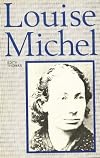
I have long wanted to read an in-depth biography of Louise Michel. Previously I'd only been able to track down a graphic novel [b:The Red Virgin and the Vision of Utopia|27405551|The Red Virgin and the Vision of Utopia|Mary M. Talbot|https://i.gr-assets.com/images/S/compressed.photo.goodreads.com/books/1453060634l/27405551._SX50_.jpg|47452881] and a more general book about the women of the Paris Commune, [b:The Women Incendiaries|701743|The Women Incendiaries|Edith show more Thomas|https://i.gr-assets.com/images/S/compressed.photo.goodreads.com/books/1354902967l/701743._SY75_.jpg|688043], also by Edith Thomas. After seven years of searching, I found a copy of Thomas' 1971 biography in the Oxfam online bookshop - a brilliant source for second-hand nonfiction. I found [b:Louise Michel|11370845|Louise Michel|Edith Thomas|https://i.gr-assets.com/images/S/compressed.photo.goodreads.com/books/1328768573l/11370845._SY75_.jpg|16301839] to be a slightly uneven but fascinating investigation of an exceptional woman. I learned a great deal about Michel's life after the Commune, as she continued to be a wholehearted revolutionary for the more than thirty subsequent years of her life. It was very interesting to trace how her influence in French revolutionary circles waxed and waned.
Although I found the biography very readable on the whole, I think Thomas is at times needlessly rude about the poetry and fiction that Michel wrote in large quantities to express her philosophies and feelings:
That final sentence demonstrates that Thomas respects Michel's actions more than her writings. Perhaps I am simply unused to being directly addressed by the author of a biography. None of Thomas' quotations from Michel's poetry are translated, which taxed my rusty French considerably. I found the chapters dealing with Michel's years of exile in New Caledonia particularly striking. These show that her humanitarian ethos made her instinctively anticolonialist:
Thomas explores the evolution of Michel's political philosophies via her activities and writing. I was delighted to discover that she wrote, among many other things, utopian sci-fi:
Michel was evidently a compelling speaker, as she gave lectures and talks continually for decades. Media coverage at the time provides some snappy quotes from these:
For context, Michel had recently been shot in the head when she made this remark. She immediately forgave the assassin named Lucas who attempted to murder her, stating that, 'I'd rather people shot me from point-blank range, rather than insulted me from a safe distance'. Lucas wrote to her in remorse at his unpremeditated act of brief madness. As in Francis Wheen's [b:Karl Marx|1097544|Karl Marx|Francis Wheen|https://i.gr-assets.com/images/S/compressed.photo.goodreads.com/books/1396232789l/1097544._SY75_.jpg|50930] biography, money troubles are a recurrent theme. Michel's Engels (financial benefactor) was named Rochefort. She was so generous to anyone in need that she perpetually struggled to pay her rent or bills from bookshops.
Despite some carping about Michel's writing style, Thomas evidently does admire her and this is most evident in the book's conclusion:
Given the evidence Thomas presents, I consider those statements to be justified rather than hagiographic. Louise Michel wasn't a perfect saint, but she was an incredible person who lived up to her political convictions in a way that few have managed before or since. In addition, I deeply respect her for wearing black for more than thirty years in mourning for the Commune. Thomas does not consider that this choice, combined with a rather overwrought poetry and prose style, might indicate that Louise Michel was the most gothic of revolutionaries. I wonder if any further biographies of Michel have been published in English in the past fifty years? show less
Although I found the biography very readable on the whole, I think Thomas is at times needlessly rude about the poetry and fiction that Michel wrote in large quantities to express her philosophies and feelings:
Meanwhile prison life followed its same monotonous rhythm. Louise kept writing: La Femme à travers les âges (later published in a newspaper), L'Excommunié, La Conscience, Le Livre des morts, the first part of Livre du Bagne. All these efforts have disappeared without a trace, but what remains is more than enough. There's far too much bad writing in print as it is!
Louise was as belligerent as ever, even after two years in prison. She did write to the Commission of Pardons, but only to threaten them.
That final sentence demonstrates that Thomas respects Michel's actions more than her writings. Perhaps I am simply unused to being directly addressed by the author of a biography. None of Thomas' quotations from Michel's poetry are translated, which taxed my rusty French considerably. I found the chapters dealing with Michel's years of exile in New Caledonia particularly striking. These show that her humanitarian ethos made her instinctively anticolonialist:
In 1878, the Melanesians rebelled. The colony was terrified but Louise, true to her principles, sided with the rebels against the French. Most of the former Communards, however, rallied to the white man's cause. "I respected them a great deal, but that day, they disgusted me," Louise later told Girault. In her opinion - and she was right - the 'Kanakas' revolt was the same fight that the Communards had waged in 1871. "They too were fighting for independence, control of their own lives, and liberty. I sided with them just as I sided with the rebellious, oppressed, and then defeated people of Paris." [...]
With Louise, feelings always led to actions. She taught the rebels how to cut telegraph wires, thereby shutting down the island's entire communication system. She sent documents to Paris that exposed the massacres of indigenous people that had taken place.
Thomas explores the evolution of Michel's political philosophies via her activities and writing. I was delighted to discover that she wrote, among many other things, utopian sci-fi:
Furthermore, Louise stands up very well to a comparison with Eugène Sue, Edgar Allan Poe, and the writers of science fiction. She foretold radio ('soon there will be long-distance waves'), organ transplants ('The ship's doctor claimed that human life, with preservatives and repairs, could surive much longer than the normal span'), submarines, airplanes, and even the atomic bomb and space travel ('the planets are already sending us signals').
Michel was evidently a compelling speaker, as she gave lectures and talks continually for decades. Media coverage at the time provides some snappy quotes from these:
She talked about the separation of Church and State, a continuing subject of controversy: "I don't want them separated; I don't want either of them to exist."
For context, Michel had recently been shot in the head when she made this remark. She immediately forgave the assassin named Lucas who attempted to murder her, stating that, 'I'd rather people shot me from point-blank range, rather than insulted me from a safe distance'. Lucas wrote to her in remorse at his unpremeditated act of brief madness. As in Francis Wheen's [b:Karl Marx|1097544|Karl Marx|Francis Wheen|https://i.gr-assets.com/images/S/compressed.photo.goodreads.com/books/1396232789l/1097544._SY75_.jpg|50930] biography, money troubles are a recurrent theme. Michel's Engels (financial benefactor) was named Rochefort. She was so generous to anyone in need that she perpetually struggled to pay her rent or bills from bookshops.
Despite some carping about Michel's writing style, Thomas evidently does admire her and this is most evident in the book's conclusion:
Her glory is that she unhesitatingly and unequivocally sided with the oppressed against the oppressors, that she never allowed herself to be co-opted by the system but fought it tooth and nail to the end. Her glory is that she never lost her faith in, or her passion for, the destiny of humanity.
She was an atheistic prophet, a women with a medieval devotion to man's destiny in the world, and she demonstrated, peerlessly, the theological virtues of faith, hope, and charity. To those virtues, moreover, she added the secular virtues of solidarity and justice.
Given the evidence Thomas presents, I consider those statements to be justified rather than hagiographic. Louise Michel wasn't a perfect saint, but she was an incredible person who lived up to her political convictions in a way that few have managed before or since. In addition, I deeply respect her for wearing black for more than thirty years in mourning for the Commune. Thomas does not consider that this choice, combined with a rather overwrought poetry and prose style, might indicate that Louise Michel was the most gothic of revolutionaries. I wonder if any further biographies of Michel have been published in English in the past fifty years? show less
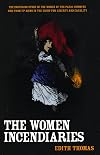
The previous books I've read that have been solely or partially about the Paris Commune of 1871 consistently failed to explain the major role taken by women. 'The Women Incendiaries' (in French, 'Les Pétroleuses') attempts to redress that balance. I found it a moving and powerful piece of scholarship. It explains the tragedy and slaughter as the Commune fell, whilst explaining the way that women were specifically scapegoated for alleged pyromania and their aspirations to equality.
The rights show more of women, to divorce, to work, to education, to equality in the eyes of the law, were all debated during the Paris Commune. This book explains how these debates played out. You get a real feeling for the mingled frustration and sense of opportunity women felt during this revolutionary time. The Commune tried to implement universal, secular, free education for all children, a policy very much driven by women's organisations and political clubs. Conversely, Thomas comments that some national guards refused help from women, despite desperate shortages of personnel. Even at a time of insurrection, some clung stubbornly to conservative ideas of a woman's role.
In the final chapters, Thomas discusses the fate of the female revolutionaries who survived the Commune. Despite the resurgent conservative establishment claiming that women were intellectually and physically inferior, the military courts seemed to have no problem accusing them of unlikely crimes. Those women found guilty were received heavy sentences, mainly hard labour and/or deportation. Indeed, Victor Hugo wrote a sharp critique of the treatment of Communards and personally intervened on behalf of one of the 'pétroleuses'.
I found this book totally compulsive. Although I love accounts of revolutionary times (especially in France), they often read as a list of male names. So often women's role in history is virtually ignored. It was fantastic to read a tribute to the bravery and spirit of female revolutionaries, who debated, fought, and died for rights that women like me now take for granted. I think Edith Thomas definitely struck the right note. show less
The rights show more of women, to divorce, to work, to education, to equality in the eyes of the law, were all debated during the Paris Commune. This book explains how these debates played out. You get a real feeling for the mingled frustration and sense of opportunity women felt during this revolutionary time. The Commune tried to implement universal, secular, free education for all children, a policy very much driven by women's organisations and political clubs. Conversely, Thomas comments that some national guards refused help from women, despite desperate shortages of personnel. Even at a time of insurrection, some clung stubbornly to conservative ideas of a woman's role.
In the final chapters, Thomas discusses the fate of the female revolutionaries who survived the Commune. Despite the resurgent conservative establishment claiming that women were intellectually and physically inferior, the military courts seemed to have no problem accusing them of unlikely crimes. Those women found guilty were received heavy sentences, mainly hard labour and/or deportation. Indeed, Victor Hugo wrote a sharp critique of the treatment of Communards and personally intervened on behalf of one of the 'pétroleuses'.
I found this book totally compulsive. Although I love accounts of revolutionary times (especially in France), they often read as a list of male names. So often women's role in history is virtually ignored. It was fantastic to read a tribute to the bravery and spirit of female revolutionaries, who debated, fought, and died for rights that women like me now take for granted. I think Edith Thomas definitely struck the right note. show less
Statistics
- Works
- 9
- Also by
- 1
- Members
- 118
- Popularity
- #167,489
- Rating
- 4.3
- Reviews
- 2
- ISBNs
- 16
- Languages
- 2