
Amedeo Modigliani (1884–1920)
Author of Modigliani (Taschen)
About the Author
Image credit: Amedeo Modigliani. 1919
Works by Amedeo Modigliani
Amedeo Modigliani; loan exhibition, October 14-November 13, 1971, for the benefit of the Museum of Modern Art, New York (1971) 7 copies
Modigliani 6 copies
Modigliani: Testimonianze, documenti e disegni inediti provenienti dalla collezione del dottor Paul Alexandre (2002) 4 copies
Drawings by Amedeo Modigliani, 1884 - 1920 from the collection of Mr. and Mrs. J. W. Alsdorf 4 copies
Amedeo Modigliani, 1884-1920 3 copies
Modern art : Modigliani 3 copies
Modigliani: sei tavole a colori 2 copies
Modigliani, peintures 2 copies
12 opere di Amedeo Modigliani 2 copies
Modigliani, portretten 1 copy
The Great Artists : Their lives, works and inspiration : 76 : Modigliani — Illustrator — 1 copy
Drawings by Amedeo Modigliani, 1884-1920: From the collection of Mr. and Mrs. J.W. Alsdorf (1955) 1 copy
Madam Pompadour 1 copy
Elena Povolozky, Modigliani 1 copy
Gypsy Woman with baby 1 copy
Modigliani : paintings 1 copy
Modigliani e l'avventura di Montparnasse : capolavori dalle collezioni Netter e Alexandre (2019) 1 copy
Bildnisse 1 copy
Bride and groom 1 copy
24:Modigliani 1 copy
Seared Nude 1 copy
Associated Works
"Primitivism" in 20th Century Art : Affinity of the Tribal and the Modern. Volume 2 (1985) — Artist — 15 copies
Jouw ogen hebben hun stilte : zeventien liefdesgedichten en een liefdesverklaring (1996) — Cover artist, some editions — 11 copies
Tagged
Common Knowledge
- Canonical name
- Modigliani, Amedeo
- Birthdate
- 1884-07-12
- Date of death
- 1920-01-24
- Gender
- male
- Education
- at home
- Occupations
- painter
sculptor
artist - Relationships
- Modigliani, Jeanne (daughter)
- Short biography
- Amedeo Modigliani, born in Livorno, was a great Italian avant garde artist who worked among the Bohemians in Paris mostly in the years prior to World War I. He was generally unknown during his lifetime but was beginning to be recognized for his distinctive style of painting, drawing, and sculpture just before his premature death in 1920 from disease (believed to be a form of tuberculosis), which many believe to have been exacerbated by poverty, overwork, and use of alcohol and narcotics. The tragedy of his early death was compounded when his companion Jeanne Hébuterne took her own life in despair a few days later. They left behind a 14-month-old daughter, Jeanne Modigliani, who grew up to become an art historian and painter; she wrote her father's biography, Modigliani, Man and Myth, published in 1958.
- Nationality
- Italy
- Birthplace
- Livorno, Italy
- Places of residence
- Paris, France
- Place of death
- Paris, France
- Burial location
- Cimetière du Père-Lachaise, Paris, France
- Associated Place (for map)
- Paris, France
Members
Reviews
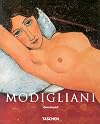
Amedeo Modigliani (1884-1920) – The Poetry of Seeing: Six elegant essays by art historian Doris Krystof along with dozens of full color illustrations of the artist’s works. I so much enjoyed this book published by Taschen. To share a bit of Modigliani rasa, here are several quotes from the book along with my comments:
“Entwined with the name of Modigliani are all manner of ideas about the Bohemian life in Paris, the fateful poverty of the artist and his grand passions. Modigliani is show more the prototype of the artist who executes his work in the draughty studios of Montmartre and Montparnasse, intoxicated by alcohol, hashish, love and poetry.” ---------- Author Doris Krystof does a good job separating myth from known facts, that is, from the artist’s day to day living and ever evolving approach of his art.
“The “spoiled brat” becomes a dandy and “the last real Bohemian.” The small, sickly boy in Livorno becomes the great, suffering artist in Paris, the painter who spares neither his strength nor his health in the creation of his work.” ---------- This can be a lesson for us all: to never limit ourselves to our life in the present since our identity, our gifts, our capacities are forever changing; we never really know what greatness we might be capable.
“Mondigliani appears to have spent the time before he moved to Paris more in the intensive study of Italian art history than in any further training as an artist. Nevertheless, his studies in Italy, the visits to original paintings and sculptures and thus the appreciation of an art historical tradition, the discovery of “forms of beauty and harmony,” as he put it in his letter from Rome, where some of the most important foundations for the later development of Modigliani’s art.” ---------- The artist’s acquaintance with the magnificent tradition of Italian art enriched his own experience and deepened his work; or, to put it another way, as in literature, where a writer is empowered by extensive reading, so an artist is empowered by extensive seeing.
The eyes – “mirrors of the soul” – play an unusually important role in the work of the Symbolist painters. Whether closed as in sleep, open or blind, they are always a visionary organ, one which can be directed both outwards and inwards. This is significant for Modigliani’s later development as a painter, insofar as the eyes of his sitters also take on the visionary role they had already played for the Symbolists.” ---------- For me and perhaps for others, like the Cheshire cat in Alice in Wonderland where his grin lingers after his body disappears, so with a Modigliani portrait, the eyes linger even when other features might fad from memory.
“With his talent for the concentrated portrayal of the characteristic traits of his sitters, and with his feeling for elegant forms and colors, Modigliani could easily have become one of the most sought-after portraitists of Parisian high society.” ---------- A telling sign of a visionary artist: he refused to be swayed by the lure of commercial success.
“Preparatory drawings for The Amazon allow one to see how Modigliani slowly encircled his subject, playing through various possibilities of expression before finally arriving at a subtle understanding of the portrayed person.” ---------- These preparatory drawings are such a revealer of the process of how the artist wanted to peel away layer after layer of superficiality and strike at the truth of the sitter’s humanness.
“Modigliani’s work as a sculptor was enormously beneficial to his painting. It was through sculpture that he formally arrived at reduction, linearity and abstraction, the components of his own personal, homogeneous pictorial language.” ---------- Similar to how a playwright can improve their writing having been an actor, so Modigliani is a prime example of how working within one art form can strengthen another.
“Modigliani’s approach to art appears removed from the sphere of aesthetic debate. His sculptures were not really responses to the challenges of the genre; rather, as their lyric description as “columns of tenderness” suggests, they arose out of a comprehensive, poetic understanding of art. It is well known that Modigliani was a great lover of poetry, that he could recite entire passages of Dante and Petrarch from memory and often did so, sometimes even while painting.” ---------- This really shows how being an artist is not a head trip, how painting and poetry are linked much more directly to the passions, feelings and the senses.
“The development of photography, as well as the desire for artistic autonomy, meant that by the beginning of the twentieth century the genre of portraiture had lost much of its original function of depicting the likeness of a person. Modigliani is the only artist of classical Modernism who still concentrated almost exclusively on the actual subject.” ---------- Modigliani’s prime chosen art form was the portrait and he wasn’t about to be dissuaded by any modern technology. show less
Amedeo Modigliani (1884-1920) – The Poetry of Seeing: Six elegant essays by art historian Doris Krystof along with dozens of full color illustrations of the artist’s works. I so much enjoyed this book published by Taschen. To share a bit of Modigliani rasa, here are several quotes from the book along with my comments:
“Entwined with the name of Modigliani are all manner of ideas about the Bohemian life in Paris, the fateful poverty of the artist and his grand passions. Modigliani is show more the prototype of the artist who executes his work in the draughty studios of Montmartre and Montparnasse, intoxicated by alcohol, hashish, love and poetry.” ---------- Author Doris Krystof does a good job separating myth from known facts, that is, from the artist’s day to day living and ever evolving approach of his art.
“The “spoiled brat” becomes a dandy and “the last real Bohemian.” The small, sickly boy in Livorno becomes the great, suffering artist in Paris, the painter who spares neither his strength nor his health in the creation of his work.” ---------- This can be a lesson for us all: to never limit ourselves to our life in the present since our identity, our gifts, our capacities are forever changing; we never really know what greatness we might be capable.
“Mondigliani appears to have spent the time before he moved to Paris more in the intensive study of Italian art history than in any further training as an artist. Nevertheless, his studies in Italy, the visits to original paintings and sculptures and thus the appreciation of an art historical tradition, the discovery of “forms of beauty and harmony,” as he put it in his letter from Rome, where some of the most important foundations for the later development of Modigliani’s art.” ---------- The artist’s acquaintance with the magnificent tradition of Italian art enriched his own experience and deepened his work; or, to put it another way, as in literature, where a writer is empowered by extensive reading, so an artist is empowered by extensive seeing.
The eyes – “mirrors of the soul” – play an unusually important role in the work of the Symbolist painters. Whether closed as in sleep, open or blind, they are always a visionary organ, one which can be directed both outwards and inwards. This is significant for Modigliani’s later development as a painter, insofar as the eyes of his sitters also take on the visionary role they had already played for the Symbolists.” ---------- For me and perhaps for others, like the Cheshire cat in Alice in Wonderland where his grin lingers after his body disappears, so with a Modigliani portrait, the eyes linger even when other features might fad from memory.
“With his talent for the concentrated portrayal of the characteristic traits of his sitters, and with his feeling for elegant forms and colors, Modigliani could easily have become one of the most sought-after portraitists of Parisian high society.” ---------- A telling sign of a visionary artist: he refused to be swayed by the lure of commercial success.
“Preparatory drawings for The Amazon allow one to see how Modigliani slowly encircled his subject, playing through various possibilities of expression before finally arriving at a subtle understanding of the portrayed person.” ---------- These preparatory drawings are such a revealer of the process of how the artist wanted to peel away layer after layer of superficiality and strike at the truth of the sitter’s humanness.
“Modigliani’s work as a sculptor was enormously beneficial to his painting. It was through sculpture that he formally arrived at reduction, linearity and abstraction, the components of his own personal, homogeneous pictorial language.” ---------- Similar to how a playwright can improve their writing having been an actor, so Modigliani is a prime example of how working within one art form can strengthen another.
“Modigliani’s approach to art appears removed from the sphere of aesthetic debate. His sculptures were not really responses to the challenges of the genre; rather, as their lyric description as “columns of tenderness” suggests, they arose out of a comprehensive, poetic understanding of art. It is well known that Modigliani was a great lover of poetry, that he could recite entire passages of Dante and Petrarch from memory and often did so, sometimes even while painting.” ---------- This really shows how being an artist is not a head trip, how painting and poetry are linked much more directly to the passions, feelings and the senses.
“The development of photography, as well as the desire for artistic autonomy, meant that by the beginning of the twentieth century the genre of portraiture had lost much of its original function of depicting the likeness of a person. Modigliani is the only artist of classical Modernism who still concentrated almost exclusively on the actual subject.” ---------- Modigliani’s prime chosen art form was the portrait and he wasn’t about to be dissuaded by any modern technology. show less
an excellent introduction, very well written, condenses huge scholarsip in accessible style

The paintings & drawings of Italian painter and sculptor Amedeo Clemente Modigliani (12 July 1884 – 24 January 1920) Composite 2 Edition. This is the standard print edition of Book VIII in The Zedign Art Series of monographs of the masters, published by The Zedign House. A dedicated webpage of Modigliani's book and artworks is maintained at https://books.zedign.com/zas/8.html
Awards

You May Also Like


Associated Authors
Statistics
- Works
- 74
- Also by
- 6
- Members
- 918
- Popularity
- #27,945
- Rating
- 3.9
- Reviews
- 12
- ISBNs
- 105
- Languages
- 10
- Favorited
- 1