
Gwen Moffat
Author of Space Below My Feet
About the Author
Series
Works by Gwen Moffat
Associated Works
Malice Domestic 09: An Anthology of Original Traditional Mystery Stories (2000) — Contributor — 39 copies
Tagged
Common Knowledge
- Legal name
- Moffat, Gwen Mary Goddard
- Birthdate
- 1924-06-03
- Gender
- female
- Occupations
- novelist
short story writer
mountaineer - Nationality
- England
UK - Birthplace
- Brighton, Sussex, England, UK
- Associated Place (for map)
- England, UK
Members
Reviews

Gwen Moffat's autobiography of her life in the 1950's as a mountaineer.
It is a very different world!
On the mountaineering side, the things they do with what feels like basically no protection to modern climbers (climbing in bare feet! Absailing just off the rope! No harnesses!) are terrifying
On the sociological side, it is a very different world! Hitch-hiking and renting cottages in a very ad hoc way. Picking up jobs casually. And all the casual gender stuff. The bit where her landlord show more doubles her rent because she has 'too many men over' is horrific, as is the bit where she gets sexually assaulted when hitch hiking (not just the assault, but the complete lack of support when she tells her friend what has happened.)
Gwen Moffet is so very very clearly in love with climbing and the hills, and is ready to trample all over anything else that gets in the way of this love - whether that's ignoring conventional gender roles, having a baby on a boat, living completely off grid in a shack...
Her writing about climbing and the mountains is superb, and so multi facetted, the joys of successful hard climbs, the fear when things are going wrong, the exhaustion and tension between climbing partners, all scattered with a sobering list of people she knows dying in the background. An extraordinary book about an extraordinary woman. show less
It is a very different world!
On the mountaineering side, the things they do with what feels like basically no protection to modern climbers (climbing in bare feet! Absailing just off the rope! No harnesses!) are terrifying
On the sociological side, it is a very different world! Hitch-hiking and renting cottages in a very ad hoc way. Picking up jobs casually. And all the casual gender stuff. The bit where her landlord show more doubles her rent because she has 'too many men over' is horrific, as is the bit where she gets sexually assaulted when hitch hiking (not just the assault, but the complete lack of support when she tells her friend what has happened.)
Gwen Moffet is so very very clearly in love with climbing and the hills, and is ready to trample all over anything else that gets in the way of this love - whether that's ignoring conventional gender roles, having a baby on a boat, living completely off grid in a shack...
Her writing about climbing and the mountains is superb, and so multi facetted, the joys of successful hard climbs, the fear when things are going wrong, the exhaustion and tension between climbing partners, all scattered with a sobering list of people she knows dying in the background. An extraordinary book about an extraordinary woman. show less
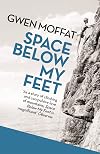
Gwen Moffat’s blithe mountaineering memoir is an extraordinary and fascinating read if, like me, you’re a person who feels the fear and definitely doesn’t do it anyway. Moffat yearned for excitement and adventure, a tendency that I find very difficult to understand. To extreme sports enthusiasts I say this: for the ultimate adrenaline rush, try having a three hour anxiety attack during which you can’t tell whether you are seriously ill or just going mad. Not much fun, but definitely show more gets the pulse racing. Anyway, Moffat recounts her amazing exploits on mountains and in wildernesses across Europe. In the immediate aftermath of the Second World War, she deserted from the ATS in order to live off the land and learn to climb in Wales. Throughout the book, Moffat exhibits an offhand yet incredible personal resilience. She lived in barns, tents, and hovels with equanimity. She was perpetually broke, yet never short of energy and ideas. Although the main theme of the book is mountaineering, at which she was a pioneer, I was more interested in the rest of her unconventional life. It felt like an insight into a vanished world, in which someone could sleep in a farmer’s barn if they helped with milking or squat in a cottage with no electricity, plumbing, or running water. Moffat clearly had a strong circle of friends that she periodically lived with and regularly climbed with, but what really came through was her intense independence. Getting married and having a baby barely crimped this independence, although she does observe sadly that poverty becomes squalid when you have a child to care for.
The writing flows along in a generally upbeat and energetic way, leaping from anecdote to anecdote. Moffat reflects only briefly on her emotions and relationships, preferring to concentrate on what she did than how she felt. A number of her adventures are horrifying, including one occasion when she narrowly escaped being raped. She is remarkably frank about this and other situations when men endangered her. By contrast, her descriptions of landscapes and wildlife are beautiful and uplifting. Despite being focused on her climbing goals, Moffat was always willing to stop in order to help an injured animal and she admired the beauty around her while enjoying the physical challenge.
‘Space Below My Feet’ may not have been the best thing to read during a cold snap, as it includes so many scenes of climbers shivering amid snow and ice. It’s clear that Moffat often suffered considerable discomfort and pain for her art. She certainly makes climbing seem like an art, although even her rhapsodies did not convince me to try it. The photos in the middle of the book show her to have had a cheerful smile and impressive shoulder muscles. Although she doesn’t self-consciously remark upon it, her life was pretty wild for the late 1940s and 50s: featuring vegetarianism, naturism, and communal living, not to mention all the camping and climbing. Her memoir isn’t quite like any other I’ve ever read and I enjoyed it, perhaps because her experiences provided insight into adventurous activities I'm happy to steer clear of. show less
The writing flows along in a generally upbeat and energetic way, leaping from anecdote to anecdote. Moffat reflects only briefly on her emotions and relationships, preferring to concentrate on what she did than how she felt. A number of her adventures are horrifying, including one occasion when she narrowly escaped being raped. She is remarkably frank about this and other situations when men endangered her. By contrast, her descriptions of landscapes and wildlife are beautiful and uplifting. Despite being focused on her climbing goals, Moffat was always willing to stop in order to help an injured animal and she admired the beauty around her while enjoying the physical challenge.
‘Space Below My Feet’ may not have been the best thing to read during a cold snap, as it includes so many scenes of climbers shivering amid snow and ice. It’s clear that Moffat often suffered considerable discomfort and pain for her art. She certainly makes climbing seem like an art, although even her rhapsodies did not convince me to try it. The photos in the middle of the book show her to have had a cheerful smile and impressive shoulder muscles. Although she doesn’t self-consciously remark upon it, her life was pretty wild for the late 1940s and 50s: featuring vegetarianism, naturism, and communal living, not to mention all the camping and climbing. Her memoir isn’t quite like any other I’ve ever read and I enjoyed it, perhaps because her experiences provided insight into adventurous activities I'm happy to steer clear of. show less

Gwen Moffat, born in Brighton, Sussex in 1924, became the first professional female mountain guide in the UK. Her travels in the field provided settings for her crime novels set in the Alps, the U.S. Rockies, and the Scottish Highlands and Hebrides. Moffat's first-hand experiences with mountain climbing are at put to obvious use in her novel "Miss Pink at the Edge of the World."
On a Scottish stack (i.e., a column of rock isolated from a shore by the action of waves) called the Old Man of show more Scamadale, two climbers die rather mysteriously. One of them, Trevor Stark, is a famous and much-hated TV celebrity who was scouting the area for a program, complete with boats and helicopters, against the wishes of the local laird (landowner) who avoided publicity and wanted to keep tourists away. The local police believe the deaths were accidents until the laird and his fellow climbers convince the police the two men were murdered—-and promptly become the prime suspects since they alone had the expertise to pull off the crime.
Miss Pink, a middle aged writer-magistrate-sleuth and a woman of "imposing presence" feels drawn to the case and the plight of the falsely-accused men. She uses her keen skills of observation and perceptions of human nature to get to the bottom of the rock-climber mystery, putting her own life in danger in the process. Miss Pink is a fun character, and Moffat does a good job with descriptions of the solitary and atmospheric landscapes. show less
On a Scottish stack (i.e., a column of rock isolated from a shore by the action of waves) called the Old Man of show more Scamadale, two climbers die rather mysteriously. One of them, Trevor Stark, is a famous and much-hated TV celebrity who was scouting the area for a program, complete with boats and helicopters, against the wishes of the local laird (landowner) who avoided publicity and wanted to keep tourists away. The local police believe the deaths were accidents until the laird and his fellow climbers convince the police the two men were murdered—-and promptly become the prime suspects since they alone had the expertise to pull off the crime.
Miss Pink, a middle aged writer-magistrate-sleuth and a woman of "imposing presence" feels drawn to the case and the plight of the falsely-accused men. She uses her keen skills of observation and perceptions of human nature to get to the bottom of the rock-climber mystery, putting her own life in danger in the process. Miss Pink is a fun character, and Moffat does a good job with descriptions of the solitary and atmospheric landscapes. show less
Gwen Moffat, born in Brighton, Sussex in 1924, became the first professional female mountain guide in the UK. Her travels in the field provided settings for her crime novels set in the Alps, the U.S. Rockies, and the Scottish Highlands and Hebrides. Moffat's first-hand experiences with mountain climbing are at put to obvious use in her novel "Miss Pink at the Edge of the World."
On a Scottish stack (i.e., a column of rock isolated from a shore by the action of waves) called the Old Man of show more Scamadale, two climbers die rather mysteriously. One of them, Trevor Stark, is a famous and much-hated TV celebrity who was scouting the area for a program, complete with boats and helicopters, against the wishes of the local laird (landowner) who avoided publicity and wanted to keep tourists away. The local police believe the deaths were accidents until the laird and his fellow climbers convince the police the two men were murdered—-and promptly become the prime suspects since they alone had the expertise to pull off the crime.
Miss Pink, a middle aged writer-magistrate-sleuth and a woman of "imposing presence" feels drawn to the case and the plight of the falsely-accused men. She uses her keen skills of observation and perceptions of human nature to get to the bottom of the rock-climber mystery, putting her own life in danger in the process.
Miss Pink is a fun character, and Moffat does a good job with descriptions of the solitary and atmospheric landscapes ("There were skerries and rocky islands, and in that brilliant but silent world the seascape had an air of unreality. It was like the coastline of Valhalla"). show less
On a Scottish stack (i.e., a column of rock isolated from a shore by the action of waves) called the Old Man of show more Scamadale, two climbers die rather mysteriously. One of them, Trevor Stark, is a famous and much-hated TV celebrity who was scouting the area for a program, complete with boats and helicopters, against the wishes of the local laird (landowner) who avoided publicity and wanted to keep tourists away. The local police believe the deaths were accidents until the laird and his fellow climbers convince the police the two men were murdered—-and promptly become the prime suspects since they alone had the expertise to pull off the crime.
Miss Pink, a middle aged writer-magistrate-sleuth and a woman of "imposing presence" feels drawn to the case and the plight of the falsely-accused men. She uses her keen skills of observation and perceptions of human nature to get to the bottom of the rock-climber mystery, putting her own life in danger in the process.
Miss Pink is a fun character, and Moffat does a good job with descriptions of the solitary and atmospheric landscapes ("There were skerries and rocky islands, and in that brilliant but silent world the seascape had an air of unreality. It was like the coastline of Valhalla"). show less
You May Also Like


Associated Authors
Statistics
- Works
- 46
- Also by
- 3
- Members
- 314
- Popularity
- #75,176
- Rating
- 3.3
- Reviews
- 7
- ISBNs
- 164