
John Eldredge
Author of Wild at Heart: Discovering the Secret of a Man's Soul
About the Author
John Eldredge is a bestselling author and counselor. He is also president of Wild at Heart, a ministry devoted to helping people discover the heart of God and recover their own hearts in God's love. John and his wife, Stasi, live near Colorado Springs, Colorado. To learn more, visit wildatheart.org.
Series
Works by John Eldredge
Wild at Heart Field Manual: A Personal Guide to Discover the Secret of Your Masculine Soul (2002) 989 copies, 4 reviews
Beautiful Outlaw: Experiencing the Playful, Disruptive, Extravagant Personality of Jesus (2011) 515 copies, 4 reviews
The Sacred Romance Workbook and Journal: Your Personal Guide for Drawing Closer to the Heart of God (2000) 246 copies
All Things New: Heaven, Earth, and the Restoration of Everything You Love (2017) 133 copies, 3 reviews
The Way of the Wild Heart Manual: A Personal Map for Your Masculine Journey (2006) 73 copies, 1 review
The Journey of Desire Journal & Guidebook: An Expedition to Discover the Deepest Longings of Your Heart (2002) 67 copies, 1 review
Wild at Heart: A Band of Brothers Small Group Participant's Guide: A Personal Guide to Discover the Secret of Your Masculine Soul (Small Group Resources) (2009) 49 copies
Love and War Devotional for Couples: The Eight-Week Adventure That Will Help You Find the Marriage You Always Dreamed Of (2010) 43 copies, 2 reviews
Experience Jesus. Really: Finding Refuge, Strength, and Wonder through Everyday Encounters with God (2025) 37 copies, 1 review
Captivating Heart to Heart Facilitator's Guide: Unveiling the Mystery of a Woman's Soul (2007) 16 copies
Experience Jesus--Really: Finding Refuge, Strength, and Wonder through Everyday Encounters with God (2025) 12 copies
The Sacred Romance Revised and Updated Edition: Coming Home to the God Who Pursues Your Heart (2024) 8 copies
All Things New Study Guide: Heaven, Earth, and the Restoration of Everything you Love (2017) 6 copies
Resilient Bible Study Guide plus Streaming Video: Restoring Your Weary Soul in These Turbulent Times (2022) 5 copies
Moving Mountains Study Guide with DVD: Praying with Passion, Confidence, and Authority (2016) 4 copies, 1 review
Forjado por el padre: Aprende lo que tu padre jamás pudo enseñarte (Spanish Edition) (2018) 3 copies
Community Impact Curriculum 3 copies
Community impact handbook: Helping local churches meet their communities in the public square (1991) 3 copies
Experience Jesus. Really Bible Study Guide plus Streaming Video: Finding Refuge, Strength, and Wonder through Everyday Encounters with God (2025) 2 copies
Mata a tu león: Una guía a través de las pruebas que enfrentan los hombres jóvenes (Spanish Edition) (2014) 2 copies
The Spirit of the Age 2 copies
Waking the Dead, CD, 50 min 1 copy
Wild at Heart Audiobook 1 copy
Sacred Romance, The 1 copy
永恆之戀 1 copy
Eu, Femeia 1 copy
Eu, Bărbatul 1 copy
Epic: The Story God Is Telling and the Role That Is Yours to Play Hardcover – September 15, 2004 1 copy
Resilient Study Guide 1 copy
All Things New Study Guide with DVD: A Revolutionary Look at Heaven and the Coming Kingdom (2017) 1 copy
Die Ongetemde Hart 1 copy
Todas las cosas nuevas: El cielo, la tierra y la restauración de todo lo que ama (Spanish Edition) (2017) 1 copy
Finde das Leben von dem du träumst: Warum es sich lohnt, auf die Stimme unseres Herzens zu hören (2010) 1 copy
Der ungezähmte Messias: Über einen unwiderstehlichen Retter, der Ihr Herz erobern wird. (2013) 1 copy
Majestuoso: La historia que Dios está contando y el papel que te toca desempeñar (Spanish Edition) (2016) 1 copy
Foundations of the Father- 2 1 copy
Leef uit jou hart uit 1 copy
Echte mannen 1 copy
Kertomus vailla vertaa 1 copy
The Restoration of the Heart 1 copy
The Work of Christ: What His Death, Resurrection, and Ascension Mean to Us (3 CD's in series) 1 copy
The Four Streams 1 copy
El despertar de los muertos: La gloria de un corazón que vive a plenitud (Spanish Edition) (2014) 1 copy
Major & Minor Themes: Understanding the Role of Suffering and Jesus' Offer of Life - Parts 1 & 2 1 copy
Growing a Strong Marriage 1 copy
Die Hart 1 copy
Associated Works
Your Captivating Heart: Unveil the Beauty, Romance, and Adventure of a Woman's Soul (2007) — Foreword — 84 copies, 1 review
Tagged
Common Knowledge
- Legal name
- Eldredge, John
- Other names
- 艾傑奇
- Birthdate
- 1960-06-06
- Gender
- male
- Birthplace
- Los Angeles, California, USA
- Places of residence
- Colorado Springs, Colorado, USA
- Map Location
- California, USA
Members
Reviews
Experience Jesus. Really: Finding Refuge, Strength, and Wonder through Everyday Encounters with God by John Eldredge
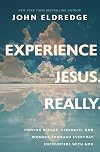
I really enjoyed this book! There was a healthy balance of Biblical wisdom mixed with conviction from the Holy Spirit that was so needed for me right now. I loved how the author, Eldredge, was not afraid to step on some toes when he shared things like how followers of Jesus should be truly experiencing a deep relationship with Him and encounter Him personally. Eldredge talked about spiritual warfare, inner healing, importance of prayer, and cleansing with the Blood of Jesus. All of it was show more spoken of in such an authentic and digestible way. I found myself just screenshotting pages for future reference because of the gold I was finding. Interestingly enough, it's not new knowledge [because everything was taken and learned from the Bible], but he simply showed readers what we often miss in passages or what a relationship with Jesus is like.... Jesus is the prize and He offers us a deeper connection than what this Western church has taught us to expect. Essentially, we need to stop letting things of this World take our attention from the One who breathed life into us and wants to commune with us!
Just some quotes from the book that made me pause for a bit:
"The secret place of God is his heart, and we are invited to take refuge there! What privilege, what intimacy, what joy!
Trailing clouds of glory you came from the heart of God, and you can return to his heart. This is the truest and greatest homecoming of all. The presence of God-Father, Son, Holy Spirit-and the vast resources of his Kingdom are always nearby. But we do need to make conscious choices to take our refuge in God and his Kingdom. Otherwise we are taking refuge somewhere else." pg 27
"The refuge of God and his Kingdom is only for those who choose to take part in it. This fact is so irritating to human nature. We just want to get on with our life and have God cover us. That's not quite how things work." pg 43
"The World as we envision it-society, culture, commerce, the arts-is under the power of the evil one, meaning it is under his jurisdiction, his rule, his sway. Which means this world that we so often perceive as relatively neutral is actually an extension of the kingdom of darkness. This reality is truly disruptive, even for many followers of Jesus." pg 49
"...our participation in the refuge is required, and this includes using the mighty victory of Christ against the assaults of the enemy. The refuge is there; the victory is there. Our role is to enforce it, with force." pg 91
"When spiritual warfare is present, you cannot talk your way out of it. You must shut it down." pg 103
"The treasure is Jesus himself, and our Papa, and the Holy Spirit." pg 213
"Saint John of the Cross will tell you why: 'The devil fears a soul in union with God as he fears God himself.' ... Satan is perfectly happy to let the Church talk about God, teach about God, scold in the name of God. What he fears are men and women actually coming to God, cultivating deep intimacy and union with Christ." page 214
"Of course your Father is a good Papa, and he loves to bless his children. Absolutely.
But there comes a time in your life with him that you will have to choose God over everything else... for the rest of your life." pg 219
Thank you to Nelson Books via NetGalley a copy of this book. A positive review is not required & all opinions are my own. show less
Just some quotes from the book that made me pause for a bit:
"The secret place of God is his heart, and we are invited to take refuge there! What privilege, what intimacy, what joy!
Trailing clouds of glory you came from the heart of God, and you can return to his heart. This is the truest and greatest homecoming of all. The presence of God-Father, Son, Holy Spirit-and the vast resources of his Kingdom are always nearby. But we do need to make conscious choices to take our refuge in God and his Kingdom. Otherwise we are taking refuge somewhere else." pg 27
"The refuge of God and his Kingdom is only for those who choose to take part in it. This fact is so irritating to human nature. We just want to get on with our life and have God cover us. That's not quite how things work." pg 43
"The World as we envision it-society, culture, commerce, the arts-is under the power of the evil one, meaning it is under his jurisdiction, his rule, his sway. Which means this world that we so often perceive as relatively neutral is actually an extension of the kingdom of darkness. This reality is truly disruptive, even for many followers of Jesus." pg 49
"...our participation in the refuge is required, and this includes using the mighty victory of Christ against the assaults of the enemy. The refuge is there; the victory is there. Our role is to enforce it, with force." pg 91
"When spiritual warfare is present, you cannot talk your way out of it. You must shut it down." pg 103
"The treasure is Jesus himself, and our Papa, and the Holy Spirit." pg 213
"Saint John of the Cross will tell you why: 'The devil fears a soul in union with God as he fears God himself.' ... Satan is perfectly happy to let the Church talk about God, teach about God, scold in the name of God. What he fears are men and women actually coming to God, cultivating deep intimacy and union with Christ." page 214
"Of course your Father is a good Papa, and he loves to bless his children. Absolutely.
But there comes a time in your life with him that you will have to choose God over everything else... for the rest of your life." pg 219
Thank you to Nelson Books via NetGalley a copy of this book. A positive review is not required & all opinions are my own. show less
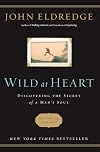
A friend of mine gave me Wild at Heart to read, and the book was so darn good I ended up buying my own copy before I'd even finished it the first time. This is one of those proofs that "many elements of sanctification and of truth" are found outside the visible confines of the Catholic Church" (CCC 819). John Eldredge himself is a Christian, but he seems to have a bit of an anti-religious vibe to him, as gleaned from his website. He is the director of Ransomed Heart Ministries, a "fellowship show more devoted to helping people discover the heart of God" (from the back of the book).
If you had to categorize the book, it's a book about masculine spirituality, but really it's so much more than that. Much of contemporary Christian material geared towards men is designed to neuter and emasculate them. Modern Christianity tells men that their passion, their drive, and their ambition is bad, and so in order to be a good Christian you need to get rid of those things and pursue virtues like meekness, gentleness, and passivity (Indeed, they are virtues and Jesus used them when he needed to, but they're never an excuse not to act when action is called for). This message is subtly backed up by by emotive music and weak homilies found at most Christian gatherings. In the same vein, we've feminized Jesus himself.
So with contemporary Christianity having feminized our understanding of Christ and our understanding of a good Christian, John Eldredge realized we have a problem. Even in the Catholic Church, which is commonly accused of being male-dominated and hierarchical, the problem is the same. So Eldredge proposes something new, he proposes that how God made men is good, because the natural values and inclinations of men correspond to the values of God himself. Early on in Wild at Heart, Eldredge says, "We need permission. Permission to be what we are-men made in God's image. Permission to live from the heart and not from the list of 'should' and 'ought to' that has left so many of us tired and bored" (emphasis original).
Speaking directly to men, every one of us has a question that needs to be answered. "Am I really a man? Do I have what it takes?" Because of Adam's original failure and the wounds we receive throughout our lives, this question often goes unanswered or is answered in the negative. The sort of masculinity I'm talking about here isn't the kind of manliness that drinks beer, watches football, and hunts. That overly-macho man is usually just compensating for the wounds he's received elsewhere in his life. No, I'm talking about the manliness that knows what makes him come alive, that is driven to pursue a goal, whether that goal is to be star quarterback or first chair in the orchestra. Either one is true masculinity because it's what makes you come alive.
But through the trials of life, we often pick up the message that we're not really a man. We don't have what it takes. You're not good enough to be the QB. Playing an instrument is for wimps. Or to Christianize the failure: The desire to succeed, the desire to excel, those are bad. Meekness and passivity are what you should pursue.
But something about this doesn't sit right, because men were made to fight. Look at little boys on the playground, they'll turn anything into a pretend weapon. We are made to compete, to conquer, to vanquish the enemy. It's what Jesus did. He fought the enemy and he won. For us, the enemy is often our own weakness. We have to recognize the battle that is at hand, and we have to recognize what is at stake. The leader is Jesus Christ, the battle is against the Devil himself, who has infiltrated even to our own hearts, and what is at stake is all the souls entrusted to our care as fathers of families, in whatever form.
God didn't give us men wild hearts to be stumbling blocks for us. He didn't give us wild hearts so that we could suppress them. He gave us wild hearts so that we could fight for him and live like Him. show less
If you had to categorize the book, it's a book about masculine spirituality, but really it's so much more than that. Much of contemporary Christian material geared towards men is designed to neuter and emasculate them. Modern Christianity tells men that their passion, their drive, and their ambition is bad, and so in order to be a good Christian you need to get rid of those things and pursue virtues like meekness, gentleness, and passivity (Indeed, they are virtues and Jesus used them when he needed to, but they're never an excuse not to act when action is called for). This message is subtly backed up by by emotive music and weak homilies found at most Christian gatherings. In the same vein, we've feminized Jesus himself.
So with contemporary Christianity having feminized our understanding of Christ and our understanding of a good Christian, John Eldredge realized we have a problem. Even in the Catholic Church, which is commonly accused of being male-dominated and hierarchical, the problem is the same. So Eldredge proposes something new, he proposes that how God made men is good, because the natural values and inclinations of men correspond to the values of God himself. Early on in Wild at Heart, Eldredge says, "We need permission. Permission to be what we are-men made in God's image. Permission to live from the heart and not from the list of 'should' and 'ought to' that has left so many of us tired and bored" (emphasis original).
Speaking directly to men, every one of us has a question that needs to be answered. "Am I really a man? Do I have what it takes?" Because of Adam's original failure and the wounds we receive throughout our lives, this question often goes unanswered or is answered in the negative. The sort of masculinity I'm talking about here isn't the kind of manliness that drinks beer, watches football, and hunts. That overly-macho man is usually just compensating for the wounds he's received elsewhere in his life. No, I'm talking about the manliness that knows what makes him come alive, that is driven to pursue a goal, whether that goal is to be star quarterback or first chair in the orchestra. Either one is true masculinity because it's what makes you come alive.
But through the trials of life, we often pick up the message that we're not really a man. We don't have what it takes. You're not good enough to be the QB. Playing an instrument is for wimps. Or to Christianize the failure: The desire to succeed, the desire to excel, those are bad. Meekness and passivity are what you should pursue.
But something about this doesn't sit right, because men were made to fight. Look at little boys on the playground, they'll turn anything into a pretend weapon. We are made to compete, to conquer, to vanquish the enemy. It's what Jesus did. He fought the enemy and he won. For us, the enemy is often our own weakness. We have to recognize the battle that is at hand, and we have to recognize what is at stake. The leader is Jesus Christ, the battle is against the Devil himself, who has infiltrated even to our own hearts, and what is at stake is all the souls entrusted to our care as fathers of families, in whatever form.
God didn't give us men wild hearts to be stumbling blocks for us. He didn't give us wild hearts so that we could suppress them. He gave us wild hearts so that we could fight for him and live like Him. show less
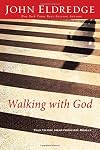
This review is a first for me in a multitude of ways. I never read self-help books. Nothing against them, they just aren’t my thing. And while I might read religious-themed works from time to time, I certainly don’t read religious self-help books. Leave that for church youth group/Sunday school crowd. Not for me, no thanks. I’ve never been one to wear my religion on my sleeve. That type of thing strikes me as somehow… contrived, maybe? Like if I did it I’d only be trying to prove show more something to a bunch of people who don’t matter anyway, and therefore any religious sentiments would be somehow cheapened. Therefore the prospect of reviewing what is ostensibly a religious self-help book seems both a wee bit pompous and a wee bit sad. But for some reason (maybe it’s sheer mule-headed obstinacy) I feel compelled to record my thoughts on this one.
Don’t worry, I won’t try to convert anyone.
A coworker lent me a copy of John Eldredge’s Walking with God during what was one of the more difficult times in my life. I won’t go into the details on everything, but suffice to say that when I got my hands on this book I was going out of my gourd. I needed something to latch onto, something to steady a world that was spinning out of control. That’s probably the only reason I gave it a shot. If things had been peachy keen, I’m sure I would have just gone on to the next crime story on the to-read pile and passed it off as yet another book I would never have time to read—and I am so glad that didn’t happen.
So what is this book about, you ask? In a nutshell, it’s about talking with the Big Man Upstairs.
Well, there’s slightly more to it than that, but that’s the gist. Eldredge presents the book as almost a personal journal, a series of anecdotes and personal recollections over the course of a year. It’s divided into four sections, one for each season starting in the Fall, and walks you through some pivotal events in his family’s life where communication with God intersected with their lives. He then extrapolates those events into guidance about how to communicate with and find guidance from God in a variety of ways.
All that’s well and good, right? But how does Walking with God differ from every other book out there about “The Christian Walk” (which, by the way, is one of those insipid religious catch phases that annoy the shit out of me)? There are a lot of other little things, I’m sure, but the primary way it’s different is that Eldredge advocates direct, personal communication with God. Not simple prayer (though there’s that, too), but direct dialogue in which you talk to God and God “talks” back. Stuff like asking God what you should do in a given situation, seeking His counsel for the direction of your life, and really listening to the response. Sounds crazy, right? Yeah, I thought so too until I tried it, and now I’ll never go back.
I’ve been a Christian since I was 16 years old—granted, a foul-mouthed, mildly inappropriate, “world”-obsessed Christian, but a Christian none-the-less. I mean, the reason we need Christ in the first place (if you buy into the whole thing) is because we’re flawed, imperfect beings, so why not own those flaws? Up until recently, I’d taken a scholarly view of Christianity. No surprise there, given my educational background, but it was still a far cry from what’s illustrated in Eldredge’s book. My version of Christianity was a series of texts to be studied, interpreted (sometimes in very non-standard ways, I might add), and codified into a code of beliefs, not a personal relationship with the almighty creator of the universe. That all changed after Walking with God.
Now, I don’t want you to think that Eldredge advocates walking around having made-up conversations with God in your head all day. It’s not exactly that. He cautions people against inserting what they want to hear in the space in their minds and using that to justify whatever it is they want. And it’s not like a schizophrenic who hears audible voices in his head (though, if you do hear something like that from time to time, evidently you aren’t crazy). It’s more like emptying your mind and allowing the God’s word to fill the void. Most of the time it’s just snippets—words or phrases that filter in as unbidden thoughts—or an answer you know before you even ask the question. One of my earliest memories of trying this stuff was sitting on the toilet (yes, the toilet—last I heard it wasn’t against the rules to pray in the middle of your morning constitutional) saying, “I love you, God,” and like an electric jolt to my medulla oblongata, the word/thoughts coming to me, I love you too.
Ugh… did that come off as sappy as I think I did? I’m going to have to say some crass stuff to balance out my smartass karma. Hell. Fart. Dead puppies. Ke$ha.
Whew. O.K., I think the balance has been restored. Moving on…
Another tidbit that struck me as particularly poignant was Eldredge’s advice to make sure that you “don’t waste your pain.” Pain—emotional or otherwise—is often the first step in change that fundamentally alters a person. What is it Flannery O’Connor said? “All human nature vigorously resists grace because grace changes us and the change is painful.” Something like that. Whether you believe in a higher power or not, oftentimes pain is the stimulus for some of the most fundamental changes in our lives. You can either let that pain consume you (or never learn your lesson from said pain) or you can grow from it, becoming stronger, more resilient, and alter your life for the better. Walking with God also describes a technique for asking God what scripture to read. It’s kind of like playing dress-up with scripture, mentally “trying on” sections of the Bible, seeing what feels right, and eventually narrowing it down to a specific chapter or two. It takes a lot of trust to do a thing like that, but I guess the whole religion takes a lot of trust (or belief, if you prefer) in the first place. So maybe it’s not all that different. Call me crazy, but it’s amazing how often I’ve tried the technique and ended up reading just the thing I needed to hear.
That being said, there was some stuff in the book that I just couldn’t buy into. For instance, Eldredge says that evil spirits can come into your home via objects that they have been imbued into, which can then affect your family’s mood, make you fight with each other, keep you distance from God, etc. I call bullshit on that one. Then there’s one story he tells in which he got thrown from his horse while riding with his wife and broke both his wrists. He says that the reason it happened is because he didn’t ask God if he should go riding that morning, and if he had, God would have told him to stay home. It smacks of what I call “The Nostradamus Effect”—interpreting an event in hindsight and saying that you should have known it was going to happen to because of X, Y, or Z, but the only reason it’s possible to interpret it that way is because it’s already happened, and therefore, it was never a viable portent of the future. Know what I mean? At any rate, I suppose those sorts of things are going to happen when you’re reading a self-help book. The key is to take the parts that you can use and ditch the rest.
So where does that leave me? Am I one of those crazy kooks who “talks to God”? Do I cozy up to The Big Guy and chat like a little boy with his elderly grandfather huddled ‘round a winter’s fire? Maybe not exactly like that, but yeah, I guess that’s me. If the shoe fits, wear it, my mama always said, so I’m wearing it. Call me nuckin’ futs if you want. Maybe I’m that, too.
I once heard somewhere that the definition of a “good book” is a book that fundamentally changes you after reading it. For me, Walking with God is that book. It has expanded my perspective on God, family, and life in general like no other book I’ve read before. Based upon that criteria, you could make the case that it deserves a five-star rating. But considering some of the junk I had to ditch along the way, five sounds a bit excessive. Four, on the other hand, sounds just right.
http://www.ireadabookonce.com/2013/02/review-walking-with-god-by-john.html show less
Don’t worry, I won’t try to convert anyone.
A coworker lent me a copy of John Eldredge’s Walking with God during what was one of the more difficult times in my life. I won’t go into the details on everything, but suffice to say that when I got my hands on this book I was going out of my gourd. I needed something to latch onto, something to steady a world that was spinning out of control. That’s probably the only reason I gave it a shot. If things had been peachy keen, I’m sure I would have just gone on to the next crime story on the to-read pile and passed it off as yet another book I would never have time to read—and I am so glad that didn’t happen.
So what is this book about, you ask? In a nutshell, it’s about talking with the Big Man Upstairs.
Well, there’s slightly more to it than that, but that’s the gist. Eldredge presents the book as almost a personal journal, a series of anecdotes and personal recollections over the course of a year. It’s divided into four sections, one for each season starting in the Fall, and walks you through some pivotal events in his family’s life where communication with God intersected with their lives. He then extrapolates those events into guidance about how to communicate with and find guidance from God in a variety of ways.
All that’s well and good, right? But how does Walking with God differ from every other book out there about “The Christian Walk” (which, by the way, is one of those insipid religious catch phases that annoy the shit out of me)? There are a lot of other little things, I’m sure, but the primary way it’s different is that Eldredge advocates direct, personal communication with God. Not simple prayer (though there’s that, too), but direct dialogue in which you talk to God and God “talks” back. Stuff like asking God what you should do in a given situation, seeking His counsel for the direction of your life, and really listening to the response. Sounds crazy, right? Yeah, I thought so too until I tried it, and now I’ll never go back.
I’ve been a Christian since I was 16 years old—granted, a foul-mouthed, mildly inappropriate, “world”-obsessed Christian, but a Christian none-the-less. I mean, the reason we need Christ in the first place (if you buy into the whole thing) is because we’re flawed, imperfect beings, so why not own those flaws? Up until recently, I’d taken a scholarly view of Christianity. No surprise there, given my educational background, but it was still a far cry from what’s illustrated in Eldredge’s book. My version of Christianity was a series of texts to be studied, interpreted (sometimes in very non-standard ways, I might add), and codified into a code of beliefs, not a personal relationship with the almighty creator of the universe. That all changed after Walking with God.
Now, I don’t want you to think that Eldredge advocates walking around having made-up conversations with God in your head all day. It’s not exactly that. He cautions people against inserting what they want to hear in the space in their minds and using that to justify whatever it is they want. And it’s not like a schizophrenic who hears audible voices in his head (though, if you do hear something like that from time to time, evidently you aren’t crazy). It’s more like emptying your mind and allowing the God’s word to fill the void. Most of the time it’s just snippets—words or phrases that filter in as unbidden thoughts—or an answer you know before you even ask the question. One of my earliest memories of trying this stuff was sitting on the toilet (yes, the toilet—last I heard it wasn’t against the rules to pray in the middle of your morning constitutional) saying, “I love you, God,” and like an electric jolt to my medulla oblongata, the word/thoughts coming to me, I love you too.
Ugh… did that come off as sappy as I think I did? I’m going to have to say some crass stuff to balance out my smartass karma. Hell. Fart. Dead puppies. Ke$ha.
Whew. O.K., I think the balance has been restored. Moving on…
Another tidbit that struck me as particularly poignant was Eldredge’s advice to make sure that you “don’t waste your pain.” Pain—emotional or otherwise—is often the first step in change that fundamentally alters a person. What is it Flannery O’Connor said? “All human nature vigorously resists grace because grace changes us and the change is painful.” Something like that. Whether you believe in a higher power or not, oftentimes pain is the stimulus for some of the most fundamental changes in our lives. You can either let that pain consume you (or never learn your lesson from said pain) or you can grow from it, becoming stronger, more resilient, and alter your life for the better. Walking with God also describes a technique for asking God what scripture to read. It’s kind of like playing dress-up with scripture, mentally “trying on” sections of the Bible, seeing what feels right, and eventually narrowing it down to a specific chapter or two. It takes a lot of trust to do a thing like that, but I guess the whole religion takes a lot of trust (or belief, if you prefer) in the first place. So maybe it’s not all that different. Call me crazy, but it’s amazing how often I’ve tried the technique and ended up reading just the thing I needed to hear.
That being said, there was some stuff in the book that I just couldn’t buy into. For instance, Eldredge says that evil spirits can come into your home via objects that they have been imbued into, which can then affect your family’s mood, make you fight with each other, keep you distance from God, etc. I call bullshit on that one. Then there’s one story he tells in which he got thrown from his horse while riding with his wife and broke both his wrists. He says that the reason it happened is because he didn’t ask God if he should go riding that morning, and if he had, God would have told him to stay home. It smacks of what I call “The Nostradamus Effect”—interpreting an event in hindsight and saying that you should have known it was going to happen to because of X, Y, or Z, but the only reason it’s possible to interpret it that way is because it’s already happened, and therefore, it was never a viable portent of the future. Know what I mean? At any rate, I suppose those sorts of things are going to happen when you’re reading a self-help book. The key is to take the parts that you can use and ditch the rest.
So where does that leave me? Am I one of those crazy kooks who “talks to God”? Do I cozy up to The Big Guy and chat like a little boy with his elderly grandfather huddled ‘round a winter’s fire? Maybe not exactly like that, but yeah, I guess that’s me. If the shoe fits, wear it, my mama always said, so I’m wearing it. Call me nuckin’ futs if you want. Maybe I’m that, too.
I once heard somewhere that the definition of a “good book” is a book that fundamentally changes you after reading it. For me, Walking with God is that book. It has expanded my perspective on God, family, and life in general like no other book I’ve read before. Based upon that criteria, you could make the case that it deserves a five-star rating. But considering some of the junk I had to ditch along the way, five sounds a bit excessive. Four, on the other hand, sounds just right.
http://www.ireadabookonce.com/2013/02/review-walking-with-god-by-john.html show less
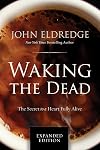
Wise words, but nothing stood out strongly enough to make this a notable book for me. Much of what i liked in this book has been said better by others. I was also a little uncomfortable with his approach to "spiritual warfare," which verged on recognizing demon possession and casting demons out. Not that he explicitly endorses demon possession, which he does briefly say he does not believe, some readers may get the wrong idea when he speaks about battling evil angels, that may be harassing a show more person, through prayer and counseling. Still, worth a read. show less
Lists
Awards

You May Also Like


Associated Authors
Statistics
- Works
- 180
- Also by
- 7
- Members
- 25,955
- Popularity
- #801
- Rating
- 3.8
- Reviews
- 177
- ISBNs
- 461
- Languages
- 18
- Favorited
- 19
