
Adam Silvera
Author of They Both Die at the End
About the Author
Series
Works by Adam Silvera
They Both Die at the End Paperback Box Set: The First to Die at the End, They Both Die at the End (2024) 3 copies
They Both Die at the End • What If It's Us • History Is All You Left Me • More Happy Than Not (2021) 2 copies
Hetki ennen kuolemaa 1 copy
Na konci naozaj obaja umrú 1 copy
They Both Die at then End 1 copy
Was ist mit uns 1 copy
Adam Silvera 2 Books Collection Set [They Both Die at the End & The First to Die at the End] (The Death-Cast Series) (2022) 1 copy
Adam Silvera Collection 3 Books Set (History Is All You Left Me, They Both Die at the End, More Happy Than Not) (2021) 1 copy
They Both Die at the End • History Is All You Left Me • More Happy Than Not • What If It's Us • Here's to Us (2022) 1 copy
Adam Silvera Fantasy Book 1 copy
Associated Works
(Don't) Call Me Crazy: 33 Voices Start the Conversation about Mental Health (2018) — Contributor — 315 copies, 1 review
Tagged
Common Knowledge
- Birthdate
- 1990-06-07
- Gender
- male
- Nationality
- USA
- Birthplace
- New York, New York, USA
- Associated Place (for map)
- New York, USA
Members
Discussions
More happy than not vs More happy than not [deluxe edition] in Combiners! (November 2021)
Reviews
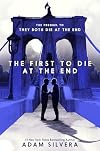
In The First to Die at the End, Adam Silvera returns to the heart-wrenching world of They Both Die at the End—this time taking readers back to the very beginning. As a prequel, the novel explores the launch of Death-Cast, the mysterious service that predicts when people will die. Against this uncertain backdrop, Silvera weaves a tender, tragic love story that examines fate, sacrifice, and what it means to truly live when time is uncertain.
The novel follows two teenage boys, each dealing show more with their internal struggles. One is living under the constant shadow of a chronic illness, knowing every day could be his last. The other is perfectly healthy—until he becomes the very first person publicly announced as a Death-Cast recipient. Caught on live camera in Times Square, this chilling moment sets the tone for a world grappling with the meaning of mortality. Their chance meeting and instant connection spark a whirlwind day through New York City, filled with moments of beauty, fear, and self-discovery.
The chemistry between the protagonists feels stronger and more immediate than in the first book, but without feeling overly rushed. The attraction between them is tender and believable, deepening as they confront their pasts, their dreams, and the terrifying reality of what may come. Unlike the first novel, the romantic progression in The First to Die at the End feels more natural, though still rooted in the same 24-hour time constraint.
The novel also stands out in how it expands the philosophical core of the series. It asks not just how we’d react to our own death, but how we live for others—and what kind of legacy we leave behind. The climax, in which the healthy boy sacrifices himself to save a stranger and donates his organs to the boy he’s just fallen for, is both devastating and beautifully symbolic. It reinforces the idea that even the briefest of connections can have a lasting impact.
While still rooted in the bittersweet formula of its predecessor, this prequel arguably hits deeper emotional notes. It offers a more layered reflection on destiny, illness, and hope, with the added suspense of Death-Cast’s very first day creating a sense of eerie unpredictability throughout. show less
The novel follows two teenage boys, each dealing show more with their internal struggles. One is living under the constant shadow of a chronic illness, knowing every day could be his last. The other is perfectly healthy—until he becomes the very first person publicly announced as a Death-Cast recipient. Caught on live camera in Times Square, this chilling moment sets the tone for a world grappling with the meaning of mortality. Their chance meeting and instant connection spark a whirlwind day through New York City, filled with moments of beauty, fear, and self-discovery.
The chemistry between the protagonists feels stronger and more immediate than in the first book, but without feeling overly rushed. The attraction between them is tender and believable, deepening as they confront their pasts, their dreams, and the terrifying reality of what may come. Unlike the first novel, the romantic progression in The First to Die at the End feels more natural, though still rooted in the same 24-hour time constraint.
The novel also stands out in how it expands the philosophical core of the series. It asks not just how we’d react to our own death, but how we live for others—and what kind of legacy we leave behind. The climax, in which the healthy boy sacrifices himself to save a stranger and donates his organs to the boy he’s just fallen for, is both devastating and beautifully symbolic. It reinforces the idea that even the briefest of connections can have a lasting impact.
While still rooted in the bittersweet formula of its predecessor, this prequel arguably hits deeper emotional notes. It offers a more layered reflection on destiny, illness, and hope, with the added suspense of Death-Cast’s very first day creating a sense of eerie unpredictability throughout. show less
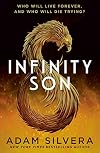
THIS WAS SO FUCKING GOOD
I am . . . genuinely confused by the number of bad reviews this has gotten? Because personally this was everything I could possibly have asked for. I've gotten increasingly picky about fantasy recently, but this was the perfect mix of characters and plot, and of sad and hopeful. The world building was so vivid and wonderful, and although it was tropey it was also *very* self-aware, and subverted a lot of tropes.
Also the characters were fantastic and I love them and show more they are my kids.
I truly did not want this book to end, and I don't know HOW I'm going to wait for Infinity Reaper. show less
I am . . . genuinely confused by the number of bad reviews this has gotten? Because personally this was everything I could possibly have asked for. I've gotten increasingly picky about fantasy recently, but this was the perfect mix of characters and plot, and of sad and hopeful. The world building was so vivid and wonderful, and although it was tropey it was also *very* self-aware, and subverted a lot of tropes.
Also the characters were fantastic and I love them and show more they are my kids.
I truly did not want this book to end, and I don't know HOW I'm going to wait for Infinity Reaper. show less
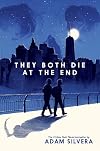
“But no matter what choices we make - solo or together - our finish line remains the same … No matter how we choose to live, we both die at the end.”
This will be on my end of the year favorites list, let’s get that out of the way first. It’s captivating, thought-provoking, and emotionally resonant. It’s a story that wraps itself around you creating both pain and comfort. I cannot sing it’s praises high enough. [b:They Both Die at the End|33385229|They Both Die at the End|Adam show more Silvera|https://images.gr-assets.com/books/1494333138s/33385229.jpg|49456196] is a bittersweet and hopeful story of courage, adventure, and taking chances. We follow teens Mateo Torrez and Rufus Emeterio who meet on their Death Day, through the Last Friends app, and are determined to make the most of the time they have left. The two grow closer as they explore their city and learn more about themselves and what it means to truly live.
Things I Liked
This book is SO EMOTIONALLY CAPTIVATING. I literally cried half a dozen times. But it’s not only sad - it’s about growth, bravery, adventure, hope, and love. It’s a story that will take you on a journey that has a full spectrum of emotions. All of these emotions make it really easy to connect and invest in the characters and the relationships. There’s meaning and purpose and heart there that pull you in.
I loved Mateo so freaking much. Mateo has severe social anxiety that he feels holds him back in areas of his life, but after he receives his Death-Cast call, Mateo is determined to change and embrace adventure and the unknown. Mateo has this beautiful growth journey and really showcases courage and goodness. He is a treasure and I love him.
Rufus is the other half of our leading duo, and he’s a bit more rough around the edges. He’s had a tough life after the loss of his parents, and has a lot of guilt and anger. He’s also pretty reckless, which forces Mateo out of his comfort zone. Rufus also grows, and learns to unburden himself of things that are outside of his control.
I absolutely loved the relationship that develops in this story. We see Rufus and Mateo’s stories parallel - both don’t want to be alone as their lives are ending, they have fear and guilt over their pasts and futures, they want this last day to mean something. And so, their worlds collide into a fateful and unimaginable day that helps them on their own personal journeys. They create a beautiful crescendo of life and bravery in the time they have together that is about more than simply wishing for a future, but celebrating where they are, who they are, and what they’ve done. Their feelings never felt rushed or forced, even though they've known each other for less than a day. They connect and form a meaningful relationship that has growth, support, and encouragement - everything a healthy should have.
One of my favorite parts of the story was the POV chapters from secondary and tertiary characters. They helped to create this fantastically full world that was both serendipitous and inevitable. It reminded me of The Sun is Also a Star, which was one of my favorite books from last year. I also loved getting to have chapters from those closest to Mateo and Rufus. Seeing their found families, especially Rufus’, gave history and depth to the relationships and made them more impactful.
Quotes:
“Twelve hours ago I received the phone call telling me I’m going to die today, and I’m more alive now than I was then.”
“Two dudes met. They fell in love. They lived. That’s our story.”
“Maybe it’s better to have gotten it right and been happy for one day instead of living a lifetime of wrongs.”
Things I Didn’t Like
This book made me cry a lot and I got a headache.
This story is so hauntingly beautiful. I loved the characters, I loved the relationships, I loved the how it made me feel and care. After reading [b:History Is All You Left Me|25014114|History Is All You Left Me|Adam Silvera|https://images.gr-assets.com/books/1462807691s/25014114.jpg|44686341] last year, I can now say that Adam Silvera is definitely a go-to author for books with intense emotions, complicated relationships, and endearing characters. I honestly don’t have the world to accurately express how much I loved this book. I can only say beautiful and amazing so many times, but this book is truly special and I cannot recommend it enough.
I received a copy of the book from HarperTeen via Edelweiss in exchange for an honest review. All quotes are taken from an ARC and subject to change. show less
5/5 stars
To keep it short and simple, this book was incredible and I didn't want it to end.
The concept is interesting, because it can be considered sci-fi, but reads much more like a contemporary, which I really liked. It combined one, slightly-dystopian element (Death-Cast) and placed it in the present day. The writing style was engaging; there were many moments while reading this book that I had to force myself to put it down (hence why it only took me two days to read).
This book, first show more and foremost, was a character-driven narrative. Mateo and Rufus are genuinely two of the best characters I have read about this year. They are both flawed, but are good at heart. As they learned about each other, I as the reader learned about them as well. When an author writes with two main narrators, they sometimes sound like the same exact character in the end, but this didn't happen in They Both Die at the End. Mateo and Rufus had complex and complete character arcs, which is surprising since the book takes place over the course of one day.
This book lives up to the hype it has gotten on social media. I can't wait to reread it again sometime. :) show less
To keep it short and simple, this book was incredible and I didn't want it to end.
The concept is interesting, because it can be considered sci-fi, but reads much more like a contemporary, which I really liked. It combined one, slightly-dystopian element (Death-Cast) and placed it in the present day. The writing style was engaging; there were many moments while reading this book that I had to force myself to put it down (hence why it only took me two days to read).
This book, first show more and foremost, was a character-driven narrative. Mateo and Rufus are genuinely two of the best characters I have read about this year. They are both flawed, but are good at heart. As they learned about each other, I as the reader learned about them as well. When an author writes with two main narrators, they sometimes sound like the same exact character in the end, but this didn't happen in They Both Die at the End. Mateo and Rufus had complex and complete character arcs, which is surprising since the book takes place over the course of one day.
This book lives up to the hype it has gotten on social media. I can't wait to reread it again sometime. :) show less
Lists
Awards


You May Also Like


Associated Authors
Statistics
- Works
- 35
- Also by
- 3
- Members
- 18,633
- Popularity
- #1,175
- Rating
- 3.9
- Reviews
- 433
- ISBNs
- 306
- Languages
- 20
- Favorited
- 6