
Gregory A. Prince
Author of David O. McKay and the Rise of Modern Mormonism
About the Author
Works by Gregory A. Prince
Associated Works
Why I Stay: The Challenges of Discipleship for Contemporary Mormons (2011) — Contributor — 10 copies
Conscience and Community: Sterling M. McMurrin, Obert C. Tanner, and Lowell L. Bennion (2018) — Contributor — 2 copies
Dialogue: A Journal of Mormon Thought - Volume 33, Number 4 (Winter 2000) (2000) — Contributor — 2 copies
Dialogue: A Journal of Mormon Thought, Volume 11, Number 3, Autumn 1978 (1978) — Contributor — 2 copies
Dialogue: A Journal of Mormon Thought - Volume 51, Number 3 (Fall 2018) (2018) — Contributor — 1 copy
Dialogue: A Journal of Mormon Thought - Volume 35, Number 1 (Spring 2002) (2002) — Contributor — 1 copy
Dialogue: A Journal of Mormon Thought - Volume 49, Number 3 (Fall 2016) (2016) — Contributor — 1 copy
Dialogue: A Journal of Mormon Thought - Volume 37, Number 2 (Summer 2004) (2004) — Contributor — 1 copy
Dialogue: A Journal of Mormon Thought - Volume 42, Number 3 (Fall 2009) (2009) — Contributor — 1 copy
Dialogue: A Journal of Mormon Thought - Volume 42, Number 4 (Winter 2009) (2009) — Contributor — 1 copy
Dialogue: A Journal of Mormon Thought - Volume 44, Number 3 (Fall 2011) (2011) — Contributor — 1 copy
Dialogue: A Journal of Mormon Thought - Volume 44, Number 4 (Winter 2011) (2011) — Contributor — 1 copy
Dialogue: A Journal of Mormon Thought - Volume 45, Number 1 (Spring 2012) (2012) — Contributor — 1 copy
Dialogue: A Journal of Mormon Thought - Volume 46, Number 1 (Spring 2013) (2013) — Contributor — 1 copy
Restoration Studies XV: Theology and Culture in Community of Christ and the Latter Day Saint Movement (2014) — Contributor — 1 copy
Dialogue: A Journal of Mormon Thought - Volume 46, Number 4 (Winter 2013) (2013) — Contributor — 1 copy
Tagged
Common Knowledge
- Legal name
- Prince, Gregory Antone
- Birthdate
- 1948-05-01
- Gender
- male
- Education
- Dixie College
University of California, Los Angeles (DDS|1973)
University of California, Los Angeles (PhD|pathology|1975) - Occupations
- pathologist
business executive
historian
virologist - Organizations
- The Church of Jesus Christ of Latter-day Saints
National Institutes of Health
Johns Hopkins University
Virion Systems, Inc. (president and CEO)
Dialogue Foundation - Relationships
- Prince, JaLynn (wife)
- Nationality
- USA
- Birthplace
- Los Angeles, California, USA
- Places of residence
- Potomac, Maryland, USA
- Associated Place (for map)
- USA
Members
Reviews
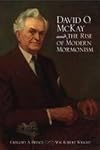
This is one in a series of beautifully-produced biographies of Latter-day Saints recently published by the University of Utah Press. This particular biography stands out for at least three reasons:
1) David O. McKay was an unusually charismatic and cheerful person, and it's hard to read about his life without feeling optimistic yourself.
2) Many progressive Mormons seem to look back with nostalgia to the McKay administration as a better time. This book gives an extensive, even-handed account show more that sheds light on the accuracy (or not) of that perception.
3) Pages 103 and 104 record President McKay's accounts of the answers he received when he prayed about ending the Priesthood ban. ("I've inquired of the Lord repeatedly. The last time I did it was late last night. I was told, with no discussion, not to bring the subject up with the Lord again; that the time will come, but it will not be my time, and to leave the subject alone.") No revisionist narrative of the ban that ignores or suppresses these accounts should be taken seriously. show less
1) David O. McKay was an unusually charismatic and cheerful person, and it's hard to read about his life without feeling optimistic yourself.
2) Many progressive Mormons seem to look back with nostalgia to the McKay administration as a better time. This book gives an extensive, even-handed account show more that sheds light on the accuracy (or not) of that perception.
3) Pages 103 and 104 record President McKay's accounts of the answers he received when he prayed about ending the Priesthood ban. ("I've inquired of the Lord repeatedly. The last time I did it was late last night. I was told, with no discussion, not to bring the subject up with the Lord again; that the time will come, but it will not be my time, and to leave the subject alone.") No revisionist narrative of the ban that ignores or suppresses these accounts should be taken seriously. show less
I was looking forward to this book since came out to high praise and I'm particularly interested in 20th century LDS history. It's writing is easy to follow and well paced. It draws from a vast collection of sources including dozens of unpublished manuscripts, oral histories, and personal interviews performed by the authors. It seems like they interviewed almost everyone for years, including family members, housekeepers, secretaries, civic leaders, mission presidents, even Gordon B. Hinckley show more while he was President of the Church in 1996. No stone was left unturned.
They made full use of the detailed and frank Ernest Wilkinson diaries and they had extensive interviews with Paul H. Dunn, a retired LDS General Authority. The book was really born from of the vast collections of McKay's personal secretary Clare Middlemiss and passed down to her nephew Robert Wright, who is coauthor on this book. (Some have questioned the wisdom in relying so much on Middlemiss and Dunn, who both have their own baggage, but I think the authors produced a very balanced and careful treatment.) I really don't know how they were able to distill all this material into an accessible book.
This biography really just focuses on David O. McKay's years as President of the Church, starting when he was 77 years old until his death at age 96. The story is divided into several major themes of his presidency, such as civil rights, moral agency, struggle against communism, politics, and the explosions in missionary work and church construction.
The authors were able to tell the behind-the-scenes story not published in church magazines about successes, failures, struggles, and conflict that exist in every large, complex organization like the LDS Church. This came to empathize with McKay and the other capable men who were charged with leadership over such a rapidly growing and internationalizing church. I was surprised how many times President McKay chose to let problems work themselves out instead of getting involved and trying to control everything. Sometimes it was wisdom and sometimes I think he just didn't know what to do. He was a reasonable man capable of seeing both sides to an argument and was at times convinced by each opposing side. At times he could be refreshingly unconventional.
In many ways this biography is really an intimate story as told by those who worked with him closely and knew him well. I am left with a flavor for his character and a greater respect for the man. Forty years after his death this book has helped raise the profile of David O. McKay in a generation that never knew him. This is a story of real people dealing with the complexity of the real world, full and rich, free from empty praise or cynical criticism. show less
They made full use of the detailed and frank Ernest Wilkinson diaries and they had extensive interviews with Paul H. Dunn, a retired LDS General Authority. The book was really born from of the vast collections of McKay's personal secretary Clare Middlemiss and passed down to her nephew Robert Wright, who is coauthor on this book. (Some have questioned the wisdom in relying so much on Middlemiss and Dunn, who both have their own baggage, but I think the authors produced a very balanced and careful treatment.) I really don't know how they were able to distill all this material into an accessible book.
This biography really just focuses on David O. McKay's years as President of the Church, starting when he was 77 years old until his death at age 96. The story is divided into several major themes of his presidency, such as civil rights, moral agency, struggle against communism, politics, and the explosions in missionary work and church construction.
The authors were able to tell the behind-the-scenes story not published in church magazines about successes, failures, struggles, and conflict that exist in every large, complex organization like the LDS Church. This came to empathize with McKay and the other capable men who were charged with leadership over such a rapidly growing and internationalizing church. I was surprised how many times President McKay chose to let problems work themselves out instead of getting involved and trying to control everything. Sometimes it was wisdom and sometimes I think he just didn't know what to do. He was a reasonable man capable of seeing both sides to an argument and was at times convinced by each opposing side. At times he could be refreshingly unconventional.
In many ways this biography is really an intimate story as told by those who worked with him closely and knew him well. I am left with a flavor for his character and a greater respect for the man. Forty years after his death this book has helped raise the profile of David O. McKay in a generation that never knew him. This is a story of real people dealing with the complexity of the real world, full and rich, free from empty praise or cynical criticism. show less
A Good Festivus Gift
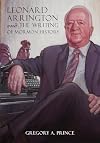
Little did I realize 25 years ago when I was reading his gentle histories The Mormon Experience and Brigham Young: American Moses how upset Leonard Arrington was with the leaders of the Church, as here revealed by his personal diaries. In 1982, he commissioned Lavina Fielding Anderson to compile his memoirs, which Anderson entitled Doves and Serpents. Of this private compilation, Arrington said: "It's a pretty intimate history, and must not become public knowledge because show more it essentially gives the story of The Good Guys and The Bad Guys. The General Authorities, in that work are the Bad Guy." (Emphasis in original.) Arrington apparently toned things down for his published autobiography Adventures of a Church Historian, but after his death his children apparently decided that there should be a public airing of grievances after all, so we have this book.
On the back cover, Anderson assures us that Arrington was quite possibly the best human being of his generation. I would have expected to come away more edified from reading the biography of someone in the 99.9999999th percentile of humanity, but maybe I didn't come to the book with a mind open enough to permit me to recognize his saintliness.
One chapter that I was pleasantly surprised by was the one on the Priesthood Revelation of 1978. Prince captures the jubilation of that moment as I remember it, without going on to condemn us all for accepting the previous policy in the first place. show less
Little did I realize 25 years ago when I was reading his gentle histories The Mormon Experience and Brigham Young: American Moses how upset Leonard Arrington was with the leaders of the Church, as here revealed by his personal diaries. In 1982, he commissioned Lavina Fielding Anderson to compile his memoirs, which Anderson entitled Doves and Serpents. Of this private compilation, Arrington said: "It's a pretty intimate history, and must not become public knowledge because show more it essentially gives the story of The Good Guys and The Bad Guys. The General Authorities, in that work are the Bad Guy." (Emphasis in original.) Arrington apparently toned things down for his published autobiography Adventures of a Church Historian, but after his death his children apparently decided that there should be a public airing of grievances after all, so we have this book.
On the back cover, Anderson assures us that Arrington was quite possibly the best human being of his generation. I would have expected to come away more edified from reading the biography of someone in the 99.9999999th percentile of humanity, but maybe I didn't come to the book with a mind open enough to permit me to recognize his saintliness.
One chapter that I was pleasantly surprised by was the one on the Priesthood Revelation of 1978. Prince captures the jubilation of that moment as I remember it, without going on to condemn us all for accepting the previous policy in the first place. show less
Leonard Arrington was a remarkable American historian. I knew just a bit about him when I discovered Greg Prince's detailed biography of Arrington. I appreciated learning about how Leonard developed from a farm boy to a historian while maintaining a strong belief in religion and the LDS church. Prince has also provided some insight into how the LDS church works, some positive and some negative. Certainly, Arrington experienced trying times during while he was LDS historian, however, it is show more clear that he was a mentor to many of the current generation of Mormon historians. Prince's biography inspires me to read Arrington's Great Basin Kingdom, Arrington and Bitton's The Mormon Experience, as well as George Santayana's Reason in Religion, Lowell Benion's What about Religion?. Thanks to Greg Prince for an excellent biography of Leonard Arrington and more importantly for giving me much more to learn. show less
Lists
Awards


You May Also Like


Associated Authors
Statistics
- Works
- 6
- Also by
- 30
- Members
- 211
- Popularity
- #105,255
- Rating
- 4.2
- Reviews
- 6
- ISBNs
- 11
- Favorited
- 1