
Hugh Nibley (1910–2005)
Author of An Approach to the Book of Mormon
About the Author
Series
Works by Hugh Nibley
Temple and Cosmos: Beyond This Ignorant Present (The Collected Works of Hugh Nibley, Vol 12 : Ancient History) (1992) 188 copies, 1 review
Lehi in the Desert, the World of the Jaredites, There Were Jaredites (Collected Works of Hugh Nibley) (1988) 179 copies
Brother Brigham Challenges the Saints (The Collected Works of Hugh Nibley, Vol 13) (1994) 98 copies, 1 review
Tinkling Cymbals and Sounding Brass: The Art of Telling Tales About Joseph Smith and Brigham Young (The Collected Works of Hugh Nibley, Vol 11) (1991) 88 copies, 1 review
Ancient State: The Rulers & the Ruled (Collected Works of Hugh Nibley: Vol.) (1991) 72 copies, 1 review
No Ma'am That's Not History: a Brief Review of Mrs. Brodie's Reluctant Vindication of a Prophet She Seeks to Expose (1946) 14 copies
Collected Works of Hugh Nibley, Vol. 7: Since Cumorah (The Collected Works of Hugh Nibley) (1967) 2 copies
The Meaning of Temples 2 copies
Ancient Statecraft 1 copy
Stick of Judah 1 copy
The Collected Works of Hugh Nibley, Vol. 16: The Message of the Joseph Smith Papyri: An Egyptian Endowment (2017) 1 copy
Dåo for de døde i Oldtiden 1 copy
Endowment History 1 copy
Leadership Vs. Management 1 copy
Associated Works
Book of Mormon Authorship: New Light on Ancient Origins (Volume Seven in the Religious Studies Monograph Series) (1982) — Contributor — 63 copies
The Gift of the Atonement: Favorite Writings on the Atonement of Jesus Christ (2002) — Contributor — 43 copies
The Temple in Antiquity: Ancient Records and Modern Perspectives (The Religious Studies Monograph Series) (1984) — Contributor — 38 copies
Working Toward Zion: Principles of the United Order for the Modern World (1996) — Foreword — 28 copies
The Disciple As Scholar: Essays on Scripture and the Ancient World in Honor of Richard Lloyd Anderson (2000) — Contributor — 25 copies
Book of Mormon Treasury: Selections from the Pages of the Improvement Era (1959) — Contributor — 19 copies
STUDIES IN SCRIPTURE : VOLUME TWO THE PEARL OF GREAT PRICE (Studies in Scripture, Volume 2) (1985) — Contributor — 19 copies
The Gift of Eternal Life: Favorite Writings on Our Divine Origin, Mortal Purpose, and Eternal Destiny (2003) — Contributor — 18 copies
To the glory of God;: Mormon essays on great issues--environment--commitment--love--peace--youth--man (1972) — Contributor — 17 copies, 1 review
To All the World: The Book of Mormon Articles from the Encyclopedia of Mormonism (2000) — Contributor — 6 copies
Blueprints for Living: Perspectives for Latter-day Saint Women, Vol. 1 (1980) — Contributor — 3 copies
Dialogue: A Journal of Mormon Thought, Volume 8, Number 1, (Spring 1973) (1973) — Contributor — 2 copies
Dialogue: A Journal of Mormon Thought - Volume 16, Number 4 (Winter 1983) (1983) — Contributor — 1 copy
Dialogue: A Journal of Mormon Thought - Volume 11, Number 2 (Summer 1978) (1978) — Contributor — 1 copy
Dialogue: A Journal of Mormon Thought - Volume 12, Number 4 (Winter 1979) (1979) — Contributor — 1 copy
Dialogue: A Journal of Mormon Thought - Volume 10, Number 4 (Autumn 1977) (1977) — Contributor — 1 copy
Dialogue: A Journal of Mormon Thought - Volume 8, Number 3/4 (Autumn/Winter 1973) (1973) — Contributor — 1 copy
Dialogue: A Journal of Mormon Thought - Volume 3, Number 2 (Summer 1968) (1968) — Contributor — 1 copy
Dialogue: A Journal of Mormon Thought - Volume 34, Number 1&2 (Spring/Summer 2001) (2001) — Contributor — 1 copy
Tagged
Common Knowledge
- Canonical name
- Nibley, Hugh
- Legal name
- Nibley, Hugh Winder
- Birthdate
- 1910-03-27
- Date of death
- 2005-02-24
- Gender
- male
- Education
- University of California, Los Angeles (BS|History)
University of California, Berkeley (Phd|Classics) - Occupations
- scholar
historian
author
professor of ancient scripture
history professor - Organizations
- The Church of Jesus Christ of Latter-day Saints
US Army, 101st Airborne Division (military intelligence)
Institute for Ancient Studies (director)
Brigham Young University (professor of ancient scripture) - Awards and honors
- BYU, Professor of the Year (1973)
BYU, Distinguished Service Award (1979)
BYU, Exemplary Manhood Award (1991) - Relationships
- Nibley, Preston (uncle)
Beck, Martha (daughter)
Petersen, Boyd Jay (son-in-law)
Nibley, Alex (son)
Petersen, Zina N. (daughter)
Nibley, Reid (brother) (show all 7)
Nibley, Charles W. (grandfather) - Nationality
- USA
- Birthplace
- Portland, Oregon, USA
- Places of residence
- Portland, Oregon, USA
Provo, Utah, USA - Place of death
- Provo, Utah, USA
- Burial location
- East Lawn Memorial Hills, Provo, Utah, USA
- Associated Place (for map)
- Provo, Utah, USA
Members
Reviews
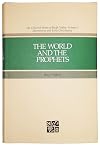
“As surely as the words of a prophet are written down in books, they become the object of specialist study. Once the true prophet has been duly rejected and passed to his reward, swarms of experts descend upon his words to begin the learned business of exegesis. The words of the dead prophets become the peculiar possession of armies of specially trained and carefully conditioned scholars. In a very old text, Peter is reported as saying in a letter to James regarding the use of his own show more writings in the church: “They think they are able to interpret my own words better than I can, telling their hearers that they are conveying my very thoughts to them, while the fact is that such things never entered my mind. If they take such outrageous liberties while I am alive, what will they do after I am gone!”’* Much later, Clement of Alexandria expressed much the same sentiment.* You see the point: The scholar and learned divine must necessarily get their knowledge from the written word, and then trouble begins. The prophet, on the other hand, who may well be illiterate, gets his knowledge by direct intercourse with heaven. The orientation of the two is entirely different.”
(The World and the Prophets, Hugh Nibley, 1987, page 28) show less
(The World and the Prophets, Hugh Nibley, 1987, page 28) show less
This series of radio broadcasts from the 50's is Nibley at his most accessible. Don't miss The Prophets and Glad Tidings near the end which utterly changed my life 30 years ago and which I still cannot reread without developing a lump in my throat. Men are that they might have joy!

For some, evidence of God’s existence is based solely on prayers and faith. And while those are requisite elements, scriptures also play an essential part in one’s journey toward a better understanding of their relationship to Deity.
But for some, deep research is necessary- an added-upon element that helps fill in the blanks their inquiring minds require. And for that latter group, scholar Hugh Nibley offers the deep theological dive.
Scripture in the Christian world- up until 1830 AD- show more consisted of the Old and New Testaments, as found in the Bible. But with publication of The Book of Mormon, by The Church of Jesus of Christ of Latter-day Saints (the LDS Church), in March of 1830, a new set of scriptures- considered to be “Another Testament of Jesus Christ”- was now available.
Other works considered by the LDS Church to be divinely inspired then followed; one of those, published in 1880, is The Book of Abraham. Translated from a papyrus, the book is an autobiography of the patriarch Abraham. In it, Abraham speaks of his desires to obtain the priesthood he was entitled to receive, by virtue of the patriarchal order in his lineage.
Later, after being persecuted by corrupt priests (and rescued by Jehovah), Abraham escapes to Canaan. Jehovah appears and promises Abraham that through him, his descendants will receive all blessings promised by obedience to the Gospel. Abraham also has revealed to him the creation of the earth, as well as the pre-earth life, foreordination, the choosing of a Redeemer, and the eternal nature of man.
As with other books the LDS Church considers to be scripture from God, critics have attacked The Book of Abraham specifically as being nothing more than “ordinary vignettes from the Egyptian Book of the Dead, and therefore could have nothing whatever to do with Abraham,” in the words of Hugh Nibley, author of “Abraham In Egypt.”
In his book, Nibley uses several methods to buttress the veracity of The Book of Abraham. He does a side-by-side comparison of it to other ancient documents such as “The Apocalypse of Abraham,” “With the Testament of Abraham,” and “The Books of the Dead.” He examines the traditions, rituals and culture of the world Abraham lived in, using them as evidence pointing to the book's authenticity.
And all along the way, Nibley returns to the fact that there are details in The Book of Abraham not found in the Old Testament. That being so, he asks, why is it that those same details appear all over the place in the two documents he compares to The Book of Abraham?
“Abraham In Egypt” is an indispensable guide for anyone desiring a fuller understanding of the tumultuous world Abraham lived in, as well as a realization that there is much more information available about Abraham now than ever before.
Nibley’s examination of The Book of Abraham may even leave readers questioning previous assumptions they may have had about what constitutes scripture, in this day and age. show less
But for some, deep research is necessary- an added-upon element that helps fill in the blanks their inquiring minds require. And for that latter group, scholar Hugh Nibley offers the deep theological dive.
Scripture in the Christian world- up until 1830 AD- show more consisted of the Old and New Testaments, as found in the Bible. But with publication of The Book of Mormon, by The Church of Jesus of Christ of Latter-day Saints (the LDS Church), in March of 1830, a new set of scriptures- considered to be “Another Testament of Jesus Christ”- was now available.
Other works considered by the LDS Church to be divinely inspired then followed; one of those, published in 1880, is The Book of Abraham. Translated from a papyrus, the book is an autobiography of the patriarch Abraham. In it, Abraham speaks of his desires to obtain the priesthood he was entitled to receive, by virtue of the patriarchal order in his lineage.
Later, after being persecuted by corrupt priests (and rescued by Jehovah), Abraham escapes to Canaan. Jehovah appears and promises Abraham that through him, his descendants will receive all blessings promised by obedience to the Gospel. Abraham also has revealed to him the creation of the earth, as well as the pre-earth life, foreordination, the choosing of a Redeemer, and the eternal nature of man.
As with other books the LDS Church considers to be scripture from God, critics have attacked The Book of Abraham specifically as being nothing more than “ordinary vignettes from the Egyptian Book of the Dead, and therefore could have nothing whatever to do with Abraham,” in the words of Hugh Nibley, author of “Abraham In Egypt.”
In his book, Nibley uses several methods to buttress the veracity of The Book of Abraham. He does a side-by-side comparison of it to other ancient documents such as “The Apocalypse of Abraham,” “With the Testament of Abraham,” and “The Books of the Dead.” He examines the traditions, rituals and culture of the world Abraham lived in, using them as evidence pointing to the book's authenticity.
And all along the way, Nibley returns to the fact that there are details in The Book of Abraham not found in the Old Testament. That being so, he asks, why is it that those same details appear all over the place in the two documents he compares to The Book of Abraham?
“Abraham In Egypt” is an indispensable guide for anyone desiring a fuller understanding of the tumultuous world Abraham lived in, as well as a realization that there is much more information available about Abraham now than ever before.
Nibley’s examination of The Book of Abraham may even leave readers questioning previous assumptions they may have had about what constitutes scripture, in this day and age. show less
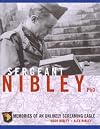
Since Nibley writes mostly about ancient civilizations, it was with great interest that I read about his own experiences. I enjoyed his detachment from emotional involvement, and his frank evaluations of a conflict that has probably had more written about it than any other conflict.
Lists
You May Also Like


Associated Authors
Statistics
- Works
- 77
- Also by
- 55
- Members
- 2,763
- Popularity
- #9,282
- Rating
- 4.2
- Reviews
- 16
- ISBNs
- 61
- Favorited
- 3