
Stephen D. Ricks
Author of Enoch the Prophet (Collected Works of Hugh Nibley, Vol 2)
About the Author
Series
Works by Stephen D. Ricks
Ancient State: The Rulers & the Ruled (Collected Works of Hugh Nibley: Vol.) (1991) — Editor — 72 copies, 1 review
The Allegory of the Olive Tree: The Olive, the Bible, and Jacob 5 (1994) — Editor; Introduction; Contributor — 53 copies, 2 reviews
By Study and Also by Faith: Essays in Honor of Hugh W. Nibley, Vol. 1 (1990) — Editor; Contributor — 49 copies
The Temple in Time & Eternity (Temples Through the Ages, No. 2) (1999) — Editor; Introduction; Contributor — 44 copies
King Benjamin's Speech: "That Ye May Learn Wisdom" (1998) — Editor; Introduction; Contributor — 37 copies
The Disciple As Scholar: Essays on Scripture and the Ancient World in Honor of Richard Lloyd Anderson (2000) — Editor; Introduction; Contributor — 25 copies
Revelation, Reason, and Faith: Essays in Honor of Truman G. Madsen (2002) — Editor; Contributor — 21 copies
The Disciple As Witness: Essays on Latter-Day Saint History and Doctrine in Honor of Richard Lloyd Anderson (2000) — Editor — 20 copies
The Dead Sea Scrolls: Questions and Responses for Latter-Day Saints (2000) — Author — 18 copies, 1 review
Journal of Book of Mormon Studies Fall 1992 Volume 1 Number 1 (1992) — Editor; Introduction — 8 copies
Journal of Book of Mormon Studies - Volume 6, Number 1 (1997) (1997) — Editor; Introduction — 6 copies
Current Research and Technological Developments on the Dead Sea Scrolls: Conference on the Texts from the Judean Desert, Jerusalem, 30 April 1995 (Studies on the Texts of the… (1996) — Editor — 6 copies
Journal of Book of Mormon Studies, Volume 2 Number 1, Spring 1993 (1993) — Editor; Introduction — 6 copies
Journal of Book of Mormon Studies, Volume 2 Number 2, Fall 1993 (1993) — Editor; Contributor — 6 copies
Journal of Book of Mormon Studies, Volume 5 Number 2, Fall 1996 (1996) — Editor; Contributor — 6 copies
Sacred Time, Sacred Space, & Sacred Meaning - The Temple on Mount Zion Series Vol. 4. (2020) — Editor — 6 copies
Journal of Book of Mormon Studies, Volume 3 Number 1, Spring 1994 (1994) — Editor; Introduction — 5 copies
Steadfast in the Defense of Faith — Essays in Honor of Daniel C. Peterson (2023) — Editor — 5 copies
Journal of Book of Mormon Studies Fall 1997 Volume 6 Number 2 (1997) — Editor; Introduction — 4 copies
A Bibliography on Temples of the Ancient Near East and Mediterranean World: Arranged by Subject and by Author (Ancient N (1991) — Author — 3 copies
The Temple Past, Present, & Future: Proceedings of the Fifth Interpreter Matthew B. Brown Memorial Conference “The Temple on Mount Zion” 7 November 2020 (2021) — Editor — 2 copies
Associated Works
Pressing Forward With the Book of Mormon: The Farms Updates of the 1990's (1999) — Contributor — 46 copies
Israel's Apostasy and Restoration: Essays in Honor of Roland K Harrison (1988) — Contributor — 32 copies
STUDIES IN SCRIPTURE : VOLUME TWO THE PEARL OF GREAT PRICE (Studies in Scripture, Volume 2) (1985) — Contributor — 19 copies
The Old Testament and the Latter-day Saints: The 14th Annual Sidney B. Sperry Symposium (1986) — Contributor — 15 copies
Ancient Scrolls from the Dead Sea: Photographs and Commentary on a Unique Collection of Scrolls (1997) — Contributor — 13 copies
Riches of Faith: The First Principle of the Gospel in the Lives of the Prophets and Saints (1995) — Contributor — 9 copies
By Our Rites of Worship: Latter-day Saint Views on Ritual in Scripture and Practice (2013) — Contributor — 9 copies
Temple Insights - Proceedings of the Interpreter Matthew B. Brown Memorial Conference - The Temple on Mount Zion Series 2 - September 2012 (2014) — Contributor — 8 copies
To All the World: The Book of Mormon Articles from the Encyclopedia of Mormonism (2000) — Contributor — 6 copies
By What Authority?: The Vital Questions of Religious Authority in Christianity (2010) — Contributor — 5 copies
Judaism and Islam : boundaries, communication, and interaction : essays in honor of William M. Brinner (2000) — Contributor — 3 copies
Perspectives on Latter-day Saint Names and Naming: Names, Identity, and Belief (2023) — Contributor — 2 copies
The Eleventh Annual Sidney B. Sperry Symposium: The New Testament, January 29, 1983 (1982) — Contributor — 1 copy
Tagged
Common Knowledge
- Legal name
- Ricks, Stephen David
- Gender
- male
- Education
- University of California, Berkeley (PhD|Near Eastren Religions)
Graduate Theological Union - Occupations
- Professor of Hebrew and Semitic Languages (Brigham Young University)
Associate Dean of General and Honors Education (Brigham Young University) - Organizations
- The Church of Jesus Christ of Latter-day Saints
Brigham Young University
Foundation for Ancient Research and Mormon Studies - Places of residence
- Provo, Utah, USA
- Associated Place (for map)
- Utah, USA
Members
Reviews

Pretty useful reference for a pretty well-documented ancient South Arabian dialect/script.
For speakers of Arabic, a large number of the roots will be readily recognizable.
I wish grammatical description was more readily available in Qatabanian, though. For instance, it seems accidental in these citation forms whether nouns have an '-m' suffix or not.
This lexicon would not be much use without Beeston's (1962) grammar, which is not so easy to get, and plenty of supplemental articles to get an show more understanding of the morphology. In my opinion, the lexicographic representation of Semitic languages (epigraphic or not) almost intentionally makes these kinds of details difficult to grasp. show less
For speakers of Arabic, a large number of the roots will be readily recognizable.
I wish grammatical description was more readily available in Qatabanian, though. For instance, it seems accidental in these citation forms whether nouns have an '-m' suffix or not.
This lexicon would not be much use without Beeston's (1962) grammar, which is not so easy to get, and plenty of supplemental articles to get an show more understanding of the morphology. In my opinion, the lexicographic representation of Semitic languages (epigraphic or not) almost intentionally makes these kinds of details difficult to grasp. show less
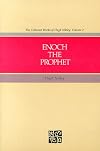
. Nibley delves into studies of apocryphal writings discovered in the last centuries....the Dead Sea Scrolls, the Pyramid Texts, Books of Abraham, and many, many more to compare and discover the Book of Enoch. Enoch lived at the time of Noah of the Great Flood.. There are hundreds of manuscripts found in a dozen different languages. Nibley arranges these in a readable text with side by side comparison to Biblical and other scripture. What you discover is totally awesome whether you see it as show more fantasy or reality, fiction or religious actuality. Any way you take it gives numerous ideas to ponder and contemplate about our world now as well as what we already believe from Bible stories.
Much of the beginning is spent proving the validity of the resources. Then the text is lined up in columns to compare with modern scripture, including the Christian Bible and the LDS Pearl of Great Price to study the book of Enoch. Books of Enoch depicting the story of the great world flood, commonly known in our sphere as the flood of Noah have been uncovered in numerous and different parts of the world, It is a given that some of these stories may have been embellished or portrayed with different details, but there are so many similarities and parallels that it is extremely interesting. Nibley has done an incredible job researching and organizing all this information. The text is easy to read, always intriguing and fascinating. You read about Noah's flood and the evil that brought it about, the ascension of Enoch to heaven, Abraham's sacrifice of Isaac, and find information that you've never imagined. Reading the book is akin to doing a research. What is here is presented for your own consideration. The amazing part is that all of it has been brought to light by discovery of apocryphal writings throughout the last centuries. To quote Dr. Nibley:
"We have been told that if we stop seeking, we shall not only find no more but lose the treasures we already have. That is why it is not only advisablie but urgent that we begin at last to pay attention to that astonishing outpouring of ancient writings that is the peculiar blessing of our generation. Among these writings, the first and most important is the book of Enoch."
I am very impressed with all the knowledge captured in Hugh Nibley's research.We must admire him for accomplishing such a monumental task of research and comparison to available scripture today It is presented in an easy to read format, although he never 'dumbs down' for his readers and seems to expect them to put forth an effort into actually studying his books. What you will discover will be well worth the effort. show less
Much of the beginning is spent proving the validity of the resources. Then the text is lined up in columns to compare with modern scripture, including the Christian Bible and the LDS Pearl of Great Price to study the book of Enoch. Books of Enoch depicting the story of the great world flood, commonly known in our sphere as the flood of Noah have been uncovered in numerous and different parts of the world, It is a given that some of these stories may have been embellished or portrayed with different details, but there are so many similarities and parallels that it is extremely interesting. Nibley has done an incredible job researching and organizing all this information. The text is easy to read, always intriguing and fascinating. You read about Noah's flood and the evil that brought it about, the ascension of Enoch to heaven, Abraham's sacrifice of Isaac, and find information that you've never imagined. Reading the book is akin to doing a research. What is here is presented for your own consideration. The amazing part is that all of it has been brought to light by discovery of apocryphal writings throughout the last centuries. To quote Dr. Nibley:
"We have been told that if we stop seeking, we shall not only find no more but lose the treasures we already have. That is why it is not only advisablie but urgent that we begin at last to pay attention to that astonishing outpouring of ancient writings that is the peculiar blessing of our generation. Among these writings, the first and most important is the book of Enoch."
I am very impressed with all the knowledge captured in Hugh Nibley's research.We must admire him for accomplishing such a monumental task of research and comparison to available scripture today It is presented in an easy to read format, although he never 'dumbs down' for his readers and seems to expect them to put forth an effort into actually studying his books. What you will discover will be well worth the effort. show less

I had no idea there were so many perspectives about one chapter in the Book of Mormon.
I had no idea that the olive tree is mentioned in so many other places in the scriptures.
This book greatly broadened my perspective about Jacob chapter 5.
"Joseph Smith explained the way to understand parables and allegories: “I have a key by which I understand the scriptures. I enquire, what was the question which drew out the answer?”Jacob poses two key questions in his introduction to the allegory, show more which provide some clues to its meaning. First, Jacob asks: “Why not speak of the atonement of Christ, and attain to a perfect knowledge of him?” (Jacob 4:12). Jacob then points to the Jews’ deliberate efforts to distance God and render him incomprehensible: they sought to create a God who could not be understood (Jacob 4:14). For their self-inflicted blindness God took away “his plainness from them … because they desired it” (Jacob 4:14). Here Jacob asks the second key question: “My beloved, how is it possible that these [the Jews], after having rejected the sure foundation, can ever build upon it, that it may become the head of their corner? Behold, my beloved brethren, I will unfold this mystery unto you” (Jacob 4:17–18). Among other meanings, a mystery is a spiritual truth grasped only through divine revelation. The mystery that Jacob unfolds, therefore, counters the Jews’ deliberate mystification of God and reveals the true nature of Jesus Christ and his divine activity in the lives of even the most intractable of men. Jacob’s two key questions alert the reader that the allegory will deal with grace, atonement, and their relationship to Israel." (Page 11)
"The word atonement first appears in William Tyndale’s 1526 English version of the Bible. He used the word at-one-ment to translate the Greek word for reconciliation (katalagē) (Romans 5:11).æ (Page 11)
Chapter 3 shows Zenos to have been a familiar prophet to Lehi, Nephi, Isaiah, Abinadi, and Jacob. To a lesser extent: Benjamin, Alma, Samuel, Mormon and Moroni.
Chapter 4 - A very interesting analysis of the use of this parable in the early days of the restored church.
Chapter 7
"For example, it is sometimes said that the rhetoric of the Authorized (King James) Version of the Bible is finer than that of the originals from which it is translated. Joseph Smith thought the Luther translation superior to the Authorized Version. 2 The sixteenth-century Swedish translation of the Bible is inferior to the Authorized Version. Granted our belief in continuing revelation, we should not confuse language differences in the details of translation with the nineteenth-century doctrine of evolution, certainly not in the sense that things get better and better. A sinful community debases its language, a virtuous community improves it; and English in our time is debased."
Here is the theme of chapter 7
"But enough has been said, I think, to illustrate how packed and rich the Book of Mormon is. It is a quality that cannot be properly appreciated unless the book is read aloud and listened to. We no longer in our culture read slowly, accurately, or aloud to the soul; we skim. We do little repeated reading. We do not read for an experience, let alone for understanding, so much as to read for immediate “comprehension.” If we read aloud, and even more likely if we hear something read aloud, we take it as an experience. If we do analyze, and we must analyze, it must be to have a better whole from the parts after we have completed the analysis. Analysis has no value in itself. It has value insofar as it contributes toward the soul’s being able to experience and understand the whole better in the end." (Page 171)
"The significance of two well-known titles of Jesus—Christ and Messiah—is instructive. Messiah is a transliteration of the Hebrew māshîaḥ, a term meaning “anointed one.” Similarly, Christ is a transliteration of the Greek christós, which also denotes “anointed one.”" (Page 281)
Chapter 11
"It is evident from the biblical writings that both animate objects (priests, prophets, and kings) and inanimate objects (vessels and instruments belonging to the temple) were anointed with olive oil as part of an Israelite religious ritual. The religious symbolism of the anointing rite had four parts. (1) The anointing rite served to sanctify and set apart an object or person for divine service. (2) The anointing was part of a “gesture of approach” rite that qualified the anointed person to approach sacred space. (3) Olive oil, the material utilized in the anointing ritual, signified the Holy Ghost. Those who received the anointing were sanctified through the agency of the Holy Ghost, enabling them to enter the presence of Deity. (4) Anointed priests, prophets, and kings were types or shadows of Jesus Christ, who is the Anointed One. Their anointing echoed the anointing of the Messiah. Certainly the anointing ritual was Christ centered. Metaphorically, Jesus is the “Horn of Salvation” (Luke 1:69), a reference to the horn of oil that is poured upon recipients of the anointing (1 Samuel 16:1; 1 Kings 1:39, 45)." (Page 283)
Chapter 13 - The English translation (in volume 2 of The Old Testament Pseudepigrapha) that this discusses has lots of old testament references in the margin on what looks like every page. This chapter deals a lot with anointing and many references to Pseudo-Philo and other pseudepigrapha.
Chapter 19
"... ‘I have two goodly shoots to engraft [...] on you: Ruth the Moabitess and Naamah the Ammonitess.’” Both of these women belonged to idolatrous nations and were grafted upon the stock of Israel. The former was the ancestress of David and the latter the mother of Rehoboam and his distinguished descendants Asa, Jehoshaphat, and Hezekiah." (Page 469)
Chapter 21 goes into detail about cultivation of olive trees.
"Some evidence indicates that by 3100 B.C., five fruits had been domesticated: olive, grape, date, fig, and pomegranate." (Page 487)
"In this single chapter of the Book of Mormon there are many detailed horticultural practices and procedures that were not likely known by an untrained person, and may not have been fully appreciated by professional botanists or horticulturalists at the time the Book of Mormon was translated. Even today, outside of olive-growing areas, professional horticulturalists may not fully appreciate some of the unique aspects of olive culture. Given the extensive detail about olive culture present in Jacob 5, we must give Zenos much credit for a high degree of horticultural knowledge, which many take for granted." (Page 552)
Contents
Introduction, Stephen D. Ricks and John W. Welch
Part 1: The Meaning of Zenos’s Allegory of the Olive Tree
1. The Olive Press: A Symbol of Christ, Truman G. Madsen
2. Jacob’s Allegory: The Mystery of Christ, M. Catherine Thomas
3. Nephite Uses and Interpretations of Zenos, Noel B. Reynolds
4. Jacob 5 in the Nineteenth Century, Grant Underwood
5. The Allegory of the Olive Tree in Jacob, Paul Y. Hoskisson
Part 2: Textual Analyses of Zenos’s Allegory of the Olive Tree
6. Jacob 4–6: Substantive Textual Variants between Manuscripts and Editions, Royal Skousen
7. Language Themes in Jacob 5: “The Vineyard of the Lord of hosts is the house of Israel” (Isaiah 5:7), Arthur Henry King
8. Words and Phrases in Jacob 5, John W. Welch
9. Graft and Corruption: On Olives and Olive Culture in the Pre-Modern Mediterranean, John Gee and Daniel C. Peterson
Part 3: Ancient Historical And Religious Backgrounds to the Symbolism of the Olive
10. The Olive in Greco-Roman Religion, John Franklin Hall
11. Ritual Anointing with Olive Oil in Ancient Israelite Religion, Donald W. Parry
12. The Allegory of the Olive Tree and the Use of Related Figurative Language in the Ancient Near East and the Old Testament, David Rolph Seely
Part 4: The Olive in Early Jewish and Christian Texts
13. The Last Words of Cenez and the Book of Mormon, John W. Welch
14. Zenos and the Texts of the Old Testament, David Rolph Seely and John W. Welch
15. The Olive Tree and the Work of God: Jacob 5 and Romans 11, James E. Faulconer
16. Romans 11:17–24: A Bibliography of Commentaries, Gary P. Gillum
17. Borrowings from the Parable of Zenos, John A. Tvedtnes
18. Olive Oil: Symbol of the Holy Ghost, John A. Tvedtnes
19. Olive Culture in the Second Temple Era and Early Rabbinic Period, Stephen D. Ricks
Part 5: The Botany and Horticulture of Olives
20. Vineyard or Olive Orchard?, John A. Tvedtnes
21. Botanical Aspects of Olive Culture Relevant to Jacob 5, Wilford M. Hess and Daniel J. Fairbanks,, John W. Welch and Jonathan K. Driggs show less
I had no idea that the olive tree is mentioned in so many other places in the scriptures.
This book greatly broadened my perspective about Jacob chapter 5.
"Joseph Smith explained the way to understand parables and allegories: “I have a key by which I understand the scriptures. I enquire, what was the question which drew out the answer?”Jacob poses two key questions in his introduction to the allegory, show more which provide some clues to its meaning. First, Jacob asks: “Why not speak of the atonement of Christ, and attain to a perfect knowledge of him?” (Jacob 4:12). Jacob then points to the Jews’ deliberate efforts to distance God and render him incomprehensible: they sought to create a God who could not be understood (Jacob 4:14). For their self-inflicted blindness God took away “his plainness from them … because they desired it” (Jacob 4:14). Here Jacob asks the second key question: “My beloved, how is it possible that these [the Jews], after having rejected the sure foundation, can ever build upon it, that it may become the head of their corner? Behold, my beloved brethren, I will unfold this mystery unto you” (Jacob 4:17–18). Among other meanings, a mystery is a spiritual truth grasped only through divine revelation. The mystery that Jacob unfolds, therefore, counters the Jews’ deliberate mystification of God and reveals the true nature of Jesus Christ and his divine activity in the lives of even the most intractable of men. Jacob’s two key questions alert the reader that the allegory will deal with grace, atonement, and their relationship to Israel." (Page 11)
"The word atonement first appears in William Tyndale’s 1526 English version of the Bible. He used the word at-one-ment to translate the Greek word for reconciliation (katalagē) (Romans 5:11).æ (Page 11)
Chapter 3 shows Zenos to have been a familiar prophet to Lehi, Nephi, Isaiah, Abinadi, and Jacob. To a lesser extent: Benjamin, Alma, Samuel, Mormon and Moroni.
Chapter 4 - A very interesting analysis of the use of this parable in the early days of the restored church.
Chapter 7
"For example, it is sometimes said that the rhetoric of the Authorized (King James) Version of the Bible is finer than that of the originals from which it is translated. Joseph Smith thought the Luther translation superior to the Authorized Version. 2 The sixteenth-century Swedish translation of the Bible is inferior to the Authorized Version. Granted our belief in continuing revelation, we should not confuse language differences in the details of translation with the nineteenth-century doctrine of evolution, certainly not in the sense that things get better and better. A sinful community debases its language, a virtuous community improves it; and English in our time is debased."
Here is the theme of chapter 7
"But enough has been said, I think, to illustrate how packed and rich the Book of Mormon is. It is a quality that cannot be properly appreciated unless the book is read aloud and listened to. We no longer in our culture read slowly, accurately, or aloud to the soul; we skim. We do little repeated reading. We do not read for an experience, let alone for understanding, so much as to read for immediate “comprehension.” If we read aloud, and even more likely if we hear something read aloud, we take it as an experience. If we do analyze, and we must analyze, it must be to have a better whole from the parts after we have completed the analysis. Analysis has no value in itself. It has value insofar as it contributes toward the soul’s being able to experience and understand the whole better in the end." (Page 171)
"The significance of two well-known titles of Jesus—Christ and Messiah—is instructive. Messiah is a transliteration of the Hebrew māshîaḥ, a term meaning “anointed one.” Similarly, Christ is a transliteration of the Greek christós, which also denotes “anointed one.”" (Page 281)
Chapter 11
"It is evident from the biblical writings that both animate objects (priests, prophets, and kings) and inanimate objects (vessels and instruments belonging to the temple) were anointed with olive oil as part of an Israelite religious ritual. The religious symbolism of the anointing rite had four parts. (1) The anointing rite served to sanctify and set apart an object or person for divine service. (2) The anointing was part of a “gesture of approach” rite that qualified the anointed person to approach sacred space. (3) Olive oil, the material utilized in the anointing ritual, signified the Holy Ghost. Those who received the anointing were sanctified through the agency of the Holy Ghost, enabling them to enter the presence of Deity. (4) Anointed priests, prophets, and kings were types or shadows of Jesus Christ, who is the Anointed One. Their anointing echoed the anointing of the Messiah. Certainly the anointing ritual was Christ centered. Metaphorically, Jesus is the “Horn of Salvation” (Luke 1:69), a reference to the horn of oil that is poured upon recipients of the anointing (1 Samuel 16:1; 1 Kings 1:39, 45)." (Page 283)
Chapter 13 - The English translation (in volume 2 of The Old Testament Pseudepigrapha) that this discusses has lots of old testament references in the margin on what looks like every page. This chapter deals a lot with anointing and many references to Pseudo-Philo and other pseudepigrapha.
Chapter 19
"... ‘I have two goodly shoots to engraft [...] on you: Ruth the Moabitess and Naamah the Ammonitess.’” Both of these women belonged to idolatrous nations and were grafted upon the stock of Israel. The former was the ancestress of David and the latter the mother of Rehoboam and his distinguished descendants Asa, Jehoshaphat, and Hezekiah." (Page 469)
Chapter 21 goes into detail about cultivation of olive trees.
"Some evidence indicates that by 3100 B.C., five fruits had been domesticated: olive, grape, date, fig, and pomegranate." (Page 487)
"In this single chapter of the Book of Mormon there are many detailed horticultural practices and procedures that were not likely known by an untrained person, and may not have been fully appreciated by professional botanists or horticulturalists at the time the Book of Mormon was translated. Even today, outside of olive-growing areas, professional horticulturalists may not fully appreciate some of the unique aspects of olive culture. Given the extensive detail about olive culture present in Jacob 5, we must give Zenos much credit for a high degree of horticultural knowledge, which many take for granted." (Page 552)
Contents
Introduction, Stephen D. Ricks and John W. Welch
Part 1: The Meaning of Zenos’s Allegory of the Olive Tree
1. The Olive Press: A Symbol of Christ, Truman G. Madsen
2. Jacob’s Allegory: The Mystery of Christ, M. Catherine Thomas
3. Nephite Uses and Interpretations of Zenos, Noel B. Reynolds
4. Jacob 5 in the Nineteenth Century, Grant Underwood
5. The Allegory of the Olive Tree in Jacob, Paul Y. Hoskisson
Part 2: Textual Analyses of Zenos’s Allegory of the Olive Tree
6. Jacob 4–6: Substantive Textual Variants between Manuscripts and Editions, Royal Skousen
7. Language Themes in Jacob 5: “The Vineyard of the Lord of hosts is the house of Israel” (Isaiah 5:7), Arthur Henry King
8. Words and Phrases in Jacob 5, John W. Welch
9. Graft and Corruption: On Olives and Olive Culture in the Pre-Modern Mediterranean, John Gee and Daniel C. Peterson
Part 3: Ancient Historical And Religious Backgrounds to the Symbolism of the Olive
10. The Olive in Greco-Roman Religion, John Franklin Hall
11. Ritual Anointing with Olive Oil in Ancient Israelite Religion, Donald W. Parry
12. The Allegory of the Olive Tree and the Use of Related Figurative Language in the Ancient Near East and the Old Testament, David Rolph Seely
Part 4: The Olive in Early Jewish and Christian Texts
13. The Last Words of Cenez and the Book of Mormon, John W. Welch
14. Zenos and the Texts of the Old Testament, David Rolph Seely and John W. Welch
15. The Olive Tree and the Work of God: Jacob 5 and Romans 11, James E. Faulconer
16. Romans 11:17–24: A Bibliography of Commentaries, Gary P. Gillum
17. Borrowings from the Parable of Zenos, John A. Tvedtnes
18. Olive Oil: Symbol of the Holy Ghost, John A. Tvedtnes
19. Olive Culture in the Second Temple Era and Early Rabbinic Period, Stephen D. Ricks
Part 5: The Botany and Horticulture of Olives
20. Vineyard or Olive Orchard?, John A. Tvedtnes
21. Botanical Aspects of Olive Culture Relevant to Jacob 5, Wilford M. Hess and Daniel J. Fairbanks,, John W. Welch and Jonathan K. Driggs show less

"This volume of articles is based on papers presented at the Symposium on Warfare in the Book of Mormon, held 24–25 March 1989 at Brigham Young University..."
By my count, the 22 chapters in this book are written by 15 different authors.
A wide variety of topics related to warfare are covered. Much more than I supposed.
"Mormon begins his commentary in the aforementioned thirteen chapters [of the book of Alma] with a description of Korihor the anti-Christ and an encounter he had with Alma. show more The text clearly points to six propositions Korihor used in an attempt to dissuade Alma and others from their beliefs. Korihor argued that (1) religious doctrines and prophecies are foolish and unenlightened ancestors create superstitious traditions (see Alma 30:13–14, 28), (2) only evidence that the physical senses can confirm is valid (see Alma 30:15), (3) religious convictions result from a frenzied and deranged mind (see Alma 30:16, 28), (4) God does not intervene in life—we survive only by our own efforts (see Alma 30:17), (5) there is no such thing as a crime (see Alma 30:17–18), and (6) churches are instruments of bondage, slavery, and oppression (see Alma 30:27). These were not new arguments then, nor are they unfamiliar to those who live today. They are fundamental to a popular modern worldview." (Page 236; At the start of chapter 12)
We tend to think that the Book of Mormon has a lot about conflict between Lamanites versus the Nephites. However:
"The armed conflicts Mormon reports can be understood more clearly if this spiritual context is taken into account. This is particularly true when it is remembered that the actual leaders of the conflicts were, in the main, Nephites and dissident Nephites rather than Nephites and Lamanites." (Page 241)
"There are two primary ideological components identified in the book of Alma. First, traditional Nephite political and military policies presupposed the existence of God, personal accountability, and divine intervention. This is in accord with the vertical tradition. Second, a relativistic, agnostic philosophy became dominant among much of the educated intelligentsia, the policy-making portion of Nephite society. This is in accord with the horizontal tradition. Nehor popularized a version of this philosophy and sought to enforce his priestcraft with the sword (see Alma 1:12). Horizontal curricula designed by dissident Nephites were also major influences in the Lamanite educational system (see Mosiah 24:4–7). The burning of believers and their religious texts at Ammonihah may also demonstrate the presence of a horizontal mindset in the Nephite culture (see Alma 14:8). The conflicting assumptions of these two distinct ideological positions often found expression in internal and external armed conflict in the Nephite nation." (Page 242)
Chapter 18 The Bow and Arrow in the Book of Mormon - I found this analysis of various categories of weaponry, and of bow construction quite enlightening.
Table of Contents
Why Study Warfare in the Book of Mormon? By John W. Welch
Why Is So Much of the Book of Mormon Given Over to Military Accounts? By R. Douglas Phillips
Purpose of the War Chapters in the Book of Mormon By Richard Dilworth Rust
An Oath of Allegiance in the Book of Mormon By Terrence L. Szink
Law and War in the Book of Mormon By John W. Welch
"Holy War": The Sacral Ideology of War in the Book of Mormon and in the Ancient Near East - The Basic Pattern By Stephen D. Ricks
The Sons of Mosiah: Emissaries of Peace By John A. Tvedtnes
Warfare and the Book of Mormon By Hugh Nibley
The Gadianton Robbers as Guerrilla Warriors By Daniel C. Peterson
Notes on "Gadianton Masonry" By Daniel C. Peterson
Secret Combinations, Warfare, and Captive Sacrifice in Mesoamerica and the Book of Mormon By Bruce W. Warren
The Impact of Shifting Cultural Assumptions on the Military Policies Directing Armed Conflict Reported in the Book of Alma By Matthew M. F. Hilton, Neil J. Flinders
Nephite Captains and Armies By A. Brent Merrill
Book of Mormon Tribal Affiliation and Military Castes By John A. Tvedtnes
Swords in the Book of Mormon By William J. Hamblin, A. Brent Merrill
Scimitars, Cimeters! We Have Scimitars! Do We Need Another Cimeter? By Paul Y. Hoskisson
Notes on the Cimeter (Scimitar) in the Book of Mormon By William J. Hamblin, A. Brent Merrill
The Bow and Arrow in the Book of Mormon By William J. Hamblin
Armor in the Book of Mormon By William J. Hamblin
Fortifications in the Book of Mormon Account Compared with Mesoamerican Fortifications By John L. Sorenson
Seasonality of Warfare in the Book of Mormon and in Mesoamerica By John L. Sorenson
The Importance of Warfare in Book of Mormon Studies By William J. Hamblin show less
By my count, the 22 chapters in this book are written by 15 different authors.
A wide variety of topics related to warfare are covered. Much more than I supposed.
"Mormon begins his commentary in the aforementioned thirteen chapters [of the book of Alma] with a description of Korihor the anti-Christ and an encounter he had with Alma. show more The text clearly points to six propositions Korihor used in an attempt to dissuade Alma and others from their beliefs. Korihor argued that (1) religious doctrines and prophecies are foolish and unenlightened ancestors create superstitious traditions (see Alma 30:13–14, 28), (2) only evidence that the physical senses can confirm is valid (see Alma 30:15), (3) religious convictions result from a frenzied and deranged mind (see Alma 30:16, 28), (4) God does not intervene in life—we survive only by our own efforts (see Alma 30:17), (5) there is no such thing as a crime (see Alma 30:17–18), and (6) churches are instruments of bondage, slavery, and oppression (see Alma 30:27). These were not new arguments then, nor are they unfamiliar to those who live today. They are fundamental to a popular modern worldview." (Page 236; At the start of chapter 12)
We tend to think that the Book of Mormon has a lot about conflict between Lamanites versus the Nephites. However:
"The armed conflicts Mormon reports can be understood more clearly if this spiritual context is taken into account. This is particularly true when it is remembered that the actual leaders of the conflicts were, in the main, Nephites and dissident Nephites rather than Nephites and Lamanites." (Page 241)
"There are two primary ideological components identified in the book of Alma. First, traditional Nephite political and military policies presupposed the existence of God, personal accountability, and divine intervention. This is in accord with the vertical tradition. Second, a relativistic, agnostic philosophy became dominant among much of the educated intelligentsia, the policy-making portion of Nephite society. This is in accord with the horizontal tradition. Nehor popularized a version of this philosophy and sought to enforce his priestcraft with the sword (see Alma 1:12). Horizontal curricula designed by dissident Nephites were also major influences in the Lamanite educational system (see Mosiah 24:4–7). The burning of believers and their religious texts at Ammonihah may also demonstrate the presence of a horizontal mindset in the Nephite culture (see Alma 14:8). The conflicting assumptions of these two distinct ideological positions often found expression in internal and external armed conflict in the Nephite nation." (Page 242)
Chapter 18 The Bow and Arrow in the Book of Mormon - I found this analysis of various categories of weaponry, and of bow construction quite enlightening.
Table of Contents
Why Study Warfare in the Book of Mormon? By John W. Welch
Why Is So Much of the Book of Mormon Given Over to Military Accounts? By R. Douglas Phillips
Purpose of the War Chapters in the Book of Mormon By Richard Dilworth Rust
An Oath of Allegiance in the Book of Mormon By Terrence L. Szink
Law and War in the Book of Mormon By John W. Welch
"Holy War": The Sacral Ideology of War in the Book of Mormon and in the Ancient Near East - The Basic Pattern By Stephen D. Ricks
The Sons of Mosiah: Emissaries of Peace By John A. Tvedtnes
Warfare and the Book of Mormon By Hugh Nibley
The Gadianton Robbers as Guerrilla Warriors By Daniel C. Peterson
Notes on "Gadianton Masonry" By Daniel C. Peterson
Secret Combinations, Warfare, and Captive Sacrifice in Mesoamerica and the Book of Mormon By Bruce W. Warren
The Impact of Shifting Cultural Assumptions on the Military Policies Directing Armed Conflict Reported in the Book of Alma By Matthew M. F. Hilton, Neil J. Flinders
Nephite Captains and Armies By A. Brent Merrill
Book of Mormon Tribal Affiliation and Military Castes By John A. Tvedtnes
Swords in the Book of Mormon By William J. Hamblin, A. Brent Merrill
Scimitars, Cimeters! We Have Scimitars! Do We Need Another Cimeter? By Paul Y. Hoskisson
Notes on the Cimeter (Scimitar) in the Book of Mormon By William J. Hamblin, A. Brent Merrill
The Bow and Arrow in the Book of Mormon By William J. Hamblin
Armor in the Book of Mormon By William J. Hamblin
Fortifications in the Book of Mormon Account Compared with Mesoamerican Fortifications By John L. Sorenson
Seasonality of Warfare in the Book of Mormon and in Mesoamerica By John L. Sorenson
The Importance of Warfare in Book of Mormon Studies By William J. Hamblin show less
Lists
You May Also Like


Associated Authors
Statistics
- Works
- 45
- Also by
- 38
- Members
- 641
- Popularity
- #39,338
- Rating
- 4.2
- Reviews
- 8
- ISBNs
- 33