

Terryl L. Givens
Author of By the Hand of Mormon: The American Scripture that Launched a New World Religion
About the Author
Terryl L. Givens is Professor of Literature and Religion and James A. Bostwick Chair of English, University of Richmond. Some of his other books on Mormonism and American religious culture are By the Hand of the Mormon: The American Scripture that Launched a New World Religion, Paradox: A History show more of Mormon Culture, Parley P. Pratt: The Apostle Paul of Mormonism (with Matthew Grow), and The God Who Weeps: How Mormonism Makes Sense of Life (with Fiona Givens). show less
Image credit: Terryl Givens in 2018
Works by Terryl L. Givens
By the Hand of Mormon: The American Scripture that Launched a New World Religion (2002) 191 copies, 3 reviews
Wrestling the Angel: The Foundations of Mormon Thought: Cosmos, God, Humanity (2014) 60 copies, 2 reviews
Joseph Smith, Jr.: Reappraisals After Two Centuries (2008) — Editor; Introduction; Contributor — 27 copies
The Pearl of Greatest Price: Mormonism's Most Controversial Scripture (2019) — Author — 25 copies, 1 review
Stretching the Heavens: The Life of Eugene England and the Crisis of Modern Mormonism (2021) 19 copies, 1 review
The God Who Weeps 1 copy
Associated Works
Introduction to New and Alternative Religions in America [Five Volumes] (2006) — Contributor — 35 copies
The Worlds of Joseph Smith: A Bicentennial Conference at the Library of Congress (2006) — Contributor — 30 copies
Standing Apart: Mormon Historical Consciousness and the Concept of Apostasy (2014) — Epilogue — 15 copies
Mormons and Mormonism: An Introduction to an American World Religion (2001) — Contributor — 14 copies
To Be Learned is Good: Essays on Faith and Scholarship in Honor of Richard Lyman Bushman (2018) — Contributor — 10 copies
Schooling the Prophet: How the Book of Mormon Influenced Joseph Smith and the Early Restoration (2015) — Foreword — 6 copies
Yet to be Revealed: Open Questions in Latter-day Saint Theology (BYU Studies Quarterly, Vol. 60, No. 3, 2021) (2021) — Guest editor, some editions; Contributor; Introduction — 3 copies
Dead Wood and Rushing Water: Essays on Mormon Faith, Culture, and Family (2013) — Foreword — 3 copies
Dialogue: A Journal of Mormon Thought - Volume 33, Number 4 (Winter 2000) (2000) — Contributor — 2 copies
Dialogue: A Journal of Mormon Thought - Volume 34, Number 3&4 (Fall-Winter 2001) (2001) — Contributor — 1 copy
Element: The Journal for the Society for Mormon Philosophy and Theology - Vol. 7, No. 1 (Spring 2018) (2018) — Contributor — 1 copy
Dialogue: A Journal of Mormon Thought - Volume 51, Number 4 (Winter 2018) (2018) — Contributor — 1 copy
Tagged
Common Knowledge
- Legal name
- Givens, Terryl Lynn
- Birthdate
- 1957
- Gender
- male
- Education
- University of North Carolina at Chapel Hill (PhD - Comparative Literature)
University of North Carolina at Chapel Hill (MA - Comparative Literature)
Cornell University (graduate work|intellectual history)
Brigham Young University (BA) - Occupations
- professor (Literature and Religion)
- Organizations
- The Church of Jesus Christ of Latter-day Saints
Brigham Young University
Faith Matters Foundation
Neal A. Maxwell Institute (senior research fellow) - Awards and honors
- Distinguished Educator Award, University of Richmond (1997)
James A. Bostwick Chair of English, University of Richmond - Relationships
- Givens, Fiona (wife)
- Nationality
- USA
- Birthplace
- New York, USA
- Associated Place (for map)
- New York, USA
Members
Reviews
Stretching the Heavens: The Life of Eugene England and the Crisis of Modern Mormonism by Terryl L. Givens
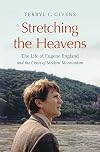
This book starts with a very nice statement about Eugene England. His biographer, Terryl Givens, writes that England was "known to thousands of friends and colleagues and students as 'the most Christ-like man I knew'" (p. 1). What a remarkable claim! I don’t know who exactly Givens is quoting here, but it reminds me of Lavina Fielding Anderson calling LDS historian Leonard Arrington "quite possibly the best human being of his generation".
Later on, Givens says: "One word more than any show more other characterizes [England's] aspirational energies to build consensus and cooperation: dialogue" (p. 63). It’s hard to know how much work the word "aspirational" is doing here. A student is quoted as saying that in the Englands’ home there "was an energy of wanting to know what you thought, what your feelings were, what your struggles were . . ." In 1980 when I was a high school senior, I was one of a couple dozen BYU scholarship candidates who were shepherded from our temporary lodgings in Deseret Towers to the Englands' Provo home where we listened to England argue against the Church’s traditional understanding of plural marriage. It’s been quite a while, and I was kind of in a daze at the time, but I don’t recall there being much opportunity to disagree with England that night. Clearer in my memory is a fireside talk England gave in my Salt Lake ward in 1991 in the run-up to the First Gulf War. I thought England’s talk was baldly political and inappropriate for the setting. Those of us who disagreed with England were not given equal time to rebut his arguments. I ended up sending him a letter outlining my disagreements. I never heard back from him.
On page 165 of this book, Gene Kovalenko says of England: "I’ve never seen him angry." That might be true, but Givens certainly portrays England as angry quite a lot. As one of many examples, on page 228 Givens describes how England rose "in dramatic outrage" and "declared in a fury" how unhappy he was with the Strengthening Church Members Committee.
Then on page 183, LDS historian Philip Barlow is quoted to the effect that England "never had a thought he didn’t write about". That's pretty close to the classic backhanded compliment: "He never had an unexpressed thought." Was that intentional?
Although it was commissioned by England’s widow (and in spite of its words of praise for England that I’ve quoted so far), this biography would properly be described as warts-and-all. Among other things, Givens accuses England again and again of the most extraordinary cluelessness. Because of this, even England’s strongest detractor is likely to be feeling some sympathy for him by the time they reach the end of the book.
As I checked the notes I jotted down while reading this biography, I was a little surprised to see that I seemed to have taken issue with Givens more than I had with England himself. Unlike England, Givens seems to understand the maxim "Never let them see you sweat", and Givens' cool academic demeanor and relative detachedness may be a partial explanation for the fact that he seems to be much more appreciated by Church leaders than England was.
It seems to me that when promoting his own controversial opinions, Givens tends to quote a few people who agree with him and none that disagree with him and leave it at that. In this book, he has plenty of endnotes to tell us precisely which page of England’s journal is being referred to, but not many to justify his own broad claims. On page 45, Givens says that "Joseph Smith bridled at orthodoxy tests" and presents a quote from Joseph to that effect, but Givens doesn’t place that statement in the context that he must know exists. There’s nothing about the many disciplinary actions that Joseph took, and certainly no mention that Joseph said that those who disliked being corrected by him when they "erred in doctrine" would need to "lump it". Givens should be given credit for not hiding the fact that in 1973 England wrote: "I am convinced that ecclesiastically the Church is doing what the Lord has directed" in regard to the priesthood ban (p. 88). But it’s too bad that neither here nor elsewhere in his writings does Givens seem willing to address David O. McKay’s relevant revelatory claims, which seem to back England up.
There are typos, some of which make me think that the proofreader was not LDS: "College of San Matteo" (p. 65), "Steward Udall" (p. 80), "seminar and institute staffing" (p. 101), "one who’s opinion and influence" (p. 129), "Deseret Books" (p. 167), "Armando Calladares" (p. 176), "Smith’s polygeny" (p. 281), and "Bryan Watterman" (p. 316).
Finally, some miscellaneous comments on what Givens wrote:
1. On page 27: "In 1954, sixty countries hosted LDS missionaries, with Fiji and South Korea added to the mix the year England departed." I actually spent some time trying to figure out why Merry Old England stopped accepting LDS missionaries!
2. On page 31: "Charlotte spotted a rat of alarming size on the refuse heap outside." Was this an intentional allusion to the "rodents of unusual size" in The Princess Bride?
3. On page 48: "Talmage . . . studied at . . . Wesleyan". Is "at" right? His degree from Wesleyan was for nonresident work.
4. On page 63: "Latter-day Saint theology . . . espoused the eventual deification of virtually all human beings". That’s quite a strong statement, and there are no supporting arguments or endnotes presented here.
5. On page 98: "A Latter-day Saint congregation’s most important executive . . . is the 'executive secretary'." Maybe I don’t understand what an executive is. In an LDS ward, an executive secretary is a secretary who keeps the appointment calendar for the members of the bishopric.
6. On page 107: "Marion D. Hanks . .. resigned from the board [of trustees] in frustration" because of what happened at a 1975 meeting. But Elder Hanks was sustained as a member of the "board of education" in General Conference in 1975 and again in 1976. Are these different boards?
7. On page 168: Elder Packer’s 1981 talk "was fuel for the fire already raging . . . Elder Ezra Taft Benson had given a 1985 talk decrying . . ." The chronology seems not to make sense.
8. On page 169: "Quinn’s words were a journalist’s dream, and the Newsweek religion writers (and famous anti-Mormons) Jerald and Sandra Tanner were quick to capitalize." Unless the Tanners replaced Kenneth Woodward as the Newsweek religion writers, the parenthesis marks seem out of position.
9. On page 220: "It is from the warp and woof of all learning . . ." This is the start of a long quote from Orson F. Whitney that had already been quoted verbatim on page 143.
10. On page 276: ". . . less than 1 percent [of earth’s population] are committed Latter-day Saints". So there are no more than 77 million committed Latter-day Saints? That’s not a really tight bound! show less
Later on, Givens says: "One word more than any show more other characterizes [England's] aspirational energies to build consensus and cooperation: dialogue" (p. 63). It’s hard to know how much work the word "aspirational" is doing here. A student is quoted as saying that in the Englands’ home there "was an energy of wanting to know what you thought, what your feelings were, what your struggles were . . ." In 1980 when I was a high school senior, I was one of a couple dozen BYU scholarship candidates who were shepherded from our temporary lodgings in Deseret Towers to the Englands' Provo home where we listened to England argue against the Church’s traditional understanding of plural marriage. It’s been quite a while, and I was kind of in a daze at the time, but I don’t recall there being much opportunity to disagree with England that night. Clearer in my memory is a fireside talk England gave in my Salt Lake ward in 1991 in the run-up to the First Gulf War. I thought England’s talk was baldly political and inappropriate for the setting. Those of us who disagreed with England were not given equal time to rebut his arguments. I ended up sending him a letter outlining my disagreements. I never heard back from him.
On page 165 of this book, Gene Kovalenko says of England: "I’ve never seen him angry." That might be true, but Givens certainly portrays England as angry quite a lot. As one of many examples, on page 228 Givens describes how England rose "in dramatic outrage" and "declared in a fury" how unhappy he was with the Strengthening Church Members Committee.
Then on page 183, LDS historian Philip Barlow is quoted to the effect that England "never had a thought he didn’t write about". That's pretty close to the classic backhanded compliment: "He never had an unexpressed thought." Was that intentional?
Although it was commissioned by England’s widow (and in spite of its words of praise for England that I’ve quoted so far), this biography would properly be described as warts-and-all. Among other things, Givens accuses England again and again of the most extraordinary cluelessness. Because of this, even England’s strongest detractor is likely to be feeling some sympathy for him by the time they reach the end of the book.
As I checked the notes I jotted down while reading this biography, I was a little surprised to see that I seemed to have taken issue with Givens more than I had with England himself. Unlike England, Givens seems to understand the maxim "Never let them see you sweat", and Givens' cool academic demeanor and relative detachedness may be a partial explanation for the fact that he seems to be much more appreciated by Church leaders than England was.
It seems to me that when promoting his own controversial opinions, Givens tends to quote a few people who agree with him and none that disagree with him and leave it at that. In this book, he has plenty of endnotes to tell us precisely which page of England’s journal is being referred to, but not many to justify his own broad claims. On page 45, Givens says that "Joseph Smith bridled at orthodoxy tests" and presents a quote from Joseph to that effect, but Givens doesn’t place that statement in the context that he must know exists. There’s nothing about the many disciplinary actions that Joseph took, and certainly no mention that Joseph said that those who disliked being corrected by him when they "erred in doctrine" would need to "lump it". Givens should be given credit for not hiding the fact that in 1973 England wrote: "I am convinced that ecclesiastically the Church is doing what the Lord has directed" in regard to the priesthood ban (p. 88). But it’s too bad that neither here nor elsewhere in his writings does Givens seem willing to address David O. McKay’s relevant revelatory claims, which seem to back England up.
There are typos, some of which make me think that the proofreader was not LDS: "College of San Matteo" (p. 65), "Steward Udall" (p. 80), "seminar and institute staffing" (p. 101), "one who’s opinion and influence" (p. 129), "Deseret Books" (p. 167), "Armando Calladares" (p. 176), "Smith’s polygeny" (p. 281), and "Bryan Watterman" (p. 316).
Finally, some miscellaneous comments on what Givens wrote:
1. On page 27: "In 1954, sixty countries hosted LDS missionaries, with Fiji and South Korea added to the mix the year England departed." I actually spent some time trying to figure out why Merry Old England stopped accepting LDS missionaries!
2. On page 31: "Charlotte spotted a rat of alarming size on the refuse heap outside." Was this an intentional allusion to the "rodents of unusual size" in The Princess Bride?
3. On page 48: "Talmage . . . studied at . . . Wesleyan". Is "at" right? His degree from Wesleyan was for nonresident work.
4. On page 63: "Latter-day Saint theology . . . espoused the eventual deification of virtually all human beings". That’s quite a strong statement, and there are no supporting arguments or endnotes presented here.
5. On page 98: "A Latter-day Saint congregation’s most important executive . . . is the 'executive secretary'." Maybe I don’t understand what an executive is. In an LDS ward, an executive secretary is a secretary who keeps the appointment calendar for the members of the bishopric.
6. On page 107: "Marion D. Hanks . .. resigned from the board [of trustees] in frustration" because of what happened at a 1975 meeting. But Elder Hanks was sustained as a member of the "board of education" in General Conference in 1975 and again in 1976. Are these different boards?
7. On page 168: Elder Packer’s 1981 talk "was fuel for the fire already raging . . . Elder Ezra Taft Benson had given a 1985 talk decrying . . ." The chronology seems not to make sense.
8. On page 169: "Quinn’s words were a journalist’s dream, and the Newsweek religion writers (and famous anti-Mormons) Jerald and Sandra Tanner were quick to capitalize." Unless the Tanners replaced Kenneth Woodward as the Newsweek religion writers, the parenthesis marks seem out of position.
9. On page 220: "It is from the warp and woof of all learning . . ." This is the start of a long quote from Orson F. Whitney that had already been quoted verbatim on page 143.
10. On page 276: ". . . less than 1 percent [of earth’s population] are committed Latter-day Saints". So there are no more than 77 million committed Latter-day Saints? That’s not a really tight bound! show less
"We are straining at particles of light in the midst of great darkness." --Keats.
This is hands-down the best book from Deseret Book that I've ever read. I read the Givenses' book (even though Goodreads credits only Terryl, it should also mention his co-writer, Fiona; thus "the Givenses") in conjunction with Lars Svendsen's A Philosophy of Evil, which latter book begins with a 76-page take-down of six major theodicies. Svendsen's main complaint w/r/t all theodicies is this: if God created show more this universe with evil in it, then He is morally responsible for all the evil in the world. In other words: God is manifestly not good. And yet, Svendsen, even if he does believe in good and evil, doesn't believe in God. (Set aside, for a moment, the a priori impossibility of an atheist finding an intellectually satisfying theodicy.) For Svendsen the problem of evil in the world comes down to this: we must fight it. We must fight evil both in ourselves and in the world. Showing how to fight that fight makes Svendsen's book a balm for the secular (as well as the believer) soul. All of which is wonderful and good.
But the question remains the believer, someone like me: Is God morally responsible for all the evil in the world? And if so, how can He/She/It claim to be benevolent and good? Enter: The God Who Weeps.
For starters, the Givenses believe that good and evil are qualities inherent in any human free agent; i.e., because we can choose *between* good and evil, we therefore can choose *to be* good or evil. Well enough. But, says Svendsen, if God, being good, recognized this fact, wouldn't He/She/It have been better off simply not creating the world? Hard to answer that question, really, conclusively, seriously, given its necessarily moot nature. (In other words, if you believe that God is good, then the fact of this world that manifestly exists is answer to the question of whether it would have been better to have left creation uncreated.) Even still, the question makes good logical sense only if one presupposes that all suffering is meaningless and bad.
Thus, if suffering is evil, and evil is bad, then suffering is bad. That's just good old fashioned syllogistic sense. But what if suffering isn't evil? According to Svendsen, evil (on a continuum, natch) is defined as anything or -one that/who does violence to a human's dignity. It's a commonplace, then, to understand that to cause a person to suffer is to do evil to that person. And there are many ways to cause suffering. One specific way is to torture. And one specific kind of torture that's seen as especially cruel and unusual is to cause someone to undergo extensive and complete isolation.
It's a fact that you never feel so alone as when you're suffering, when you're in terrible and excruciating pain. All you can sense and see and hear is pain, when it's chronic and acute. Your suffering isolates you because you can't share it in any meaningful way without causing suffering to the soul who's seeking to share it with you. And how exactly do you "share" your suffering? In fact, "sharing" suffering looks, in practice, awfully similar to the phenomenon of redirecting aggression (the natural and scientifically proven phenomenon whereby an animal, human or non-, reduces its suffering by inflicting similar suffering on another animal; call it the "kick the dog after a bad day" phenomenon). Thus if God created a world where suffering is not only possible but all but certain, and that the *only* way of ameliorating said suffering is to cause more suffering, then God, if He/She/It exists, must be cruel, right?
But there's another way to ameliorate suffering. It might not be an easy way, but it's both durable and complete. For starters, I don't believe suffering to be bad, and neither do the Givenses (you might reasonably -- and correctly! -- infer from the title of their book), and, it appears, neither does God.
Here's why: Suffering ennobles and expands those souls who use their suffering as a window of empathy into the souls of those who also suffer. The window goes both ways, too. In other words, and leaping logically ahead, those who survive their own suffering, and who therefore trust in their ability to survive all suffering, even unto death, are willing and able to take on or bear the suffering of others. They thereby decrease their own and the other's loneliness in suffering, and thereby decrease the effects of that suffering.
This, in sum, albeit far less eloquently expressed than the Givenses in their marvelous book have expressed it (so read the damn book!), is what God does for us. Because he is willing to suffer to same extent as any one of us, because he is willing to bleed as we bleed, weep as we weep, he therefore is able to pierce the veil of loneliness for the believer who suffers, thereby healing that suffering soul's soul.
And that is why God is a justifiably good God.
Read the book for the second time, listened to it on audio. show less
This is hands-down the best book from Deseret Book that I've ever read. I read the Givenses' book (even though Goodreads credits only Terryl, it should also mention his co-writer, Fiona; thus "the Givenses") in conjunction with Lars Svendsen's A Philosophy of Evil, which latter book begins with a 76-page take-down of six major theodicies. Svendsen's main complaint w/r/t all theodicies is this: if God created show more this universe with evil in it, then He is morally responsible for all the evil in the world. In other words: God is manifestly not good. And yet, Svendsen, even if he does believe in good and evil, doesn't believe in God. (Set aside, for a moment, the a priori impossibility of an atheist finding an intellectually satisfying theodicy.) For Svendsen the problem of evil in the world comes down to this: we must fight it. We must fight evil both in ourselves and in the world. Showing how to fight that fight makes Svendsen's book a balm for the secular (as well as the believer) soul. All of which is wonderful and good.
But the question remains the believer, someone like me: Is God morally responsible for all the evil in the world? And if so, how can He/She/It claim to be benevolent and good? Enter: The God Who Weeps.
For starters, the Givenses believe that good and evil are qualities inherent in any human free agent; i.e., because we can choose *between* good and evil, we therefore can choose *to be* good or evil. Well enough. But, says Svendsen, if God, being good, recognized this fact, wouldn't He/She/It have been better off simply not creating the world? Hard to answer that question, really, conclusively, seriously, given its necessarily moot nature. (In other words, if you believe that God is good, then the fact of this world that manifestly exists is answer to the question of whether it would have been better to have left creation uncreated.) Even still, the question makes good logical sense only if one presupposes that all suffering is meaningless and bad.
Thus, if suffering is evil, and evil is bad, then suffering is bad. That's just good old fashioned syllogistic sense. But what if suffering isn't evil? According to Svendsen, evil (on a continuum, natch) is defined as anything or -one that/who does violence to a human's dignity. It's a commonplace, then, to understand that to cause a person to suffer is to do evil to that person. And there are many ways to cause suffering. One specific way is to torture. And one specific kind of torture that's seen as especially cruel and unusual is to cause someone to undergo extensive and complete isolation.
It's a fact that you never feel so alone as when you're suffering, when you're in terrible and excruciating pain. All you can sense and see and hear is pain, when it's chronic and acute. Your suffering isolates you because you can't share it in any meaningful way without causing suffering to the soul who's seeking to share it with you. And how exactly do you "share" your suffering? In fact, "sharing" suffering looks, in practice, awfully similar to the phenomenon of redirecting aggression (the natural and scientifically proven phenomenon whereby an animal, human or non-, reduces its suffering by inflicting similar suffering on another animal; call it the "kick the dog after a bad day" phenomenon). Thus if God created a world where suffering is not only possible but all but certain, and that the *only* way of ameliorating said suffering is to cause more suffering, then God, if He/She/It exists, must be cruel, right?
But there's another way to ameliorate suffering. It might not be an easy way, but it's both durable and complete. For starters, I don't believe suffering to be bad, and neither do the Givenses (you might reasonably -- and correctly! -- infer from the title of their book), and, it appears, neither does God.
Here's why: Suffering ennobles and expands those souls who use their suffering as a window of empathy into the souls of those who also suffer. The window goes both ways, too. In other words, and leaping logically ahead, those who survive their own suffering, and who therefore trust in their ability to survive all suffering, even unto death, are willing and able to take on or bear the suffering of others. They thereby decrease their own and the other's loneliness in suffering, and thereby decrease the effects of that suffering.
This, in sum, albeit far less eloquently expressed than the Givenses in their marvelous book have expressed it (so read the damn book!), is what God does for us. Because he is willing to suffer to same extent as any one of us, because he is willing to bleed as we bleed, weep as we weep, he therefore is able to pierce the veil of loneliness for the believer who suffers, thereby healing that suffering soul's soul.
And that is why God is a justifiably good God.
Read the book for the second time, listened to it on audio. show less
By the Hand of Mormon: The American Scripture that Launched a New World Religion by Terryl L. Givens
For some, The Book of Mormon is simply a humorous Broadway production. For others, it is taken as a threat to their religious beliefs, while members of The Church of Jesus Christ of Latter-day Saints revere it as scripture alongside the Bible. Terryl Givens, who is a member of the LDS Church, has approached it from a scholarly perspective to examine just what it is and how well it stands up to the various claims made about it, both by those who believe its words and those who don't.
He show more begins by looking at how it came about through the story Joseph Smith told and those who saw the ancient plates he claims to have translated it from. He discusses the contents and how it was used by early converts to the church. He also looks at the archaeological history, and while he finds a lack of conclusive evidence on the American continents where it was written, he finds much more when looking to the Old World where the people of the book claim to have originated. He also looks at many of the charges against it and weighs their merits, as well as the effect it has had on the church that resulted from it.
A friend at church recommended this book to me and it's one of the best I've read this year. I found it interesting that early Church members continued to rely upon the Bible, which they were more familiar with, and treated it more as a sign from heaven or a historical record. It wasn't until late in the 20th century that Church members began to make it the object of more serious study, both personal and in more scholarly pursuits. And Givens has written an excellent overview of the book that I think can be appreciated both by Church members and non-members alike. There were a number of parts that I feel might be better appreciated by theology or philosophy students, but I found it to be a very enjoyable and enlightening read. show less
He show more begins by looking at how it came about through the story Joseph Smith told and those who saw the ancient plates he claims to have translated it from. He discusses the contents and how it was used by early converts to the church. He also looks at the archaeological history, and while he finds a lack of conclusive evidence on the American continents where it was written, he finds much more when looking to the Old World where the people of the book claim to have originated. He also looks at many of the charges against it and weighs their merits, as well as the effect it has had on the church that resulted from it.
A friend at church recommended this book to me and it's one of the best I've read this year. I found it interesting that early Church members continued to rely upon the Bible, which they were more familiar with, and treated it more as a sign from heaven or a historical record. It wasn't until late in the 20th century that Church members began to make it the object of more serious study, both personal and in more scholarly pursuits. And Givens has written an excellent overview of the book that I think can be appreciated both by Church members and non-members alike. There were a number of parts that I feel might be better appreciated by theology or philosophy students, but I found it to be a very enjoyable and enlightening read. show less
Givens' By the Hand of Mormon is a fascinating and scholarly book that examines the text's role as a divine testament of the Last Dispensation and as a sacred sign of Joseph Smith's status as a modern-day prophet. He assesses its claim to be a history of the ancient peoples of North America, and investigates whether new theology is contained therein. Ultimately he posits that the Book of Mormon is more valuable for its existence than its content: as evidence that Joseph Smith is a modern-day show more prophet.
This is one of the only full-length scholarly works dealing with the Book of Mormon from non-Mormon presses and Givens conducts serious academic study on the Book, which is long overdue for such work from scholars regardless of their religious affiliation. Givens' research is in depth while remaining somewhat constrained by the limits of his page numbers; nevertheless this is an excellent book which is so regardless of what one believes about the Book of Mormon.
My only complaint is that the last chapter (on the Book of Mormon as a cultural icon in LDS culture) was remarkably short in comparison to the other chapters, and felt rushed. show less
This is one of the only full-length scholarly works dealing with the Book of Mormon from non-Mormon presses and Givens conducts serious academic study on the Book, which is long overdue for such work from scholars regardless of their religious affiliation. Givens' research is in depth while remaining somewhat constrained by the limits of his page numbers; nevertheless this is an excellent book which is so regardless of what one believes about the Book of Mormon.
My only complaint is that the last chapter (on the Book of Mormon as a cultural icon in LDS culture) was remarkably short in comparison to the other chapters, and felt rushed. show less
Lists
Awards


You May Also Like


Associated Authors
Statistics
- Works
- 31
- Also by
- 25
- Members
- 1,295
- Popularity
- #19,822
- Rating
- 4.1
- Reviews
- 20
- ISBNs
- 87
- Languages
- 1
- Favorited
- 1