
Blake J. Harris
Author of Console Wars: Sega, Nintendo, and the Battle that Defined a Generation
About the Author
Blake J. Harris is the bestselling author of Console Wars: Sega, Nintendo, and the Battle That Defined a Generation, which is currently being adapted for television. Harris has written for ESPN, IGN, Fast Company,/Film, and The AV Club, and appears regularly on Paul Scheer's How Did This Get Made? show more podcast. He lives in New York City with his wonderful wife and their stinky cat, Itchy. show less
Works by Blake J. Harris
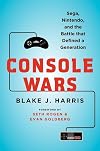
Console Wars: Sega, Nintendo, and the Battle that Defined a Generation (2014) 588 copies, 18 reviews
The History of the Future: Oculus, Facebook, and the Revolution That Swept Virtual Reality (2019) 99 copies, 3 reviews
Tagged
Common Knowledge
- Gender
- male
Members
Reviews
There's two important points to make about this book:.
1. Harris is a good writer. His research and narrative work effortlessly guide you through six or so years of epic change.
2. Consoles just have no soul. Harris and his principal sources seem to never question how ultimately the console industry boils down to marketing brinksmanship and how hollow that makes the entire endeavour.
Maybe this isn't really Harris' fault, but the world of 80's-90's consoles (and probably still today) is so show more hopelessly full of corporate hagiography that we're led to believe everyone previously fabulously rich executive is a genius in this emerging world of video games. Tom Kalinske, Sega of America's president and Harris' messiah in a suit, is treated like a trailblazer for what--thirty years later--really just amounts to edgelord marketing. It's a weird lens on the industry that seems to gloss over how commodified and exploitative these same suits made their arena.
There are no creatives here. This isn't Masters of Doom or any other history of the creative rise of video games, but rather the celebration of corporate gaming. Even Sega's rise is ultimately depressing in that context. Console Wars is a great history... it's just that it's a documentation of the most banal process of extracting wealth from games rather than any form of creativity beyond ad-wizardry. show less
1. Harris is a good writer. His research and narrative work effortlessly guide you through six or so years of epic change.
2. Consoles just have no soul. Harris and his principal sources seem to never question how ultimately the console industry boils down to marketing brinksmanship and how hollow that makes the entire endeavour.
Maybe this isn't really Harris' fault, but the world of 80's-90's consoles (and probably still today) is so show more hopelessly full of corporate hagiography that we're led to believe everyone previously fabulously rich executive is a genius in this emerging world of video games. Tom Kalinske, Sega of America's president and Harris' messiah in a suit, is treated like a trailblazer for what--thirty years later--really just amounts to edgelord marketing. It's a weird lens on the industry that seems to gloss over how commodified and exploitative these same suits made their arena.
There are no creatives here. This isn't Masters of Doom or any other history of the creative rise of video games, but rather the celebration of corporate gaming. Even Sega's rise is ultimately depressing in that context. Console Wars is a great history... it's just that it's a documentation of the most banal process of extracting wealth from games rather than any form of creativity beyond ad-wizardry. show less

In this creative nonfiction book, Harris follows the rise of Sega in the 1990s against Nintendo's console gaming monopoly, with some mentions of Sony along the way.
It might be more accurate to say, however, that this follows the rise of Tom Kalinske's Sega of America. One of my issues with this book was that it repeatedly presented Sega of Japan as making bone-headed business decisions that occasionally hamstrung the entire company, apparently simply because employees at Sega of Japan were show more jealous of Hayao Nakayama's level of trust in Tom Kalinske. Even Nintendo and Sony got more detailed and balanced coverage here than Sega of Japan, which remained a mystery until the end.
While reading this, I realized that I was far more interested in stories about video games and consoles than I was in the actual business side of the video game industry. Unfortunately, the business side of things was Harris' primary focus. No matter how many times "the name of the game is the game" was repeated, to Harris, the name of the game actually seemed to be marketing. Yes, Sonic became an iconic character on par with Mario, but with the way Harris told it, it was marketing more than anything that saved Sega (of America).
Meanwhile, I wanted to hear about the games and consoles. There were a bunch of times, while reading this, when I considered DNFing, only to be drawn back by a random mention of the development of this or that game character, or even the disaster that was the live action Mario movie. That said, all of these Sega, Nintendo, and Sony employees weren't nearly as interesting as Harris seemed to think they were, and Harris' decision to write Console Wars as creative nonfiction meant that the book, on the whole, was much longer than it really needed to be.
The number of people Harris mentioned who were involved in the video game industry but were uninterested in video games as anything other than potential money makers probably shouldn't have surprised me, but it did. And kind of disgusted me, which was probably not the emotion Harris intended to evoke.
(Original review posted on A Library Girl's Familiar Diversions.) show less
It might be more accurate to say, however, that this follows the rise of Tom Kalinske's Sega of America. One of my issues with this book was that it repeatedly presented Sega of Japan as making bone-headed business decisions that occasionally hamstrung the entire company, apparently simply because employees at Sega of Japan were show more jealous of Hayao Nakayama's level of trust in Tom Kalinske. Even Nintendo and Sony got more detailed and balanced coverage here than Sega of Japan, which remained a mystery until the end.
While reading this, I realized that I was far more interested in stories about video games and consoles than I was in the actual business side of the video game industry. Unfortunately, the business side of things was Harris' primary focus. No matter how many times "the name of the game is the game" was repeated, to Harris, the name of the game actually seemed to be marketing. Yes, Sonic became an iconic character on par with Mario, but with the way Harris told it, it was marketing more than anything that saved Sega (of America).
Meanwhile, I wanted to hear about the games and consoles. There were a bunch of times, while reading this, when I considered DNFing, only to be drawn back by a random mention of the development of this or that game character, or even the disaster that was the live action Mario movie. That said, all of these Sega, Nintendo, and Sony employees weren't nearly as interesting as Harris seemed to think they were, and Harris' decision to write Console Wars as creative nonfiction meant that the book, on the whole, was much longer than it really needed to be.
The number of people Harris mentioned who were involved in the video game industry but were uninterested in video games as anything other than potential money makers probably shouldn't have surprised me, but it did. And kind of disgusted me, which was probably not the emotion Harris intended to evoke.
(Original review posted on A Library Girl's Familiar Diversions.) show less
I shouldn't have liked this book as much as I did. Author Blake Harris takes a pastime I love, video games, and pulls back the production curtain to show this cut-throat capitalistic world of corporations vying for primacy. Dollars and attention are apparently the spoils of war. My whole naive view industry is now soured. And yet, I didn't want to put it down. At least not at first.
Console Wars runs for over 500 pages which seems to be overkill for this particular subject. Its outstretched show more length is because the author seems to follow every tangent and story thread. For example, "This is when so-and-so entered the picture, and now here's his whole backstory" or "an unrelated, non-video game company did a similar thing, and here's the full rundown of how that turned out." The pace is kept brisk but I wonder if the unified whole suffers in place of extrapolating the individual stories.
Lastly, I feel like Console Wars should have one of those "Based on actual events" disclaimers. I have no idea how the author conducted his research but all the conversations and interactions play out with a movie script-like quality that I'm sure a good dose of artistic license was taken. Honestly, I'm fine with it. It made the book 10x more readable. I just wonder which parts are truer than others. show less
Console Wars runs for over 500 pages which seems to be overkill for this particular subject. Its outstretched show more length is because the author seems to follow every tangent and story thread. For example, "This is when so-and-so entered the picture, and now here's his whole backstory" or "an unrelated, non-video game company did a similar thing, and here's the full rundown of how that turned out." The pace is kept brisk but I wonder if the unified whole suffers in place of extrapolating the individual stories.
Lastly, I feel like Console Wars should have one of those "Based on actual events" disclaimers. I have no idea how the author conducted his research but all the conversations and interactions play out with a movie script-like quality that I'm sure a good dose of artistic license was taken. Honestly, I'm fine with it. It made the book 10x more readable. I just wonder which parts are truer than others. show less
The History of the Future: Oculus, Facebook, and the Revolution That Swept Virtual Reality by Blake J. Harris

“The History of the Future” is either the worst name for this book, or perhaps a tongue-in-cheek reference to one character’s reference to the impact virtual reality is expected to have on the gaming industry over the next few decades.
This book is not a history of the future.
For a few bright, shining years a very young man, Palmer Lucky, headed his own tech start-up in the promising field of virtual reality gaming. Virtual reality is really a synthetic, immersive gaming environment in show more 3D. Lucky and his colleagues sold the company, Oculus, for billions to facebook.
On the advice trusted venture capitalists, Mark Zuckerberg made one of his big bets in buying Oculus believing that it was the best of several attempts to bring virtual reality mainstream.
Given Zuckerberg’s resources, it was not a bad bet in my estimation.
Virtual reality has phenomenal upside, even for non-gamers like me. Humans use unconscionable amounts of resources to motor themselves around the planet to do things that could fairly be done in a virtual environment. Go to and from work. Visit the doctor. Go to school. Visit aged relatives. Attend a business meeting. Attend a concert. And the list goes on.
On one hand, this book is a story of a start-up. It is also the story of the rise and fall of a naïf and a sidebar to the story of Donald Trump...I kid you not! Lucky made the mistake of contributing to a non-profit supporting the election of Donald Trump that was labelled racist, white supremacist, misogynist, and anti-Semitic. When news of his involvement leaked, his future with the company and facebook was doomed.
More interesting to me, however, were the arguments Mark Zuckerberg made to Oculus. The biggest, of course, was the price Zuck was willing to pay. But Zuck also wooed them with the exclusivity of building the only interface with a facebook “experience,” and thus an attraction to developers and an automatic lock on potentially one billion users.
Zuckerberg seemed to be pitching some kind of a VR facebook experience, but the developers at Oculus were thinking of hitting a home run with a gamer experience. It seems that that buyer and seller were in different ball parks.
And this in a multi-billion dollar deal.
At face value it looks like the sellers really didn’t look closely enough at their suitor because immediately after the acquisition the principals were scratching their heads over attempts by facebook to integrate them physically in their workspace and culture.
For example, everybody at facebook used Apple computers, whereas the hardcore Oculus gamers were mostly PC users.
Also, the Oculus guys saw the advantages of leaving their games open to be used on other platforms. Zuck nixed that.
Oculus’ early fans were horrified that the platform was being developed by the evil facebook. The culture of facebook was and is so foreign to gamers. And we’re not just talking semantics.
Gamers really are different. And the games market is so huge that it’s really difficult to reorient them from the consoles and open source culture they come from. As big as facebook is, Zuck really bumped up into an immovable force.
In the couple of years since the facebook acquisition, Oculus devices have sold moderately well behind market leader SONY, and ahead of HTC. They are selling in the millions, good but not the killer app they expected.
This story is far from over. show less
This book is not a history of the future.
For a few bright, shining years a very young man, Palmer Lucky, headed his own tech start-up in the promising field of virtual reality gaming. Virtual reality is really a synthetic, immersive gaming environment in show more 3D. Lucky and his colleagues sold the company, Oculus, for billions to facebook.
On the advice trusted venture capitalists, Mark Zuckerberg made one of his big bets in buying Oculus believing that it was the best of several attempts to bring virtual reality mainstream.
Given Zuckerberg’s resources, it was not a bad bet in my estimation.
Virtual reality has phenomenal upside, even for non-gamers like me. Humans use unconscionable amounts of resources to motor themselves around the planet to do things that could fairly be done in a virtual environment. Go to and from work. Visit the doctor. Go to school. Visit aged relatives. Attend a business meeting. Attend a concert. And the list goes on.
On one hand, this book is a story of a start-up. It is also the story of the rise and fall of a naïf and a sidebar to the story of Donald Trump...I kid you not! Lucky made the mistake of contributing to a non-profit supporting the election of Donald Trump that was labelled racist, white supremacist, misogynist, and anti-Semitic. When news of his involvement leaked, his future with the company and facebook was doomed.
More interesting to me, however, were the arguments Mark Zuckerberg made to Oculus. The biggest, of course, was the price Zuck was willing to pay. But Zuck also wooed them with the exclusivity of building the only interface with a facebook “experience,” and thus an attraction to developers and an automatic lock on potentially one billion users.
Zuckerberg seemed to be pitching some kind of a VR facebook experience, but the developers at Oculus were thinking of hitting a home run with a gamer experience. It seems that that buyer and seller were in different ball parks.
And this in a multi-billion dollar deal.
At face value it looks like the sellers really didn’t look closely enough at their suitor because immediately after the acquisition the principals were scratching their heads over attempts by facebook to integrate them physically in their workspace and culture.
For example, everybody at facebook used Apple computers, whereas the hardcore Oculus gamers were mostly PC users.
Also, the Oculus guys saw the advantages of leaving their games open to be used on other platforms. Zuck nixed that.
Oculus’ early fans were horrified that the platform was being developed by the evil facebook. The culture of facebook was and is so foreign to gamers. And we’re not just talking semantics.
Gamers really are different. And the games market is so huge that it’s really difficult to reorient them from the consoles and open source culture they come from. As big as facebook is, Zuck really bumped up into an immovable force.
In the couple of years since the facebook acquisition, Oculus devices have sold moderately well behind market leader SONY, and ahead of HTC. They are selling in the millions, good but not the killer app they expected.
This story is far from over. show less
Lists
Awards


You May Also Like


Associated Authors
Statistics
- Works
- 2
- Members
- 687
- Popularity
- #36,815
- Rating
- 3.6
- Reviews
- 21
- ISBNs
- 24
- Languages
- 5