
Elizabeth May (4) (1987–)
Author of The Falconer
For other authors named Elizabeth May, see the disambiguation page.
Series
Works by Elizabeth May
The Falconer: La trilogia 2 copies
Associated Works
Tagged
Common Knowledge
- Birthdate
- 1987-05-09
- Gender
- female
- Education
- St. Andrews University (PhD)
- Agent
- Russell Galen (Scovil Galen Ghosh Literary)
- Nationality
- USA
- Birthplace
- California, USA
- Associated Place (for map)
- California, USA
Members
Discussions
The Vanishing Throne: Bk II of the Falconer Trilogy by Elizabeth May -Apr 2016 LTER in Reviews of Early Reviewers Books (May 2016)
Reviews
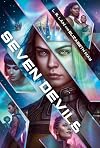
OK BUT I LOVED THIS???? FOUND FAMILY LADIES IN SPACE TRYING TO TOPPLE A CORRUPT EMPIRE WITH A LIL HINT OF A SAPPHIC ROMANCE AND I LOVE EVERY CHARACTER WITH MY WHOLE HEART.
eris, bb i would die for you. (i'd also die for ari and rhea) i hope you get to murder your evil brother so hard in the second book which i will be STARTING RIGHT AWAY.
absolutely loved and tore through this, def rec.
eris, bb i would die for you. (i'd also die for ari and rhea) i hope you get to murder your evil brother so hard in the second book which i will be STARTING RIGHT AWAY.
absolutely loved and tore through this, def rec.

The Falconer started off strong: steampunk fantasy setting involving evil faeries and drawing room etiquette all at once, with a strong dash of costume porn and some excellent violence. I mean, seriously, I usually loathe violence in my books and cringe away from it even when it's relevant to the plot, but the visceral descriptions in the opening pages of The Falconer suited me perfectly this week (it's been a stressful week for me) and I found myself really getting into the deserved (if show more misplaced) vengeance the heroine commits.
The book fails for me in three ways:
1) there is a wholly unnecessary love story. Completely unnecessary and also kind of disturbing. From the outset, the love interest is depicted as unsuitable and a bad idea, but as the pagecount increases, sexy-linked words and descriptions about him grow, until suddenly at the end it's actual love somehow?? and i just can't see it. Also, the plot would be so much better without this romance thread.
2) the love interest is threatened with murder at several points, but the heroine never follows through. :( I was rooting for her the entire time! he's set up as her mentor (of sorts) but not trustworthy and also cruel, and I was certain that he was secretly a villain and needed to be murdered. Turns out he's not exactly a villain, but he still needed murdering and the heroine never quite succeeds at it, and that is incredibly disappointing.
3) the climatic battle between our heroine and the faeries is a let down. There's hardly any good description of the killing like in the early parts of the book, it's all sort of elided in favor of more sexy descriptions of the love interest and sad farewells and "you must leave me for the good of the world" (blech barf gross). PLUS I know it was explained earlier why there had to be this battle but it never really made sense for me, that she had to fight a bunch of evil faeries before she can trap them again. Why not be positioned near the trapdoor to lock it up before the faeries escape instead of letting them escape and having to cut her way through to get to the door?
There are two other things that bug me but aren't failures:
A) so much denigration of the drawing room etiquette stuff. I feel like the heroine didn't have to be completely negative about social status, even if she is grieving and secretly a valkyrie or whatever.
B) there are no actual falcons in the book, so the whole "the Falconer" thing was a bit of a letdown. Admittedly, i didn't read the book synopsis or anything before reading it. I don't know why I put it on my library hold list anymore, it just came in so I got it off the shelf and started reading.
So anyway, in summary, The Falconer is pretty engaging and fun to read except I wanted the heroine to murder the love interest in cold blood the entire time. Also the ending sucked but there's a sequel! Maybe she'll murder him in the sequel. show less
The book fails for me in three ways:
1) there is a wholly unnecessary love story. Completely unnecessary and also kind of disturbing. From the outset, the love interest is depicted as unsuitable and a bad idea, but as the pagecount increases, sexy-linked words and descriptions about him grow, until suddenly at the end it's actual love somehow?? and i just can't see it. Also, the plot would be so much better without this romance thread.
2) the love interest is threatened with murder at several points, but the heroine never follows through. :( I was rooting for her the entire time! he's set up as her mentor (of sorts) but not trustworthy and also cruel, and I was certain that he was secretly a villain and needed to be murdered. Turns out he's not exactly a villain, but he still needed murdering and the heroine never quite succeeds at it, and that is incredibly disappointing.
3) the climatic battle between our heroine and the faeries is a let down. There's hardly any good description of the killing like in the early parts of the book, it's all sort of elided in favor of more sexy descriptions of the love interest and sad farewells and "you must leave me for the good of the world" (blech barf gross). PLUS I know it was explained earlier why there had to be this battle but it never really made sense for me, that she had to fight a bunch of evil faeries before she can trap them again. Why not be positioned near the trapdoor to lock it up before the faeries escape instead of letting them escape and having to cut her way through to get to the door?
There are two other things that bug me but aren't failures:
A) so much denigration of the drawing room etiquette stuff. I feel like the heroine didn't have to be completely negative about social status, even if she is grieving and secretly a valkyrie or whatever.
B) there are no actual falcons in the book, so the whole "the Falconer" thing was a bit of a letdown. Admittedly, i didn't read the book synopsis or anything before reading it. I don't know why I put it on my library hold list anymore, it just came in so I got it off the shelf and started reading.
So anyway, in summary, The Falconer is pretty engaging and fun to read except I wanted the heroine to murder the love interest in cold blood the entire time. Also the ending sucked but there's a sequel! Maybe she'll murder him in the sequel. show less
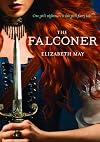
The Falconertook me over a month to finish. Typically, a young adult fantasy takes me less than a week, if not just two or three days. Why it took me so long, I honestly can't put my finger on it, other than to say that I didn't love it as much as I thought and hoped I would. All the pieces were there that usually equate to literary obsession for me: fierce female heroine, faeries, a Scottish setting, steampunk elements, etc, but I just wasn't hooked.
Protagonist Aileana is likeable enough, show more though difficult to relate to, and her prowess in fighting killer Scottish faeries of lore is explained reasonably enough. The love story is pretty obvious and predictable and the love triangle contrived and unbelievable. The cliffhanger is terrific, but a little mean, so now I must keep reading a trilogy I might have otherwise abandoned.
But, and it's a big but, Elizabeth can write, and write very well. Any potential plot and character development shortcomings are more than compensated for with exquisite writing. May's knowledge of Scottish lore is beyond compare and she weaves such knowledge (and vocabulary) expertly into her fantastical story. Here's to hoping the second book is just as well written and the character's more developed. show less
Protagonist Aileana is likeable enough, show more though difficult to relate to, and her prowess in fighting killer Scottish faeries of lore is explained reasonably enough. The love story is pretty obvious and predictable and the love triangle contrived and unbelievable. The cliffhanger is terrific, but a little mean, so now I must keep reading a trilogy I might have otherwise abandoned.
But, and it's a big but, Elizabeth can write, and write very well. Any potential plot and character development shortcomings are more than compensated for with exquisite writing. May's knowledge of Scottish lore is beyond compare and she weaves such knowledge (and vocabulary) expertly into her fantastical story. Here's to hoping the second book is just as well written and the character's more developed. show less
Dudes. DUUUUUUDES. Stop what you are doing. Put down what you are reading (except for this review). Put everything on hold and read The Falconer. I don’t care what you’ve heard, and I don’t care what hangups you think you might have. In fact, I think I can answer every concern you might have. Look!
1. Ugh, but it’s steampunk. I don’t like steampunk.
Okay, you’re a crazy person, and crazy isn’t something I can fix. Steampunk is awesome. But I guess you’re allowed your tastes, so show more whatever. Even still, I think The Falconer‘s version of steampunk is palatable for just about everyone. First of all, it’s a steampunk set in Scotland. SCOTLAND! Not once do we step foot in London or even England proper. They don’t even like the British up there. Even better, the steampunk Elizabeth May employs is so delightfully restrained. To quote my pal Gillian Berry, it’s a “subtle steampunk that just serves to boost the world, not define it.”
Aileana’s world has delightful contraptions like stitcher spiders and ornithopters and flying carriages, all of which set my heart a-fluttering, but Ms. May does a great job of keeping the steampunk elements from overwhelming the story. The inventions are used to bolster the plot and make the world-building shine, but the story would remain both feasible and intelligible without them. The reader gets all of the balls and pretty gowns and social constraints that we’ve come to expect from books of this time period, just with some fantastic mechanical baubles thrown in.
2. There are fairies. I don’t do fairies.
Faeries. They’re faeries, not fairies. My gosh. But you know what? I can’t STAND faeries/fairies/fae/whatever. Every book I’ve ever tried with those odd beasties were complete duds for me. Really, the faeries were my biggest hangup prior to starting The Falconer. But then I read this book, and now I’m a believer. Ms. May manages to squeeze in each type of faerie typically found in YA lit (scary, sexy, funny) and make it work. We get everything from the generally harmless pixies to the seductive and dangerous daoine sith and everything in between—fae that fly, howl, bark, and charm their way through piles of dead Scots.
Interestingly, though each type of faerie also has a nearly incomprehensible Scottish name for itself, I didn’t have trouble keeping the types separated. Each kind was on the page long enough and the titles used consistently enough that I was able to tell a sluag apart from a baobhan sith, for example. Which is great, because then I didn’t miss out on the rest of faerie lore. There’s more to enjoy concerning men with the Sight and women Falconers and bloodlines and herbs and fighting techniques. As with the faerie types, I was able to follow along easily, which I appreciated.
3 . There’s a fighter girl. I’m so over fighter girls.
I get that. Fighter girls can be fun, but there are so many of them that the standard, kick-butt version does less and less for me each time. That being said, Aileana is a variation that I completely enjoyed. First of all, she’s wicked smart. Even before her mother’s death, Aileana was an avid tinkerer. She built her family’s ornithopter and was always inventing some new gadget. After her mother’s death, however, she dismantled all her fobs and fripperies and started converting them into weapons to hunt the faeries.
She’s also remarkably unapologetic about her thirst for vengeance. Since her mother’s death a year prior, this young noblewoman has murdered 158 faeries. She has gone from a wide-eyed, innocent young thing with a head full of love and marriage to a seasoned liar and hunter with a thirst for blood. Indeed, she’s become addicted to the rush of power and untainted joy she gets with each kill. Watching her struggle in an attempt to reconcile the girl that she was with what she has become is both an interesting read and a heartbreaking one. In the end, these two traits—Aileana’s brains and her drive—are what make her strong, not her ability to kill.
4. There’s a love triangle. I HAAAAAATE love triangles.
No! No love triangle! Not really. What Ms. May does here is tricky, because it sort of looks like Aileana is being prepped for a whopper of a love triangle (or even a love trident), but it never comes to pass. There are actually three wonderful boys in The Falconer, and each deserves a mention, because they’re just that wonderful.
First, there’s Derrick. Derrick is a pixie, a tiny Tinker Bell-sized faerie that lives in Aileana’s dressing room and mends her clothes in exchange for honey (too much of which makes him hilariously drunk). Of the three boys, he’s mostly played for comic relief, but he’s also a true and loyal friend to Aileana, which is pretty incredible considering her vow to kill as many faeries as she can find. All of the best quotes come from Derrick, and I would dearly like to have one of my own. (Except for one comment about an old love of his, Derrick fits the standard trope of Loyal Gay Friend pretty well.)
Next, there’s Gavin. Gavin is a human and the elder brother of Aileana’s best friend. He represents Aileana’s past and the hopes and dreams she’s set aside in exchange for revenge. If this were Shadow and Bone, he’d be Mal; if Unhinged, he’d be Jeb. I can’t say too much more about Gavin, but I truly enjoyed him and the role he filled.
Lastly, there’s Kiaran, or as Gillian and I like to call him, “KIAAAAARAAAAAAAAAN.” What a dreamboat. He’s the bad-boy side of this supposed love triangle. If Gavin is Aileana’s pure and innocent past, Kiaran is her dark and dangerous future. Kiaran is one of the most powerful types of faerie, a daoine sith, and hunts down his own kind for reasons of his own. Nowhere is Kiaran framed as the safe choice or even necessarily the best choice. However, he offers what Gavin cannot. He sees Aileana’s rage and thirst for revenge and accepts them in a way that Gavin simply can’t. In this equation, Kiaran is the best parts of the Darkling, Warner, Jack Dandy, and Morpheus, Aileana’s guide as she does what must be done.
Despite how it appears, I must stress again that this book does not contain an actual love triangle. The storyline may trend that way in later books, but it does not do so now. Even if it did, I still think readers will enjoy this book. Each boy plays his part (Loyal Friend, Good Boy, Bad Boy), but each part contains pleasant deviations from the standard form. You might think you know how each boy will react—who will be jealous of whom and how, who will attempt to control Aileana, etc.—but you can’t. Aileana is not the one to change Kiaran’s black heart. Gavin isn’t constantly playing the white knight and saving her from danger. Aileana doesn’t whine, wheedle, or manipulate the boys to do what she wants. It’s wonderful!
5. The ending. I’ve heard other people didn’t like how abrupt it was.
I’ll give you this one. The ending was rather abrupt. I liked it, because it left me with a jolt of character development that I wasn’t expecting, but it definitely killed me in the “Oh my gosh, give me the next book NOW” sort of way. What can ya do?
I strongly encourage you all to read this book. If I may quote my own Goodreads status, this book is like popcorn. Delicious, adrenaline-laced, pixie dust-flavored popcorn. It’s ridiculously addictive in the best way. The moment I have money to spend, it will go toward obtaining this book, and from me, there’s no higher praise.
Favorite Non-Spoilery Quotes:
“You know my mother thinks the waltz is indecent.”
“Your mother would find the sight of a chair leg indecent.”
When Dante described the circles of Hell, he clearly forgot the one where a hungry pixie sits on one’s shoulder for eternity.
“My ears are bleeding. I have a nasty headache. I’m trapped in a room with a murderous faery and I blame you.”
“That’s fair.”
“Perhaps it’s a honey-ache. That’s the result of eating too much of what isn’t yours.”
“But your friend offered it. So she might not have explicitly said, ‘Derrick, please eat all of the honey in my kitchen,’ but it was implied by the mere fact that she has a kitchen.”
“Well, I can safely say that I’ve never experienced a more exciting two days. I suppose I should send a note before seeing you again. ‘Are you in the company of any creature liable to attack me unprovoked? I can visit later.’”
Points Added For: Aileana, Derrick, Kiaran, Gavin; a fresh, less stereotypical twist on character tropes; Aileana’s inventive streak; subtle steampunkery; a great mix of humor, tension, and sexiness.
Points Subtracted For: A really abrupt ending, I guess.
Good For Fans Of: Faeries, bad boys, good boys, funny and supportive boys, girls who kick butt, smart girls, historical Scotland, light steampunk.
Notes For Parents: Language (I think), making out, death. show less
1. Ugh, but it’s steampunk. I don’t like steampunk.
Okay, you’re a crazy person, and crazy isn’t something I can fix. Steampunk is awesome. But I guess you’re allowed your tastes, so show more whatever. Even still, I think The Falconer‘s version of steampunk is palatable for just about everyone. First of all, it’s a steampunk set in Scotland. SCOTLAND! Not once do we step foot in London or even England proper. They don’t even like the British up there. Even better, the steampunk Elizabeth May employs is so delightfully restrained. To quote my pal Gillian Berry, it’s a “subtle steampunk that just serves to boost the world, not define it.”
Aileana’s world has delightful contraptions like stitcher spiders and ornithopters and flying carriages, all of which set my heart a-fluttering, but Ms. May does a great job of keeping the steampunk elements from overwhelming the story. The inventions are used to bolster the plot and make the world-building shine, but the story would remain both feasible and intelligible without them. The reader gets all of the balls and pretty gowns and social constraints that we’ve come to expect from books of this time period, just with some fantastic mechanical baubles thrown in.
2. There are fairies. I don’t do fairies.
Faeries. They’re faeries, not fairies. My gosh. But you know what? I can’t STAND faeries/fairies/fae/whatever. Every book I’ve ever tried with those odd beasties were complete duds for me. Really, the faeries were my biggest hangup prior to starting The Falconer. But then I read this book, and now I’m a believer. Ms. May manages to squeeze in each type of faerie typically found in YA lit (scary, sexy, funny) and make it work. We get everything from the generally harmless pixies to the seductive and dangerous daoine sith and everything in between—fae that fly, howl, bark, and charm their way through piles of dead Scots.
Interestingly, though each type of faerie also has a nearly incomprehensible Scottish name for itself, I didn’t have trouble keeping the types separated. Each kind was on the page long enough and the titles used consistently enough that I was able to tell a sluag apart from a baobhan sith, for example. Which is great, because then I didn’t miss out on the rest of faerie lore. There’s more to enjoy concerning men with the Sight and women Falconers and bloodlines and herbs and fighting techniques. As with the faerie types, I was able to follow along easily, which I appreciated.
3 . There’s a fighter girl. I’m so over fighter girls.
I get that. Fighter girls can be fun, but there are so many of them that the standard, kick-butt version does less and less for me each time. That being said, Aileana is a variation that I completely enjoyed. First of all, she’s wicked smart. Even before her mother’s death, Aileana was an avid tinkerer. She built her family’s ornithopter and was always inventing some new gadget. After her mother’s death, however, she dismantled all her fobs and fripperies and started converting them into weapons to hunt the faeries.
She’s also remarkably unapologetic about her thirst for vengeance. Since her mother’s death a year prior, this young noblewoman has murdered 158 faeries. She has gone from a wide-eyed, innocent young thing with a head full of love and marriage to a seasoned liar and hunter with a thirst for blood. Indeed, she’s become addicted to the rush of power and untainted joy she gets with each kill. Watching her struggle in an attempt to reconcile the girl that she was with what she has become is both an interesting read and a heartbreaking one. In the end, these two traits—Aileana’s brains and her drive—are what make her strong, not her ability to kill.
4. There’s a love triangle. I HAAAAAATE love triangles.
No! No love triangle! Not really. What Ms. May does here is tricky, because it sort of looks like Aileana is being prepped for a whopper of a love triangle (or even a love trident), but it never comes to pass. There are actually three wonderful boys in The Falconer, and each deserves a mention, because they’re just that wonderful.
First, there’s Derrick. Derrick is a pixie, a tiny Tinker Bell-sized faerie that lives in Aileana’s dressing room and mends her clothes in exchange for honey (too much of which makes him hilariously drunk). Of the three boys, he’s mostly played for comic relief, but he’s also a true and loyal friend to Aileana, which is pretty incredible considering her vow to kill as many faeries as she can find. All of the best quotes come from Derrick, and I would dearly like to have one of my own. (Except for one comment about an old love of his, Derrick fits the standard trope of Loyal Gay Friend pretty well.)
Next, there’s Gavin. Gavin is a human and the elder brother of Aileana’s best friend. He represents Aileana’s past and the hopes and dreams she’s set aside in exchange for revenge. If this were Shadow and Bone, he’d be Mal; if Unhinged, he’d be Jeb. I can’t say too much more about Gavin, but I truly enjoyed him and the role he filled.
Lastly, there’s Kiaran, or as Gillian and I like to call him, “KIAAAAARAAAAAAAAAN.” What a dreamboat. He’s the bad-boy side of this supposed love triangle. If Gavin is Aileana’s pure and innocent past, Kiaran is her dark and dangerous future. Kiaran is one of the most powerful types of faerie, a daoine sith, and hunts down his own kind for reasons of his own. Nowhere is Kiaran framed as the safe choice or even necessarily the best choice. However, he offers what Gavin cannot. He sees Aileana’s rage and thirst for revenge and accepts them in a way that Gavin simply can’t. In this equation, Kiaran is the best parts of the Darkling, Warner, Jack Dandy, and Morpheus, Aileana’s guide as she does what must be done.
Despite how it appears, I must stress again that this book does not contain an actual love triangle. The storyline may trend that way in later books, but it does not do so now. Even if it did, I still think readers will enjoy this book. Each boy plays his part (Loyal Friend, Good Boy, Bad Boy), but each part contains pleasant deviations from the standard form. You might think you know how each boy will react—who will be jealous of whom and how, who will attempt to control Aileana, etc.—but you can’t. Aileana is not the one to change Kiaran’s black heart. Gavin isn’t constantly playing the white knight and saving her from danger. Aileana doesn’t whine, wheedle, or manipulate the boys to do what she wants. It’s wonderful!
5. The ending. I’ve heard other people didn’t like how abrupt it was.
I’ll give you this one. The ending was rather abrupt. I liked it, because it left me with a jolt of character development that I wasn’t expecting, but it definitely killed me in the “Oh my gosh, give me the next book NOW” sort of way. What can ya do?
I strongly encourage you all to read this book. If I may quote my own Goodreads status, this book is like popcorn. Delicious, adrenaline-laced, pixie dust-flavored popcorn. It’s ridiculously addictive in the best way. The moment I have money to spend, it will go toward obtaining this book, and from me, there’s no higher praise.
Favorite Non-Spoilery Quotes:
“You know my mother thinks the waltz is indecent.”
“Your mother would find the sight of a chair leg indecent.”
When Dante described the circles of Hell, he clearly forgot the one where a hungry pixie sits on one’s shoulder for eternity.
“My ears are bleeding. I have a nasty headache. I’m trapped in a room with a murderous faery and I blame you.”
“That’s fair.”
“Perhaps it’s a honey-ache. That’s the result of eating too much of what isn’t yours.”
“But your friend offered it. So she might not have explicitly said, ‘Derrick, please eat all of the honey in my kitchen,’ but it was implied by the mere fact that she has a kitchen.”
“Well, I can safely say that I’ve never experienced a more exciting two days. I suppose I should send a note before seeing you again. ‘Are you in the company of any creature liable to attack me unprovoked? I can visit later.’”
Points Added For: Aileana, Derrick, Kiaran, Gavin; a fresh, less stereotypical twist on character tropes; Aileana’s inventive streak; subtle steampunkery; a great mix of humor, tension, and sexiness.
Points Subtracted For: A really abrupt ending, I guess.
Good For Fans Of: Faeries, bad boys, good boys, funny and supportive boys, girls who kick butt, smart girls, historical Scotland, light steampunk.
Notes For Parents: Language (I think), making out, death. show less
Lists
Awards


You May Also Like


Associated Authors
Statistics
- Works
- 8
- Also by
- 1
- Members
- 2,192
- Popularity
- #11,705
- Rating
- 3.7
- Reviews
- 107
- ISBNs
- 117
- Languages
- 4
