
Jing Tsu
Author of Kingdom of Characters: The Language Revolution That Made China Modern
About the Author
Jing Tsu, Ph.D. (Harvard University), is associate professor of Chinese Literature at Yale University. She is author of Failure, Nationalism, and Literature: The Making of Modern Chinese Identity, 1895-1937 (Stanford University Press, 2005) and Sound and Script in Chinese Diaspora (Harvard show more University Press, 2010). David Der-wei Wang is Edward C. Henderson Professor of Chinese Literature at Harvard University. He is author, editor, and coeditor of numerous publications in English and Chinese, including The Monster That is History: Violence, History, and Fictional Writing in 20th Century China (University of California Press, 2004) and Writing Taiwan: A New Literary History (Duke University Press, 2007). show less
Works by Jing Tsu
Failure, Nationalism, and Literature: The Making of Modern Chinese Identity, 1895-1937 (2005) 5 copies, 1 review
Tagged
Common Knowledge
- Birthdate
- 1973-02-23
- Gender
- female
- Education
- Harvard University
- Birthplace
- Taiwan
- Map Location
- USA
Members
Reviews
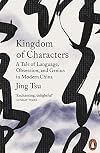
An amazing story! How Chinese speech and script go to be standardized and fit for the age of printing, data-precessing, and the internet is a true adventure story, told with brio and passion in this eye-opening book. It's a complicated tale, to be sure, and the solutions found verge on the miraculous. But the false starts, forgotten heroes, the rejections of the past, and the return to traditions that are clearly laid out in this book also amp out a cultural history of modern China. It is show more immensely instructive and thoroughly enjoyable. David Bellos show less
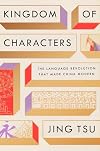
Occasionally I would be reading this book and suddenly a realization would wash over me that this was all incredibly boring. I mean I never thought I would read a book on Chinese phototypesetting or the invention of the Unicode international standard. I picked up this book after hearing the author appear on a really interesting episode of the Sinica podcast. I think it's great to have a book like this written in English by a native Chinese speaker. I mostly brought to it an interest in the show more linguistic aspects of Chinese, and maybe expected something a little more in that vein - instead this book is mostly about technology and path of rapid development taken by China in the last 50 years. This is, of course, a highly relevant topic for some folks, and does carry some interest for me - just not enough to hold me for several hundred pages.
The best parts of this book for me were the ones that dealt with the features of Chinese culture, language, and writing that set it apart from the other languages participating in the technological revolution of the last 200 years. As I was reading it, I couldn't help but share little tidbits of information learned with friends and coworkers about how arduous modernizing the Chinese language was. As an Anglo, and a member of Latin-script using Western Culture, it's difficult to understand how alienating it must have been for Chinese speakers to discover that the whole world was being built on technology that had no adequate way to incorporate your language. The sheer mindfuck of designing a hanzi typewriter, or making telegraphy work with Chinese characters never occurred to me before reading this book. As much as globalization has done to damage our societies and planet, the ability of human beings to find ways to cross linguistic and cultural boundaries that a first glace seem untraversable is something to marvel at (perhaps cower before). I don't think the average person really appreciates how amazing it is for someone to, with a single keystroke, switch between English and 中文, or to summon up a single character among tens of thousands in the blink of an eye. It's only after comparing a convenience that has become mundane to how people used to do it (usually mind-numbingly tedious) that we can truly appreciate how far, and how quickly we've come.
We've had to scale innumerable logistical Mt. Everests to make our modern world possible, and this book was worth reading merely to appreciate that fact as it relates to Chinese. Where it lost me sometimes was the long-winded biographical dives that devoted lots of white space to people and stories that were not as interesting as the technology they begat. Jing Tsu seems to be following the modern journalistic/non-fiction convention that we always need a "character" to latch onto, to ground the information being shared in a lifetime's experience. This being the prevailing style, I can't blame her for doing just that in a book geared for popular readership, but there were several times where my mind sort of shut off as she was describing the twists and turns of a particular idea or technology as it wound its way through the lives of various people, governmental agencies, or computer labs. I honestly couldn't tell you the name of any of the many inventors, linguists, and computer scientists that she talks about in this book. What does stick out is the advances they fomented. Jing Tsu seems to be trying to reclaim these folks from obscurity, and show how they contributed to bringing Chinese into the modern era. However, it is perhaps only natural that the particulars of these people's lives are lost to history even as their developments loom large. Despite popular conception, history is mostly made by tiny changes accumulated over the span of years and countless overlapping lifetimes. That these lifetimes when viewed in the abstract may not hold our interest is not a slight on those who lived them - it's the work that serves as their legacy. show less
The best parts of this book for me were the ones that dealt with the features of Chinese culture, language, and writing that set it apart from the other languages participating in the technological revolution of the last 200 years. As I was reading it, I couldn't help but share little tidbits of information learned with friends and coworkers about how arduous modernizing the Chinese language was. As an Anglo, and a member of Latin-script using Western Culture, it's difficult to understand how alienating it must have been for Chinese speakers to discover that the whole world was being built on technology that had no adequate way to incorporate your language. The sheer mindfuck of designing a hanzi typewriter, or making telegraphy work with Chinese characters never occurred to me before reading this book. As much as globalization has done to damage our societies and planet, the ability of human beings to find ways to cross linguistic and cultural boundaries that a first glace seem untraversable is something to marvel at (perhaps cower before). I don't think the average person really appreciates how amazing it is for someone to, with a single keystroke, switch between English and 中文, or to summon up a single character among tens of thousands in the blink of an eye. It's only after comparing a convenience that has become mundane to how people used to do it (usually mind-numbingly tedious) that we can truly appreciate how far, and how quickly we've come.
We've had to scale innumerable logistical Mt. Everests to make our modern world possible, and this book was worth reading merely to appreciate that fact as it relates to Chinese. Where it lost me sometimes was the long-winded biographical dives that devoted lots of white space to people and stories that were not as interesting as the technology they begat. Jing Tsu seems to be following the modern journalistic/non-fiction convention that we always need a "character" to latch onto, to ground the information being shared in a lifetime's experience. This being the prevailing style, I can't blame her for doing just that in a book geared for popular readership, but there were several times where my mind sort of shut off as she was describing the twists and turns of a particular idea or technology as it wound its way through the lives of various people, governmental agencies, or computer labs. I honestly couldn't tell you the name of any of the many inventors, linguists, and computer scientists that she talks about in this book. What does stick out is the advances they fomented. Jing Tsu seems to be trying to reclaim these folks from obscurity, and show how they contributed to bringing Chinese into the modern era. However, it is perhaps only natural that the particulars of these people's lives are lost to history even as their developments loom large. Despite popular conception, history is mostly made by tiny changes accumulated over the span of years and countless overlapping lifetimes. That these lifetimes when viewed in the abstract may not hold our interest is not a slight on those who lived them - it's the work that serves as their legacy. show less
For those not already aware of its recent history, the development and transformation of written Chinese in the past 200 years will come across as breathtaking. I had no idea that the language that I’m in the very early stages of learning had so recently settled on its romanized form, PinYin, or that the elegant strokes of the characters are actually a simplified version of the more complex ancient characters. And of course I had no inkling of the many figures vital to this development. So show more this book, for me, was a definite eye-opener. That makes evaluating how well it told its tale somewhat problematic. If I knew more, perhaps I might be more critical. Certainly I learned a lot. And I have a much greater appreciation of the huge effort that has been undertaken to transform written Chinese.
So, certainly recommended for those, like me, who until now knew so little. And probably recommended as well for those who know more. show less
So, certainly recommended for those, like me, who until now knew so little. And probably recommended as well for those who know more. show less
I had always wondered how a Chinese typewriter would work, given that the written forms of Chinese dialects traditionally rely upon thousands of ideographs, rather than an alphabetic system. Professor Jing Tsu answers this question and more in her book, Kingdom of Characters. She explores how industrial and political modernization required the Chinese people to rethink their attitudes towards their ancient language with its myriad dialects and venerated scholars. All forms of text-based show more communication, from telegraphy to library automation, were affected.
The book could have been more engaging; the writing plods along and the the narrative is both detailed and redundant. Still, the book offers a valuable introduction to an intriguing topic. show less
The book could have been more engaging; the writing plods along and the the narrative is both detailed and redundant. Still, the book offers a valuable introduction to an intriguing topic. show less
Lists
Wanted List (1)
Awards


You May Also Like


Statistics
- Works
- 5
- Members
- 324
- Popularity
- #73,084
- Rating
- 3.8
- Reviews
- 13
- ISBNs
- 20
- Languages
- 1