
Esa Saarinen
Author of Länsimaisen filosofian historia huipulta huipulle Sokrateesta Marxiin
About the Author
Image credit: Jyri Engestrom
Works by Esa Saarinen
Essays in Honour of Jaakko Hintikka: On the Occasion of His Fiftieth Birthday on January 12, 1979 (Synthese Library) (1978) 7 copies
Associated Works
Tagged
Common Knowledge
- Canonical name
- Saarinen, Esa
- Birthdate
- 1953-07-27
- Gender
- male
- Occupations
- philosopher
- Nationality
- Finland
- Associated Place (for map)
- Finland
Members
Reviews
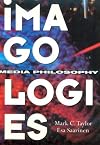
Published in 1994, thirty years later this book is dated, and doesn't feel as ultimately insightful as the authours certainly initially hoped. Time reveals what may have been lacking from the start, but offers a fair warning for all of us who want to understand and penetrate the world clouding around us in our time: whatever new features of culture we imagine influential or overarching in their scope today, being avant-garde and innovative can easily come to smack of pretension, and that show more impulse produces something that suffers from acetic fermentation on the page. That is especially so should I imagine that my own innovations license me to coin phrases that sound like something someone really profound would say.
This book is a little drunk on its own dream of ingenuity, and that plays out in splattered images on pages with single phrases or paragraphs - as though the words written there are supposed to be mind altering and transformative. "In Simcult, excess becomes excessive" . . . "Simcult presupposes the commodification of commodification" . . . "Simcult engenders an air of information." A young drunk, while sad, and despite our better angels or reason, can yet suggest something tragically titillating. God help us. Add a few decades, though, and no one laughs, plays along, or hopes to take her home. If you've read Baudrillard, you'll recognize the tone and literary strategy.
Unlike someone like Paul Ricoeur, Imagologies also has a hegemonic quality in its insistence on what the culture of the day was. To be fair, at the time of writing, reeling from the quick evolution of media technology right at the birth of the internet, its no surprise Taylor and Saarinen tried to stake a philosophical claim to terms and definitions that could have framed the emerging day, but probably reached too far. They were insightful at the time, but humility might have proved more affable.
On reflection today, the use of images and text do not correlate in a way that suggests something meaningful, but rather chaotic, and what might feel clever to the artsy is rather exhausting to try and read through. This is fettered further by the overlay of letters between the authours spaced out through the text. On the one hand, the authours' discussions of navigating technology are strangely real and dissonant from the grand philosophical declarations of Simcult and the Mediatrix. But overall, the effect is a bit alienating, with me as a reader wondering if there really is something clever going on, and I'm just too slow to get it.
Happy for you if that is the case and you're among the gifted few! But in a day where reality has disappeared, the longing for communication that gives you something to hold on to is not illegitimate. A man awash in a world that is like a 'boudoir where the doors are never closed' may not be truly helped by curtains or private retreats, but he certainly doesn't need a more of what is already unending. It turns out, thirty years on, that touch, person-hood, truth, and intimacy are more treasured than ever. This book revels in the cultural disaster that was at hand, but description is hardly prescriptive or prophetic, and so the book offers little hope.
Lots to look at, but sadly a step away from the "communicative intellect" that is "active, practical, and engaged." It turns out that when praxis precedes theory, there's not that much to think about or understand. A 'society of spectacle' sparkles away, and goes dark. show less
This book is a little drunk on its own dream of ingenuity, and that plays out in splattered images on pages with single phrases or paragraphs - as though the words written there are supposed to be mind altering and transformative. "In Simcult, excess becomes excessive" . . . "Simcult presupposes the commodification of commodification" . . . "Simcult engenders an air of information." A young drunk, while sad, and despite our better angels or reason, can yet suggest something tragically titillating. God help us. Add a few decades, though, and no one laughs, plays along, or hopes to take her home. If you've read Baudrillard, you'll recognize the tone and literary strategy.
Unlike someone like Paul Ricoeur, Imagologies also has a hegemonic quality in its insistence on what the culture of the day was. To be fair, at the time of writing, reeling from the quick evolution of media technology right at the birth of the internet, its no surprise Taylor and Saarinen tried to stake a philosophical claim to terms and definitions that could have framed the emerging day, but probably reached too far. They were insightful at the time, but humility might have proved more affable.
On reflection today, the use of images and text do not correlate in a way that suggests something meaningful, but rather chaotic, and what might feel clever to the artsy is rather exhausting to try and read through. This is fettered further by the overlay of letters between the authours spaced out through the text. On the one hand, the authours' discussions of navigating technology are strangely real and dissonant from the grand philosophical declarations of Simcult and the Mediatrix. But overall, the effect is a bit alienating, with me as a reader wondering if there really is something clever going on, and I'm just too slow to get it.
Happy for you if that is the case and you're among the gifted few! But in a day where reality has disappeared, the longing for communication that gives you something to hold on to is not illegitimate. A man awash in a world that is like a 'boudoir where the doors are never closed' may not be truly helped by curtains or private retreats, but he certainly doesn't need a more of what is already unending. It turns out, thirty years on, that touch, person-hood, truth, and intimacy are more treasured than ever. This book revels in the cultural disaster that was at hand, but description is hardly prescriptive or prophetic, and so the book offers little hope.
Lots to look at, but sadly a step away from the "communicative intellect" that is "active, practical, and engaged." It turns out that when praxis precedes theory, there's not that much to think about or understand. A 'society of spectacle' sparkles away, and goes dark. show less

I first read this book back in 1996 when it was relatively new and was really pretty groundbreaking. Re-reading it in 2018 it feels quite dated, the internet has come a long way since then! But it's still fascinating. The book is an interesting scrapbook type design with soundbites and short essays on internet and media philosophy. My favourite bits though are the emails between the 2 authors, grappling with technical problems in setting up video conferencing and international phone lines show more without the cost being prohibitive, and discussing the way their students use email. I just found it made me feel quite unnerved by how much we take for granted now that is really very recent. show less
The authors try to capture the nature of interactive media and the state of society by critical and philosophical tools, outlining the idea of a communicative intellect oriented towards practice rather than theory, images and simulations rather than truth and reality. The form of the book follows the ideas introduced, being a visual and conceptual collage rather than a classic academic text.
You May Also Like


Associated Authors
Statistics
- Works
- 22
- Also by
- 5
- Members
- 313
- Popularity
- #75,400
- Rating
- 3.6
- Reviews
- 3
- ISBNs
- 41
- Languages
- 3
- Favorited
- 1