
Scott R Jones
Author of Stonefish
Works by Scott R Jones
Associated Works
The Children of Gla'aki: A Tribute to Ramsey Campbell's Great Old One (2016) — Contributor — 42 copies, 2 reviews
Welcome to Miskatonic University: Fantastically Weird Tales of Campus Life (2019) — Contributor — 8 copies
Tagged
Common Knowledge
- Gender
- male
Members
Reviews
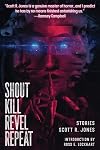
An outrageously good collection from Scott Jones.
Most of the stories here were already published prior to collection, and I *believe* all the original stories have since seen print in other collections as well. Which is not to say you shouldn't pick this up...Its Jones' unique stew of mysticism, science fiction, lovecraftian horror, with social commentary for spice on full display.
There's clearly either some world building going on, or just Jones working out a number of ideas, themes, and show more story elements that will finally gel together in Stonefish. Whichever of those is true, its a fascinating process to watch, and well re-creates the feeling Lovecraft created that there was something coherent and *bigger* going on, when it fact it is and always was chaos. We even see Jones' much vaunted First Law, Everything Hungry, make appearences throughout. If I have one minor complaint, its that that there are a couple sensory turns of phrase (the calving of an ice shelf) that feel a little repetitive, but only because stories originally written to be read on their own all collected in one place.
Some of these definitely feel like they fall within the Stonefish mythos ('The Amnesiac's Lament', 'The Spike', etc.). Others are squarely in the bounds of Jones' unique take on Lovecraft's universe (the titular 'Shout/Kill/Revel/Repeat', 'Wonder and Glory Forever'), some touch on other classics of weird fiction (I loved the King in Yellow riff of 'Perfect Ten'), and others are something completely separate and different ('The Transition of Toby the Twitch'). If I had to identify a story that didn't really land for me, I'd say it was Abraxas.
If you like a deeply mystic take on weird fiction, that defies easy classification and still moves fast while being thought provoking, please pick up Jones work. show less
Most of the stories here were already published prior to collection, and I *believe* all the original stories have since seen print in other collections as well. Which is not to say you shouldn't pick this up...Its Jones' unique stew of mysticism, science fiction, lovecraftian horror, with social commentary for spice on full display.
There's clearly either some world building going on, or just Jones working out a number of ideas, themes, and show more story elements that will finally gel together in Stonefish. Whichever of those is true, its a fascinating process to watch, and well re-creates the feeling Lovecraft created that there was something coherent and *bigger* going on, when it fact it is and always was chaos. We even see Jones' much vaunted First Law, Everything Hungry, make appearences throughout. If I have one minor complaint, its that that there are a couple sensory turns of phrase (the calving of an ice shelf) that feel a little repetitive, but only because stories originally written to be read on their own all collected in one place.
Some of these definitely feel like they fall within the Stonefish mythos ('The Amnesiac's Lament', 'The Spike', etc.). Others are squarely in the bounds of Jones' unique take on Lovecraft's universe (the titular 'Shout/Kill/Revel/Repeat', 'Wonder and Glory Forever'), some touch on other classics of weird fiction (I loved the King in Yellow riff of 'Perfect Ten'), and others are something completely separate and different ('The Transition of Toby the Twitch'). If I had to identify a story that didn't really land for me, I'd say it was Abraxas.
If you like a deeply mystic take on weird fiction, that defies easy classification and still moves fast while being thought provoking, please pick up Jones work. show less
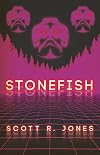
Scott Jones defies genre expectations all the way round. This cyberpunk, dys- or I guess u-topian (depending on how you feel about it), weird fiction, horror, crypto zoological mystery should maybe not work...but it does and beautifully at that.
As one might expect from Scott there are certainly religious and mystical overtones (I particularly enjoy the parallel to Christ carrying his cross upon his back late in the novel) as well. With clever references to the present day, our protagonist (a show more journalist by trade) goes on the hunt for a missing tech mogul in a world teetering both on the edge of climate collapse and transformative consciousness, in the midst of another mysterious crisis featuring strange phenomena robbing people of their senses.
I would describe or summarize some of what's encountered along the way, but repeatedly the very nature and substance of reality is called into question. As the, intertextually referenced, Matrix advertising campaign told us in the 90s, one can't be told what this story is. Or at least, can't be without robbing you of the journey and experience (unless, like me, you are completely okay with spoilers).
While reading it, I kept thinking something about Stonefish reminded me of Murakam's 'Hard-Boiled Wonderland and the End of the World' and I've struggled to think of why. Other than some very superficial trappings, they don't on the surface seem similar enough to have evoked that in me. But I can't help feel they share some DNA. Maybe its the birth and death of worlds, questions about the nature of reality, but one entirely internal and one very external. show less
As one might expect from Scott there are certainly religious and mystical overtones (I particularly enjoy the parallel to Christ carrying his cross upon his back late in the novel) as well. With clever references to the present day, our protagonist (a show more journalist by trade) goes on the hunt for a missing tech mogul in a world teetering both on the edge of climate collapse and transformative consciousness, in the midst of another mysterious crisis featuring strange phenomena robbing people of their senses.
I would describe or summarize some of what's encountered along the way, but repeatedly the very nature and substance of reality is called into question. As the, intertextually referenced, Matrix advertising campaign told us in the 90s, one can't be told what this story is. Or at least, can't be without robbing you of the journey and experience (unless, like me, you are completely okay with spoilers).
While reading it, I kept thinking something about Stonefish reminded me of Murakam's 'Hard-Boiled Wonderland and the End of the World' and I've struggled to think of why. Other than some very superficial trappings, they don't on the surface seem similar enough to have evoked that in me. But I can't help feel they share some DNA. Maybe its the birth and death of worlds, questions about the nature of reality, but one entirely internal and one very external. show less

I enjoyed this anthology of contemporary yog-sothothery. Many of the stories keep clear of the canonical names and standard fetishes of the micro-genre, but even the ones that mention Arkham, Shub-Niggurath, or the Necronomicon have a distinct remove from the original Lovecraftian tone. While the stories might still be horror, the protagonists in this book all have (or develop) a conscious appetite for the thrill of congress with the inhuman, or "The Black Gnosis" as it is denominated by the show more subtitle. Protagonists are generally not "cultists" per se: although they might be votaries of some praeterhuman entity, they largely fall outside the bounds of even cult communities.
The longest story and "star" of the collection is Ruthanna Emrys's "Litany of Earth," which I had read in its earlier online publication at Tor.com. It is in many ways more involved with the Lovecraftian canon than other stories in the book, but in a highly revisionist manner that inverts many of the perspectives in the earlier fiction. It follows an Innsmouth native as a sympathetic survivor of the government raids and arrests in "The Shadow Over Innsmouth." Emrys's social comparanda are not just the interment of Japanese-Americans, but also Nazi Versuchspersonen. The integration of the Yith into the lore of the Esoteric Order of Dagon was a little surprising at first, but I thought the story sold it well. It held up for me on its second reading, and I am seriously contemplating a go at the author's novel Winter Tide centered on the same character.
Other stand-out contributions here include Gord Sellar's "Heiros Gamos" exploring the Eleusinian Mysteries, a mother-daughter team of eschatologists in John Linwood Grant's "Messages," a thing on many doorsteps in "Feeding the Abyss" by Rhoads Brazos, and the outre apprenticeship and epiphany of Stephanie Elrick's "Mother's Nature." In addition to short fiction, there is a sprinkling of poems and manifestos adumbrating the Black Gnosis, and these, along with the more straightforward explanations of editor Scott R. Jones's introduction, have me interested in his "auto-ethnographical work" When the Stars Are Right. show less
The longest story and "star" of the collection is Ruthanna Emrys's "Litany of Earth," which I had read in its earlier online publication at Tor.com. It is in many ways more involved with the Lovecraftian canon than other stories in the book, but in a highly revisionist manner that inverts many of the perspectives in the earlier fiction. It follows an Innsmouth native as a sympathetic survivor of the government raids and arrests in "The Shadow Over Innsmouth." Emrys's social comparanda are not just the interment of Japanese-Americans, but also Nazi Versuchspersonen. The integration of the Yith into the lore of the Esoteric Order of Dagon was a little surprising at first, but I thought the story sold it well. It held up for me on its second reading, and I am seriously contemplating a go at the author's novel Winter Tide centered on the same character.
Other stand-out contributions here include Gord Sellar's "Heiros Gamos" exploring the Eleusinian Mysteries, a mother-daughter team of eschatologists in John Linwood Grant's "Messages," a thing on many doorsteps in "Feeding the Abyss" by Rhoads Brazos, and the outre apprenticeship and epiphany of Stephanie Elrick's "Mother's Nature." In addition to short fiction, there is a sprinkling of poems and manifestos adumbrating the Black Gnosis, and these, along with the more straightforward explanations of editor Scott R. Jones's introduction, have me interested in his "auto-ethnographical work" When the Stars Are Right. show less
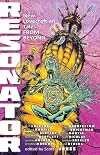
As much, if not more, inspired by "From Beyond" the much beloved cult horror film than by the Lovecraft story of the same name, "Resonator" is one of the overall most solid collections put together by Scott R. Jones and Martian Migraine Press I've yet read. There is not a shred of fat to be lost here.
Those familiar with Martian Migraine may know of the editor's fondness for playing with concepts and themes for their collections in ways other publisher might not, as well as for an openness to show more more sex and eros integrated into the stories than we might normally see in short literary horror. A collection based on the concepts and technology in the film "From Beyond" lend themselves perfectly to this mindset.
As is frequently the case with Martian Migraine, the collection opens with a reprinting of the Lovecraft story that inspired it all after a not to be skipped Introduction/analysis by Scott Jones. I won't do an exhaustive list/summary at this time, but let's hit a few high points. "The Wizard of OK" is not a only a standout in this collection, but ranks as one of my favorite pieces by genre favourite Scott Nicolay so far. "Machine Will Start When You Start" is a super fun piece by Matthew Bartlett, and is wildly divergent from his usual Leeds fair, something I think fans will really enjoy. "IPO", "Film Maudit", "Bug Zappers", and "Turbulence" all play in different ways with the idea of the Tillinghast technology getting out in a more widespread way into the world. As does Orrin Grey's, "Programmed To Receive", albeit in a more tragic and personal way. For lovers of cats and children, there's a particularly sad entry by the name of "Ninesight" not to be missed. show less
Those familiar with Martian Migraine may know of the editor's fondness for playing with concepts and themes for their collections in ways other publisher might not, as well as for an openness to show more more sex and eros integrated into the stories than we might normally see in short literary horror. A collection based on the concepts and technology in the film "From Beyond" lend themselves perfectly to this mindset.
As is frequently the case with Martian Migraine, the collection opens with a reprinting of the Lovecraft story that inspired it all after a not to be skipped Introduction/analysis by Scott Jones. I won't do an exhaustive list/summary at this time, but let's hit a few high points. "The Wizard of OK" is not a only a standout in this collection, but ranks as one of my favorite pieces by genre favourite Scott Nicolay so far. "Machine Will Start When You Start" is a super fun piece by Matthew Bartlett, and is wildly divergent from his usual Leeds fair, something I think fans will really enjoy. "IPO", "Film Maudit", "Bug Zappers", and "Turbulence" all play in different ways with the idea of the Tillinghast technology getting out in a more widespread way into the world. As does Orrin Grey's, "Programmed To Receive", albeit in a more tragic and personal way. For lovers of cats and children, there's a particularly sad entry by the name of "Ninesight" not to be missed. show less
Lists
Awards

You May Also Like
Associated Authors
Statistics
- Works
- 8
- Also by
- 19
- Members
- 203
- Popularity
- #108,638
- Rating
- 3.9
- Reviews
- 10
- ISBNs
- 14
- Favorited
- 2