
Paige Rawl
Author of Positive: A Memoir
Works by Paige Rawl
Tagged
Common Knowledge
- Birthdate
- 20th Century
- Gender
- female
- Nationality
- USA
- Associated Place (for map)
- USA
Members
Reviews

Positive is one of those books that make me feel like humanity isn't totally effed. It is a memoir written by a young woman who has been HIV positive since birth.
It has the benefit of reading so much more smoothly and is a lot more captivating than a lot of memoirs of young people (defined by my unscientific metric as being noticeably younger than me) who tend to maybe have a dramatic or interesting life story, without necessarily a lot of life experience. Paige Rawl seems to have both the show more story and the experience, which makes Positive a very well-rounded memoir.
The thing about this book is, I really wish I could have read it when I was a teenager. I don't have HIV, but I was the victim of absolutely merciless bullying in school, my first memories of it go back to 5th grade (which meant it probably started even before that). I just didn't fit in, nothing about me was so obviously out of the status quo to get me ridiculed, it was just a giant collection of my oddness, and my generally not wanting to fit in. I didn't have the right clothes (didn't know what the right clothes were, either). I didn't listen to the right music (and didn't know what that was, either). I didn't watch sports, nor did I play them. I was smart as hell and didn't hide it. And the worst point(s) against me: I was outspoken (and a young woman). You get the idea. I think one of the fantastic things that Paige does in this book is to make the connection that children are ridiculed for every reason, including non-reasons, and they really do deserve help and support in any way possible. It is horrifying to me that children resort to suicide as a result of bullying, but I understand it, because I was in their shoes.
And I totally believe what Paige went through, as I also know first hand what schools do to help end bullying. They stick their fingers in their ears, scrunch up their eyes, and say "nah nah nah nothing happening here" as the popular kids keep beating on the rejects / freaks / weirdos / nerds / geeks / stoners / dropouts / punks / emos / whatevers with COMPLETE IMPUNITY. In fact, if the schools could have made US somehow be responsible for our own torment, it probably would have made their lives easier, and they would have done it. Ask any student who was bullied why they didn't talk to a teacher or an adult. We will say "why bother? it would have made things worse." That is the sad reality of public schools. (I can't speak for private schools, but I imagine they have their own issues.)
I thank my lucky stars that Facebook and the Internet weren't around when I was in grade school. At least when I got to go home, the bullying ended. I had over 12 hours to exist in a world that I could pretend I was somewhat in charge of. And if I needed to, I could close the door, turn the volume to 11 on my Nine Inch Nails CD, and cry without having anybody hear me. It really makes me hurt to think that children, these days, can't even escape home to have the torment stop. It continues on phones, on computers, everywhere. It is absolutely heartbreaking.
It's hard to get out of the cycle. And I think Paige does an amazing job describing what it's like. You spend years and years trying to pretend things don't bother you. You act hard and aloof. You pretend you can't hear what other people are saying about you. You don't cry, because you can't show weakness. You get home and your mask comes off, and you get angry, and listen to loud music, and all you know is that IT HURTS and it WON'T STOP. You don't want to go to school, you go anyway, you keep getting amazing grades to spite them all, or maybe you stop getting good grades because it's too stressful to keep up.
At some point, if it hasn't gotten to the point of no return, you learn how to cope. Probably not in a real healthy way, but whatever gets you through the pain of getting through 8 hours confined in a relatively small building with many people who hate you for no good reason... All the while trying to maintain your few authentic friendships, trying to stay true to who you are, trying to decide what you want to do next in your life, etc. Sadly a lot of students just don't make it that far before dropping out (drugs, suicide, dropping out, self-injury, getting totally enveloped in hate).
And then, one day, your tormenters and you both cross a stage, and you might never have to see them again. The bandaid may have come off, but there's still a wound under there. It took me a few years into college before I realized that I was still operating under the assumptions that everybody should be hating me. I mean, these people said that we were friends. But based on the way my life had operated, they must secretly want something from me (some of my bullies wanted to be my "friend" so they could cheat off of me), or that they're just waiting for some big reveal later on (some of my bullies would pretend to be my "friend" so they could just do something really douchey to me and then laugh about it later). It's hard to figure out how to navigate life when you're on an even level with your peers, and there are no ulterior motives.
And then, you learn that some people are just GOOD PEOPLE. And that is like the scene in a movie where the sun shines down and the harps start playing. There are good people in the world, and you want to be one of those good people, and if you all got together, what kind of amazing change could you make in the world?
Now with many years of hindsight, I will sometimes ask myself what I would have been like if I had never been bullied. Well, I don't know, but it certainly did something to my character that became a strength. I am my own person, and I am not dependent on other people to provide me with worth. I don't feel a need to fit in with crowds just to add another number to my Facebook friends. Basically, I am my own person, and I have a lot of strength, and that may not have happened to this degree if I hadn't spent years of my life being bullied. Unfortunately, to get there, I had to suffer, A LOT, and I also don't want to forget that and make this sound like "yay, rainbows!" because there's definitely some turds under those rainbows. I was just lucky enough to make it through the torment to a point in my life where I was able to turn it around into something that made me stronger. Not all children are so lucky.
Paige makes similar statements that, without having had HIV, or being bullied, she wouldn't have been able to go out giving talks to schools and making connections with children there, or helping other young kids know that they're not alone, advocating for better anti-bullying legislation, etc. Talk about turning those lemons into lemonade! (But again, she also mentions that it's partly out of sheer luck and fortitude that she made it to where she is now, and just because she's doing well now doesn't mean that the pain, to some level, will ever go away entirely. Scars are souvenirs we never lose.)
Anyway, that is probably the most rambling book review I've ever written, but this book really hit me. If I could have read this as a kid, I would have known that I was NOT ALONE. That, in itself, would have been worth the world to me. I'm so grateful that our world contains amazing young women like Paige Rawl who are committed to doing what they can to end stigma (for whatever reason, HIV status, sexual orientation, gender orientation, skin color, race, body size / shape, mental illness, disability, etc.)
I'm thankful that (1) Paige was able to start forging her own path, and was able to determine what strengths to bring with her, and that (2) she was able to start making such an impact on the lives of others, including by writing this book. I wish I could give her a big "you are awesome, way to go" cyber hug, and all the encouragement in the world. We really need more role models like Paige. show less
It has the benefit of reading so much more smoothly and is a lot more captivating than a lot of memoirs of young people (defined by my unscientific metric as being noticeably younger than me) who tend to maybe have a dramatic or interesting life story, without necessarily a lot of life experience. Paige Rawl seems to have both the show more story and the experience, which makes Positive a very well-rounded memoir.
The thing about this book is, I really wish I could have read it when I was a teenager. I don't have HIV, but I was the victim of absolutely merciless bullying in school, my first memories of it go back to 5th grade (which meant it probably started even before that). I just didn't fit in, nothing about me was so obviously out of the status quo to get me ridiculed, it was just a giant collection of my oddness, and my generally not wanting to fit in. I didn't have the right clothes (didn't know what the right clothes were, either). I didn't listen to the right music (and didn't know what that was, either). I didn't watch sports, nor did I play them. I was smart as hell and didn't hide it. And the worst point(s) against me: I was outspoken (and a young woman). You get the idea. I think one of the fantastic things that Paige does in this book is to make the connection that children are ridiculed for every reason, including non-reasons, and they really do deserve help and support in any way possible. It is horrifying to me that children resort to suicide as a result of bullying, but I understand it, because I was in their shoes.
And I totally believe what Paige went through, as I also know first hand what schools do to help end bullying. They stick their fingers in their ears, scrunch up their eyes, and say "nah nah nah nothing happening here" as the popular kids keep beating on the rejects / freaks / weirdos / nerds / geeks / stoners / dropouts / punks / emos / whatevers with COMPLETE IMPUNITY. In fact, if the schools could have made US somehow be responsible for our own torment, it probably would have made their lives easier, and they would have done it. Ask any student who was bullied why they didn't talk to a teacher or an adult. We will say "why bother? it would have made things worse." That is the sad reality of public schools. (I can't speak for private schools, but I imagine they have their own issues.)
I thank my lucky stars that Facebook and the Internet weren't around when I was in grade school. At least when I got to go home, the bullying ended. I had over 12 hours to exist in a world that I could pretend I was somewhat in charge of. And if I needed to, I could close the door, turn the volume to 11 on my Nine Inch Nails CD, and cry without having anybody hear me. It really makes me hurt to think that children, these days, can't even escape home to have the torment stop. It continues on phones, on computers, everywhere. It is absolutely heartbreaking.
It's hard to get out of the cycle. And I think Paige does an amazing job describing what it's like. You spend years and years trying to pretend things don't bother you. You act hard and aloof. You pretend you can't hear what other people are saying about you. You don't cry, because you can't show weakness. You get home and your mask comes off, and you get angry, and listen to loud music, and all you know is that IT HURTS and it WON'T STOP. You don't want to go to school, you go anyway, you keep getting amazing grades to spite them all, or maybe you stop getting good grades because it's too stressful to keep up.
At some point, if it hasn't gotten to the point of no return, you learn how to cope. Probably not in a real healthy way, but whatever gets you through the pain of getting through 8 hours confined in a relatively small building with many people who hate you for no good reason... All the while trying to maintain your few authentic friendships, trying to stay true to who you are, trying to decide what you want to do next in your life, etc. Sadly a lot of students just don't make it that far before dropping out (drugs, suicide, dropping out, self-injury, getting totally enveloped in hate).
And then, one day, your tormenters and you both cross a stage, and you might never have to see them again. The bandaid may have come off, but there's still a wound under there. It took me a few years into college before I realized that I was still operating under the assumptions that everybody should be hating me. I mean, these people said that we were friends. But based on the way my life had operated, they must secretly want something from me (some of my bullies wanted to be my "friend" so they could cheat off of me), or that they're just waiting for some big reveal later on (some of my bullies would pretend to be my "friend" so they could just do something really douchey to me and then laugh about it later). It's hard to figure out how to navigate life when you're on an even level with your peers, and there are no ulterior motives.
And then, you learn that some people are just GOOD PEOPLE. And that is like the scene in a movie where the sun shines down and the harps start playing. There are good people in the world, and you want to be one of those good people, and if you all got together, what kind of amazing change could you make in the world?
Now with many years of hindsight, I will sometimes ask myself what I would have been like if I had never been bullied. Well, I don't know, but it certainly did something to my character that became a strength. I am my own person, and I am not dependent on other people to provide me with worth. I don't feel a need to fit in with crowds just to add another number to my Facebook friends. Basically, I am my own person, and I have a lot of strength, and that may not have happened to this degree if I hadn't spent years of my life being bullied. Unfortunately, to get there, I had to suffer, A LOT, and I also don't want to forget that and make this sound like "yay, rainbows!" because there's definitely some turds under those rainbows. I was just lucky enough to make it through the torment to a point in my life where I was able to turn it around into something that made me stronger. Not all children are so lucky.
Paige makes similar statements that, without having had HIV, or being bullied, she wouldn't have been able to go out giving talks to schools and making connections with children there, or helping other young kids know that they're not alone, advocating for better anti-bullying legislation, etc. Talk about turning those lemons into lemonade! (But again, she also mentions that it's partly out of sheer luck and fortitude that she made it to where she is now, and just because she's doing well now doesn't mean that the pain, to some level, will ever go away entirely. Scars are souvenirs we never lose.)
Anyway, that is probably the most rambling book review I've ever written, but this book really hit me. If I could have read this as a kid, I would have known that I was NOT ALONE. That, in itself, would have been worth the world to me. I'm so grateful that our world contains amazing young women like Paige Rawl who are committed to doing what they can to end stigma (for whatever reason, HIV status, sexual orientation, gender orientation, skin color, race, body size / shape, mental illness, disability, etc.)
I'm thankful that (1) Paige was able to start forging her own path, and was able to determine what strengths to bring with her, and that (2) she was able to start making such an impact on the lives of others, including by writing this book. I wish I could give her a big "you are awesome, way to go" cyber hug, and all the encouragement in the world. We really need more role models like Paige. show less
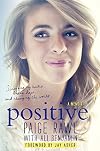
In one sense, this is an easy read. I’ve seen it described as non-fiction that reads like a YA novel, and that’s pretty accurate. The writing is straightforward and the pages just fly by; I found it hard to put down and was finished much faster than I’d expected.
In another sense, this isn’t an easy read at all. It’s a non-fiction account of the horrible bullying that the author endured after revealing to her best friend that she’s been HIV positive since birth. The friend soon show more made it known to the whole school, and the name-calling, teasing, and avoidance began.
That wasn’t what made the account almost unbearable, though. I wasn’t surprised that kids would be awful to anyone different. What absolutely shocked me was the behaviour of the adults at the school, especially Paige’s guidance counsellor who dismissed her concerns as “drama” and basically told her to go away. The stress of the bullying led to multiple seizures of the sort more common among sufferers from PTSD, and all the adults who might be expected to deal with the situation were completely absent, when they weren’t actively blaming Paige for everything and advising her to lie about her status to make the problem go away. I can’t believe these people kept their jobs.
As the clever title suggests, this book tries to strike a note of optimism about Paige’s resiliency in overcoming her struggles; she survives a suicide attempt and comes to realize that she can make a difference in the world. This is certainly an encouraging conclusion, but the journey that we take with Paige to reach that point is often a painful and unpleasant one.
Of course, the fact that such terrible things can happen to someone through no fault of their own, simply because of the ignorance and intolerance of others, makes this an important issue to discuss. I’m glad that the author wrote this book, and I’m glad that I read it. As I mentioned earlier, it was a very quick read, and ultimately pretty uplifting. But I can’t quite say that I loved it, because the journey was sometimes so bleak. I liked it, and I would recommend it, but be warned: this is a powerful story, and it hurts. show less
In another sense, this isn’t an easy read at all. It’s a non-fiction account of the horrible bullying that the author endured after revealing to her best friend that she’s been HIV positive since birth. The friend soon show more made it known to the whole school, and the name-calling, teasing, and avoidance began.
That wasn’t what made the account almost unbearable, though. I wasn’t surprised that kids would be awful to anyone different. What absolutely shocked me was the behaviour of the adults at the school, especially Paige’s guidance counsellor who dismissed her concerns as “drama” and basically told her to go away. The stress of the bullying led to multiple seizures of the sort more common among sufferers from PTSD, and all the adults who might be expected to deal with the situation were completely absent, when they weren’t actively blaming Paige for everything and advising her to lie about her status to make the problem go away. I can’t believe these people kept their jobs.
As the clever title suggests, this book tries to strike a note of optimism about Paige’s resiliency in overcoming her struggles; she survives a suicide attempt and comes to realize that she can make a difference in the world. This is certainly an encouraging conclusion, but the journey that we take with Paige to reach that point is often a painful and unpleasant one.
Of course, the fact that such terrible things can happen to someone through no fault of their own, simply because of the ignorance and intolerance of others, makes this an important issue to discuss. I’m glad that the author wrote this book, and I’m glad that I read it. As I mentioned earlier, it was a very quick read, and ultimately pretty uplifting. But I can’t quite say that I loved it, because the journey was sometimes so bleak. I liked it, and I would recommend it, but be warned: this is a powerful story, and it hurts. show less
Paige is HIV positive and has been since birth. Her father cheated on her mom and infected her before she gave birth to Paige. Her father has since died of AIDS but Paige and her mom, thanks to her mom’s diligence, are doing well. However, when Paige confided to her best friend her health condition, this friend spread it around school and the bullying began. It got to the point she withdrew from school and learned at home for a year. On the plus side, she made new friends, got involved in show more a new charter school where bullying was simply not tolerated and got involved in the HIV community. Hers is a great story, from the depths of depression and a suicide attempt to coming to terms with herself and accepting it, even embracing it, as she moves forward in life. Her courage is amazing. show less
There are books that you don’t put down because you are obligated to read them, either because of a Positiveschool assignment or a journal review, which was the case with the book I read before Positive: A Memoir. Then there are the books you don’t put down because they are so good or so absorbing you want to/need to keep reading, which is the case with Paige Rawl’s story of the middle school bullying she faced and overcame because of her HIV+ status.
At the age of three, Paige and her show more mother were diagnosed HIV+. Her mother contracted it through Paige’s father and passed it on to her. Their lives would never be the same. There was the regimen of pills to counteract the HIV, and pills to moderate the depression and loss of appetite caused by the medication. But that was their lives and Paige knew nothing different. To her, her disability or illness was no different than someone with asthma or allergies. So when she mentioned it to her best friend, Yasmine, in passing (“everyone has something”) the reaction was so unexpected. Within minutes, this knowledge was spread to other students who lost no time in ridiculing her, calling her Ho and PAID, telling her she has AIDS and making life miserable.
We all know the impact of bullying on teens. We read it in the newspapers all the time. Teen suicide is on the rise. Cutting is becoming more prevalent. It was no different with Paige. She went through all these emotions. We also know that schools are ill equipped to counteract bullying, as was Paige’s school. One counselor told her to ‘just don’t tell anyone you’re HIV+”. Another told her “to cut the drama”. She was unable to get satisfaction through our legal system as well, unable to get a trial in order to make her situation public.
Luckily for Paige, she was able to overcome this. She had a very supportive mother and some great friends who stood by her.
Listen, in my mind, bullying doesn’t even have to be directed at a person. Even commenting amongst ourselves is a form of bullying. If you see an effeminate man and make comments to your co-workers, that’s a form a bullying. If you see a man dressed in women’s clothing and whisper, that’s a form of bullying, only because you are not seeing what’s inside that person and you’re denigrating him. And what’s the next step you might take? Openly commenting?
Positive: A Memoir is a low key, eye opening book. Paige is the exception to the rule. She ultimately chose to be an anti-bullying activist and tell people her story. Most young adults aren’t able to make that leap. Most suffer alone, afraid to tell an adult or having told someone, watch as nothing is done, no or minimal action taken.
With an Introduction by Jay Asher and a list of resources and facts at the end, Positive: A Memoir is a quietly powerful book. show less
At the age of three, Paige and her show more mother were diagnosed HIV+. Her mother contracted it through Paige’s father and passed it on to her. Their lives would never be the same. There was the regimen of pills to counteract the HIV, and pills to moderate the depression and loss of appetite caused by the medication. But that was their lives and Paige knew nothing different. To her, her disability or illness was no different than someone with asthma or allergies. So when she mentioned it to her best friend, Yasmine, in passing (“everyone has something”) the reaction was so unexpected. Within minutes, this knowledge was spread to other students who lost no time in ridiculing her, calling her Ho and PAID, telling her she has AIDS and making life miserable.
We all know the impact of bullying on teens. We read it in the newspapers all the time. Teen suicide is on the rise. Cutting is becoming more prevalent. It was no different with Paige. She went through all these emotions. We also know that schools are ill equipped to counteract bullying, as was Paige’s school. One counselor told her to ‘just don’t tell anyone you’re HIV+”. Another told her “to cut the drama”. She was unable to get satisfaction through our legal system as well, unable to get a trial in order to make her situation public.
Luckily for Paige, she was able to overcome this. She had a very supportive mother and some great friends who stood by her.
Listen, in my mind, bullying doesn’t even have to be directed at a person. Even commenting amongst ourselves is a form of bullying. If you see an effeminate man and make comments to your co-workers, that’s a form a bullying. If you see a man dressed in women’s clothing and whisper, that’s a form of bullying, only because you are not seeing what’s inside that person and you’re denigrating him. And what’s the next step you might take? Openly commenting?
Positive: A Memoir is a low key, eye opening book. Paige is the exception to the rule. She ultimately chose to be an anti-bullying activist and tell people her story. Most young adults aren’t able to make that leap. Most suffer alone, afraid to tell an adult or having told someone, watch as nothing is done, no or minimal action taken.
With an Introduction by Jay Asher and a list of resources and facts at the end, Positive: A Memoir is a quietly powerful book. show less
Lists
Awards


You May Also Like


Statistics
- Works
- 1
- Members
- 173
- Popularity
- #123,687
- Rating
- 4.3
- Reviews
- 14
- ISBNs
- 8
- Languages
- 2