
Henry Jenkins
Author of Convergence Culture: Where Old and New Media Collide
About the Author
Henry Jenkins is the Peter de Florez Professor of Humanities and the Founder/Director of the Comparative Media Studies Program at MIT.
Image credit: Joi Ito
Works by Henry Jenkins
Confronting the Challenges of Participatory Culture: Media Education for the 21st Century (The John D. and Catherine T. MacArthur Foundation Reports on Digital Media and Learning) (2009) 130 copies, 4 reviews
Science Fiction Audiences: Watching Star Trek and Doctor Who (Popular Fictions Series) (1995) — Author — 89 copies
Participatory Culture in a Networked Era: A Conversation on Youth, Learning, Commerce, and Politics (2015) 56 copies
Reading in a Participatory Culture: Remixing Moby-Dick in the English Classroom (Language and Literacy Series) (2013) 22 copies
By Any Media Necessary: The New Youth Activism (Connected Youth and Digital Futures) (2016) 19 copies
livro cultura da convergncia 1 copy
Where the Wild Things Were: Boyhood and Permissive Parenting in Postwar America (Postmillennial Pop, 40) (2025) 1 copy
Games, the New Lively Art 1 copy
Introduction: "Worship at the Altar of Convergence": A New Paradigm for Understanding Media Change 1 copy
Rozprzestrzenialne media 1 copy
Associated Works
First Person: New Media as Story, Performance, and Game (2004) — Contributor — 177 copies, 3 reviews
From Barbie to Mortal Kombat: Gender and Computer Games (1998) — Editor, some editions; Contributor, some editions — 104 copies
Interfictions 2: An Anthology of Interstitial Writing (2009) — Introduction — 101 copies, 15 reviews
Vintage Tomorrows: A Historian And A Futurist Journey Through Steampunk Into The Future of Technology (2013) — Foreword, some editions — 86 copies, 2 reviews
The Routledge Companion to Media Fandom (Routledge Media and Cultural Studies Companions) (2017) — Contributor — 13 copies
Tagged
Common Knowledge
- Legal name
- Jenkins, Henry, III
- Birthdate
- 1958-06-04
- Gender
- male
- Organizations
- National Association of Comics Art Educators
- Nationality
- USA
- Birthplace
- Atlanta, Georgia, USA
- Places of residence
- Los Angeles, California, USA
- Associated Place (for map)
- USA
Members
Reviews
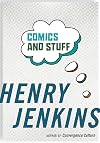
Rating: 4.5* of five
The Publisher Says: Considers how comics display our everyday stuff—junk drawers, bookshelves, attics—as a way into understanding how we represent ourselves now
For most of their history, comics were widely understood as disposable—you read them and discarded them, and the pulp paper they were printed on decomposed over time. Today, comic books have been rebranded as graphic novels—clothbound high-gloss volumes that can be purchased in bookstores, checked out of show more libraries, and displayed proudly on bookshelves. They are reviewed by serious critics and studied in university classrooms. A medium once considered trash has been transformed into a respectable, if not elite, genre.
While the American comics of the past were about hyperbolic battles between good and evil, most of today's graphic novels focus on everyday personal experiences. Contemporary culture is awash with stuff. They give vivid expression to a culture preoccupied with the processes of circulation and appraisal, accumulation and possession. By design, comics encourage the reader to scan the landscape, to pay attention to the physical objects that fill our lives and constitute our familiar surroundings. Because comics take place in a completely fabricated world, everything is there intentionally. Comics are stuff; comics tell stories about stuff; and they display stuff.
When we use the phrase "and stuff" in everyday speech, we often mean something vague, something like "etcetera." In this book, stuff refers not only to physical objects, but also to the emotions, sentimental attachments, and nostalgic longings that we express—or hold at bay—through our relationships with stuff.
In Comics and Stuff, his first solo authored book in over a decade, pioneering media scholar Henry Jenkins moves through anthropology, material culture, literary criticism, and art history to resituate comics in the cultural landscape. Through over one hundred full-color illustrations, using close readings of contemporary graphic novels, Jenkins explores how comics depict stuff and exposes the central role that stuff plays in how we curate our identities, sustain memory, and make meaning. Comics and Stuff presents an innovative new way of thinking about comics and graphic novels that will change how we think about our stuff and ourselves.
I RECEIVED A DRC FROM THE PUBLISHER VIA EDELWEISS+. THANK YOU.
My Review: Stuff is a nightmare. Stuff is all I got. Stuff...is. Dealing with stuff, yours. mine, or no one we know's, is a full time career.
Comic books are stuff. They're about stuff. They are, in short, great wats to explore stuff and its role in our lives.
A subtle person uses the medium to critique, analyze, and...sometimes...take to task the message and its architects. Henry Jenkins is subtle; he uses the medium to make plain what can easily fall outside the awareness of the consumer: This is a story, an entire social universe, construted around the Love of Stuff.
It seems harmless enough phrased that way. It's hard to see from inside the system what the system's designed to do. Like investigating the many-worlds interpretation of quantum physics, the theory is as close to proof of intent as we'll get...we can't observe what is, by definition, outside the system we're working within to perform the measurement.
In other words, you can't see the nose on your face unless you're looking in a mirror (or its equivalent reflective surface). Henry Jenkins is offering that mirror.
Highly recommended for your graphic-novel readin' sophisticate. show less
The Publisher Says: Considers how comics display our everyday stuff—junk drawers, bookshelves, attics—as a way into understanding how we represent ourselves now
For most of their history, comics were widely understood as disposable—you read them and discarded them, and the pulp paper they were printed on decomposed over time. Today, comic books have been rebranded as graphic novels—clothbound high-gloss volumes that can be purchased in bookstores, checked out of show more libraries, and displayed proudly on bookshelves. They are reviewed by serious critics and studied in university classrooms. A medium once considered trash has been transformed into a respectable, if not elite, genre.
While the American comics of the past were about hyperbolic battles between good and evil, most of today's graphic novels focus on everyday personal experiences. Contemporary culture is awash with stuff. They give vivid expression to a culture preoccupied with the processes of circulation and appraisal, accumulation and possession. By design, comics encourage the reader to scan the landscape, to pay attention to the physical objects that fill our lives and constitute our familiar surroundings. Because comics take place in a completely fabricated world, everything is there intentionally. Comics are stuff; comics tell stories about stuff; and they display stuff.
When we use the phrase "and stuff" in everyday speech, we often mean something vague, something like "etcetera." In this book, stuff refers not only to physical objects, but also to the emotions, sentimental attachments, and nostalgic longings that we express—or hold at bay—through our relationships with stuff.
In Comics and Stuff, his first solo authored book in over a decade, pioneering media scholar Henry Jenkins moves through anthropology, material culture, literary criticism, and art history to resituate comics in the cultural landscape. Through over one hundred full-color illustrations, using close readings of contemporary graphic novels, Jenkins explores how comics depict stuff and exposes the central role that stuff plays in how we curate our identities, sustain memory, and make meaning. Comics and Stuff presents an innovative new way of thinking about comics and graphic novels that will change how we think about our stuff and ourselves.
I RECEIVED A DRC FROM THE PUBLISHER VIA EDELWEISS+. THANK YOU.
My Review: Stuff is a nightmare. Stuff is all I got. Stuff...is. Dealing with stuff, yours. mine, or no one we know's, is a full time career.
Comic books are stuff. They're about stuff. They are, in short, great wats to explore stuff and its role in our lives.
A subtle person uses the medium to critique, analyze, and...sometimes...take to task the message and its architects. Henry Jenkins is subtle; he uses the medium to make plain what can easily fall outside the awareness of the consumer: This is a story, an entire social universe, construted around the Love of Stuff.
It seems harmless enough phrased that way. It's hard to see from inside the system what the system's designed to do. Like investigating the many-worlds interpretation of quantum physics, the theory is as close to proof of intent as we'll get...we can't observe what is, by definition, outside the system we're working within to perform the measurement.
In other words, you can't see the nose on your face unless you're looking in a mirror (or its equivalent reflective surface). Henry Jenkins is offering that mirror.
Highly recommended for your graphic-novel readin' sophisticate. show less

Evaluating both popular children’s books and advice to parents, Jenkins chronicles the rise of parenting techniques that were stereotyped as “permissive,” though neither primary intellectual voice—Benjamin Spock and Margaret Mead—characterized their description/advocacy that way; they definitely didn’t think that “anything goes.”
Jenkins characterizes permissiveness as having multiple features: it requires sustained, empathetic engagement with children to understand their show more reactions; it values “children’s sensuality, pleasure, curiosity, and passion as motivating them to explore their environment,” upholds “the rights of children to find their own voices, articulate their own sense of justice, and participate in democratic processes within their families and schools,” encourages the creation of expression—pictures, play, song, or otherwise— “as a means of working through intense, sometimes overwhelming emotions,” and prioritizes explanations and discussions rather than orders or dictated truth. Its advocates “mostly saw themselves as progressive, trying to change the structure and goals of the American family and pave the way for larger changes in the national culture. They wanted to raise children who would be more open to diversity, more willing to embrace democratic citizenship, better prepared to deal with a rapidly changing world, more capable of embracing global brotherhood, and more comfortable with their own bodies.”
This permissive mindset was deracialized and tried to avoid conscious racial stereotypes, but, in doing so, “1950s and 1960s children’s fictions also stepped away from representing people of color, complicit in segregation regardless of their liberal self-perceptions.” Black parents faced particular risks raising their children, especially boys, according to Dr. Spock, whose encouragement of exploration could easily be read by authorities as defiance. This made permissiveness “a form of white privilege, no matter how much these authors might have wished otherwise.”
Child-rearing advocates directly engaged with children’s media-makers, and Jenkins mines the latter’s texts to tell us “about adults, their values, their aspirations, their emotional needs,” rather than about children’s actual experiences. Although they’ve been criticized as predecessors of today’s intensive parenting, which weighs heavily on women, many of those trying to reform parenting were women’s rights activists trying to reason from their own direct observations of children rather than abstract theorizing. These “permissive writers reconceptualized fatherhood, shifting attention from fathers’ traditional functions as breadwinner and disciplinarian toward a new role as playmate.” Weary fathers could get renewed by playing with their sons, while modeling masculinity to them. Play was “an escape from social control, as a space of the free imagination,” but also an entry point for leisure- and consumption-oriented consumerism. And permissiveness also “allowed adults to rethink their domestic lives as helping to construct a more democratic society, and through the representation of the child as a ‘wild thing,’ to imagine the possibilities for their own escape from constrained roles.” But that also meant that fathers retreated from the world with their sons, rather than teaching them how to be adults.
Dennis the Menace was an example of the brand of conservatism that celebrated “an irrepressible masculine spirit” and “boyhood as a force of opposition.” Jenkins contrasts Dennis to the immigrant “real” menaces of the 20s, the Katzenjammer kids—I wonder what he’d say about The Great Brain books of the late 60s/70s and similar books. (Looking those books up, I found out they were edited by E.L. Doctorow. The more you know!) In fact, Dennis is a national metaphor: “America was trying to mask its newly discovered geopolitical influence and its intrusions into other nations’ sovereignty behind a different myth of childlike innocence.” Sure, it did bad things, but it was good at heart.
Like sf, children’s stories used metaphor instead of actual Black characters. I loved Jenkins’ discussion of Dumbo. He points out that, although the black crows living on the outskirts of town are painfully stereotypical, they also (like the “magical Negro” trope) enable Dumbo’s success: “Their acceptance of the misfit pachyderm gives him the courage to gain acceptance by the circus society. … Such stories show how the culture spoke about the need to accept and even celebrate difference without naming any specific form of difference. We can’t say Dumbo is queer, disabled, or Black, though his story might have addressed each of these issues for specific viewers.”
Mr. Rogers modeled permissive ideals for decades longer than other prominent promoters, even after permissiveness lost its dominance, “which is why Rogers, today, is seen as a unique rather than representative figure—in some ways, a man out of his time.” By the late 60s/early 70s, permissiveness was controversial to new people, and Black parents and advice-givers in particular had to grapple with it. “While parenting books by white writers generally focus on psychology, these authors turned to sociological perspectives. They could not consider how to raise ‘normal’ Black children without asking core questions about the society where they were coming of age.” Things like feeding on demand, “an early breakthrough for permissive parenting,” had more tradeoffs for working mothers, and a fixed schedule could help children learn patience, since Black children needed to be prepared for hardship and constraint as well as for rights assertion in the face of discrimination.
I learned that Jonny Quest had a South Asian sidekick so the author could get a “child of the streets” but not “the typical black kid from the ghetto which so many others had used in comic strips and comic books at the time.” As Jenkins puts it, “casting Hadji was about displacing Blackness, shifting from a civil rights frame to a global-brotherhood one, which somehow felt less stereotypical.” show less
Jenkins characterizes permissiveness as having multiple features: it requires sustained, empathetic engagement with children to understand their show more reactions; it values “children’s sensuality, pleasure, curiosity, and passion as motivating them to explore their environment,” upholds “the rights of children to find their own voices, articulate their own sense of justice, and participate in democratic processes within their families and schools,” encourages the creation of expression—pictures, play, song, or otherwise— “as a means of working through intense, sometimes overwhelming emotions,” and prioritizes explanations and discussions rather than orders or dictated truth. Its advocates “mostly saw themselves as progressive, trying to change the structure and goals of the American family and pave the way for larger changes in the national culture. They wanted to raise children who would be more open to diversity, more willing to embrace democratic citizenship, better prepared to deal with a rapidly changing world, more capable of embracing global brotherhood, and more comfortable with their own bodies.”
This permissive mindset was deracialized and tried to avoid conscious racial stereotypes, but, in doing so, “1950s and 1960s children’s fictions also stepped away from representing people of color, complicit in segregation regardless of their liberal self-perceptions.” Black parents faced particular risks raising their children, especially boys, according to Dr. Spock, whose encouragement of exploration could easily be read by authorities as defiance. This made permissiveness “a form of white privilege, no matter how much these authors might have wished otherwise.”
Child-rearing advocates directly engaged with children’s media-makers, and Jenkins mines the latter’s texts to tell us “about adults, their values, their aspirations, their emotional needs,” rather than about children’s actual experiences. Although they’ve been criticized as predecessors of today’s intensive parenting, which weighs heavily on women, many of those trying to reform parenting were women’s rights activists trying to reason from their own direct observations of children rather than abstract theorizing. These “permissive writers reconceptualized fatherhood, shifting attention from fathers’ traditional functions as breadwinner and disciplinarian toward a new role as playmate.” Weary fathers could get renewed by playing with their sons, while modeling masculinity to them. Play was “an escape from social control, as a space of the free imagination,” but also an entry point for leisure- and consumption-oriented consumerism. And permissiveness also “allowed adults to rethink their domestic lives as helping to construct a more democratic society, and through the representation of the child as a ‘wild thing,’ to imagine the possibilities for their own escape from constrained roles.” But that also meant that fathers retreated from the world with their sons, rather than teaching them how to be adults.
Dennis the Menace was an example of the brand of conservatism that celebrated “an irrepressible masculine spirit” and “boyhood as a force of opposition.” Jenkins contrasts Dennis to the immigrant “real” menaces of the 20s, the Katzenjammer kids—I wonder what he’d say about The Great Brain books of the late 60s/70s and similar books. (Looking those books up, I found out they were edited by E.L. Doctorow. The more you know!) In fact, Dennis is a national metaphor: “America was trying to mask its newly discovered geopolitical influence and its intrusions into other nations’ sovereignty behind a different myth of childlike innocence.” Sure, it did bad things, but it was good at heart.
Like sf, children’s stories used metaphor instead of actual Black characters. I loved Jenkins’ discussion of Dumbo. He points out that, although the black crows living on the outskirts of town are painfully stereotypical, they also (like the “magical Negro” trope) enable Dumbo’s success: “Their acceptance of the misfit pachyderm gives him the courage to gain acceptance by the circus society. … Such stories show how the culture spoke about the need to accept and even celebrate difference without naming any specific form of difference. We can’t say Dumbo is queer, disabled, or Black, though his story might have addressed each of these issues for specific viewers.”
Mr. Rogers modeled permissive ideals for decades longer than other prominent promoters, even after permissiveness lost its dominance, “which is why Rogers, today, is seen as a unique rather than representative figure—in some ways, a man out of his time.” By the late 60s/early 70s, permissiveness was controversial to new people, and Black parents and advice-givers in particular had to grapple with it. “While parenting books by white writers generally focus on psychology, these authors turned to sociological perspectives. They could not consider how to raise ‘normal’ Black children without asking core questions about the society where they were coming of age.” Things like feeding on demand, “an early breakthrough for permissive parenting,” had more tradeoffs for working mothers, and a fixed schedule could help children learn patience, since Black children needed to be prepared for hardship and constraint as well as for rights assertion in the face of discrimination.
I learned that Jonny Quest had a South Asian sidekick so the author could get a “child of the streets” but not “the typical black kid from the ghetto which so many others had used in comic strips and comic books at the time.” As Jenkins puts it, “casting Hadji was about displacing Blackness, shifting from a civil rights frame to a global-brotherhood one, which somehow felt less stereotypical.” show less
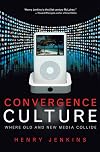
Picked this up as part of my reading of things related to fandom and fan studies. Of the books I've read recently on the subject, I feel like this one was the most well-written and is a great overview from someone who has become known as one of the foremost scholars in this area. It focused more on media consumption and integration than fandom activity, I felt, but it still provided a good overview of how media creators are using new methods to engage with their audiences and how audiences show more are using that engagement to influence media. Definitely worth a read if this is a topic of interest. show less
Textual Poachers: Television Fans and Participatory Culture (Studies in Culture and Communication) by Henry Jenkins
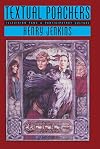
A media studies exploration of television fandom from the early nineties. One of the best studies on the subject, at least partly because Jenkins considers himself a fan of the type he's discussing (too many critical discussions of fandom treat fans as weird or strange and their work suffers for it--there is, for instance, a section on slash fan fiction in Fags, Hags and Queer Sisters: Gender Dissent and Heterosocial Bonds in Gay Culture which, in its contempt for or misunderstanding of the show more subject, contains errors in its literary analysis which no undergrad English student would stand for). Jenkins spends a lot of time discussing who television fans are, what they do, and how their participation in fannish activities affect them. Overall, it's a positive study which provides a lot of insight, even if (or maybe especially if) you're a fan yourself. The missing last half-star reflects the fact that parts of the study read as very dated--being published in 1992, it predates the explosion of fan-related activity on the internet and (obviously) doesn't discuss many of the staples of recent fan-focus (Harry Potter, Jackson's Lord of the Rings, the second Star Wars trilogy, the new Doctor Who, nearly half of the installments in the Star Trek franchise). show less
Lists
Awards


You May Also Like


Associated Authors
Statistics
- Works
- 31
- Also by
- 10
- Members
- 2,218
- Popularity
- #11,557
- Rating
- 3.8
- Reviews
- 37
- ISBNs
- 103
- Languages
- 7
- Favorited
- 4