
Margot Sunderland
Author of The Science of Parenting
About the Author
Works by Margot Sunderland
What Every Parent Needs to Know: The Incredible Effects of Love, Nurture and Play on Your Child's Development (2007) 39 copies
Draw On Your Emotions: Creative Ways to Explore, Express & Understand Important Feelings (1993) 26 copies
Using Story Telling as a Therapeutic Tool with Children (Helping Children with Feelings) (2017) 17 copies
The Day the Sea Went Out and Never Came Back: A Story for Children Who Have Lost Someone They Love (Helping Children with Feelings) (1997) 14 copies, 1 review
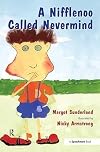
A Nifflenoo Called Nevermind: A Story for Children Who Bottle Up Their Feelings (Helping Children with Feelings) (2000) 11 copies, 1 review
The Frog Who Longed for the Moon to Smile: A Story for Children Who Yearn for Someone They Love (Helping Children with Feelings) (2017) 8 copies, 1 review
A Wibble Called Bipley: A Story for Children Who Have Hardened Their Hearts or Becomes Bullies (Helping Children with Feelings) (2001) 7 copies
Draw on Your Relationships: Creative Ways to Explore, Understand and Work Through Important Relationship Issues (2008) 6 copies
Die neue Elternschule: Kinder richtig verstehen - ein praktischer Erziehungsratgeber: Kinder richtig verstehen und liebevoll erziehen (2007) 6 copies, 1 review
Helping Children Who Have Hardened Their Hearts or Become Bullies (Helping Children) (1997) 6 copies
Willy and the Wobbly House: A Story for Children Who are Anxious or Obsessional (Helping Children with Feelings) (1997) 6 copies
Helping Children Locked in Rage or Hate: A Guidebook (Helping Children with Feelings) (2003) 6 copies
Helping Children Who Are Anxious or Obsessional and Willy and the Wobbly House (Helping Children) (2001) 5 copies
Smasher: A Story to Help Adolescents with Anger & Alienation: A Story to Help Teenagers with Anger and Alienation (2008) 4 copies
Un enfant heureux : Faites des choix éducatifs avertis grâce aux récentes découvertes scientifiques (2007) 3 copies
Helping Children Pursue Their Hopes and Dreams: AND Pea Called Mildred (Helping Children with Feelings) (2001) 1 copy
Helping Children Who Bottle Up Their Feelings & A Nifflenoo Called Nevermind: Set (Helping Children with Feelings) (1999) 1 copy
Helping Children Locked in Rage or Hate & How Hattie Hated Kindness: Set (Helping Children with Feelings) (1999) 1 copy
Helping Children of Troubled Parents & Monica Plum's Horrid Problem: Set (Helping Children with Feelings) (2012) 1 copy
Aiutare i bambini... a esprimere le emozioni. Attività psicoeducative con il supporto di una favola (2005) 1 copy
Tagged
Common Knowledge
- Birthdate
- 20th Century
- Gender
- female
- Occupations
- child psychologist
- Nationality
- UK
- Associated Place (for map)
- UK
Members
Reviews
Science of Parenting: Practical Guidance on Sleep, Crying, Play and Building Emotional Wellbeing for Life by Margot Sunderland
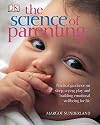
This is a parenting book, as opposed to a science book, with all the benefits and pitfalls inherent in that. The style it is written in is quite accessible, though the tone tends to be a little emotive for my tastes. It really irritated me that Sunderland continually referred to things like the autonomic parts of the brain as a child's "reptilian" brain. This is obviously a pet way for the author to get across her ideas of higher cognitive function and emotional response systems etc. in a show more way that speaks to a mother, rather than repeatedly using big scientific words, but it just felt condescending to me.
I found I had to read this book in quite an aware way. At times I was trying to discern scientific fact from scientific theory as it wasn't always obvious. Many of the conclusions drawn are from studies on extreme cases, such as studies on extreme maternal deprivation, criminals and the severely emotionally disturbed. Some of the assertions were based on the theories of one or two specific scientists, rather than accepted theory from longitudinal studies. I don't think in all cases such conclusions are as important as Sunderland makes them out to be and in some cases they can be quite alarmist, especially to vulnerable first parents (such as a point that she makes about a mother being stressed in pregnancy causing her boy to be transgendered - way to stress out a parent! 'Calm down now! You're destroying your child's chances at a normal life!' okay, so I'm overstating things for effect).
This book seems to be written for ease of access on specific topics. It has bullet point summaries and big boldface quotes, much like a magazine; this can lead to it being somewhat repetitive if you are reading it from cover to cover.
I really appreciated the information on the physiological effects of mother-child bed sharing and the insistence that a child's emotional needs should be met by responsive and communicative parenting rather than baby training and controlled crying techniques.
It seemed to me to be rather at odds with the first chapters of the book when it came to the discipline sections and there were guidelines for Time-Outs and other similarly destructive punishments. I found that the view of children was a little inconsistent as it was hard to tell when the author would advocate being responsive to a child's needs or when she would think it appropriate to train a child out of a behaviour regardless of its needs. I think it's telling that the author occasionally refers to a child as naughty, which is an un-helpful label from my perspective and doesn't fit with my parenting style. It might work for others, but if there is any part of this book that I would take with me for my parenting strategy it is not from this section of the book.
In the last section of the book there are some strategies for parental self care which are designed to help you get on top of your body's own natural chemistry. Again, a lot of this is simplified information and more often given as guidelines without precise explanations. This is probably a good thing to make the information accessible; if you want good information about nutrition for mental health there are better places to go to get the information, but this is fine for a general parenting manual.
This is the sort of book for which the phrase "take what you can use and ignore the rest" was invented. show less
I found I had to read this book in quite an aware way. At times I was trying to discern scientific fact from scientific theory as it wasn't always obvious. Many of the conclusions drawn are from studies on extreme cases, such as studies on extreme maternal deprivation, criminals and the severely emotionally disturbed. Some of the assertions were based on the theories of one or two specific scientists, rather than accepted theory from longitudinal studies. I don't think in all cases such conclusions are as important as Sunderland makes them out to be and in some cases they can be quite alarmist, especially to vulnerable first parents (such as a point that she makes about a mother being stressed in pregnancy causing her boy to be transgendered - way to stress out a parent! 'Calm down now! You're destroying your child's chances at a normal life!' okay, so I'm overstating things for effect).
This book seems to be written for ease of access on specific topics. It has bullet point summaries and big boldface quotes, much like a magazine; this can lead to it being somewhat repetitive if you are reading it from cover to cover.
I really appreciated the information on the physiological effects of mother-child bed sharing and the insistence that a child's emotional needs should be met by responsive and communicative parenting rather than baby training and controlled crying techniques.
It seemed to me to be rather at odds with the first chapters of the book when it came to the discipline sections and there were guidelines for Time-Outs and other similarly destructive punishments. I found that the view of children was a little inconsistent as it was hard to tell when the author would advocate being responsive to a child's needs or when she would think it appropriate to train a child out of a behaviour regardless of its needs. I think it's telling that the author occasionally refers to a child as naughty, which is an un-helpful label from my perspective and doesn't fit with my parenting style. It might work for others, but if there is any part of this book that I would take with me for my parenting strategy it is not from this section of the book.
In the last section of the book there are some strategies for parental self care which are designed to help you get on top of your body's own natural chemistry. Again, a lot of this is simplified information and more often given as guidelines without precise explanations. This is probably a good thing to make the information accessible; if you want good information about nutrition for mental health there are better places to go to get the information, but this is fine for a general parenting manual.
This is the sort of book for which the phrase "take what you can use and ignore the rest" was invented. show less
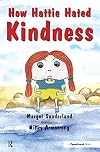
A book about pain and sadness and how a little girl who was sad and frightened learned to live in a gentler, kinder world.
this is a really interesting book about brain development as it relates to parenting. highly recommended for parents of young children and parents-to-be.
You May Also Like


Associated Authors
Statistics
- Works
- 52
- Members
- 368
- Popularity
- #65,432
- Rating
- 4.0
- Reviews
- 8
- ISBNs
- 159
- Languages
- 5