
Steve Tomecek
Author of Everything Rocks and Minerals: Dazzling gems of photos and info that will rock your world
About the Author
Stephen M. Tomecek is a scientist and the author of more than 30 non-fiction books for children and teachers, including Bouncing Bending Light, the 1996 winner of the American Institute of Physics Science Writing Award. Tomecek works as a consultant and writer for the National Geographic Society show more and Scholastic Inc. show less
Image credit: via What On Earth? Books
Works by Steve Tomecek
Everything Rocks and Minerals: Dazzling gems of photos and info that will rock your world (2011) 739 copies, 5 reviews
Dirtmeister's Nitty Gritty Planet Earth: All About Rocks, Minerals, Fossils, Earthquakes, Volcanoes, & Even Dirt! (2015) 61 copies, 2 reviews
Soda Bottle Science: 25 Easy, Hands-on Activities That Teach Key Concepts in Physical, Earth, and Life Sciences-and Meet the Science Standards (2006) 60 copies, 1 review
Sandwich Bag Science: 25 Hands-on Activities for Physical, Earth, and Life Sciences (2006) 38 copies
All About Heat Waves and Droughts (A True Book: Natural Disasters) (A True Book (Relaunch)) (2021) 26 copies
The Greatest Stuff on Earth: The Amazing Science of Sunlight, Smartphones, Microphones, Mushrooms and Everything In-Between (2025) 16 copies, 9 reviews
Estrellas 2 copies
Matter, Matter, Everywhere 1 copy
Tagged
Common Knowledge
- Gender
- male
Members
Reviews
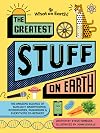
The Greatest Stuff on Earth by Steve Tomecek is an informative and fun exploration of the science behind everyday things—covering everything from atoms and light to mushrooms and replacement body parts. The book breaks down complex topics into bite-sized, two-page segments, making it a great choice for quick, topic-specific reads. With vibrant graphics, photos, and diagrams, it’s visually engaging and accessible for curious minds. The casual, conversational tone—like “Chloroplasts show more are one of my favorite kinds of stuff…”—keeps things lighthearted. It’s a solid addition to a classroom library for short bursts of science, but it’s not likely to be a go-to for extended reading—a nice resource for sparking curiosity, but not quite a standout in terms of depth or flow. show less
 This review was written for LibraryThing Early Reviewers.
The Greatest Stuff on Earth: The amazing science of sunlight, smartphones, microphones, mushrooms & everything in-between by Steve Tomecek
This 128-page book tackles a lot of science topics in mostly double-page spreads. Coverage of each topic is brief, yet I found I was learning new things reading this book. The illustrations are colorful and cartoon-like, and the font used was large enough to read easily (although black print on dark backgrounds is never a good idea). The four-page glossary at the end is helpful, along with an explanation of the research done for the book (I appreciate the author looking for at least three show more respected, reliable sources for each fact). There's also a three-page index and a list of selected sources - not all, and I suspect the selection deliberately targets websites, because those are generally easier for readers to access. I especially appreciate the author discussing topics like climate change, evolution, and vaccines - because in my right-wing state, many of these topics can no longer be discussed in school. This would be a good book to inspire children to find more to read and learn about the topics it covers that they find interesting. show less
This review was written for LibraryThing Early Reviewers.The Greatest Stuff on Earth: The amazing science of sunlight, smartphones, microphones, mushrooms & everything in-between by Steve Tomecek
This book is … a LOT. All the colors and graphics were overwhelming — I kept wanting some white space, or any space at all. And while it’s laudable that the author wanted to cover so much, the sheer amount of topics and factoids (combined with the design) makes it harder to absorb them. I feel that other books out there, such as DK’s guides, do a better job with both visual and factual presentation.
This review was written for LibraryThing Early Reviewers.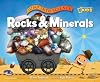
This book was so much fun to read! I loved that the book had both fictional and non-fiction elements with the little cartoon character taking us through the lesson. I also appreciated that when it was appropriate and possible real pictures were used instead of drawings or cartoon art. I think this book could be a great book to transition students into reading more informational type texts because it has the diagrams, images and examples that we see in informational reading but there is still show more that added layer of fun that comes with being guided by a cartoon scientist. Lastly, I love that it ended the book with an experiment that used everyday materials so kids could mimic this at home (with distance learning) or even at school! show less
Lists
4th Grade Books (1)
Awards


You May Also Like


Associated Authors
Statistics
- Works
- 40
- Members
- 2,522
- Popularity
- #10,177
- Rating
- 4.0
- Reviews
- 36
- ISBNs
- 99
- Languages
- 2
