
Sharyn Rohlfsen Udall
Author of O'Keeffe and Texas
About the Author
Sharyn Rohlfsen Udall is an independent art historian and curator in Santa Fe. (Bowker Author Biography)
Works by Sharyn Rohlfsen Udall
Santa Fe Art Colony, 1900-1942: July 17-August 8, 1987, Gerald Peters Gallery, Santa Fe, New Mexico (1987) 19 copies
O'Keefe in Texas 4 copies
john marin in new mexico 1 copy
Page Allen 1 copy
Tagged
Common Knowledge
- Gender
- female
- Occupations
- historian (art)
professor (college)
Members
Reviews

To include and compare three great woman painters of the early 20th century Americas who were roughly contemporaneous was a good impulse. Our thanks to author Udall. There are many points of interest put before us. Yet this discussion often lacks focus with too many digressions and no strong guiding overview; making it hard to formulate a broader clearer picture. A good editor and some conciseness are needed. Considering that the portrayed worked very hard with resultant wondrous original show more art works; one is left with profound respect for Carr, Canadian, Kaho, Mexican, and Okeeffe, American, but wanting to see in a more understandable way how they and their art fit together. When it did fit together which was not all the time.
Quotes: (page 9) “The art critic Peter Schjeidah has argued that 'nationality is one of the most significant and interesting things about anyone, and therefore any art.' It affects the content and character of art at least as much as, say, gender does, even or perhaps especially when an artist tries to transcend it.' Although place and nationality are not the same thing, they are intimately connected. And gender complicates the issue: what does it mean to be a woman artist in a particular place? More to the point, how did the experience of being female in Mexico, Canada, and the United States in the 1920s affect the artistic aspirations of Kahlo, Carr, and O'keeffe?
(page 44) “'Indian people and their Art touched me deeply,' she concluded. Indian Art broadened my seeing, loosened the formal tightness I had learned in England's schools. Its bigness and stark reality baffled my whiteman's understanding. I was as Canadian-born as the Indian but behind were Old World heredity and ancestry as well as Canadian environment....I learned a lot from the Indians, but who but Canada herself could help me comprehend her great woods and spaces'”
(page 76) “Emily Carr and Georgia O'keeffe, whose volumes of Lawrence's work remained in their libraries throughout their lives, found many themes in his writings relevant to their painting. Lawrence's sensitivity to place and to the everlasting tug of nature upon cultures old and new made him a favorite throughout the Western Hemisphere.”
(pages 166-167) “Unlike Carr's forest paintings, Kaho's are static, undisturbed by any movement. In truth, they are not paintings about trees or plants as they exist in nature; they are fragments of natural form sharpened, stylized, frozen. They are the flora of Henri Rousseau, whom Kahlo admired and whose invented ten-year residence in Mexico supposedly taught him to paint the jungle. Close behind her head, Kahlo's lush fabrications present a clotted ersatz jungle, no more real than the fabric backdrops once set up behind his portrait sitters. Though she invites us to compare textures and shapes, everything in Kahlo's self-portraits remains discrete, unblended, unmerged. It is as self hood and identity depend on separation, an impulse diametrically opposite Carr's wish to create unity out of nature's chaos.”
(page 307) “Carr's legacy, strongest in British Columbia, looms over the broader reaches of Canada as well....Jack Shadbolt and David Alexander have called Carr a vital link to romantic landscape traditions as well as an obstacle they must overcome in finding their own expressions. So it is with O'keeffe's legacy in the United States. And Kahlo---what a great icon burden she has been asked to carry! Theological icon, kitch idol. Emblem of what is accessible and forbidden, she appears almost infinitely adaptable, expansive, profitable, a mirror for the commercial projections of others.
The risk for all these artists reputations is that they are being frozen into commodities and captive icons. There is a disadvantage in enshrining these painters prematurely: making a deceased artist into a dominant cultural figure confers honor while simultaneously circumscribing her possible influence. It presses us to fix her in ideological systems, artistic lineages, and institutional frameworks that may prematurely quiet a still-evolving voice.” show less
Quotes: (page 9) “The art critic Peter Schjeidah has argued that 'nationality is one of the most significant and interesting things about anyone, and therefore any art.' It affects the content and character of art at least as much as, say, gender does, even or perhaps especially when an artist tries to transcend it.' Although place and nationality are not the same thing, they are intimately connected. And gender complicates the issue: what does it mean to be a woman artist in a particular place? More to the point, how did the experience of being female in Mexico, Canada, and the United States in the 1920s affect the artistic aspirations of Kahlo, Carr, and O'keeffe?
(page 44) “'Indian people and their Art touched me deeply,' she concluded. Indian Art broadened my seeing, loosened the formal tightness I had learned in England's schools. Its bigness and stark reality baffled my whiteman's understanding. I was as Canadian-born as the Indian but behind were Old World heredity and ancestry as well as Canadian environment....I learned a lot from the Indians, but who but Canada herself could help me comprehend her great woods and spaces'”
(page 76) “Emily Carr and Georgia O'keeffe, whose volumes of Lawrence's work remained in their libraries throughout their lives, found many themes in his writings relevant to their painting. Lawrence's sensitivity to place and to the everlasting tug of nature upon cultures old and new made him a favorite throughout the Western Hemisphere.”
(pages 166-167) “Unlike Carr's forest paintings, Kaho's are static, undisturbed by any movement. In truth, they are not paintings about trees or plants as they exist in nature; they are fragments of natural form sharpened, stylized, frozen. They are the flora of Henri Rousseau, whom Kahlo admired and whose invented ten-year residence in Mexico supposedly taught him to paint the jungle. Close behind her head, Kahlo's lush fabrications present a clotted ersatz jungle, no more real than the fabric backdrops once set up behind his portrait sitters. Though she invites us to compare textures and shapes, everything in Kahlo's self-portraits remains discrete, unblended, unmerged. It is as self hood and identity depend on separation, an impulse diametrically opposite Carr's wish to create unity out of nature's chaos.”
(page 307) “Carr's legacy, strongest in British Columbia, looms over the broader reaches of Canada as well....Jack Shadbolt and David Alexander have called Carr a vital link to romantic landscape traditions as well as an obstacle they must overcome in finding their own expressions. So it is with O'keeffe's legacy in the United States. And Kahlo---what a great icon burden she has been asked to carry! Theological icon, kitch idol. Emblem of what is accessible and forbidden, she appears almost infinitely adaptable, expansive, profitable, a mirror for the commercial projections of others.
The risk for all these artists reputations is that they are being frozen into commodities and captive icons. There is a disadvantage in enshrining these painters prematurely: making a deceased artist into a dominant cultural figure confers honor while simultaneously circumscribing her possible influence. It presses us to fix her in ideological systems, artistic lineages, and institutional frameworks that may prematurely quiet a still-evolving voice.” show less
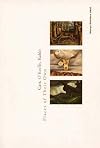
Fantastic parings of works of art by Kahlo, O'keeffe, Carr
You May Also Like


Statistics
- Works
- 10
- Members
- 210
- Popularity
- #105,677
- Rating
- 4.2
- Reviews
- 3
- ISBNs
- 12