
Emily Carr (1) (1871–1945)
Author of Klee Wyck
For other authors named Emily Carr, see the disambiguation page.
About the Author
Emily Carr, generally considered Canada's most famous woman painter, was born in Victoria, British Columbia in 1871 and died there in 1945. She was an unusually gifted woman renowned not only for her magnificent paintings but also for her extraordinarily vivid and imaginative prose. She began show more writing late in life when she was forced by failing health to curtail her sketching activities. Her first book, Klee Wyck, was an instant success and won a Governor General's award show less
Image credit: Source: Libraries and Archives Canada
Works by Emily Carr
Associated Works
Gender in Modernism: New Geographies, Complex Intersections (2007) — Contributor — 12 copies, 1 review
Tagged
Common Knowledge
- Birthdate
- 1871-12-13
- Date of death
- 1945-03-02
- Gender
- female
- Education
- Westminster School of Art, London
Academie Colarossi, Paris - Occupations
- painter
autobiographer
dog breeder
diarist - Nationality
- Canada
- Birthplace
- Victoria, British Columbia, Canada
- Places of residence
- Victoria, British Columbia, Canada (birth ∙ death)
Ucluelet, British Columbia, Canada
Skagway, British Columbia, Canada
Paris, France
San Francisco, California, USA
London, England, UK - Place of death
- Victoria, British Columbia, Canada
- Burial location
- Ross Bay Cemetery, Victoria, British Columbia, Canada
- Associated Place (for map)
- British Columbia, Canada
Members
Reviews
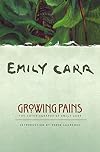
I loved inhabiting this autobiography. Emily Carr writes in way that makes you want to be with her, like a friend.
There are extraordinary moments of insightful expression
And her deeply felt love of country and its native inhabitants is both poignant and expressed with a wonder that transported me:
Indian Sophie was my friend. We sat long whiles upon the wide church steps, talking little, watching the ferry ply between the city and the North Shore, Indian canoes fishing the waters of the Inlet, papooses playing on the beach. p. 278.
There are extraordinary moments of insightful expression
I felt bitter. My sister was peeved. She neither looked at nor asked about my workshow more
during the whole two months of her visit. It was then that I made myself into an envelope into which I could thrust my work deep, lick the flap, seal it from everybody. p. 175
And her deeply felt love of country and its native inhabitants is both poignant and expressed with a wonder that transported me:
No part of living was normal. We lived on fish and fresh air. We sat on things not meant for sitting on, ate out of vessels not meant to hold food, slept on hardness that bruised us; but the lovely, wild vastness did something to it all. I loved every bit of it – no boundaries, no beginning, no end, one continual shove of growing - edge of land meeting edge of water, with just a ribbon of sand between. P.108.show less
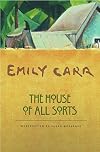
Enjoyable short vignettes by BC artist and writer Emily Carr. Yet this is not the equal of some of her other books - notably Klee Wyck, Growing Pains, and the The Book of Small. These stories concern her years running a boarding house and raising dogs as her main income. While all her memoirs are insightful and compelling, her anecdotes here centre on often inconsiderate, sometimes dishonest and occasionally pitiful renters, illustrating how unpleasant those years were for Carr. Her boarding show more house brought her into close contact with unfamiliar people and relationships, interactions and chores, and she reacted by categorising them and writing rather resentfully about her tenants' behaviours as payback. This broad disdain for people, coupled with Carr's love of (and evident preference for) animals evident in this writing, particularly in the appended stories about raising dogs, leaves a parting impression of a rather sour and disillusioned person. Fortunately her other memoirs - also written in late life - provide a more fully rounded view of her personality and humanness. show less
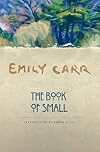
How is it fair that a renowned painter can also be a gifted writer? Carr wrote this memoir of her early childhood when she was in her early 70s, so historical veracity is not the point of this delightful book. Carr was born in Victoria, BC, into a community that is often called "more English than the English," and many of her vignettes tell of people forging their idea of a civilized life in the western wilderness. The Book of Small is a collection of snapshots of British Colonial life show more through the eyes of a small girl, in fact, the "Small" of the title is Carr's nickname as the youngest daughter. Some of the stories are told in first person, and some in third, with Small as the main character. My favourite part was when Small dresses up a starfish in doll's clothes and then forgets it in a cupboard.
The Book of Small has been compared to the writings of Lucy Maud Montgomery and Beatrix Potter, although this is not a children's book. She does capture that world of late-Victorian childhood where one minute she's sitting on a stiff chair drinking tea in a dark parlour, and the next she's squeezing through brambles and mud to get to her own Secret Garden.
Victoria is one of my all-time favourite cities, and I know it well, so it was fascinating to read what the city was like before the imposing Empress Hotel, when cows roamed the streets and Cook St was the garbage dump. I enjoyed how the city itself is a character in this novel.
Recommended for: Anyone looking for a amusing yet detailed look at domestic British Colonial life. Also anyone who is interested in the history of Victoria. show less
The Book of Small has been compared to the writings of Lucy Maud Montgomery and Beatrix Potter, although this is not a children's book. She does capture that world of late-Victorian childhood where one minute she's sitting on a stiff chair drinking tea in a dark parlour, and the next she's squeezing through brambles and mud to get to her own Secret Garden.
Victoria is one of my all-time favourite cities, and I know it well, so it was fascinating to read what the city was like before the imposing Empress Hotel, when cows roamed the streets and Cook St was the garbage dump. I enjoyed how the city itself is a character in this novel.
Recommended for: Anyone looking for a amusing yet detailed look at domestic British Colonial life. Also anyone who is interested in the history of Victoria. show less
She has that weird attachment to the presence of things, a propensity that means that the world will never add up, it'll never be more than the sum of its parts, but. The parts are enough. more than enough. The love of the fur, the smell, the green, the water, the buzzing of it all, leads one to renounce any thought of transcendence in favor of lying down forever with the mortal remains of what one has loved.
Lists
Awards

You May Also Like


Associated Authors
Statistics
- Works
- 33
- Also by
- 4
- Members
- 1,712
- Popularity
- #14,991
- Rating
- 4.1
- Reviews
- 33
- ISBNs
- 93
- Languages
- 2