

Paulina Ganucheau
Author of Zodiac Starforce, Vol. 1: By the Power of Astra
Series
Works by Paulina Ganucheau
The Powerpuff Girls (2004) #1 - Destiny Detour! — Illustrator — 4 copies
ThunderCats/The Powerpuff Girls #1 3 copies
Thundercats/The Powerpuff Girls #2 3 copies
The Powerpuff Girls (2024) #4 - Flour Power — Author; Cover artist, some editions — 3 copies
The Powerpuff Girls (2024) #5 - Moon Mojo's Mega Missile Meltdown — Author; Cover artist, some editions — 3 copies
The Powerpuff Girls (2024) #6 — Author; Cover artist, some editions — 3 copies
The Powerpuff Girls Valentine's Mwah Mwah Kissy Face Special #1 — Author; Cover artist, some editions — 2 copies
The Unbelievable Gwenpool #14 — Illustrator — 2 copies
Thundercats The Powerpuff Girls Volume 1, Issue #3 — Author; Cover artist, some editions — 2 copies
The Unbelievable Gwenpool #15 — Illustrator — 2 copies
Another Castle #3 — Illustrator — 1 copy
The Unbelievable Gwenpool #21 — Illustrator — 1 copy
Associated Works
Angel Catbird Volume 2: To Castle Catula (2017) — Contributor, some editions — 112 copies, 3 reviews
Wild Ocean: Sharks, Whales, Rays, and Other Endangered Sea Creatures (2014) — Illustrator — 25 copies, 4 reviews
The Double Life of Miranda Turner Volume 1: If You Have Ghosts (2016) — Colors — 14 copies, 1 review
The Powerpuff Girls (2024) #7 - New Year, New You! — Cover artist, some editions — 2 copies
The Powerpuff Girls (2024) #8 - Girl's Best Friend — Cover artist, some editions — 2 copies
The Powerpuff Girls (2024) #9 - Battle of the Bands — Cover artist, some editions — 2 copies
Tagged
Common Knowledge
Members
Reviews
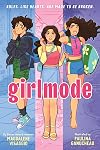
This is the same old cliche high school popularity drama with shallow characters and shallow lessons but with a trans girl this time. If any trans person is looking for that basic ‘stay true to yourself’ plot line with a main character you can see yourself in, this could work for you, but I found it boring.
The art was appealing and fit the tone of the book well. The messages that being a girl doesn’t mean you have to fit yourself to misogynistic standards and you should be the one to show more define your own life are fine. But there wasn’t much else to it. All the characters were assholes to each other in the standard ways for their tropes (plus gender stereotypes) – the controlling queen bee, the white knighting nerd who’s quick to turn when rejected, the jock boys who ‘only want one thing’, the impressionable protagonist guilelessly falling into bad behavior before she comes into herself. It didn’t really get me invested; I just got sick of all of them and the payoff of the very typical lesson learned wasn’t worth it for me. show less
The art was appealing and fit the tone of the book well. The messages that being a girl doesn’t mean you have to fit yourself to misogynistic standards and you should be the one to show more define your own life are fine. But there wasn’t much else to it. All the characters were assholes to each other in the standard ways for their tropes (plus gender stereotypes) – the controlling queen bee, the white knighting nerd who’s quick to turn when rejected, the jock boys who ‘only want one thing’, the impressionable protagonist guilelessly falling into bad behavior before she comes into herself. It didn’t really get me invested; I just got sick of all of them and the payoff of the very typical lesson learned wasn’t worth it for me. show less
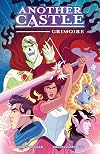
I like the female empowerment, but that couldn't make up for the fairly bland fantasy story. The servants Gorga and Fog were the best parts of the book for me as they were vulnerable and wore their hearts on their sleeves, but they couldn't offset the Saturday morning cartoon tone of the rest of the book.

There is a lot to like here. The storytelling has a good pace, the characters are immediately fairly memorable and clearly drawn (both metaphorically and literally), the aesthetics are pleasant and the narrative -- considering it is based on slightly skewed tropes -- is reasonably fresh.
That said, in my eyes, the book suffers greatly from being caught between wishing to address the protagonist's morals and desires with real complexities, nuance and realism, but also wanting to write a show more morality tale where having the virtuous goals and the strength to stick to one's principles magically carries the day. This leads to a frequent set up where the protagonist is confronted with the naivete of her behaviour, only to then make barely any adjustments to it, and largely through blind luck and storytelling needs still succeed. (And indeed, the entire book ends on decisions which, based on the factors already established in the story, should likely lead to enormous amounts of violence and suffering, but which is presented as though it's purely a Good Thing and so no mention of the almost inevitable negative consequences is done.) It would perhaps have been better to not lampshade these issues by first introducing the moral complexities in the first place, and keep it a simple black-and-white fairy tale where goodness of heart wins the day.
As it stands, the story is decent, if simplistic, has some clever mythological building blocks (particularly the logic of the villain's scheme is good) and has several lovely moments, as well as opportunities for the protagonist to overcome (largely self-caused) problems with actual resourcefulness. And I very much enjoyed the additional, aspirational level of meaning the book's title took on in the last page. I just wish it by then hadn't been already undercut by the sparse attempts at realism. show less
That said, in my eyes, the book suffers greatly from being caught between wishing to address the protagonist's morals and desires with real complexities, nuance and realism, but also wanting to write a show more morality tale where having the virtuous goals and the strength to stick to one's principles magically carries the day. This leads to a frequent set up where the protagonist is confronted with the naivete of her behaviour, only to then make barely any adjustments to it, and largely through blind luck and storytelling needs still succeed. (And indeed, the entire book ends on decisions which, based on the factors already established in the story, should likely lead to enormous amounts of violence and suffering, but which is presented as though it's purely a Good Thing and so no mention of the almost inevitable negative consequences is done.) It would perhaps have been better to not lampshade these issues by first introducing the moral complexities in the first place, and keep it a simple black-and-white fairy tale where goodness of heart wins the day.
As it stands, the story is decent, if simplistic, has some clever mythological building blocks (particularly the logic of the villain's scheme is good) and has several lovely moments, as well as opportunities for the protagonist to overcome (largely self-caused) problems with actual resourcefulness. And I very much enjoyed the additional, aspirational level of meaning the book's title took on in the last page. I just wish it by then hadn't been already undercut by the sparse attempts at realism. show less
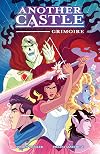
This was a really fun story about a princess who gets imprisoned by an evil dark lord who is forcing her to marry him so he can take over her kingdom. Her almost-betrothed sets off to rescue her, but she decides she needs to help herself.
The secondary characters in this are really great. I loved Gorga, and would have gladly read a book centered around her. Unfortunately, I never really connected with Misty the way I did with the secondary characters - mainly because I never saw her exhibit show more any traits other than generic fantasy heroine.
Despite that, I enjoyed the book. I liked the messages about not making assumptions about people (monsters are people too!), and was greatly amused at how utterly useless Pete was at heroing.
I wish the story had been drawn out a bit more so I could have stayed in the world a bit longer.
Review copy courtesy of the publisher via NetGalley. show less
The secondary characters in this are really great. I loved Gorga, and would have gladly read a book centered around her. Unfortunately, I never really connected with Misty the way I did with the secondary characters - mainly because I never saw her exhibit show more any traits other than generic fantasy heroine.
Despite that, I enjoyed the book. I liked the messages about not making assumptions about people (monsters are people too!), and was greatly amused at how utterly useless Pete was at heroing.
I wish the story had been drawn out a bit more so I could have stayed in the world a bit longer.
Review copy courtesy of the publisher via NetGalley. show less
Lists
Awards


You May Also Like


Associated Authors
Statistics
- Works
- 37
- Also by
- 18
- Members
- 631
- Popularity
- #39,928
- Rating
- 3.6
- Reviews
- 28
- ISBNs
- 26
- Languages
- 1
- Favorited
- 1