

Jim Tolpin
Author of The New Cottage Home: A Tour of Unique American Dwellings
About the Author
Jim Tolpin is a woodworker, teacher, and writer living in Port Townsend, Washington
Image credit: from the cover of "Jim Tolpin's Woodworking: Wit & Wisdom"
Works by Jim Tolpin
The Toolbox Book: A Craftsman's Guide to Tool Chests, Cabinets, and Storage Systems (1995) 255 copies, 4 reviews
The New Traditional Woodworker: From Tool Set to Skill Set to Mind Set (Popular Woodworking) (2011) 90 copies, 1 review
Tagged
Common Knowledge
- Canonical name
- Tolpin, Jim
- Other names
- Tolpin, James
- Birthdate
- 1947
- Gender
- male
- Organizations
- Port Townsend School of Woodworking
Members
Reviews
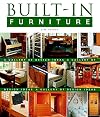
This book is exactly what the title claims it to be: a catalog of ways to integrate built in furniture into every room in the home. As a decided fan of nooks, built in shelving, bed alcoves, really almost any built-in furniture, I found something delightful on nearly every page, and I even got a handful of ideas that might actually be practical. Even the ideas that were not practical for us were still delightful (e.g., like the full bedroom width gothic built-in headboard, see the second hit show more for "gothic" on Amazon's Look Inside tool for the book above to see it).
Many of the built-ins in this book were added after the fact. I appreciated that because I suspect our budget cannot bear to have us build in originally all of the built-ins that I want eventually.
A good read if you are looking for inspiration about built-ins. show less
Many of the built-ins in this book were added after the fact. I appreciated that because I suspect our budget cannot bear to have us build in originally all of the built-ins that I want eventually.
A good read if you are looking for inspiration about built-ins. show less

This book has two general categories of ideas for making a great family home. First, the home must be flexible and able to change with the changing needs of a family. E.g., the shared rooms and play loft which worked great for children may give way to a relatively private room for a teenager. That may eventually turn into a room for aging grandparents or even, eventually, an easy access master bedroom as the home's owners age. The book has many suggestions around this.
The other category of show more suggestions was around customizing a home to make it unique and memorable. Many of these suggestions included ways to improve children's space: play lofts, built-in desks and beds, an in-bedroom sink to reduce teenage bathroom fights. Lots of interesting ideas. The main downside to this book is that it was organized as case studies. I find books that I prefer books that spend some time extracting more general lessons from the specific examples they present. In so far as this was your standard figure-it-out-yourself case study book, I did not like it as well as I could have. show less
The other category of show more suggestions was around customizing a home to make it unique and memorable. Many of these suggestions included ways to improve children's space: play lofts, built-in desks and beds, an in-bedroom sink to reduce teenage bathroom fights. Lots of interesting ideas. The main downside to this book is that it was organized as case studies. I find books that I prefer books that spend some time extracting more general lessons from the specific examples they present. In so far as this was your standard figure-it-out-yourself case study book, I did not like it as well as I could have. show less
By Hound & Eye: A plain & easy guide to designing furniture with no further trouble by George R. Walker

The companion workbook to Toplin & Walker's By Hand & Eye takes you through illustrated and explained (by a rather sarcastic dog) exercises all using basic geometry and simple tools to design furniture. The tools include pencil, dividers (or compass) straight edge and a sector. There is no ruler in that list, as it is all about proportions and rhythms.
If you liked the ideas of By Hand & Eye but were a bit frustrated or lost by the brief descriptions, or just haven't had much luck trying to show more apply the ideas, then this workbook is for you.
I also think it is a great thing for the kid that takes geometry and say "but what GOOD is any of this?" If they have any kind of a bent towards making things, out of legos, drawing, wood, 3-d printers, whatever, this can help with design ideas and seeing the patterns behind so many designed things, and the important part geometry plays in that realm. show less
If you liked the ideas of By Hand & Eye but were a bit frustrated or lost by the brief descriptions, or just haven't had much luck trying to show more apply the ideas, then this workbook is for you.
I also think it is a great thing for the kid that takes geometry and say "but what GOOD is any of this?" If they have any kind of a bent towards making things, out of legos, drawing, wood, 3-d printers, whatever, this can help with design ideas and seeing the patterns behind so many designed things, and the important part geometry plays in that realm. show less

I've heard or read about the golden ratio any number of times, and how it can or should be applied to designing almost anything. But in the course of my own attempts to design and build furniture, I never really got it until I was reading this book. Unfortunately along the way, a lot of the geometric constructions were described a little superficially, and in a manner that I didn't really "get". I ended up working through several variations myself, and scrounging up old geometry books and show more examples online. That's good, because I really got it once I got it, but its bad, because the book didn't really help me that much.
All in all, it's not a bad book, but you have to be really into the idea of designing by hand and by proportions, without CAD, without precisely accurate to the 1 mm measurements. And like anything from Lost Art Press, it is an incredibly solid, well made book that is going to last. Even if you have it bumping around in your shop. Reportedly Walker and Toplin are creating a follow-up workbook in 2015, which should be a big help to for anyone looking for more practical than theory. show less
All in all, it's not a bad book, but you have to be really into the idea of designing by hand and by proportions, without CAD, without precisely accurate to the 1 mm measurements. And like anything from Lost Art Press, it is an incredibly solid, well made book that is going to last. Even if you have it bumping around in your shop. Reportedly Walker and Toplin are creating a follow-up workbook in 2015, which should be a big help to for anyone looking for more practical than theory. show less
You May Also Like


Associated Authors
Statistics
- Works
- 21
- Members
- 1,623
- Popularity
- #15,854
- Rating
- 3.9
- Reviews
- 13
- ISBNs
- 40
- Languages
- 1