
Isabel Quintero
Author of My Papi Has a Motorcycle
About the Author
Image credit: Author Isabel Quintero at the 2019 Texas Book Festival in Austin, Texas, United States. By Larry D. Moore, CC BY-SA 4.0, https://commons.wikimedia.org/w/index.php?curid=83503296
Works by Isabel Quintero
Ugly Cat 1 copy
Golden State 1 copy
Associated Works
Come On In: 15 Stories about Immigration and Finding Home (2020) — Contributor — 137 copies, 6 reviews
Ab(solutely) Normal: Short Stories That Smash Mental Health Stereotypes (2023) — Contributor — 48 copies, 2 reviews
Tagged
Common Knowledge
- Gender
- female
- Education
- California State University, San Bernardino
- Occupations
- author
poet - Organizations
- San Bernardino Valley College
Mt. San Jacinto College
Arts Council of San Bernardino
PoetrIE - Nationality
- USA
- Birthplace
- Inland Empire, California, USA
- Places of residence
- Coronado, California, USA
- Associated Place (for map)
- California, USA
Members
Reviews
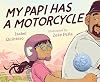
Ascreaming, bright-blue comet zooms through the streets of Corona, California, in a race against the orange setting sun.
A unicorn-decorated purple helmet can’t hide the grin of the young girl tightly gripping the waist of her carpenter father, who’s hunched over his blazing motorcycle as a comet tail of sawdust streams behind them. Basking in her father’s wordless expression of love, she watches the flash of colors zip by as familiar landmarks blend into one another. Changes loom all show more around them, from the abandoned raspado (snow cone) shop to the housing construction displacing old citrus groves. Yet love fills in the spaces between nostalgia and the daily excitement of a rich life shared with neighbors and family. Quintero’s homage to her papi and her hometown creates a vivid landscape that weaves in and out of her little-girl memory, jarring somewhat as it intersects with adult recollections. At the end, her family buys raspados from a handcart—are the vendor and defunct shop’s owner one and the same? Peña’s comic-book–style illustrations capture cultural-insider Mexican-American references, such as a book from Cathy Camper and Raúl the Third’s Lowrider series and the Indigenous jaguar mask on the protagonist’s brother’s T-shirt. Dialogue in speech bubbles incorporates both Spanish and English, and the gist of the conversation is easily followed; a fully Spanish edition releases simultaneously.
Every girl should be so lucky as to have such a papi. (Picture book. 7-11)
-Kirkus Review show less
A unicorn-decorated purple helmet can’t hide the grin of the young girl tightly gripping the waist of her carpenter father, who’s hunched over his blazing motorcycle as a comet tail of sawdust streams behind them. Basking in her father’s wordless expression of love, she watches the flash of colors zip by as familiar landmarks blend into one another. Changes loom all show more around them, from the abandoned raspado (snow cone) shop to the housing construction displacing old citrus groves. Yet love fills in the spaces between nostalgia and the daily excitement of a rich life shared with neighbors and family. Quintero’s homage to her papi and her hometown creates a vivid landscape that weaves in and out of her little-girl memory, jarring somewhat as it intersects with adult recollections. At the end, her family buys raspados from a handcart—are the vendor and defunct shop’s owner one and the same? Peña’s comic-book–style illustrations capture cultural-insider Mexican-American references, such as a book from Cathy Camper and Raúl the Third’s Lowrider series and the Indigenous jaguar mask on the protagonist’s brother’s T-shirt. Dialogue in speech bubbles incorporates both Spanish and English, and the gist of the conversation is easily followed; a fully Spanish edition releases simultaneously.
Every girl should be so lucky as to have such a papi. (Picture book. 7-11)
-Kirkus Review show less
Ascreaming, bright-blue comet zooms through the streets of Corona, California, in a race against the orange setting sun.
A unicorn-decorated purple helmet can’t hide the grin of the young girl tightly gripping the waist of her carpenter father, who’s hunched over his blazing motorcycle as a comet tail of sawdust streams behind them. Basking in her father’s wordless expression of love, she watches the flash of colors zip by as familiar landmarks blend into one another. Changes loom all show more around them, from the abandoned raspado (snow cone) shop to the housing construction displacing old citrus groves. Yet love fills in the spaces between nostalgia and the daily excitement of a rich life shared with neighbors and family. Quintero’s homage to her papi and her hometown creates a vivid landscape that weaves in and out of her little-girl memory, jarring somewhat as it intersects with adult recollections. At the end, her family buys raspados from a handcart—are the vendor and defunct shop’s owner one and the same? Peña’s comic-book–style illustrations capture cultural-insider Mexican-American references, such as a book from Cathy Camper and Raúl the Third’s Lowrider series and the Indigenous jaguar mask on the protagonist’s brother’s T-shirt. Dialogue in speech bubbles incorporates both Spanish and English, and the gist of the conversation is easily followed; a fully Spanish edition releases simultaneously.
Every girl should be so lucky as to have such a papi. (Picture book. 7-11)
-Kirkus Review show less
A unicorn-decorated purple helmet can’t hide the grin of the young girl tightly gripping the waist of her carpenter father, who’s hunched over his blazing motorcycle as a comet tail of sawdust streams behind them. Basking in her father’s wordless expression of love, she watches the flash of colors zip by as familiar landmarks blend into one another. Changes loom all show more around them, from the abandoned raspado (snow cone) shop to the housing construction displacing old citrus groves. Yet love fills in the spaces between nostalgia and the daily excitement of a rich life shared with neighbors and family. Quintero’s homage to her papi and her hometown creates a vivid landscape that weaves in and out of her little-girl memory, jarring somewhat as it intersects with adult recollections. At the end, her family buys raspados from a handcart—are the vendor and defunct shop’s owner one and the same? Peña’s comic-book–style illustrations capture cultural-insider Mexican-American references, such as a book from Cathy Camper and Raúl the Third’s Lowrider series and the Indigenous jaguar mask on the protagonist’s brother’s T-shirt. Dialogue in speech bubbles incorporates both Spanish and English, and the gist of the conversation is easily followed; a fully Spanish edition releases simultaneously.
Every girl should be so lucky as to have such a papi. (Picture book. 7-11)
-Kirkus Review show less
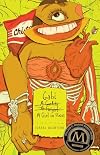
What's not to love about GABI, A GIRL IN PIECES? Not much that I can think of. This new book by Isabel Quintero is sassy, funny, heart-felt, heartbreaking, hearwarming, and unputdownable. I love Gabi Hernandez, the protagonist, not for her self-deprecating humor, but for her willingness to grow past it. I loved her honesty, as she struggles with some pretty tough stuff, from being the "fat girl" to her best friend's unwanted pregnancy to her dad being a meth addict. It's not that she takes show more it in stride, but that she takes it, and survives it, and does it in style.
Gabi Hernandez is starting her senior year with a lot on her plate. Aside from the aforementioned drama, one of her besties has just come out to his family is gay, and he's been kicked out of his house. She's trying to figure out how to find a guy to kiss, and as soon as she gets someone to like her, he turns out to be kind of a weirdo. And while she's kicking butt in her poetry class, that class is forcing her to confront her issues with her family. Her mom is never shy about telling Gabi to drop a few pounds, which means shopping for a prom dress sounds like the absolute worst. Plus, if she flunks Algebra II again, her chances of getting into her dream school -- Berkley -- are down the drain.
With a voice that is reminiscent of A.S. King and Hannah Moskowitz, written in journal format and sprinkled with Gabi's poetry, this is definitely the kind of book that fans of fearless, "edgy" YA will devour. show less
Gabi Hernandez is starting her senior year with a lot on her plate. Aside from the aforementioned drama, one of her besties has just come out to his family is gay, and he's been kicked out of his house. She's trying to figure out how to find a guy to kiss, and as soon as she gets someone to like her, he turns out to be kind of a weirdo. And while she's kicking butt in her poetry class, that class is forcing her to confront her issues with her family. Her mom is never shy about telling Gabi to drop a few pounds, which means shopping for a prom dress sounds like the absolute worst. Plus, if she flunks Algebra II again, her chances of getting into her dream school -- Berkley -- are down the drain.
With a voice that is reminiscent of A.S. King and Hannah Moskowitz, written in journal format and sprinkled with Gabi's poetry, this is definitely the kind of book that fans of fearless, "edgy" YA will devour. show less
I read this book because a review of it was "in progress" during Banned Books Week 2022 in my racist, radical right-wing rural Republican school district, that had already banned Out of Darkness by another Latina author, for "sexually explicit content." I remember ordering Gabi, A Girl in Pieces in e-book format for my state university library's curriculum collection (used by future teachers) because it won the 2015 William C. Morris Award for Debut Young Adult Fiction.
Gabriela "Gabi" show more Hernandez is a slightly-chubby Mexican-American high school senior in southern California. The book is her diary/journal, and covers a 10.5 month period from a month before senior year starts, through graduation.
The book opens with Gabi dealing with one best friend (Cindy) who's just found out she's unintentionally pregnant, and another best friend (Sebastian) who is gay and, after coming out to his parents, is kicked out of his home by his father. Gabi has family problems too. Her father is a meth addict, her 16-year-old brother gets arrested for tagging, her hypocritical ultra-religious aunt lives with the family, and her overbearing mother is also pregnant. Throw in date rape, another classmate getting an abortion, teens contemplating sex (and condoms), and dating dilemmas, and you've got plenty here to rile the "Christian" nationalists.
This book reminded me SO much of my own high school journal and letters to my pen pal (Gabi writes letters she never sends, to her dad and others). Similar angst - I'm too fat, does that boy like me, fretting about academics, and so on. Like Gabi, I found solace in my writing (like her, some poetry too), and I think the journal format creates an honesty that many readers will be able to relate to.
So what happened with this book in my local school libraries? Apparently, this book made it through the challenge process (although why it did and Out of Darkness did not is beyond me). As of this writing, the book is still on the shelves and available in the high school library. I borrowed the copy I read from the local public library's young adult section. After I return it, it will be interesting to see if it stays there or, like Out of Darkness, gets moved to the adult section. show less
Gabriela "Gabi" show more Hernandez is a slightly-chubby Mexican-American high school senior in southern California. The book is her diary/journal, and covers a 10.5 month period from a month before senior year starts, through graduation.
The book opens with Gabi dealing with one best friend (Cindy) who's just found out she's unintentionally pregnant, and another best friend (Sebastian) who is gay and, after coming out to his parents, is kicked out of his home by his father. Gabi has family problems too. Her father is a meth addict, her 16-year-old brother gets arrested for tagging, her hypocritical ultra-religious aunt lives with the family, and her overbearing mother is also pregnant. Throw in date rape, another classmate getting an abortion, teens contemplating sex (and condoms), and dating dilemmas, and you've got plenty here to rile the "Christian" nationalists.
This book reminded me SO much of my own high school journal and letters to my pen pal (Gabi writes letters she never sends, to her dad and others). Similar angst - I'm too fat, does that boy like me, fretting about academics, and so on. Like Gabi, I found solace in my writing (like her, some poetry too), and I think the journal format creates an honesty that many readers will be able to relate to.
So what happened with this book in my local school libraries? Apparently, this book made it through the challenge process (although why it did and Out of Darkness did not is beyond me). As of this writing, the book is still on the shelves and available in the high school library. I borrowed the copy I read from the local public library's young adult section. After I return it, it will be interesting to see if it stays there or, like Out of Darkness, gets moved to the adult section. show less
Lists
Things that GO (1)
Awards


You May Also Like


Associated Authors
Statistics
- Works
- 9
- Also by
- 5
- Members
- 2,129
- Popularity
- #12,092
- Rating
- 4.2
- Reviews
- 162
- ISBNs
- 77
- Languages
- 2
- Favorited
- 1