
John Pearce (1) (1942–)
Author of Treasure of Saint-Lazare
For other authors named John Pearce, see the disambiguation page.
About the Author
Image credit: http://www.goodreads.com/author/show/6468853.John_Pearce
Series
Works by John Pearce
Tagged
Common Knowledge
- Birthdate
- 1942-12-17
- Gender
- male
- Nationality
- USA
- Birthplace
- New Orleans, Louisiana, USA
- Associated Place (for map)
- Louisiana, USA
Members
Reviews
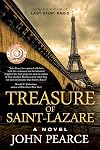
The publisher's blurb dangles the lure, but it doesn't take long before the hook is set. This fast-paced suspenseful novel veritably coerces the reader to keep flipping another page. It combines a hunt for a well-hidden treasure, revenge, greed, murder, law enforcement on two continents, old relationships, and lessons from WWII history impacting the characters in the 21st century. Well done!
Ebook provided free for honest review courtesy of BooksGoSocial.
Ebook provided free for honest review courtesy of BooksGoSocial.
I don't want to say it ... I don't want to say it ... I'm trying really hard not to, ... but it will come out: This books reads like a cross between Ian Fleming and Franklin W. Dixon. In other words, we have the Hardy Boys meeting James Bond. In Sarasota. And then in Paris. Or vice versa. There, I've said it.
The thing is, I'm a great fan of both the Hardy Boys AND 007. I love them. In all their splendid campiness and derring-do, I swear there's enough fun, thrills and chills to make any show more girl's heart flutter in any one of the Hardy Boys or 007 mysteries -- but not in the same book.
To be perfectly honest, and absolutely fair, I think John Pearce "almost" has it. He has a great story line and he writes very well. That's not the problem. The problem is that there's too much -- just too much -- of everything coming at you and much of it is very sophomoric and stale. It's not that I can't follow the story line, it's that the story line isn't worth following because it is convoluted beyond what words can describe. The characters are flat and predictable, and there is no growth. I realize I'm supposed to be reading a thriller and not a great psychologically complex roman, but still and all, one does expect some sort of depth to the characters depicted. (Think George Smiley if you're looking for satisfying character development in the Thrillers' genre.)
The dialogue is quite flat and too prosaic. People don't really talk like this. They reminded me of little wooden soldiers issuing staccato orders one to the other. Loosen up the tongue a bit, and let it roll. Don't punch it out like a Dashiell Hammett potboiler. That kind of talk wasn't popular even when he was "popular"!
Now that I've written my worst, I can explain the rest: John Pearce's real story begins on page 211, in Paris, July 1944. Now, that's writing that really makes John Pearce shine. The story clicks along like a run-away train and I just couldn't get enough. His writing is sharp and focused and the story moves at lightning speed. (If I can create a mental picture for you: it's like when the really thrilling scenes are taking place on the movie screen, and you're so focused and into the story, and you're eating popcorn like crazy, and you hear nothing but the pounding of your heart and the screams from the movie and nothing else exists in the whole world.)
Then, just as suddenly, full stop. You hit a brick wall on page 238 and it all goes back to hum-drum. And it doesn't pick up again, leading the reader to a very predictable ending.
Pearce's writing isn't the issue. It is obvious that he writes well. Pearce's ideas aren't the issue either: in fact, they are brilliant. When they come, they come fast and furious, and are exciting, dangerous, intriguing and captivating. Yes, all those things.
More the issue here is poor editing. Someone should have directed him to scrap the first 200 pages and begin the story in 1944. Scrap all the hackneyed P.I. stuff, and all the cliched romancing, and all the commonplace old chestnuts that he digs up from who knows where, and give me John Pearce, writer-from-the heart, and you have a brilliant novelist in the Thriller section. In this section, you will find that his research is flawless and his historical characters are convincing.
More than the poor editing, Pearce needs to lose his journalistic ways. As a journalist, he was duty-bound, it would seem to report "just the facts". As a novelist, that type of writing doesn't work. If Mr. Pearce would do more showing, and less telling, which he obviously can do very capably, it would go a long way to remedying the novel's essential flaws.
If some of these changes are made, I would actually look forward to a second novel by Pearce, for there is much there to enjoy.
Full Disclosure: I received this as a goodreads giveaway, and am truly appreciative of the opportunity to review an excellent novelist-in-the-making. show less
The thing is, I'm a great fan of both the Hardy Boys AND 007. I love them. In all their splendid campiness and derring-do, I swear there's enough fun, thrills and chills to make any show more girl's heart flutter in any one of the Hardy Boys or 007 mysteries -- but not in the same book.
To be perfectly honest, and absolutely fair, I think John Pearce "almost" has it. He has a great story line and he writes very well. That's not the problem. The problem is that there's too much -- just too much -- of everything coming at you and much of it is very sophomoric and stale. It's not that I can't follow the story line, it's that the story line isn't worth following because it is convoluted beyond what words can describe. The characters are flat and predictable, and there is no growth. I realize I'm supposed to be reading a thriller and not a great psychologically complex roman, but still and all, one does expect some sort of depth to the characters depicted. (Think George Smiley if you're looking for satisfying character development in the Thrillers' genre.)
The dialogue is quite flat and too prosaic. People don't really talk like this. They reminded me of little wooden soldiers issuing staccato orders one to the other. Loosen up the tongue a bit, and let it roll. Don't punch it out like a Dashiell Hammett potboiler. That kind of talk wasn't popular even when he was "popular"!
Now that I've written my worst, I can explain the rest: John Pearce's real story begins on page 211, in Paris, July 1944. Now, that's writing that really makes John Pearce shine. The story clicks along like a run-away train and I just couldn't get enough. His writing is sharp and focused and the story moves at lightning speed. (If I can create a mental picture for you: it's like when the really thrilling scenes are taking place on the movie screen, and you're so focused and into the story, and you're eating popcorn like crazy, and you hear nothing but the pounding of your heart and the screams from the movie and nothing else exists in the whole world.)
Then, just as suddenly, full stop. You hit a brick wall on page 238 and it all goes back to hum-drum. And it doesn't pick up again, leading the reader to a very predictable ending.
Pearce's writing isn't the issue. It is obvious that he writes well. Pearce's ideas aren't the issue either: in fact, they are brilliant. When they come, they come fast and furious, and are exciting, dangerous, intriguing and captivating. Yes, all those things.
More the issue here is poor editing. Someone should have directed him to scrap the first 200 pages and begin the story in 1944. Scrap all the hackneyed P.I. stuff, and all the cliched romancing, and all the commonplace old chestnuts that he digs up from who knows where, and give me John Pearce, writer-from-the heart, and you have a brilliant novelist in the Thriller section. In this section, you will find that his research is flawless and his historical characters are convincing.
More than the poor editing, Pearce needs to lose his journalistic ways. As a journalist, he was duty-bound, it would seem to report "just the facts". As a novelist, that type of writing doesn't work. If Mr. Pearce would do more showing, and less telling, which he obviously can do very capably, it would go a long way to remedying the novel's essential flaws.
If some of these changes are made, I would actually look forward to a second novel by Pearce, for there is much there to enjoy.
Full Disclosure: I received this as a goodreads giveaway, and am truly appreciative of the opportunity to review an excellent novelist-in-the-making. show less

Great entry into a new series. It plays in Paris and Sarasota, Florida. The point is that Eddie's father, together with a friend after the WWII, sometimes hijacked Nazi-theft art, but also returned it to the public. When the friend was murdered, Eddie received a letter that was very puzzling. But Eddie realized that he was not the only one who tried to solve the puzzle. After all these years, a descendant of a Nazi wants to bring into his possession a certain lost painting and gold bullions. show more He is not afraid to kill for it. The story is gripping and fast-paced. I will definitely read the sequels as well. show less
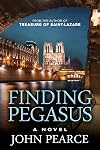
A complex plot that starts in Florida and ends in Hungary, some great new characters, Kate and Mark, make this an excellent entry in this very good series. There is also new technology, lots of time underwater, the obligatory but always delightful, stop in Paris with some wealthy but very evil villains to sustain your interest throughout.
Awards

Statistics
- Works
- 4
- Members
- 123
- Popularity
- #162,200
- Rating
- 3.8
- Reviews
- 13
- ISBNs
- 53
- Languages
- 2