
Francis Crick (1916–2004)
Author of Astonishing Hypothesis: The Scientific Search for the Soul
About the Author
Image credit: Owen Barfield World Wide Website
Works by Francis Crick
Associated Works
Tagged
Common Knowledge
- Canonical name
- Crick, Francis
- Legal name
- Crick, Francis Harry Compton
- Birthdate
- 1916-06-08
- Date of death
- 2004-07-28
- Gender
- male
- Education
- University College London (BS|Physics)
Gonville and Caius College, Cambridge (PhD)
Mill Hill School - Occupations
- biophysicist
molecular biologist
neuroscientist
professor - Organizations
- Royal Society
International Academy of Humanism
Committee for Skeptical Inquiry - Awards and honors
- Nobel Prize (Physiology or Medicine|1962)
Fellow of the Royal Society
Royal Medal (1972)
Copley Medal (1975)
Order of Merit (1991)
Fellow of the International Academy of Humanism (show all 7)
Benjamin Franklin Medal for Distinguished Achievement in the Sciences (2001) - Relationships
- Perutz, Max (doctoral advisor)
- Short biography
- Francis Crick was a molecular biologist famous, along with research partner James Watson and others, such as Rosalind Franklin and Maurice Wilkins, for discovering the double helix structure of DNA.
- Nationality
- UK
- Birthplace
- Weston Favell, Northamptonshire, England, UK
- Places of residence
- Cambridge, Cambridgeshire, England, UK
La Jolla, California, USA - Place of death
- San Diego, California, USA
- Burial location
- cremated
ashes scattered at sea (Pacific Ocean) - Associated Place (for map)
- UK
Members
Reviews

This reading was one of the most fun I have had looking through the muse of a disciplined scientist. His re-telling of his modest beginnings, through his and his team discovering the DNA molecule and further, was nothing less than charming. His humors are attractive in so many ways, on the verge of irreverence, tipping the scales on self deprecation, the roasting of oneself comes to mind; yet beautifully dignified all the way through. Coming from one of the primary contributers to the show more discovery of DNA, being a scientific marvel of the twentieth century, this book is a sweetheart of all sweethearts. God bless Francis Crick. show less
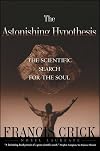
The bulk of the book is spent on describing how the brain, step by step, processes the information that the retina provides into the 3-dimensional 'motion picture' we observe, and which parts of the brain are involved and what they do.
He stresses several times that patients are not aware about several types of damage. And that blind sight exists.
Only at the very end the author carefully speculates on the relation between what he described, and consciousness/the soul.
I think the title of show more the book should have been: A Technical Explanation of Vision, with maybe a subtitle And Some Speculations about Consciousness. That would have been way more honest, though he would have sold far less copies... show less
He stresses several times that patients are not aware about several types of damage. And that blind sight exists.
Only at the very end the author carefully speculates on the relation between what he described, and consciousness/the soul.
I think the title of show more the book should have been: A Technical Explanation of Vision, with maybe a subtitle And Some Speculations about Consciousness. That would have been way more honest, though he would have sold far less copies... show less
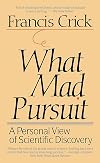
Very enjoyable reading, but a much different book than Watson's account of the discovery of DNA in "The Double Helix". This book was more of a reflection on a career in science than on a particular episode. It's filled with a good number of quotes and truisms that I couldn't help but jot down, such as "... one good example is worth a thousand theoretical arguments".

Not as good as the Watson book. The description of the science is better, but it is all rather ragged and unstructured, and I found it hard to engage with Crick as a person - not a problem with Watson and his book.
You May Also Like


Associated Authors
Statistics
- Works
- 19
- Also by
- 3
- Members
- 1,242
- Popularity
- #20,660
- Rating
- 3.8
- Reviews
- 16
- ISBNs
- 46
- Languages
- 12
- Favorited
- 3