
Susan Blackmore
Author of The Meme Machine
About the Author
Susan Blackmore is a freelance writer, lecturer, and broadcaster, and a Visiting Lecturer at the University of the West of England, Bristol
Image credit: From Wikipedia. Photo of Susan Blackmore. Released by Blackmore after a personal request to her for a public domain photo.
Works by Susan Blackmore
Conversations on Consciousness: What the Best Minds Think about the Brain, Free Will, and What It Means to Be Human (2005) 411 copies, 5 reviews
Susan Blackmore 1 copy
Experiencias fora do corpo 1 copy
Associated Works
What Is Your Dangerous Idea? Today's Leading Thinkers on the Unthinkable (2007) — Contributor — 668 copies, 8 reviews
UFO Magazine May/June 1996 — Contributor — 1 copy
Tagged
Common Knowledge
- Other names
- Blackmore, Susan Jane
- Birthdate
- 1951-07-29
- Gender
- female
- Education
- University of Oxford (St Hilda's College, BA, psychology and physiology, 1973)
University of Surrey (MSc, 1974, PhD, 1980, psychology) - Occupations
- freelance writer
broadcaster
academic
psychologist - Organizations
- Committee for the Scientific Investigation of Claims of the Paranormal
British Humanist Association - Awards and honors
- CSICOP Distinguished Skeptic Award (1991)
- Relationships
- Troscianko, Tom (husband|1977|split up|1990|divorced|2009)
Troscianko, Emily (daughter)
Hart-Davis, Adam (second husband|2010) - Nationality
- UK
- Birthplace
- London, England, UK
- Places of residence
- Plymouth, Devon, England, UK
Bristol, Gloucestershire, England, UK - Associated Place (for map)
- England, UK
Members
Reviews
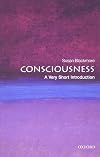
Early on, the author sets out the problem. Is consciousness something extra we have, over and above the physical world, or is it intrinsically a phenomenon of the physical world? If the former, then we’re entitled to ask (a) how consciousness and world interact with one another, (b) what, if anything, consciousness does, (c) where it comes from, how we get it, and (d) are we special, or do other animals have it too? But if it’s the latter, such questions look less formidable; what is, show more though, now a huge problem instead is to explain why we still seem to have this non-physical, purely mental, entity inside our heads. In a nutshell: if there are two realms, how can they ever influence one another; if there is only one, why does it seem as if there are two?
So what about studying the brain, does that help? It certainly does, particularly since the advent of things like fMRI- and PET-scanning, but only up to a point. One of the main features of consciousness is its apparent unity, both in time and space: it seems to have continuity, from moment to moment, and is experienced as a phenomenon here, i.e. “me”. But the brain is pretty much the opposite of all that—decentralised, massively parallel, a network of networks.
Nevertheless there are, and have always been, no end of theories about mind and world, from dualists blithely waving away the “how could they ever influence one another” problem (“…details, details…”), to today’s quantum-theory enthusiasts “explaining” one age-old enigma with a modern one.
Susan Blackmore deals with all this, and much more besides—and has her own views on the subject, as we all do, which does give the book a bit of a slant. But for an introduction to this subject it’s exceptionally well written, the language as plain as you could ask for. And if you are in any doubt yourself about consciousness, “the self” and so on, my favourite idea (pps 74-5) might help clarify things: picture a teleporter, the sort of matter-transmitter imagined by science-fiction writers. It looks like a phone booth, you step in at this end, the booth makes a recording of you—every last cell, every atom of every cell—then destroys you and transmits the recording to a second booth on the other side of the world, where you (is it you?) step back out. The journey is free, won’t cost you a penny. And while in real life nothing is ever completely infallible, for the sake of this thought-experiment assume our teleporter is absolutely, guaranteed, one hundred per cent safe. The question, of course, is: would you go? show less
So what about studying the brain, does that help? It certainly does, particularly since the advent of things like fMRI- and PET-scanning, but only up to a point. One of the main features of consciousness is its apparent unity, both in time and space: it seems to have continuity, from moment to moment, and is experienced as a phenomenon here, i.e. “me”. But the brain is pretty much the opposite of all that—decentralised, massively parallel, a network of networks.
Nevertheless there are, and have always been, no end of theories about mind and world, from dualists blithely waving away the “how could they ever influence one another” problem (“…details, details…”), to today’s quantum-theory enthusiasts “explaining” one age-old enigma with a modern one.
Susan Blackmore deals with all this, and much more besides—and has her own views on the subject, as we all do, which does give the book a bit of a slant. But for an introduction to this subject it’s exceptionally well written, the language as plain as you could ask for. And if you are in any doubt yourself about consciousness, “the self” and so on, my favourite idea (pps 74-5) might help clarify things: picture a teleporter, the sort of matter-transmitter imagined by science-fiction writers. It looks like a phone booth, you step in at this end, the booth makes a recording of you—every last cell, every atom of every cell—then destroys you and transmits the recording to a second booth on the other side of the world, where you (is it you?) step back out. The journey is free, won’t cost you a penny. And while in real life nothing is ever completely infallible, for the sake of this thought-experiment assume our teleporter is absolutely, guaranteed, one hundred per cent safe. The question, of course, is: would you go? show less

Ok, wow. I know I love her writing style and how carefully she explores the (currently?) unanswerable questions from [b:The Meme Machine|254502|The Meme Machine|Susan Blackmore|https://images.gr-assets.com/books/1347677335s/254502.jpg|437557]. This memoir of her young adulthood, her time focused on uni, thesis, teaching, and research before she became (coincidentally?) almost in conjunction, a disbeliever and a mother, is mesmerizing. :get it?:
Specific examples of her work and her analyses show more of others' abound. One thing that was finally figured out is that people who tend to believe in paranormal mysteries tend to be exceptionally poor (very few humans are good...) at estimating probability. Intelligence, education, even maturity didn't seem to matter, either, as the medical students displayed the same results as the young schoolchildren. (This research prompted by one of those tales "I told her not to get on the plane, and the plane crashed but she was safe on the train.")
If you've ever had any interest in the big questions of philosophy (memory, consciousness, life-after-death, etc.) , or in psi, or even in altered states of mind or alternative therapies, and want to understand what value any of those have to you, or to science, or if you just like memoirs in general, I bet you'll like this. Dr. Blackmore is brave & brilliant and I'm even more impressed with her work now, even more eager to read more by her, and more willing to watch her videos because she's not written enough books.
She and [a:Temple Grandin|1567|Temple Grandin|https://images.gr-assets.com/authors/1241222068p2/1567.jpg] are my heroes. show less
Specific examples of her work and her analyses show more of others' abound. One thing that was finally figured out is that people who tend to believe in paranormal mysteries tend to be exceptionally poor (very few humans are good...) at estimating probability. Intelligence, education, even maturity didn't seem to matter, either, as the medical students displayed the same results as the young schoolchildren. (This research prompted by one of those tales "I told her not to get on the plane, and the plane crashed but she was safe on the train.")
If you've ever had any interest in the big questions of philosophy (memory, consciousness, life-after-death, etc.) , or in psi, or even in altered states of mind or alternative therapies, and want to understand what value any of those have to you, or to science, or if you just like memoirs in general, I bet you'll like this. Dr. Blackmore is brave & brilliant and I'm even more impressed with her work now, even more eager to read more by her, and more willing to watch her videos because she's not written enough books.
She and [a:Temple Grandin|1567|Temple Grandin|https://images.gr-assets.com/authors/1241222068p2/1567.jpg] are my heroes. show less
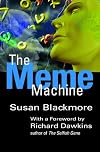
Here’s the idea at the heart of this book in a nutshell. For the best part of a century now we’ve become used to the picture (or many of us have anyway) of the four-billion-year history of life on this planet having been driven by a single kind of self-replicating entity, the gene. The result has been biological evolution. But in fact, all this may be only one very specific example of a more general, a more universal, principle—other kinds of self-replicators also being possible. show more Recently, with the emergence of human beings, a second kind has indeed appeared—the “meme”—and the result in this case is not biological evolution, but cultural: as is the gene to biology, so is the meme to sociology and psychology.
It’s not a new idea (has been around for decades) but Susan Blackmore’s is a particularly clear summary. It explains what memes actually are: concepts of all kinds, ways of doing things, stories, myths, works of art and music, fashions, advertising slogans…you name it—all the assorted quality and trash which makes up our culture. It explains their method of replication (imitation) and some of the questions they may help answer, such as the puzzling size of the human brain, or the origins of language. There are also the differences between genes and memes: whereas genes need to deal squarely with reality at all times (or the plant, fungus or animal dies) this is not the case with memes; memes can be incorrect beliefs, misconceptions, urban myths, fantasies, pure nonsense or outright lies. Memetics “explains the spread of untrue, bizarre, and even harmful ideas…memes do not need to be true to be successful.”
Like everything else I’ve read by Blackmore, this is exceptionally well-written—she’s a natural, a superb communicator of even the trickiest details; and although I did finish it as sceptical as I started out (i.e. mildly sceptical, no more) one thought did cross my mind. Many physicists have suggested that the basic “stuff” of the universe isn’t matter, or even energy, but information; and as for biologists, that’s what genes are too—the basic “stuff” of biology is also information. And once you look at the world that way, this “meme” idea doesn’t seem nearly so much of a stretch. show less
It’s not a new idea (has been around for decades) but Susan Blackmore’s is a particularly clear summary. It explains what memes actually are: concepts of all kinds, ways of doing things, stories, myths, works of art and music, fashions, advertising slogans…you name it—all the assorted quality and trash which makes up our culture. It explains their method of replication (imitation) and some of the questions they may help answer, such as the puzzling size of the human brain, or the origins of language. There are also the differences between genes and memes: whereas genes need to deal squarely with reality at all times (or the plant, fungus or animal dies) this is not the case with memes; memes can be incorrect beliefs, misconceptions, urban myths, fantasies, pure nonsense or outright lies. Memetics “explains the spread of untrue, bizarre, and even harmful ideas…memes do not need to be true to be successful.”
Like everything else I’ve read by Blackmore, this is exceptionally well-written—she’s a natural, a superb communicator of even the trickiest details; and although I did finish it as sceptical as I started out (i.e. mildly sceptical, no more) one thought did cross my mind. Many physicists have suggested that the basic “stuff” of the universe isn’t matter, or even energy, but information; and as for biologists, that’s what genes are too—the basic “stuff” of biology is also information. And once you look at the world that way, this “meme” idea doesn’t seem nearly so much of a stretch. show less
It may sound harsh, but the overall feeling that this book left me with was one of an aversion to many of those philosophers who are making their careers out of proposing abstract, unscientific, untestable theories of “phenomenal consciousness”.
Susan Blackmore does a good job of shooting down some of these theories. But her own alternative theory does not convince me. She argues that consciousness is basically an illusion. Now, I find it plausible that “free will” might well be an show more illusion: we don’t make choices that are independent of causal factors. But that’s not the same as accepting that consciousness itself is an illusion.
Of course, our brains are working away all the time doing things that we are not conscious of. This has been called “parallel processing”, as opposed to “serial processing”, where we consciously focus on one thing after another.
There is no consciousness without the brain and its neurons. Consciousness is just the brain working in a particular way. The human brain evolved, and natural selection does not create something from nothing, so some basic form of consciousness must have existed in the ancestors of modern humans and been adapted to a more developed level.
This suggests that, as Susan Greenfield has argued, consciousness is not an all-or-nothing thing; it is more like a dimmer-switch which can produce varying amounts of light. For example, babies and some animals probably have the “dim” type of consciousness. Greenfield also points out that consciousness also involves emotion, which means that computers don’t have “consciousness”.
Incidentally, some of those who argue that animals do not have any consciousness at all even go so far as to claim that therefore animals do not feel pain. But most scientists in this area argue that vertebrates at least do not just react to stimuli: they also feel/are aware of pain.
But WHY did consciousness evolve? Karl Marx wrote that: “…what distinguishes the worst architect from the best of bees is this, that the architect raises his structure in imagination before he erects it in reality.”
Similarly, Richard Dawkins has argued that consciousness evolved because it brought about the possibility of SIMULATION, giving humans the propensity for planning and foresight.
Consciousness involves representations or reflections (however imperfect) inside our brains of the world outside. Once these mental reflections exist, we begin to mentally juggle with them inside our heads: we begin to think about them. We have then moved from reflections OF the world to reflecting ON it.
Finally, there is the question of what LED TO the evolution of human consciousness, as opposed to the “less developed” consciousness of (some) other animals. Firstly, there is the development of tool-making by our ancestors. Then there is social interaction, and, finally, the development of language. The interaction between these three factors probably led to the “take-off” in human consciousness. The book does not fully explore this.
I’ll end with a parting shot at the “philosophers”. As Charles Darwin wrote in one of his early “transmutation” notebooks: “He who would understand baboon would do more towards metaphysics than (the philosopher) Locke.”
PS: I just came across this from Ernst Mayr, one of the greatest twentieth century evolutionary theorists:
"How did human consciousness evolve?... The answer is actually quite simple: from animal consciousness!... Every dog owner has had occasion to observe the "guilt feeling" a dog displays when, in the absence of his master, he has done something for which he expects to be punished... How far "down" in the animal kingdom one can trace such signs of consciousness is arguable... However, it is quite certain that human consciousness did not arise full-fledged with the human species, but is only the most highly evolved end point of a long evolutionary history." show less
Susan Blackmore does a good job of shooting down some of these theories. But her own alternative theory does not convince me. She argues that consciousness is basically an illusion. Now, I find it plausible that “free will” might well be an show more illusion: we don’t make choices that are independent of causal factors. But that’s not the same as accepting that consciousness itself is an illusion.
Of course, our brains are working away all the time doing things that we are not conscious of. This has been called “parallel processing”, as opposed to “serial processing”, where we consciously focus on one thing after another.
There is no consciousness without the brain and its neurons. Consciousness is just the brain working in a particular way. The human brain evolved, and natural selection does not create something from nothing, so some basic form of consciousness must have existed in the ancestors of modern humans and been adapted to a more developed level.
This suggests that, as Susan Greenfield has argued, consciousness is not an all-or-nothing thing; it is more like a dimmer-switch which can produce varying amounts of light. For example, babies and some animals probably have the “dim” type of consciousness. Greenfield also points out that consciousness also involves emotion, which means that computers don’t have “consciousness”.
Incidentally, some of those who argue that animals do not have any consciousness at all even go so far as to claim that therefore animals do not feel pain. But most scientists in this area argue that vertebrates at least do not just react to stimuli: they also feel/are aware of pain.
But WHY did consciousness evolve? Karl Marx wrote that: “…what distinguishes the worst architect from the best of bees is this, that the architect raises his structure in imagination before he erects it in reality.”
Similarly, Richard Dawkins has argued that consciousness evolved because it brought about the possibility of SIMULATION, giving humans the propensity for planning and foresight.
Consciousness involves representations or reflections (however imperfect) inside our brains of the world outside. Once these mental reflections exist, we begin to mentally juggle with them inside our heads: we begin to think about them. We have then moved from reflections OF the world to reflecting ON it.
Finally, there is the question of what LED TO the evolution of human consciousness, as opposed to the “less developed” consciousness of (some) other animals. Firstly, there is the development of tool-making by our ancestors. Then there is social interaction, and, finally, the development of language. The interaction between these three factors probably led to the “take-off” in human consciousness. The book does not fully explore this.
I’ll end with a parting shot at the “philosophers”. As Charles Darwin wrote in one of his early “transmutation” notebooks: “He who would understand baboon would do more towards metaphysics than (the philosopher) Locke.”
PS: I just came across this from Ernst Mayr, one of the greatest twentieth century evolutionary theorists:
"How did human consciousness evolve?... The answer is actually quite simple: from animal consciousness!... Every dog owner has had occasion to observe the "guilt feeling" a dog displays when, in the absence of his master, he has done something for which he expects to be punished... How far "down" in the animal kingdom one can trace such signs of consciousness is arguable... However, it is quite certain that human consciousness did not arise full-fledged with the human species, but is only the most highly evolved end point of a long evolutionary history." show less
Lists
You May Also Like


Associated Authors
Statistics
- Works
- 14
- Also by
- 6
- Members
- 3,430
- Popularity
- #7,420
- Rating
- 3.7
- Reviews
- 54
- ISBNs
- 111
- Languages
- 15
- Favorited
- 6

