
Patricia Smith Churchland
Author of Neurophilosophy: Toward a Unified Science of the Mind-Brain
About the Author
Patricia S. Churchland is professor emerita of philosophy at the University of California, San Diego. The recipient of a MacArthur Fellowship, she lives in San Diego.
Image credit: Photo by Dan Lurie / Flickr
Works by Patricia Smith Churchland
Associated Works
Consciousness at the Crossroads: Conversations with the Dalai Lama on Brainscience and Buddhism (1999) — Contributor — 138 copies, 2 reviews
Tagged
Common Knowledge
- Birthdate
- 1943-07-16
- Gender
- female
- Occupations
- Professor Emeritus of Philosophy, University of California, San Diego
- Awards and honors
- President, American Philosophical Association Pacific Division (1992-1993)
MacArthur Fellowship (1991) - Relationships
- Churchland, Paul M. (husband)
- Nationality
- Canada
- Associated Place (for map)
- Canada
Members
Reviews
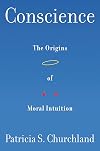
Summary: Exploring the neuroscience of our sense of right and wrong, integrating our knowledge of neurophysical causation, social factors, and philosophy, arguing that moral norms are based in our brain functions, interacting with our social world.
Conscience. Unless one is significantly cognitively impaired, there is this inner sense we have about what is morally right or wrong, or sometimes this place where we determine right or wrong. Where does this come from? Theists will claim a show more transcendent basis for this, something written on the heart. Yet, what is written on one heart often varies from another's. Often we experience uncertainty about these things in our own hearts. Furthermore, those "cognitive impairments" and advancing neuroscience are demonstrating that many aspects of human moral behavior from social bonding and care for others to where one may fall on the political spectrum with regard to moral issues is rooted in the neurophysiology of the brain. Are we conscious actors, or is our moral sense and moral behavior in some way determined by our brain chemistry?
Patricia S. Churchland is one of the pioneers in the field of neurophilosophy--exploring this intersection of neuroscience research and philosophical discussion of questions like ethics and free will. This work is an engaging introduction to her work that moves between discussions of neurotransmitters and a philosophical survey of theories of moral behavior and the question of free will.
She looks at the role of oxytocin in human attachment ("The Snuggle to Survive"), how we are wired for sociality, and how behavior is shaped by the reward system in our brains, and the physiology of empathy. We learn what the brain response to a person eating worms may indicate about political attitudes. Churchland explores the bewildering field of psychopathology--those whose anti-social behavior reflects a lack of moral compass, guilt or remorse--and thus far, our futile efforts to arrive at remedies.
The last two chapters of the book focus on the philosophical questions, and here is where it got really interesting for me. Churchland considers "rule based" moral behavior from the ten commandments to Kant's categorical imperative to utilitarian-based systems. The flaw, she argues, is that human behavior endlessly deviates from these rules, and there is even significant disagreement on the rules. She argues for a socio-biological basis for moral behavior in which the evolution of our neurophysiology is such that we are well-equipped to engage in social life and behavior that sustains the bonds between us. This leads her to a definition of morality as "the set of shared attitudes and practices that regulate individual behavior to facilitate cohesion and well-being among individuals in the group." She seems sympathetic to forms of virtue ethics in which habits of behaving may be modified by particular case constraints.
The final chapter explores free will, and here, Churchland seems to be trying to navigate between those who would fully advocate for free will, and even argue moral certainties, and those who would argue that what we have learned about causation in neuroscience undermines free will, and exonerates criminals from guilt. She argues for the distinction between causes beyond our control and causes under our control, using the example of Bernie Madoff, who was under no compulsion, but knew exactly what he was doing.
Churchland's discussion in these two chapters also indicated to me some of the concerns that underlie this book. She is deeply concerned about those who tout moral certitudes and also authoritarian approaches that may lead to morally justified abuses of others. She believes that an understanding of how we are "wired" for morally decent behavior shaped by social norms to be superior to such approaches.
As a Christian theist with a deep respect for scientists, and one who shares a sense of being humbled before the realities of our existence, I wonder whether there is a third way between a pure naturalism of "morally decent humans" and a rule-based authoritarianism, whether rooted in ideology or theology. Might we not allow for the possibility that we are indeed "wired" for moral behavior in social contexts that reflect transcendent concerns expressed in the great commands, which are really broad moral statements of principle, to love God and one's neighbor as oneself? It seems we often get caught in binary discussions of either science or the transcendent. Might there be an approach of both-and that both celebrates the wonderful mechanisms that bond parents and children, or larger social groups, the mechanisms by which we learn what it is to be moral, in all its societal variants; and recognizes the possibility that at least some communal norms might be grounded in transcendent realities that are not occasions for arrogance or authoritarianism, but humility and grace and empathy, and are consonant with the ways we are wired?
I could be wrong, but it was not evident that Churchland has engaged with neurotheologians like Andrew Newberg, (see my review of his book Neurotheology [https://bobonbooks.com/2018/05/10/review-neurotheology/]) who covers similar ground. There are many others interested in a conversation rather than a war between science and religious belief, and see the possibility of a kind of consilience that mutes the voice of neither. When I consider Churchland's account, I find myself marveling anew at the marvels hidden within my own body and am grateful for her exposition of these. I hope going forward, there might be a growing appreciation on the part of neurophilosophers like Churchland, not merely of problematic aspects of rule-based ethics in philosophy or religious teaching (which I will admit exist, just as there are problematic questions in neuroscience), but also the ways religious frameworks of moral teachings have profoundly shaped many communities for good (for example Andre' Trocme' and his community of Le Chambon, which hid Jewish refugees during the Holocaust), and helped individuals lead morally worthy lives as people of conscience.
____________________________
Disclosure of Material Connection: I received a complimentary review e-galley of this book from the publisher via Edelweiss in exchange for an honest review. The opinions I have expressed are my own. show less
Conscience. Unless one is significantly cognitively impaired, there is this inner sense we have about what is morally right or wrong, or sometimes this place where we determine right or wrong. Where does this come from? Theists will claim a show more transcendent basis for this, something written on the heart. Yet, what is written on one heart often varies from another's. Often we experience uncertainty about these things in our own hearts. Furthermore, those "cognitive impairments" and advancing neuroscience are demonstrating that many aspects of human moral behavior from social bonding and care for others to where one may fall on the political spectrum with regard to moral issues is rooted in the neurophysiology of the brain. Are we conscious actors, or is our moral sense and moral behavior in some way determined by our brain chemistry?
Patricia S. Churchland is one of the pioneers in the field of neurophilosophy--exploring this intersection of neuroscience research and philosophical discussion of questions like ethics and free will. This work is an engaging introduction to her work that moves between discussions of neurotransmitters and a philosophical survey of theories of moral behavior and the question of free will.
She looks at the role of oxytocin in human attachment ("The Snuggle to Survive"), how we are wired for sociality, and how behavior is shaped by the reward system in our brains, and the physiology of empathy. We learn what the brain response to a person eating worms may indicate about political attitudes. Churchland explores the bewildering field of psychopathology--those whose anti-social behavior reflects a lack of moral compass, guilt or remorse--and thus far, our futile efforts to arrive at remedies.
The last two chapters of the book focus on the philosophical questions, and here is where it got really interesting for me. Churchland considers "rule based" moral behavior from the ten commandments to Kant's categorical imperative to utilitarian-based systems. The flaw, she argues, is that human behavior endlessly deviates from these rules, and there is even significant disagreement on the rules. She argues for a socio-biological basis for moral behavior in which the evolution of our neurophysiology is such that we are well-equipped to engage in social life and behavior that sustains the bonds between us. This leads her to a definition of morality as "the set of shared attitudes and practices that regulate individual behavior to facilitate cohesion and well-being among individuals in the group." She seems sympathetic to forms of virtue ethics in which habits of behaving may be modified by particular case constraints.
The final chapter explores free will, and here, Churchland seems to be trying to navigate between those who would fully advocate for free will, and even argue moral certainties, and those who would argue that what we have learned about causation in neuroscience undermines free will, and exonerates criminals from guilt. She argues for the distinction between causes beyond our control and causes under our control, using the example of Bernie Madoff, who was under no compulsion, but knew exactly what he was doing.
Churchland's discussion in these two chapters also indicated to me some of the concerns that underlie this book. She is deeply concerned about those who tout moral certitudes and also authoritarian approaches that may lead to morally justified abuses of others. She believes that an understanding of how we are "wired" for morally decent behavior shaped by social norms to be superior to such approaches.
As a Christian theist with a deep respect for scientists, and one who shares a sense of being humbled before the realities of our existence, I wonder whether there is a third way between a pure naturalism of "morally decent humans" and a rule-based authoritarianism, whether rooted in ideology or theology. Might we not allow for the possibility that we are indeed "wired" for moral behavior in social contexts that reflect transcendent concerns expressed in the great commands, which are really broad moral statements of principle, to love God and one's neighbor as oneself? It seems we often get caught in binary discussions of either science or the transcendent. Might there be an approach of both-and that both celebrates the wonderful mechanisms that bond parents and children, or larger social groups, the mechanisms by which we learn what it is to be moral, in all its societal variants; and recognizes the possibility that at least some communal norms might be grounded in transcendent realities that are not occasions for arrogance or authoritarianism, but humility and grace and empathy, and are consonant with the ways we are wired?
I could be wrong, but it was not evident that Churchland has engaged with neurotheologians like Andrew Newberg, (see my review of his book Neurotheology [https://bobonbooks.com/2018/05/10/review-neurotheology/]) who covers similar ground. There are many others interested in a conversation rather than a war between science and religious belief, and see the possibility of a kind of consilience that mutes the voice of neither. When I consider Churchland's account, I find myself marveling anew at the marvels hidden within my own body and am grateful for her exposition of these. I hope going forward, there might be a growing appreciation on the part of neurophilosophers like Churchland, not merely of problematic aspects of rule-based ethics in philosophy or religious teaching (which I will admit exist, just as there are problematic questions in neuroscience), but also the ways religious frameworks of moral teachings have profoundly shaped many communities for good (for example Andre' Trocme' and his community of Le Chambon, which hid Jewish refugees during the Holocaust), and helped individuals lead morally worthy lives as people of conscience.
____________________________
Disclosure of Material Connection: I received a complimentary review e-galley of this book from the publisher via Edelweiss in exchange for an honest review. The opinions I have expressed are my own. show less
When thinking about morality, people generally make two mistakes: 1) that moral certainty can be achieved by consulting some external, objective source, and 2) that if this is not the case, and moral certainty cannot be attained, then we all have license to do whatever we want and there’s nothing left to discuss.
As analytical philosopher Patricia Churchland explains in her latest book, Conscience: The Origin of Our Moral Intuitions, both ideas are false. Moral dilemmas always involve show more conflicting priorities, and the call for “objective morality” is nothing other than the desire to escape uncertainty and to have someone or something else do the thinking for you. As Churchland writes:
“I may long for certainty, but I have to live with doing the best I can. I may concoct a myth to explain that my certainty, unlike yours, taps into universal moral truths. Reality will soon dissolve that myth. Voltaire (1694-1778), a French philosopher of the Enlightenment, concisely summed up the state of affairs: ‘Uncertainty is an uncomfortable position, but certainty is an absurd one.’”
While moral certainty does not and cannot exist, that doesn’t mean we lack a strong foundation from which to build. Morality is equal parts emotion, rooted in biology, and reason, which allows us to leverage our “better angels” while suppressing or controlling our baser instincts. As Churchland states:
“The verdict of conscience is not solely cognitive...but has two interdependent elements: feelings that urge us in a general direction, and judgment that shapes the urge into a specific action.”
Humans, like most mammals, are social animals, wired for sympathy, empathy, attachment, bonding, and the desire for social approval. This social suite of emotions and behaviors, which allows for complex cooperative behavior, is the only reason humans, physically unimpressive as they are, did not go extinct over their 200,000 year history.
It is worth reflecting on the fact that modern humans have been around for hundreds of thousands of years. This means that morality must have come from some other source than “ancient” religious or philosophical texts that were written a mere two to three thousand years ago. These texts cannot, contrary to what is sometimes claimed, possibly account for our collective longevity and social and moral inclinations. The roots lie deeper in our evolutionary past, encoded in our biology and uncovered by neuroscience.
To the authors credit, Churchland does not get lost in the scientism that this might suggest; she acknowledges that science cannot determine right and wrong actions. On the other hand, Churchland also correctly recognizes that science is highly relevant to moral decision making and that scientific facts impact what we consider to be moral actions. While conceding to David Hume that “is” does not imply “ought,” science can certainly influence our moral calculation, as, for example, when we stopped executing witches on account of the fact that they don’t exist.
So morality is grounded in our biology and our care for others, informed by science, and codified in community standards. Most of the time, and in most cases, moral decisions do not pose any special problems. But what about moral dilemmas with conflicting interests, as in debates regarding abortion, the death penalty, and political philosophy in general? How are we supposed to balance the competing priorities and conflicting ideals?
The history of moral philosophy is filled with attempts to escape the discomfort of uncertainty with rule-based systems that prescribe one course of action or the prioritization of one variable in all circumstances. As Chruchland explains, every such attempt is easily exposed as incomplete with counter-examples and exceptions. This shouldn’t be surprising, as every ethical dilemma is unique and involves competing priorities; therefore, the prioritization of the same principle all of the time leads to immoral behavior at least some of the time.
Humanity’s first attempts at solving ethical problems were the invocation of supernatural authority. Divine command theory states simply that God will tell you what to do, you just have to follow the commandments. The problem with this was first articulated by Plato in the dialogue Euthyphro. The “Euthyphro Dilemma” asks: do the gods love good action because it is good, or is good action good because it is loved by the gods? If the first, the goodness of an action is independent of god, rendering god unnecessary and subject to the same moral constraints as everyone else. If the second, then morality is not objective and entirely dependent on god’s whim.
Of course, even the religious don’t believe that all divine commands are moral, which is why there is so much disagreement among people with the same gods and the same religions and why people cherry pick the moral parts out of the Bible while ignoring the nastier parts (I’m thinking of pretty much anything out of Leviticus). If god, or the voice in your head, told you, like Isaac, to murder your own son, I would hope that your response would be different and that you wouldn’t march him up to an altar.
So divine command theory cannot be the answer; we simply can’t escape the evaluation of moral claims regardless of their source.
So what about grounding morality in reason alone? This too has been attempted and has largely failed for the same reasons.
Kant’s categorical imperative tells us to “act only according to that maxim whereby you can, at the same time, will that it should become a universal law.” This seems like a reasonable idea, but only if you overlook the fact that logical consistency does not imply morality. Two people may disagree on what they think should be willed as a universal law, and the categorical imperative does not in itself resolve the dispute. For example, is lying always wrong, and should this be cast as a universal rule? Kant said yes, but as Churchland wrote, “As even modestly clever undergraduates are quick to point out, no rule seems to be immune to fair-minded exceptions.” Would you lie to save your child’s life? I’m betting you would, despite the demands of the categorical imperative.
Utilitarianism tries a different approach. It regards moral decisions as those which produce the greatest good for the greatest number, but is apt to ignore basic human rights and the idea of not using human life as a means to an end. It also runs counter to our strong biological urge to prioritize the needs of our family over others.
Even the Golden Rule, commanding us to treat others the way we would wish to be treated, is only moral if the other person shares your values. Perhaps they wish to be treated differently than you, or deserve harsher treatment (as in the case of psychopaths and terrorists). Again, any rule-based system or moral proclamation will encounter examples it is not equipped to deal with.
All of this is not to endorse moral relativism; of course some actions are more moral than others according to the only standards that really count: our biological wiring that causes us to value pleasure over pain, peace over violence, and solidarity over solitude. We are justified in calling immoral the things that cause suffering and moral the things that cause human flourishing. But this does not mean that there are not difficult cases with conflicting priorities that simultaneously strain both our Kantian and utilitarian impulses.
The best we can hope for is to keep the dialogue going. The real enemy of morality is not uncertainty, but ideology, the dogmatic confidence in the moral superiority of one’s position. Whenever the claim that god or reason is on one side of the moral debate and one side alone, the result is almost always tragic. show less
As analytical philosopher Patricia Churchland explains in her latest book, Conscience: The Origin of Our Moral Intuitions, both ideas are false. Moral dilemmas always involve show more conflicting priorities, and the call for “objective morality” is nothing other than the desire to escape uncertainty and to have someone or something else do the thinking for you. As Churchland writes:
“I may long for certainty, but I have to live with doing the best I can. I may concoct a myth to explain that my certainty, unlike yours, taps into universal moral truths. Reality will soon dissolve that myth. Voltaire (1694-1778), a French philosopher of the Enlightenment, concisely summed up the state of affairs: ‘Uncertainty is an uncomfortable position, but certainty is an absurd one.’”
While moral certainty does not and cannot exist, that doesn’t mean we lack a strong foundation from which to build. Morality is equal parts emotion, rooted in biology, and reason, which allows us to leverage our “better angels” while suppressing or controlling our baser instincts. As Churchland states:
“The verdict of conscience is not solely cognitive...but has two interdependent elements: feelings that urge us in a general direction, and judgment that shapes the urge into a specific action.”
Humans, like most mammals, are social animals, wired for sympathy, empathy, attachment, bonding, and the desire for social approval. This social suite of emotions and behaviors, which allows for complex cooperative behavior, is the only reason humans, physically unimpressive as they are, did not go extinct over their 200,000 year history.
It is worth reflecting on the fact that modern humans have been around for hundreds of thousands of years. This means that morality must have come from some other source than “ancient” religious or philosophical texts that were written a mere two to three thousand years ago. These texts cannot, contrary to what is sometimes claimed, possibly account for our collective longevity and social and moral inclinations. The roots lie deeper in our evolutionary past, encoded in our biology and uncovered by neuroscience.
To the authors credit, Churchland does not get lost in the scientism that this might suggest; she acknowledges that science cannot determine right and wrong actions. On the other hand, Churchland also correctly recognizes that science is highly relevant to moral decision making and that scientific facts impact what we consider to be moral actions. While conceding to David Hume that “is” does not imply “ought,” science can certainly influence our moral calculation, as, for example, when we stopped executing witches on account of the fact that they don’t exist.
So morality is grounded in our biology and our care for others, informed by science, and codified in community standards. Most of the time, and in most cases, moral decisions do not pose any special problems. But what about moral dilemmas with conflicting interests, as in debates regarding abortion, the death penalty, and political philosophy in general? How are we supposed to balance the competing priorities and conflicting ideals?
The history of moral philosophy is filled with attempts to escape the discomfort of uncertainty with rule-based systems that prescribe one course of action or the prioritization of one variable in all circumstances. As Chruchland explains, every such attempt is easily exposed as incomplete with counter-examples and exceptions. This shouldn’t be surprising, as every ethical dilemma is unique and involves competing priorities; therefore, the prioritization of the same principle all of the time leads to immoral behavior at least some of the time.
Humanity’s first attempts at solving ethical problems were the invocation of supernatural authority. Divine command theory states simply that God will tell you what to do, you just have to follow the commandments. The problem with this was first articulated by Plato in the dialogue Euthyphro. The “Euthyphro Dilemma” asks: do the gods love good action because it is good, or is good action good because it is loved by the gods? If the first, the goodness of an action is independent of god, rendering god unnecessary and subject to the same moral constraints as everyone else. If the second, then morality is not objective and entirely dependent on god’s whim.
Of course, even the religious don’t believe that all divine commands are moral, which is why there is so much disagreement among people with the same gods and the same religions and why people cherry pick the moral parts out of the Bible while ignoring the nastier parts (I’m thinking of pretty much anything out of Leviticus). If god, or the voice in your head, told you, like Isaac, to murder your own son, I would hope that your response would be different and that you wouldn’t march him up to an altar.
So divine command theory cannot be the answer; we simply can’t escape the evaluation of moral claims regardless of their source.
So what about grounding morality in reason alone? This too has been attempted and has largely failed for the same reasons.
Kant’s categorical imperative tells us to “act only according to that maxim whereby you can, at the same time, will that it should become a universal law.” This seems like a reasonable idea, but only if you overlook the fact that logical consistency does not imply morality. Two people may disagree on what they think should be willed as a universal law, and the categorical imperative does not in itself resolve the dispute. For example, is lying always wrong, and should this be cast as a universal rule? Kant said yes, but as Churchland wrote, “As even modestly clever undergraduates are quick to point out, no rule seems to be immune to fair-minded exceptions.” Would you lie to save your child’s life? I’m betting you would, despite the demands of the categorical imperative.
Utilitarianism tries a different approach. It regards moral decisions as those which produce the greatest good for the greatest number, but is apt to ignore basic human rights and the idea of not using human life as a means to an end. It also runs counter to our strong biological urge to prioritize the needs of our family over others.
Even the Golden Rule, commanding us to treat others the way we would wish to be treated, is only moral if the other person shares your values. Perhaps they wish to be treated differently than you, or deserve harsher treatment (as in the case of psychopaths and terrorists). Again, any rule-based system or moral proclamation will encounter examples it is not equipped to deal with.
All of this is not to endorse moral relativism; of course some actions are more moral than others according to the only standards that really count: our biological wiring that causes us to value pleasure over pain, peace over violence, and solidarity over solitude. We are justified in calling immoral the things that cause suffering and moral the things that cause human flourishing. But this does not mean that there are not difficult cases with conflicting priorities that simultaneously strain both our Kantian and utilitarian impulses.
The best we can hope for is to keep the dialogue going. The real enemy of morality is not uncertainty, but ideology, the dogmatic confidence in the moral superiority of one’s position. Whenever the claim that god or reason is on one side of the moral debate and one side alone, the result is almost always tragic. show less

Even being released in 1986, this book is an amazing argument for 1) the co-dependence of Neuroscience, Philosophy, and Psychology (and in a modern context Cognitive Science as a multi-disciplinary enterprise) and more specifically 2) that brain states are mental states, specifically in part II. It has a great tripartite structure, which makes it suitable for just about anybody with interest. Part I goes over Neuroscience, getting the reader current to 1980 levels (quite well), Part II is show more Philosophy of Science, which is still 100% relevant today and IMHO still has a lot to say that has not been integrated, and Part III covers the synthesis of the two. All in all, a fantastic read. Churchland showcases her wit and brilliance in an accessible and important way. show less
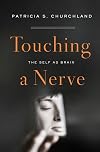
This is an excellent narrative exploring both the science and philosophy behind the current realms of neuroscience and the brain. It deftly lays bare the arguments for dualism and shows why reductionism does not in any way make the experiences of the brain any less enjoyable or insightful just because the underlying causes and mechanisms are brought into the light. The title alludes to the fact that though many of the modern discoveries in brain science may be hard to take for many people, show more in time as these discoveries gain more and more evidence acceptance of the brain as the source of consciousness will eventually become accepted. The book does do an excellent job of approaching each subject with a delicate hand and easily accessible language that does not overwhelm the reader with endless jargon. This is a must read book for anyone who is fascinated by the brain and wonders just what makes us conscious. show less
Lists
Awards


You May Also Like


Associated Authors
Statistics
- Works
- 8
- Also by
- 4
- Members
- 1,320
- Popularity
- #19,470
- Rating
- 3.8
- Reviews
- 12
- ISBNs
- 47
- Languages
- 7
- Favorited
- 5