

Christof Koch
Author of Consciousness: Confessions of a Romantic Reductionist
About the Author
Christof Koch is President and Chief Scientist of the Allen Institute for Brain Science in Seattle, following twenty-seven years as a Professor at the California Institute of Technology. He is the author of Consciousness: Confessions of a Romantic Reductionist (MIT Press), The Quest for show more Consciousness: A Neurobiological Approach, and other books. show less
Works by Christof Koch
The Feeling of Life Itself: Why Consciousness Is Widespread but Can't Be Computed (The MIT Press) (2019) 122 copies, 3 reviews
Associated Works
Tagged
Common Knowledge
- Birthdate
- 1956-11-13
- Gender
- male
- Education
- Max Planck Institute for Biological Cybernetics (PhD, 1982)
University of Tübingen (MS, Physics, 1980) - Occupations
- neuroscientist
professor of cognitive and behavioral biology
professor of computation and neural systems
chief scientific officer (Allen Institute for Brain Science) - Organizations
- California Institute of Technology
Allen Institute for Brain Science - Nationality
- USA
- Birthplace
- Kansas City, Missouri, USA
- Places of residence
- Amsterdam, The Netherlands
Bonn, Germany
Seattle, Washington, USA - Associated Place (for map)
- USA
Members
Reviews
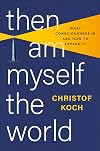
Author Koch being one of the foremost advocates of integrated information theory or IIT, this volume is more purely philosophical and perhaps more easily readable than his 2019 book, _The Feeling of Life Itself_. On IIT's nitty-gritty details, though, both works have a crucial central chapter that I could not fully follow -- whether this is Koch's fault or mine, I don't know. About two-thirds of the way through the new book, he turns to "abrupt transformative experiences" that can show more permanently change people's subjective lives. Here he has much to say about research on therapeutic uses of psychedelic substances (and, in an endnote, observes that "nothing is ever simple in biology"). Later, he unkindly opines that mind uploading is the "equivalent of rapture for, and by, nerds" (ch 9) and "whistling in the dark by technoevangelists" (ch 10). His excellent last chapter tells us that, while intelligence can be realized by conventional computation, consciousness and free will cannot. Unless something like hardware-level neuromorphic technology someday endows them with subjectivity, AIs will never be able to "imbue the universe with the light of hope, reason, and meaning." show less
The Feeling of Life Itself: Why Consciousness Is Widespread but Can't Be Computed (The MIT Press) by Christof Koch
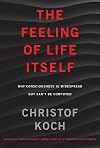
Philosophers write some excellent books on consciousness (recent examples: Philip Goff, Susan Schneider), but we need some from neuroscientists like Christof Koch too. This one splendidly fills the bill, addressing the subject from the perspective of the physics-like Integrated Information Theory (IIT), where "information" (symbol: Phi) has neither its everyday nor its Shannon meaning but rather means what can be paraphrased as "maximally irreducible cause-effect power". Even though it show more avoids mathematical formalism and is only 12 pages long, the central eighth chapter, which has the important job of explaining some of IIT's details, is conceptually very challenging (and it does seem to renege on a promise to calculate Phi's numerical value for the simple logic circuit used as an example). Fortunately, it does not barricade the reader from reaping the riches of the later chapters. Among these riches: consciousness ("being") is distinctly different from intelligence ("doing"); likening brains (many feedback connections) to computers of the conventional kind (mostly feedforward connections) is deeply erroneous; the kind of mind upload created by copying a brain's connectome to the computational "cloud" would not only fail to preserve personal identity but also completely fail to be conscious; IIT has considerable compatibility with panpsychism. show less
The Feeling of Life Itself: Why Consciousness is Widespread But Can't Be Computed (MIT Press Essential Knowledge) by Christof Koch
***.5
The author is a neuroscientist and strongest when he sticks to his primary field of expertise. The early chapters provide a straightforward definition of consciousness as experience, and uses this to establish a common-sense approach to developing a theory of mind. He then delves into details on how the brain works and how consciousness emerges from the physical substrate and connectivity.
The second part focuses on IIT (Integrated Information Theory) and that's where he lost me a bit. show more The basic premise that there is a single variable that represents the degree to which a system is self-aware is pretty neat, but he didn't do nearly as thorough a job of justifying the underlying basis for the theory as he had in the first part. He seemed to gloss over some of the more difficult/controversial parts rather than attempt to justify them.
This tendency to hand wave away criticism became increasing problematic as the book progressed. He spent a good deal of time in Part 1 to demonstrate why he thinks animals have consciousness too, but when it comes to denying that potential to computers, it's more an assertion than a substantiated argument. It seems like his aversion to the idea of sentient computers is that it's "icky" to him, with personal opinions supplanting science:
He starts the discussion about AI by referencing Gödel and the Church-Turing Thesis, but then immediately drops it without elaboration or drawing any conclusions, and instead pivots immediately to describing a couple of current machine learning applications, then points out the physical differences between brains and silicon-based chips, which is entirely besides the point. There's also a diagram of 2 different neural networks with equivalent inputs and outputs, and supposedly one of them obviously has integrated information ("intrinsic causal powers") and the other doesn't. I read the section three times but was unable to follow the reasoning.
He then makes things worse with the ridiculous analogy that since computer simulations of the weather don't make it rain, brain emulations are therefore unable to achieve consciousness, which he attempts to justify in a footnote with a reference to John Searle's famous Chinese Room argument (which seemed to me entirely irrelevant to the point).
I rounded up the rating because despite my disagreeing with his main conclusion, he then went on to differentiate clearly between the scientific approach of IIT and the mystical elements of panpsychism, before concluding with an exhortation to treat other living things (except AI!) as at least somewhat conscious and hence worthy of compassion and better treatment than they currently receive. show less
The author is a neuroscientist and strongest when he sticks to his primary field of expertise. The early chapters provide a straightforward definition of consciousness as experience, and uses this to establish a common-sense approach to developing a theory of mind. He then delves into details on how the brain works and how consciousness emerges from the physical substrate and connectivity.
The second part focuses on IIT (Integrated Information Theory) and that's where he lost me a bit. show more The basic premise that there is a single variable that represents the degree to which a system is self-aware is pretty neat, but he didn't do nearly as thorough a job of justifying the underlying basis for the theory as he had in the first part. He seemed to gloss over some of the more difficult/controversial parts rather than attempt to justify them.
This tendency to hand wave away criticism became increasing problematic as the book progressed. He spent a good deal of time in Part 1 to demonstrate why he thinks animals have consciousness too, but when it comes to denying that potential to computers, it's more an assertion than a substantiated argument. It seems like his aversion to the idea of sentient computers is that it's "icky" to him, with personal opinions supplanting science:
"The mythos that life is nothing but an algorithm limits our spiritual horizon and devalues our perspective on life, experience, and the place of sentience in time’s wide circuit."
He starts the discussion about AI by referencing Gödel and the Church-Turing Thesis, but then immediately drops it without elaboration or drawing any conclusions, and instead pivots immediately to describing a couple of current machine learning applications, then points out the physical differences between brains and silicon-based chips, which is entirely besides the point. There's also a diagram of 2 different neural networks with equivalent inputs and outputs, and supposedly one of them obviously has integrated information ("intrinsic causal powers") and the other doesn't. I read the section three times but was unable to follow the reasoning.
He then makes things worse with the ridiculous analogy that since computer simulations of the weather don't make it rain, brain emulations are therefore unable to achieve consciousness, which he attempts to justify in a footnote with a reference to John Searle's famous Chinese Room argument (which seemed to me entirely irrelevant to the point).
I rounded up the rating because despite my disagreeing with his main conclusion, he then went on to differentiate clearly between the scientific approach of IIT and the mystical elements of panpsychism, before concluding with an exhortation to treat other living things (except AI!) as at least somewhat conscious and hence worthy of compassion and better treatment than they currently receive. show less
I heard about this book from an interview with Koch on the excellent Brain Science Podcast and was intrigued to understand more about IIT (Integrated Information Theory).
I found the book to be easy to read and with some good attempts to explain the core concepts of IIT, which in turns out is less about the information content of thought and more about the causal structure of the system being the source of consciousness.
I quite liked how Koch progressed from some key features of subjective show more experience, to the core theory, to implications in terms of consciousness in humans, other animals, computers and the universe generally. He thinks computers are a long way off having enough connectivity or subtlety of signalling to have any consciousness, though this is not to be ruled out if they get better at replicating neuronal function. show less
I found the book to be easy to read and with some good attempts to explain the core concepts of IIT, which in turns out is less about the information content of thought and more about the causal structure of the system being the source of consciousness.
I quite liked how Koch progressed from some key features of subjective show more experience, to the core theory, to implications in terms of consciousness in humans, other animals, computers and the universe generally. He thinks computers are a long way off having enough connectivity or subtlety of signalling to have any consciousness, though this is not to be ruled out if they get better at replicating neuronal function. show less
Awards


You May Also Like


Associated Authors
Statistics
- Works
- 9
- Also by
- 1
- Members
- 825
- Popularity
- #30,924
- Rating
- 3.9
- Reviews
- 16
- ISBNs
- 43
- Languages
- 6
- Favorited
- 3
