

Tracy Maurer
Author of John Deere, That's Who!
About the Author
Series
Works by Tracy Maurer
Lady Bird Johnson, That's Who!: The Story of a Cleaner and Greener America (2021) 20 copies, 2 reviews
Tagged
Common Knowledge
- Canonical name
- Maurer, Tracy
- Legal name
- Maurer, Tracy Maureen Nelson
- Other names
- Maurer, Tracy N.
- Birthdate
- 1965-07-15
- Gender
- female
- Education
- Hamline University (MFA|Writing for Children and Young Adults)
University of Minnesota (BA|Journalism) - Organizations
- Minnesota Society of Children's Book Writers and Illustrators
- Agent
- Kendra Marcus (BookStop Literary Agency)
- Nationality
- USA
- Birthplace
- Superior, Wisconsin, USA
- Places of residence
- Superior, Wisconsin, USA
Minneapolis-St Paul, Minnesota, USA
Macon, Georgia, USA
Park Falls, Wisconsin, USA
Sheboygan, Wisconsin, USA
Forest Lake, Minnesota, USA - Associated Place (for map)
- USA
Members
Reviews
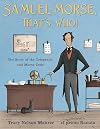
This book, subtitled “The Story of the Telegraph and Morse Code” tells the story of how instant messages were first invented back in the 1800s.
The author begins by pointing out for children ages 5 and up:
“Back when Samuel Morse was a boy, news wasn’t usually new by the time folks heard it. A letter could ride for weeks between towns or sail for months between countries.”
Samuel dreamed up a machine that would use electric pulses to carry coded messages through wires to machines far show more away from each other. He created a code that used dots and dashes to stand for numbers that in turn referred to words. He shared his idea with a science professor and an engineer who helped him realize his invention. He tried various schemes to bury cable but ran into difficulties. Under water, a ship inadvertently pulled up his cable. On land, poorly made pipes caused the wires to fail. Then he tried above ground, using tall chestnut poles strung with wires. This plan, completed in 1844, was the one that finally worked. The first message went from the U.S. Supreme Court changer to a Baltimore train depot and read “What Hath God Wrought.”
The invention took off like wildfire and spread from coast to coast, and then across the oceans.
The author ends with: “So, who made electricity useful? Who created instant messages and changed the world forever? Samuel Morris, that’s who!” And part of Morris’s name is rendered in code.
Backmatter includes a time line, list of additional facts, bibliography, and Author’s Note.
Charcoal-lined mixed media Illustrations by Borja Ramón López Cotelo, also known as el primo Ramón, have a comic-book feel.
Evaluation: This story emphasizes Morse’s persistence in the face of repeated failures, and the fact that his ideas required collaboration with others. Both of these messages are laudatory for children. I thought it a bit of an exaggeration to claim Morse “made electricity useful” however, as it was quite useful even aside from its role in enabling telegraphy.
The author, who expressed her admiration for Morse in her note, did not mention that Morse, who was anti-Catholic and anti-immigrant, was also a well-known defender of slavery in the 1850s, declaring it sanctioned by God. Specifically, he wrote:
“Slavery per se is not sin. It is a social condition ordained from the beginning of the world for the wisest purposes, benevolent and disciplinary, by Divine Wisdom. The mere holding of slaves, therefore, is a condition having per se nothing of moral character in it, any more than the being a parent, or employer, or ruler.”
It would be a good lesson to point out to young readers that people are not all one thing or the other, and that many prominent figures in America’s history bear the stain of racism and prejudice, in addition to their accomplishments.
Note: This book received a number of accolades, including NSTA Best STEM Book of the Year, Junior Library Guild Selection, and A Bank Street College Best Book of the Year. show less
The author begins by pointing out for children ages 5 and up:
“Back when Samuel Morse was a boy, news wasn’t usually new by the time folks heard it. A letter could ride for weeks between towns or sail for months between countries.”
Samuel dreamed up a machine that would use electric pulses to carry coded messages through wires to machines far show more away from each other. He created a code that used dots and dashes to stand for numbers that in turn referred to words. He shared his idea with a science professor and an engineer who helped him realize his invention. He tried various schemes to bury cable but ran into difficulties. Under water, a ship inadvertently pulled up his cable. On land, poorly made pipes caused the wires to fail. Then he tried above ground, using tall chestnut poles strung with wires. This plan, completed in 1844, was the one that finally worked. The first message went from the U.S. Supreme Court changer to a Baltimore train depot and read “What Hath God Wrought.”
The invention took off like wildfire and spread from coast to coast, and then across the oceans.
The author ends with: “So, who made electricity useful? Who created instant messages and changed the world forever? Samuel Morris, that’s who!” And part of Morris’s name is rendered in code.
Backmatter includes a time line, list of additional facts, bibliography, and Author’s Note.
Charcoal-lined mixed media Illustrations by Borja Ramón López Cotelo, also known as el primo Ramón, have a comic-book feel.
Evaluation: This story emphasizes Morse’s persistence in the face of repeated failures, and the fact that his ideas required collaboration with others. Both of these messages are laudatory for children. I thought it a bit of an exaggeration to claim Morse “made electricity useful” however, as it was quite useful even aside from its role in enabling telegraphy.
The author, who expressed her admiration for Morse in her note, did not mention that Morse, who was anti-Catholic and anti-immigrant, was also a well-known defender of slavery in the 1850s, declaring it sanctioned by God. Specifically, he wrote:
“Slavery per se is not sin. It is a social condition ordained from the beginning of the world for the wisest purposes, benevolent and disciplinary, by Divine Wisdom. The mere holding of slaves, therefore, is a condition having per se nothing of moral character in it, any more than the being a parent, or employer, or ruler.”
It would be a good lesson to point out to young readers that people are not all one thing or the other, and that many prominent figures in America’s history bear the stain of racism and prejudice, in addition to their accomplishments.
Note: This book received a number of accolades, including NSTA Best STEM Book of the Year, Junior Library Guild Selection, and A Bank Street College Best Book of the Year. show less

Prolific children's author Tracy Nelson Maurer, whose previous forays into the world of picture-book biography include John Deere, That’s Who! and Noah Webster's Fighting Words, returns to the form in this look at the life of Lady Bird Johnson, the wife of Lyndon Baines Johnson, the thirty-sixth President of the United States. Born Clara Alta Taylor, Lady Bird - so nicknamed by her childhood friends - was a shy girl who grew up to become an important public figure, notable not just for her show more relationship to LBJ, but for her active participation as a citizen in her own right. A campaigner for the beautification of American's parks and motorways, and for the protection of our green spaces, she was the first First Lady to have her own chief of staff, and she worked tirelessly for the ecological causes she espoused...
Although Lady Bird Johnson, That's Who!: The Story of a Cleaner and Greener America is the first book I have read from Maurer, it is the second picture-book biography of Lady Bird Johnson that I have encountered, following upon Kathi Appelt and Joy Fisher Hein's Miss Lady Bird's Wildflowers: How a First Lady Changed America. Although on the whole I think I prefer the Appelt/Hein title, this was still an engaging, educational book, one that pairs an informative, friendly narrative from Maurer with cute, appealing artwork from illustrator Ginnie Hsu. I liked the focus here on Lady Bird overcoming her shyness - as one might imagine from the title, the focus in Miss Lady Bird's Wildflowers: How a First Lady Changed America was its subject's love of wildflowers and how this influenced her life - and think many young children will find something to identify with, in this theme. Recommended to picture-book readers who enjoy biography, are passionate about conservation, or are interested in First Ladies. show less
Although Lady Bird Johnson, That's Who!: The Story of a Cleaner and Greener America is the first book I have read from Maurer, it is the second picture-book biography of Lady Bird Johnson that I have encountered, following upon Kathi Appelt and Joy Fisher Hein's Miss Lady Bird's Wildflowers: How a First Lady Changed America. Although on the whole I think I prefer the Appelt/Hein title, this was still an engaging, educational book, one that pairs an informative, friendly narrative from Maurer with cute, appealing artwork from illustrator Ginnie Hsu. I liked the focus here on Lady Bird overcoming her shyness - as one might imagine from the title, the focus in Miss Lady Bird's Wildflowers: How a First Lady Changed America was its subject's love of wildflowers and how this influenced her life - and think many young children will find something to identify with, in this theme. Recommended to picture-book readers who enjoy biography, are passionate about conservation, or are interested in First Ladies. show less
The subject matter is fascinating and I think this is a great book for helping children understand how communications were done in the past.
It’s only a 3.5 stars book for me though.
I actually liked the one repetitive line but most of the story for me was just serviceable.
The illustrations are good enough too but for my personal taste I’d have preferred them with much more detail. They were good but I didn’t love them.
I did appreciate the 5 pages in the back that gave more historical show more details and other information.
Great book for kids to see the complexities of long distance communication in the days before computers, smart phones, televisions, and even telephones. show less
It’s only a 3.5 stars book for me though.
I actually liked the one repetitive line but most of the story for me was just serviceable.
The illustrations are good enough too but for my personal taste I’d have preferred them with much more detail. They were good but I didn’t love them.
I did appreciate the 5 pages in the back that gave more historical show more details and other information.
Great book for kids to see the complexities of long distance communication in the days before computers, smart phones, televisions, and even telephones. show less
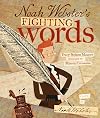
Noah Webster fought the American Revolution with his pen, as the author argues in this story:
In his opinion, America needed to break away from Great Britain in every way. Politics. Trade. Even in its ways of speaking and spelling.”
To that end, he published A Grammatical Institute of the English Language in 1783, changing some British spellings and showing American pronunciations. He followed this up in the next two years with American Grammar and the American Reader. He featured the works show more of Americans in his books, and looked for more ways to make “American” separate from “English.” Thus, for example, he promulgated such usages as “jail” instead of “gaol” (successfully) and “riter” instead of “writer” (not so much).
He asked the U.S. Congress to pass laws making speaking and spelling uniform throughout the states, but Congress refused. He then tried to effect change through a dictionary. In 1806 he wrote a small dictionary with 40,600 entries, including some unique American words, such as chowder and skunk. [His philosophy - “descriptionist” rather than “prescriptionist” to dictate correct word usage - is still being debated to this day.]
In 1828, he published his pièce de résistance, An American Dictionary of the English Language. The author writes:
“No one, not another author, or even a king or queen, has ever successfully changed the spellings of as many English words as Noah Webster did for the new nation.”
“Today,” the author concludes, “a dictionary named after him is still published in America - with new words in every edition.”
An Author’s Note explains the author’s interest in Noah Webster and the research she undertook to write the book. Romanian illustrator Mircea Catusanu also includes a note, reporting on how he “opted for a collage style that incorporates realistic elements including some period drawings of objects, created over one hundred years ago by anonymous artists, as well as excerpts from period books, newspapers, and Noah’s original handwritten letters.” He also reveals that he tried using “a lighter approach” in drawing his characters, “aiming for an unexpected and hopefully amusing effect.”
The book concludes with a timeline, list of sources, and selected bibliography.
Evaluation: The interesting text and lively, collage-style illustrations will provide children with insight into how language evolves, as well as teaching them that the American Revolution was carried out in more unorthodox ways than just through military clashes. This can lead to many insights on the ways in which words, images, and art of all kinds can influence the course of history. show less
In his opinion, America needed to break away from Great Britain in every way. Politics. Trade. Even in its ways of speaking and spelling.”
To that end, he published A Grammatical Institute of the English Language in 1783, changing some British spellings and showing American pronunciations. He followed this up in the next two years with American Grammar and the American Reader. He featured the works show more of Americans in his books, and looked for more ways to make “American” separate from “English.” Thus, for example, he promulgated such usages as “jail” instead of “gaol” (successfully) and “riter” instead of “writer” (not so much).
He asked the U.S. Congress to pass laws making speaking and spelling uniform throughout the states, but Congress refused. He then tried to effect change through a dictionary. In 1806 he wrote a small dictionary with 40,600 entries, including some unique American words, such as chowder and skunk. [His philosophy - “descriptionist” rather than “prescriptionist” to dictate correct word usage - is still being debated to this day.]
In 1828, he published his pièce de résistance, An American Dictionary of the English Language. The author writes:
“No one, not another author, or even a king or queen, has ever successfully changed the spellings of as many English words as Noah Webster did for the new nation.”
“Today,” the author concludes, “a dictionary named after him is still published in America - with new words in every edition.”
An Author’s Note explains the author’s interest in Noah Webster and the research she undertook to write the book. Romanian illustrator Mircea Catusanu also includes a note, reporting on how he “opted for a collage style that incorporates realistic elements including some period drawings of objects, created over one hundred years ago by anonymous artists, as well as excerpts from period books, newspapers, and Noah’s original handwritten letters.” He also reveals that he tried using “a lighter approach” in drawing his characters, “aiming for an unexpected and hopefully amusing effect.”
The book concludes with a timeline, list of sources, and selected bibliography.
Evaluation: The interesting text and lively, collage-style illustrations will provide children with insight into how language evolves, as well as teaching them that the American Revolution was carried out in more unorthodox ways than just through military clashes. This can lead to many insights on the ways in which words, images, and art of all kinds can influence the course of history. show less
Lists
Awards


You May Also Like


Associated Authors
Statistics
- Works
- 112
- Members
- 1,037
- Popularity
- #24,830
- Rating
- 3.9
- Reviews
- 25
- ISBNs
- 329
- Languages
- 2
- Favorited
- 1