
Alexis Bass
Author of Love and Other Theories
Works by Alexis Bass
Tagged
Common Knowledge
- Gender
- female
Members
Reviews
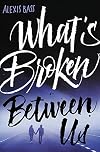
I think we all have that one person in our life.
The one who is no good for anyone, especially themselves. Self-destructive and self-disciplining.
The one that doesn’t try to do better. Just wallows in self-pity and hatred and regret.
The ones you can only watch and hope that one day they come to their senses and get their life’s together.
I’ve had my share of these people pass through my life. (and a lot of them are my family, so I can’t really get away from them). Watching it unfold show more between the pages of What’s Broken Between Us was equally heartbreaking and reassuring.
I adored this book. I devoured it after work and between workouts. I thought about it when I was cooking and doing laundry. In other words, this book consumed my life.
Maybe it was the flowing prose and the relatable story. It might have been the characters that I grew to care about (and then want to smack them every time they did something stupid).
Amanda. Amander. (I read most of this book in Henry’s British accent because it was actually believable). She is one of those characters that doesn’t feel like a character in a book but more like someone you’d meet in life.
That’s how I felt for all the other characters too. Mumsy and Standard Dad (LOVED THAT, BTW). Henry and Sutton. They all felt real. And most of all, Jonathan. He was the most authentic. This is how people with a substance abuse problem act (and Jonathan with his PTSD, probably). They’re careless with their lifes and others. It was just overwhelming to read sometimes, but I couldn’t stop.
What’s Broken Between Us is a true to life look at what happens after a tragedy strikes a family-a community-a friendship. It’s a tale of forgiveness and acceptance. A beautiful contemporary.
REVIEW AT YABOOKSCENTRAL.COM show less
The one who is no good for anyone, especially themselves. Self-destructive and self-disciplining.
The one that doesn’t try to do better. Just wallows in self-pity and hatred and regret.
The ones you can only watch and hope that one day they come to their senses and get their life’s together.
I’ve had my share of these people pass through my life. (and a lot of them are my family, so I can’t really get away from them). Watching it unfold show more between the pages of What’s Broken Between Us was equally heartbreaking and reassuring.
I adored this book. I devoured it after work and between workouts. I thought about it when I was cooking and doing laundry. In other words, this book consumed my life.
Maybe it was the flowing prose and the relatable story. It might have been the characters that I grew to care about (and then want to smack them every time they did something stupid).
Amanda. Amander. (I read most of this book in Henry’s British accent because it was actually believable). She is one of those characters that doesn’t feel like a character in a book but more like someone you’d meet in life.
That’s how I felt for all the other characters too. Mumsy and Standard Dad (LOVED THAT, BTW). Henry and Sutton. They all felt real. And most of all, Jonathan. He was the most authentic. This is how people with a substance abuse problem act (and Jonathan with his PTSD, probably). They’re careless with their lifes and others. It was just overwhelming to read sometimes, but I couldn’t stop.
What’s Broken Between Us is a true to life look at what happens after a tragedy strikes a family-a community-a friendship. It’s a tale of forgiveness and acceptance. A beautiful contemporary.
REVIEW AT YABOOKSCENTRAL.COM show less
Actual Rating: 3.5
I am so torn about this one.
Firstly, I have said this before, and I will say it again. I hate characters who cheat. I absolutely despise them, and chances are, if a main character ends up cheating, I'll hate the entire book as well.
Which is why I am so shocked at myself for finishing this book without spiraling into angry insanity.
The characters - Amanda, to be specific - did go through some character development, but afterwards, there were still moments that I really show more cannot handle.
Hm, for example, this is how Graham's confrontation with Amanda about her cheating goes down.
And even though I don't like Graham, I quite agree.
Amanda's desperate self-victimization annoys me to no end.
Why don't we look at another example, this time between Amanda and her best friend?
After their fight, Amanda decides to apologize to Dawn. And yet, she manages to squeeze in a few words that remind Dawn that it's not completely her fault. Here is what she says:
WE GET IT, AMANDA. YOU DON'T HAVE TO KEEP REMINDING US ABOUT YOUR TRAGIC LIFE.
But I do see where her personality comes from: her mother, who is even weaker and spineless than she is. And it is in her mother's weak moments, where we are finally able to see Amanda's strength begin to surface.
When Amanda returns home with her brother Jonathan, her mother is indifferent, and Amanda is brave enough to confront her mother about her abysmal parenting.
You don't want to know? YOU DON'T WANT TO KNOW?
What kind of mother gives such a shitty excuse and needs her teenage daughter to tell them how to take care of your children?
I just...no. No, no, no.
So basically, many of the characters are awful. And yet, Alexis Bass' writing style is absolutely perfect.
Specifically, my favorite parts are the ones about "diffusion of responsibility", which made me really think about my own life. And the way Bass referred back to it when Jonathan was being arrested...
Feels, I tell you.
So overall, what made What's Broken Between Us crumble were simply the dislikeable characters, but the surreal writing style brought some of it back.
If I were to recommend this book to anyone, it would simply be because of the beautiful quotes. And so, let me end this review on one of those moments:
I am so torn about this one.
Firstly, I have said this before, and I will say it again. I hate characters who cheat. I absolutely despise them, and chances are, if a main character ends up cheating, I'll hate the entire book as well.
Which is why I am so shocked at myself for finishing this book without spiraling into angry insanity.
The characters - Amanda, to be specific - did go through some character development, but afterwards, there were still moments that I really show more cannot handle.
Hm, for example, this is how Graham's confrontation with Amanda about her cheating goes down.
"I'm so sorry," I say. "Henry knew what I was going through and -"
"That's such bullshit!" he cries.
And even though I don't like Graham, I quite agree.
Amanda's desperate self-victimization annoys me to no end.
Why don't we look at another example, this time between Amanda and her best friend?
After their fight, Amanda decides to apologize to Dawn. And yet, she manages to squeeze in a few words that remind Dawn that it's not completely her fault. Here is what she says:
Oh, and I'm sorry I didn't tell you about Henry. I treated it like a shameful secret, because I'm so used to shameful secrets.
WE GET IT, AMANDA. YOU DON'T HAVE TO KEEP REMINDING US ABOUT YOUR TRAGIC LIFE.
But I do see where her personality comes from: her mother, who is even weaker and spineless than she is. And it is in her mother's weak moments, where we are finally able to see Amanda's strength begin to surface.
When Amanda returns home with her brother Jonathan, her mother is indifferent, and Amanda is brave enough to confront her mother about her abysmal parenting.
"You're not going to ask what happened?" I yell at her silence. My screaming contains the rage of all the years she didn't ask.
"I don't want to know!" she shouts back - and it's the most helpless sound.
You don't want to know? YOU DON'T WANT TO KNOW?
What kind of mother gives such a shitty excuse and needs her teenage daughter to tell them how to take care of your children?
I just...no. No, no, no.
So basically, many of the characters are awful. And yet, Alexis Bass' writing style is absolutely perfect.
Feels, I tell you.
So overall, what made What's Broken Between Us crumble were simply the dislikeable characters, but the surreal writing style brought some of it back.
If I were to recommend this book to anyone, it would simply be because of the beautiful quotes. And so, let me end this review on one of those moments:
"Just forget it," she says, hanging up.show less
By now, I know: people only ever say that about things that are impossible to really forget.
For more reviews, gifs, Cover Snark and more, visit A Reader of Fictions.
Love and Other Theories is one of those books. One of the ones that’s going to garner such disparate opinions as to puzzle you exceedingly. My theory is that this is a book most people are going to really like or really hate. That, in fact, is why I read this book. At first, I wasn’t sure if it was a book for me and, actually, that never changed. However, I got so curious about the contents that I had to see for show more myself. The fun surprise was how much I liked this book.
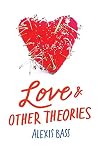
You see that summary up there? It is lying to you. The blurbing of this book does it and the people who will pick it up a vast disservice. The blurb describes Love and Other Theories as a romantic comedy. This is a blatant lie. Love and Other Theories most definitely isn’t a romance and I’d hesitate to call it especially funny. Neither humor nor romance is the point of the novel. The most accurate thing is the heart with pins stuck in it, because that’s how much this book isn’t a romance.
The pins are accurate on two levels actually. First, Aubrey and her friends, according to the theories, don’t believe in love in high school. They don’t want romance. Down with love and down with Cupid. Second, the side effects of the theories, since love isn’t necessarily stoppable, is that sometimes they have to deny their true feelings, which is a heart-stabby pain.
It’s clear very early on that the theories aren’t healthy, and this is very obviously going to be one of the points of the book. There are useful side effects of the theories, like the fact that the girls feel confident approaching boys and comfortable with their sex lives. What’s unhealthy about them is that the girls don’t allow relationships, because no high school boy can be trusted not to move on. I don’t think the theories are any less unhealthy than just about dating manual that someone could pick up for advice, because every relationship is different and there aren’t hard and fast rules that will work. This feels a lot like a YA version of Love by the Book, which I also thought was magnificent.
What I think I like best about Love and Other Theories is how oddly accepting it is for a book that initially seems to be full of a bunch of hateful, judgmental teenagers. The theories are both shown to be wrong, but not entirely condemned. There are good things about them. Though things turn into a real mess because of them, they do make it easier for Aubrey and Nathan to go off to college at the end of the year. It’s somewhat of a coincidence, but it is true that not being tied down into a serious relationship during high school makes college simpler.
Love and Other Theories is mostly about friendship. The girls will seem horrible to start, and I imagine many readers will still hate them when it’s over. I, however, was impressed with the way that things went down. Yes, some really shitty friend things happened, and a fight needed to be had. Ultimately, though, I think Aubrey acknowledges her part in the bad decisions that were made and chooses friendship over boys, which was really the goal of everything all along. The resolutions of the plots with Chiffon and Trip Chapman were also fantastic.
Love and Other Theories is not a book that will work for everyone. It’s realistic, awkward, and doesn’t wrap up into a neat little bow, but I think it’s a great addition to YA. show less
Love and Other Theories is one of those books. One of the ones that’s going to garner such disparate opinions as to puzzle you exceedingly. My theory is that this is a book most people are going to really like or really hate. That, in fact, is why I read this book. At first, I wasn’t sure if it was a book for me and, actually, that never changed. However, I got so curious about the contents that I had to see for show more myself. The fun surprise was how much I liked this book.
You see that summary up there? It is lying to you. The blurbing of this book does it and the people who will pick it up a vast disservice. The blurb describes Love and Other Theories as a romantic comedy. This is a blatant lie. Love and Other Theories most definitely isn’t a romance and I’d hesitate to call it especially funny. Neither humor nor romance is the point of the novel. The most accurate thing is the heart with pins stuck in it, because that’s how much this book isn’t a romance.
The pins are accurate on two levels actually. First, Aubrey and her friends, according to the theories, don’t believe in love in high school. They don’t want romance. Down with love and down with Cupid. Second, the side effects of the theories, since love isn’t necessarily stoppable, is that sometimes they have to deny their true feelings, which is a heart-stabby pain.
It’s clear very early on that the theories aren’t healthy, and this is very obviously going to be one of the points of the book. There are useful side effects of the theories, like the fact that the girls feel confident approaching boys and comfortable with their sex lives. What’s unhealthy about them is that the girls don’t allow relationships, because no high school boy can be trusted not to move on. I don’t think the theories are any less unhealthy than just about dating manual that someone could pick up for advice, because every relationship is different and there aren’t hard and fast rules that will work. This feels a lot like a YA version of Love by the Book, which I also thought was magnificent.
What I think I like best about Love and Other Theories is how oddly accepting it is for a book that initially seems to be full of a bunch of hateful, judgmental teenagers. The theories are both shown to be wrong, but not entirely condemned. There are good things about them. Though things turn into a real mess because of them, they do make it easier for Aubrey and Nathan to go off to college at the end of the year. It’s somewhat of a coincidence, but it is true that not being tied down into a serious relationship during high school makes college simpler.
Love and Other Theories is mostly about friendship. The girls will seem horrible to start, and I imagine many readers will still hate them when it’s over. I, however, was impressed with the way that things went down. Yes, some really shitty friend things happened, and a fight needed to be had. Ultimately, though, I think Aubrey acknowledges her part in the bad decisions that were made and chooses friendship over boys, which was really the goal of everything all along. The resolutions of the plots with Chiffon and Trip Chapman were also fantastic.
Love and Other Theories is not a book that will work for everyone. It’s realistic, awkward, and doesn’t wrap up into a neat little bow, but I think it’s a great addition to YA. show less
This book was so good, yet so sad. There's a party. And everyone who is anyone is there. Having a good time, having some drinks. And when it's time to go home, In spite of having too much to drink, Jonathan gets behind the wheel of the car with his girlfriend and best friend also in the car with tragic results.
This story is about Jonathan and his family and how they cope with the aftermath. His sister Amanda is a pariah to many, Jonathan has gone from being the person everyone wants to know show more and be friends with, to someone no one wants to even bring up in conversation much less associate with. Their parents, whose main rule was there are no rules are in total denial. And Jonathan himself is spiralling out of control. And it isn't just Amanda's family that is affected.
This book gives so much awareness to the whole drinking and driving issue. Coming from an era where the least drunk person drove home, we had no idea how lucky we were. So many people nowadays still could be Jonathan. This book reveals that anyone could be Jonathan, one split second of a bad decision can have lifetime consequences. Everyone gets a holier than thou attitude when something like this happens when in reality it could have happened to them, they were just luckier.
I was so sad for the family. Can you heal after something like that? Life will be forever changed, the elephant will always be in the room.
I love a book that makes me think. One that makes me feel and become engrossed in the story. While the main story was of a serious nature, there was some romance in there that fit well into the story and should appeal to a large group of readers, I loved it. show less
This story is about Jonathan and his family and how they cope with the aftermath. His sister Amanda is a pariah to many, Jonathan has gone from being the person everyone wants to know show more and be friends with, to someone no one wants to even bring up in conversation much less associate with. Their parents, whose main rule was there are no rules are in total denial. And Jonathan himself is spiralling out of control. And it isn't just Amanda's family that is affected.
This book gives so much awareness to the whole drinking and driving issue. Coming from an era where the least drunk person drove home, we had no idea how lucky we were. So many people nowadays still could be Jonathan. This book reveals that anyone could be Jonathan, one split second of a bad decision can have lifetime consequences. Everyone gets a holier than thou attitude when something like this happens when in reality it could have happened to them, they were just luckier.
I was so sad for the family. Can you heal after something like that? Life will be forever changed, the elephant will always be in the room.
I love a book that makes me think. One that makes me feel and become engrossed in the story. While the main story was of a serious nature, there was some romance in there that fit well into the story and should appeal to a large group of readers, I loved it. show less
You May Also Like


Statistics
- Works
- 4
- Members
- 203
- Popularity
- #108,638
- Rating
- 3.3
- Reviews
- 13
- ISBNs
- 26
- Languages
- 1