

Karl Schlögel
Author of Moscow, 1937
About the Author
Karl Schlogel teaches at the Europa University Vadrina in Frankfurt (Oder), Germany.
Works by Karl Schlögel
Associated Works
Tagged
Common Knowledge
- Canonical name
- Schlögel, Karl
- Birthdate
- 1948-03-17
- Gender
- male
- Education
- Freie Universität Berlin
Collegium Rupertinum - Occupations
- historian
public relations - Organizations
- Europa-Universität Viadrina, Frankfurt
PEN-Zentrum Deutschland - Awards and honors
- Friedenspreis des Deutschen Buchhandels (2025)
Hoffmann-von-Fallersleben-Preis (2012)
Samuel-Bogumil-Linde-Preis (2010) - Nationality
- Germany
- Birthplace
- Hawangen, Germany
- Places of residence
- Berlin, Germany
- Associated Place (for map)
- Germany
Members
Reviews
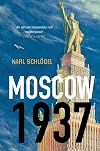
Although I can't quit bring myself to give this work five stars, I come away very impressed with Schlogel's attempt to capture the spirit of Moscow in 1937, which was an age of wonders and horrors, as utopia still seemed possible, and Soviet society descended into the maelstrom of the Great Purge. Why the purge? To cut to the chase, Schlogel argues that the higher Party leadership was so out of touch with the social impact of the collectivization and the Five Year Plans that, with a genuine show more national election in the offing, the realization that accountability was hanging over their heads like the Sword of Damocles concentrated minds in the Politburo. Add to this the rising threat of a new general war creating the need for at least forced social solidarity, the solution was to sacrifice the expendable to the mobs and create new cadres from people who had been brought up in the Soviet system.
The note that Schlogel ends his work on is the rebuilding of the Cathedral of Christ the Savior in central Moscow, which was to have been the site for the grand Palace of the Soviets, with Schlogel's open question being what symbolic void is being filled. Almost a generation down the pike, the answer would seem to be that the malign inheritance of Stalinism still seems to fill that space. show less
The note that Schlogel ends his work on is the rebuilding of the Cathedral of Christ the Savior in central Moscow, which was to have been the site for the grand Palace of the Soviets, with Schlogel's open question being what symbolic void is being filled. Almost a generation down the pike, the answer would seem to be that the malign inheritance of Stalinism still seems to fill that space. show less
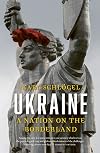
Ein Loblied auf den Multikulturalismus der Ukraine und die Minderheiten, welche in diesem Staat leben. Es wirkt fast so, als ob Schlögel die Ukraine nicht wegen der Ukrainer selbst und ihrer Kultur liebt, sondern der hohen Anzahl an ethnischen Minderheiten wegen, ein Umstand, der Schlögels kulturelle Sensibilitäten besonders zu stimulieren scheint. Dem stellt er ein verzerrtes (Feind-)Bild Russlands gegenüber, welches er als nationalistischen Monolithen beschreibt und lässt dabei ausser show more Acht, dass es sich bei Russland ebenso um einen Vielvölkerstaat handelt. Die Ukraine fungiert hier als Projektionsfläche für das Wunschdenken eines linksliberalen und Bildungs- und Weltenbürgers und EU-Lobbyisten. show less

I would read a declaratory sentence and expect the next one to elaborate, give examples, something. This happened over and over and the something never happened. Paragraphs went from one thing to another, so did chapters, there was a fair amount of repetition, and overall, I thought the book was not coherent which was disappointing because the subject had potential.
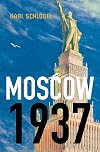
Terreur en Droom is an impressive and often deep moving panorama.
In 38 successive chapters Schlögel evokes 1937 Moscow in all its complexity and seeming contradictions, which results in a book of enormous breadth and dept. I read it first from the public library in its Dutch translation during which I wanted to have it on my shelf and before finishing it purchased the (much cheaper) English version, from which I quote.
Author Karl Schlögel is a German Professor of Eastern European History show more (i) , whom Dutch (and of course German) readers may know from his book Steden lezen (about social and cultural changes in East European cities before and after 1989’s Wende (ii)
First some crucial facts:
• In 1937 in the SU some 2 million people were arrested, approaching 700.000 were murdered and almost 1.3 million were deported to camps and labour colonies. Most of those people didn’t know why they had been singled out. The accusations were incredible and fantastic, but more fantastic was the fact that the accused repeated and reproduced them in their confessions, not only the prominent persons known the world over but also all the ordinary people - in fact only these last decades, since the publication of sources relating to the 1937 mass operations it has become clear that the Great Terror was directed mainly against ordinary people who did not belong to the Party, but who were singled out on the basis of social and ethnic criteria.
Also… in short time those who had carried out the sentences found themselves in the dock, transformed from active participants into victims.
• The enormous amount of sources and publications since the demise of the Soviet Union brought about a change of paradigm: “Much that seemed previously to be the expression of omnipotent state power can now been seen as the disparate actions of an impotent state; what appeared to be the expression of a daring utopianism turns out to consist of panicky expedients without which a state power with the barest minimum by way of legitimacy could not have survived for a single day.” (p. 7)
In his Preface Schlögel tells that this is the book he knew he would write since he first encountered the Soviet Union and began to think politically: “It is not possible to talk about Russia in the 20th century and even present day post-Soviet Russia without coming up against the caesura invoked by the term ‘1937’”.
He calls it “the time and place of the radical and irreversible rupture in the third decade of the 20th century (…), one of the key settings of European history (...), situated (…) on a fault line of European civilization. The dead of 1937 are the contemporaries of a ‘century of extremes’ that knows no frontiers. This is why Moscow in 1937 must form part of our mental processes when we inquire into the meaning of the 20th century for European civilization” (pp. x, xi).
In his Acknowledgements Schögel uses the term ‘histoire totale of Stalinism as a civilization’, and mentions the ‘narratological problems’ this enterprise involves.
In the Introduction he gives his aim and method:
The basic idea is quite straightforward:
“(…) bring together whatever records should have belonged together from the standpoint of history and life experience but which have been separated by the demands of the division of labour operating in historical research” (p 2).
Schlögel mentions Mikhail Bakhtin, who coined (for literature: the novel) the term chronotope (iii) , which he himself now will make use of in his historic narrative: “We might speak of ‘Moscow 1937’ as a chronotope. Its chief characteristics are: arbitrariness, suddenness, shock, attacks out of the blue, and the disappearance and obliteration of the distinction between the real and the fantastic. “ (p. 4). Also “fear” and “total exhaustion” (p.9).
About his method:
“Newspapers and magazines took pride of place in my efforts to understand and reproduce the world (…) from an interdisciplinary standpoint that preserved the integrity of events. The next step was to forge a path through the surface of historical incident so as to develop an architecture that would do justice to the course of events” (p. 5). To bring together “history from above” and “history from below”. Crucial in selecting events for the book was not what was “particularly drastic of exotic but what was representative”. And “To think of Stalinism merely as a question of total domination is as dubious as to see it purely in terms of social history (…) All that is needed is an understanding of the interplay of the forces on the spot. For in reality what took place was a conflict between opposing forces, a battle of life and death”(p 8).
Also:
“As events unfold, they remind us less of the trajectory of an ‘experiment‘ than of the almost natural progress of a war of all against all, whose end is anything but fixed. (…) This book makes no claim to provide a conclusion; it has no thesis that holds everything together, but for that reason it remains focused on the enigma that distinguishes Moscow in 1937 from many other catastrophes in history”(p. 8)
To begin with the last, Schlögels no-thesis claim.
No small feat, according to his colleagues, Schlögel dìd add to history writing of Soviet Russia: he is the first to see a connection between the Great Terror and the important elections of 1937.
In Chapter 11 The Engine Room of the Year 1937: The February-March Plenum of the Central Committee he describes how this plenum was informed about elections to the Supreme Soviet of the USSR and to soviets of other levels to be held in the coming autumn or winter. Those elections had to be in conformity with the ‘Stalin Constitution’ that had been passed in December 1936, meaning they should be ‘universal, equal and secret’. This meant
(1) that ‘servants of religion’, former White Guards, the so called ‘former people’ and ‘people who did not earn their living from universally useful labour were to be admitted to the ballot.
(2) that the previous electoral imbalance between town and country, between workers and peasants was eliminated.
(3) that the suffrage was direct and not, as previously, indirect via a four-stage system, and
(4) that the elections were to be held in secret, as previously they were open and involved voting for a list. This is what the new constitution prescribed.
Slowly the delegates began to realize that their own power might well be questioned and even completely wiped out…(pp. 186/88).
The preparations for the elections occupied the whole of 1937. “To have embarked on this adventure is eloquent testimony to the isolation of the political leadership (and especially the Politburo) and its complete ignorance of the situation in the country. Despite the warnings that were voiced during the February-March plenum, the Politburo stuck to its policy of ‘universal, equal and secret’ elections. However, this policy could be maintained only if care were taken to ensure that every alternative would be suppressed in advance. This was done by means of the mass operations against so called kulaks as well as against anti-Soviet and criminal elements. (…) The starting point – the publication of the rules governing the elections and the decision to go ahead with the mass operations – took place literally on the same day, 2 July 1937, and the end point – the mass operations were set to last 4 months, i.e. up to the elections on 12 December 1937 – indicate that the planned elections and the targeted liquidation of potential challengers belong together ” (p. 503). So far Schlögels no-thesis claim.
The 38 chapters of the book that make up the panorama of 1937 Moscow contain a broad scala of subjects. After a flight over Moscow with Mikhail Bulgakov’s heroine Margarita for the bird’s eye view of the scene, Schlögel takes the reader with him to the gigantic construction site Moscow, where Stalin’s Plan for the Reconstruction of Moscow brought the cityscape between demolition and construction.
Next Schlögel studies the 1936 edition of the Directory for All Moscow , which is also the last edition of this annual. It included i.e. the names of people who a year later had been arrested or shot and therefore can be considered a Topography of the Disappeared.
Chapter 4 is about the creation of enemies in the first Moscow show process, followed by a chapter about Lion Feuchtwanger’s visit to Moscow where he meets Stalin and observes this and the next process (‘tired of the effort of observing and understanding’)(iv)
Following chapters cover the NKVD’s involvement in Spain’s Civil War; the suppressed Census of 1937 (because of its disappointing results the organizers were murdered); the second Moscow show process (“since coincidences and accidents were deemed not to exist, there must be people who caused these events and were responsible for them”); the Puskin Jubilee (‘A feast in the Time of Plague’).
A chapter deals with the death of a member of the top leadership (Ordzhonikidze), which was in fact a suicide that shocked the nomenclature deeply, but “suicide is conspiracy”. The next one is about the February-March Plenum of the Central Committee (see above). Then follows a chapter about the USSR Pavillion at the Paris International Exhibition, that had 31.000.955 visitors, among them many Russian exiles and emigrés “some of whom now began to feel pride in their home country”.
After a small chapter about Red Square as a parade place and a place of execution, Schlögel continues with radiofikatzia or the radiofication of the immense surface of the USSR and its consequences and a chapter about the first All-Union Congress of Architects that determined the development of Soviet architecture, followed by one about sport (and 1930th youth: “How far these prototypes of a new age had travelled beyond those of the revolutionary period! They were the very antithesis of the shortsighted, bearded faces complete with nickel-rimmed glasses. A new generation had been born and the regime had given it final polish.”)
And only half way I am, in giving the pictures of the panorama.
After this follow chapters about the 17th International Geology Congress in Moscow; the opening of the Moscow-Volga Canal; of the Soviet aviators; of luxury and shortages; recreation on the Volga, the Red Riviéra, and in the dacha’s; of one of Russia’s emigrated so called ‘former people’ who came back to the USSR, which turned out badly; of the celebration of the October Revolution; of High Society before the massacre; of Soviet Hollywood / Mosfilm; of death in exile; of Arcadia in Moscow, which was the Gorky Park of Culture and Rest; the workforce of the Stalin Car Factories of Jazz, of portrait galleries of victims of the regime; of Soviet travelers to America who did what Steinbeck did for Travels with Charley; of the production of Soviet space; of the Butovo Shooting Range, an execution center (grim key chapter on the Great Terror); of dreamtime (children’s worlds); of the celebration of 20 years of the Cheka in the Boshoi theatre ; of Bukharin’s process and last days; of Moscow as a city on the enemy map; and, last, in a return to building and architecture, of the foundation pit.
But the Palace of the Soviets was not to be constructed… the Epilogue of this grim history deals with ‘the disappearance of a tragedy in the shadow of an even greater tragedy”, ww ii.
As I said earlier, Schlögel evokes. He also connects and analyzes.
With its color map with key locations, its pictures, figures and schedules, its 58 pages of notes, 17 p. bibliography and very effective index the book is a ‘Fundgrube' for the student of the USSR. For the general reader, as I am one, it is a fascinating and eye opening read – I never realized the magnitude of the ‘maelstrom’ the USSR was, when the Great Terror struck..
Highly recommended!
--------------------------------------
i Karl Schlögel’s many books deal i.a with “Stalinism as civilisation“, the history of forced migration and the cultures of Diaspora in the 20th century. He has also been interested
in researching urban history and urbanism in eastern Europe as well as the theoretical. See also:
http://www.leipzig.de/imperia/md/content/41_kulturamt/literatur/karl_schl__gel_b....
ii See Schlögel on “Reading in time and space”, a method he also uses for Moscow 1937
http://www.studentencorps.com/urbansciencesdenhaag/Karl%20Schlogel%20Den%20Haag%....
iii See: http://en.wikipedia.org/wiki/Chronotope
N.B.!: in 1937 Bahtin lived close to Moscow and witnessed the events Schlögel describes.
iv Feuchtwanger wrote a book about it: Moskau 1937
See also: http://www.theatlantic.com/magazine/archive/2013/03/moscow-under-terror/309214/ show less
In 38 successive chapters Schlögel evokes 1937 Moscow in all its complexity and seeming contradictions, which results in a book of enormous breadth and dept. I read it first from the public library in its Dutch translation during which I wanted to have it on my shelf and before finishing it purchased the (much cheaper) English version, from which I quote.
Author Karl Schlögel is a German Professor of Eastern European History show more (i) , whom Dutch (and of course German) readers may know from his book Steden lezen (about social and cultural changes in East European cities before and after 1989’s Wende (ii)
First some crucial facts:
• In 1937 in the SU some 2 million people were arrested, approaching 700.000 were murdered and almost 1.3 million were deported to camps and labour colonies. Most of those people didn’t know why they had been singled out. The accusations were incredible and fantastic, but more fantastic was the fact that the accused repeated and reproduced them in their confessions, not only the prominent persons known the world over but also all the ordinary people - in fact only these last decades, since the publication of sources relating to the 1937 mass operations it has become clear that the Great Terror was directed mainly against ordinary people who did not belong to the Party, but who were singled out on the basis of social and ethnic criteria.
Also… in short time those who had carried out the sentences found themselves in the dock, transformed from active participants into victims.
• The enormous amount of sources and publications since the demise of the Soviet Union brought about a change of paradigm: “Much that seemed previously to be the expression of omnipotent state power can now been seen as the disparate actions of an impotent state; what appeared to be the expression of a daring utopianism turns out to consist of panicky expedients without which a state power with the barest minimum by way of legitimacy could not have survived for a single day.” (p. 7)
In his Preface Schlögel tells that this is the book he knew he would write since he first encountered the Soviet Union and began to think politically: “It is not possible to talk about Russia in the 20th century and even present day post-Soviet Russia without coming up against the caesura invoked by the term ‘1937’”.
He calls it “the time and place of the radical and irreversible rupture in the third decade of the 20th century (…), one of the key settings of European history (...), situated (…) on a fault line of European civilization. The dead of 1937 are the contemporaries of a ‘century of extremes’ that knows no frontiers. This is why Moscow in 1937 must form part of our mental processes when we inquire into the meaning of the 20th century for European civilization” (pp. x, xi).
In his Acknowledgements Schögel uses the term ‘histoire totale of Stalinism as a civilization’, and mentions the ‘narratological problems’ this enterprise involves.
In the Introduction he gives his aim and method:
The basic idea is quite straightforward:
“(…) bring together whatever records should have belonged together from the standpoint of history and life experience but which have been separated by the demands of the division of labour operating in historical research” (p 2).
Schlögel mentions Mikhail Bakhtin, who coined (for literature: the novel) the term chronotope (iii) , which he himself now will make use of in his historic narrative: “We might speak of ‘Moscow 1937’ as a chronotope. Its chief characteristics are: arbitrariness, suddenness, shock, attacks out of the blue, and the disappearance and obliteration of the distinction between the real and the fantastic. “ (p. 4). Also “fear” and “total exhaustion” (p.9).
About his method:
“Newspapers and magazines took pride of place in my efforts to understand and reproduce the world (…) from an interdisciplinary standpoint that preserved the integrity of events. The next step was to forge a path through the surface of historical incident so as to develop an architecture that would do justice to the course of events” (p. 5). To bring together “history from above” and “history from below”. Crucial in selecting events for the book was not what was “particularly drastic of exotic but what was representative”. And “To think of Stalinism merely as a question of total domination is as dubious as to see it purely in terms of social history (…) All that is needed is an understanding of the interplay of the forces on the spot. For in reality what took place was a conflict between opposing forces, a battle of life and death”(p 8).
Also:
“As events unfold, they remind us less of the trajectory of an ‘experiment‘ than of the almost natural progress of a war of all against all, whose end is anything but fixed. (…) This book makes no claim to provide a conclusion; it has no thesis that holds everything together, but for that reason it remains focused on the enigma that distinguishes Moscow in 1937 from many other catastrophes in history”(p. 8)
To begin with the last, Schlögels no-thesis claim.
No small feat, according to his colleagues, Schlögel dìd add to history writing of Soviet Russia: he is the first to see a connection between the Great Terror and the important elections of 1937.
In Chapter 11 The Engine Room of the Year 1937: The February-March Plenum of the Central Committee he describes how this plenum was informed about elections to the Supreme Soviet of the USSR and to soviets of other levels to be held in the coming autumn or winter. Those elections had to be in conformity with the ‘Stalin Constitution’ that had been passed in December 1936, meaning they should be ‘universal, equal and secret’. This meant
(1) that ‘servants of religion’, former White Guards, the so called ‘former people’ and ‘people who did not earn their living from universally useful labour were to be admitted to the ballot.
(2) that the previous electoral imbalance between town and country, between workers and peasants was eliminated.
(3) that the suffrage was direct and not, as previously, indirect via a four-stage system, and
(4) that the elections were to be held in secret, as previously they were open and involved voting for a list. This is what the new constitution prescribed.
Slowly the delegates began to realize that their own power might well be questioned and even completely wiped out…(pp. 186/88).
The preparations for the elections occupied the whole of 1937. “To have embarked on this adventure is eloquent testimony to the isolation of the political leadership (and especially the Politburo) and its complete ignorance of the situation in the country. Despite the warnings that were voiced during the February-March plenum, the Politburo stuck to its policy of ‘universal, equal and secret’ elections. However, this policy could be maintained only if care were taken to ensure that every alternative would be suppressed in advance. This was done by means of the mass operations against so called kulaks as well as against anti-Soviet and criminal elements. (…) The starting point – the publication of the rules governing the elections and the decision to go ahead with the mass operations – took place literally on the same day, 2 July 1937, and the end point – the mass operations were set to last 4 months, i.e. up to the elections on 12 December 1937 – indicate that the planned elections and the targeted liquidation of potential challengers belong together ” (p. 503). So far Schlögels no-thesis claim.
The 38 chapters of the book that make up the panorama of 1937 Moscow contain a broad scala of subjects. After a flight over Moscow with Mikhail Bulgakov’s heroine Margarita for the bird’s eye view of the scene, Schlögel takes the reader with him to the gigantic construction site Moscow, where Stalin’s Plan for the Reconstruction of Moscow brought the cityscape between demolition and construction.
Next Schlögel studies the 1936 edition of the Directory for All Moscow , which is also the last edition of this annual. It included i.e. the names of people who a year later had been arrested or shot and therefore can be considered a Topography of the Disappeared.
Chapter 4 is about the creation of enemies in the first Moscow show process, followed by a chapter about Lion Feuchtwanger’s visit to Moscow where he meets Stalin and observes this and the next process (‘tired of the effort of observing and understanding’)(iv)
Following chapters cover the NKVD’s involvement in Spain’s Civil War; the suppressed Census of 1937 (because of its disappointing results the organizers were murdered); the second Moscow show process (“since coincidences and accidents were deemed not to exist, there must be people who caused these events and were responsible for them”); the Puskin Jubilee (‘A feast in the Time of Plague’).
A chapter deals with the death of a member of the top leadership (Ordzhonikidze), which was in fact a suicide that shocked the nomenclature deeply, but “suicide is conspiracy”. The next one is about the February-March Plenum of the Central Committee (see above). Then follows a chapter about the USSR Pavillion at the Paris International Exhibition, that had 31.000.955 visitors, among them many Russian exiles and emigrés “some of whom now began to feel pride in their home country”.
After a small chapter about Red Square as a parade place and a place of execution, Schlögel continues with radiofikatzia or the radiofication of the immense surface of the USSR and its consequences and a chapter about the first All-Union Congress of Architects that determined the development of Soviet architecture, followed by one about sport (and 1930th youth: “How far these prototypes of a new age had travelled beyond those of the revolutionary period! They were the very antithesis of the shortsighted, bearded faces complete with nickel-rimmed glasses. A new generation had been born and the regime had given it final polish.”)
And only half way I am, in giving the pictures of the panorama.
After this follow chapters about the 17th International Geology Congress in Moscow; the opening of the Moscow-Volga Canal; of the Soviet aviators; of luxury and shortages; recreation on the Volga, the Red Riviéra, and in the dacha’s; of one of Russia’s emigrated so called ‘former people’ who came back to the USSR, which turned out badly; of the celebration of the October Revolution; of High Society before the massacre; of Soviet Hollywood / Mosfilm; of death in exile; of Arcadia in Moscow, which was the Gorky Park of Culture and Rest; the workforce of the Stalin Car Factories of Jazz, of portrait galleries of victims of the regime; of Soviet travelers to America who did what Steinbeck did for Travels with Charley; of the production of Soviet space; of the Butovo Shooting Range, an execution center (grim key chapter on the Great Terror); of dreamtime (children’s worlds); of the celebration of 20 years of the Cheka in the Boshoi theatre ; of Bukharin’s process and last days; of Moscow as a city on the enemy map; and, last, in a return to building and architecture, of the foundation pit.
But the Palace of the Soviets was not to be constructed… the Epilogue of this grim history deals with ‘the disappearance of a tragedy in the shadow of an even greater tragedy”, ww ii.
As I said earlier, Schlögel evokes. He also connects and analyzes.
With its color map with key locations, its pictures, figures and schedules, its 58 pages of notes, 17 p. bibliography and very effective index the book is a ‘Fundgrube' for the student of the USSR. For the general reader, as I am one, it is a fascinating and eye opening read – I never realized the magnitude of the ‘maelstrom’ the USSR was, when the Great Terror struck..
Highly recommended!
--------------------------------------
i Karl Schlögel’s many books deal i.a with “Stalinism as civilisation“, the history of forced migration and the cultures of Diaspora in the 20th century. He has also been interested
in researching urban history and urbanism in eastern Europe as well as the theoretical. See also:
http://www.leipzig.de/imperia/md/content/41_kulturamt/literatur/karl_schl__gel_b....
ii See Schlögel on “Reading in time and space”, a method he also uses for Moscow 1937
http://www.studentencorps.com/urbansciencesdenhaag/Karl%20Schlogel%20Den%20Haag%....
iii See: http://en.wikipedia.org/wiki/Chronotope
N.B.!: in 1937 Bahtin lived close to Moscow and witnessed the events Schlögel describes.
iv Feuchtwanger wrote a book about it: Moskau 1937
See also: http://www.theatlantic.com/magazine/archive/2013/03/moscow-under-terror/309214/ show less
Lists
Awards


You May Also Like


Associated Authors
Statistics
- Works
- 44
- Also by
- 2
- Members
- 781
- Popularity
- #32,596
- Rating
- 4.0
- Reviews
- 9
- ISBNs
- 102
- Languages
- 9