

Patricia Bray
Author of Devlin's Luck
About the Author
Series
Works by Patricia Bray
Associated Works
Tagged
Common Knowledge
- Birthdate
- 1975 c.
- Gender
- female
- Occupations
- IT Project Manager
- Organizations
- Broad Universe
- Nationality
- USA
- Places of residence
- New York, USA
- Associated Place (for map)
- New York, USA
Members
Reviews

Cute, and actually very well-done. They're not thinking like modern people forced to obey Regency mores, they're just willing to take the scandal - it's worth it to them (two different scandals, neither one deserved). The terrible crises they're forced to undergo because of the scandals are...pretty minor, from a modern viewpoint, but have a strong effect on them. They also keep it mostly non-physical - a touch means something. Two kissing sessions, one with details and one without, is as show more hot as it gets - appropriate for the period. Freddie starts out a bit limp and discovers he has a backbone when the matter is actually important to him; Sarah is introduced to us cool, competent and used to dealing with problems and discovers that she actually likes having someone to share with. And Ian is great - not the usual precocious old man in a little boy's body, just a kid dealing with a confusing (and, occasionally, amusing and enjoyable) world. I can even understand Priscilla and Freddie's mother - no cardboard villains, just people. The story is slight, the characters are good, it was fun to read and I think I'll keep it as a sort of palate-cleanser. show less
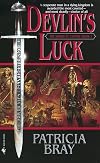
The book looks like it should be classic sword and sorcery of the Conan variety - and it does hit a lot of the key tropes - barbarian warrior who wanders into civilization after the death of his family and ends up saving everyone, secretive evil sorcerer, brave but clueless sidekick...
But somewhere it takes a left turn. In fact, it takes a left turn almost immediately, because Devlin is not your classic sword and sorcery hero. He was a farmer and a blacksmith. And he doesn't want fame or show more glory or fortune. The only thing he wants is to repay his debts and find an honorable death. He thinks becoming the Chosen One of Jorsk will give him both, but is wasn't counting on the gods or his own sense of duty...
From Captain Drakken of the Palace Guard to the minstrel Stephen and Duke Gerhard of the King's Council, Devlin's journey brings him into contact with a number of characters who will help and hinder him. And it the actions and interactions of these characters that takes this book from cliched sword and sorcery to gripping tale of rebirth - the rebirth of a man and the rebirth of a kingdom.
I would recommend this book for anyone who enjoys classic fantasy, but is tired of seeing the same old muscle-thewed barbarians cut their way through the same old enemy hordes. show less
But somewhere it takes a left turn. In fact, it takes a left turn almost immediately, because Devlin is not your classic sword and sorcery hero. He was a farmer and a blacksmith. And he doesn't want fame or show more glory or fortune. The only thing he wants is to repay his debts and find an honorable death. He thinks becoming the Chosen One of Jorsk will give him both, but is wasn't counting on the gods or his own sense of duty...
From Captain Drakken of the Palace Guard to the minstrel Stephen and Duke Gerhard of the King's Council, Devlin's journey brings him into contact with a number of characters who will help and hinder him. And it the actions and interactions of these characters that takes this book from cliched sword and sorcery to gripping tale of rebirth - the rebirth of a man and the rebirth of a kingdom.
I would recommend this book for anyone who enjoys classic fantasy, but is tired of seeing the same old muscle-thewed barbarians cut their way through the same old enemy hordes. show less
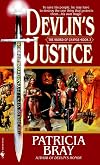
The most satisfying conclusion to a trilogy or series I have read in a long time. The book as a whole is well written, and the series is one of the very rare sword-and-sorcery type books that I truly enjoy. There is enough depth and connection to the characters to truly engage me, but the story is fast moving and never quite does the expected.
In the first book, Devlin became Chosen One of Jorsk because the position paid enough gold he could be sure his brother's wife and children would be show more able to live well after the death of their father. Once he sends the money off, he just hoped the job would kill him quickly (like it had all of his predecessors. Instead he survived, and found a new reason to live. As Devlin's Justice begins, he is returning to Jorsk with a long-lost artifact and walks into a betrayal beyond his imagination.
The first half to the book follows to storylines, Devlin's friends and allies, as they try to find out what happened to him, and Devlin's as he tries to escape the trap he finds himself in. Eventually the two story lines come together, and of course (sword-and-sorcery style) good triumphs over evil
It is rare that I put down that a book completely satisfied. Neither clamoring for more nor disappointed in some aspect. Patricia Bray manages a realistic ending that avoids being saccharine and is totally in keeping with the characters she introduced us to throughout the series. The story is clearly over, but the world will go on.
Very much looking forward to picking up more of Patricia Bray's work. show less
In the first book, Devlin became Chosen One of Jorsk because the position paid enough gold he could be sure his brother's wife and children would be show more able to live well after the death of their father. Once he sends the money off, he just hoped the job would kill him quickly (like it had all of his predecessors. Instead he survived, and found a new reason to live. As Devlin's Justice begins, he is returning to Jorsk with a long-lost artifact and walks into a betrayal beyond his imagination.
The first half to the book follows to storylines, Devlin's friends and allies, as they try to find out what happened to him, and Devlin's as he tries to escape the trap he finds himself in. Eventually the two story lines come together, and of course (sword-and-sorcery style) good triumphs over evil
It is rare that I put down that a book completely satisfied. Neither clamoring for more nor disappointed in some aspect. Patricia Bray manages a realistic ending that avoids being saccharine and is totally in keeping with the characters she introduced us to throughout the series. The story is clearly over, but the world will go on.
Very much looking forward to picking up more of Patricia Bray's work. show less
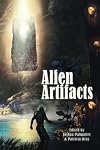
I read another Zombie Needs Brains anthology which completely blew me away--that one was My Batter Is Low and It Is Getting Dark (2020)--so I had high expectations of this one. Unfortunately, this particular anthology didn't come close to setting the high standard set by the publisher's more recent one. As anthologies go, it's not bad for a themed anthology, but it's also not great.
A big issue early on is repetitiveness--repetitiveness in tone, theme, voice, you name it, and this was show more probably the biggest disappointment since it's always what I fear from themed anthologies, but wasn't at all a problem in the other I read from ZNB. The other big issue, which came up over and over again, was a focus on concept over completeness. What I mean by that is that a good number of the stories--perhaps even the majority--seemed to be more focused on exploring a concept vs telling what felt like a complete story. As such, many of the stories felt like they ended just as they were getting interesting, with things cutting off into nothing as soon as the concept was fully explained and the reader was given a hook. It wouldn't surprise me at all if many of these authors ended up turning these 'stories' into novellas or even novels simply because what was presented here felt super-interesting conceptually, and well-written for a start, but also entirely unfinished.
I also have to note that some of the most well-known names here in the TOC ultimately offered up the least impressive stories, particularly in terms of concept and completeness, which made me wonder (not for the first time) if inviting authors to anchor a TOC is a double-edged sword, assuming you plan on accepting whatever they send in. I also have to admit to being annoyed by the inclusion of Gini Koch's "Alien Epilogue" because it's part of a larger series, and read like an out-take from the series. Although a complete story, I think only readers of her series would really appreciate it because there are so, so many characters, the first few pages are almost impossible to follow without re-reading, as the story seems to depend on you having knowledge of them already, to the extent that an intro to the story tells us where it would be placed in a series timeline. Maybe the editors expected this to sell more books, to followers of the series, but as a reader who hadn't read the series, I found it frustrating and, to be truthful, borderline offensive to unfamiliar readers and to all of the writers who went to pains to create new worlds for this story. Far from turning me on to Koch's work, it made me uninterested in reading her series as a result. It's possible that other stories from well-known authors here have similar connections--that might explain some of the lack of development--but I'm simply not sure.
All that said, there were some definite standouts in the collection. Seanan McGuire's story ended the anthology, and while it almost felt as if it suffered from the 'ends as soon as it begins' issue, it ultimately felt complete. My other favorites included James Van Pelt's "Titan Descanso," Sofie Bird's "And We Have No Words to Tell You" (probably worse the cover price all by itself, honestly), and "Pandora" by C.S. Friedman.
All told, I'll certainly read another ZNB anthology. Perhaps when this one was published, they just hadn't hit their groove yet in putting together anthologies, which could explain the big difference in quality since this was published 5 years before the other one I enjoyed so much. And as I said, at least one of these stories was such a gem that it made the whole anthology worthwhile, so that certainly says something, as well. show less
A big issue early on is repetitiveness--repetitiveness in tone, theme, voice, you name it, and this was show more probably the biggest disappointment since it's always what I fear from themed anthologies, but wasn't at all a problem in the other I read from ZNB. The other big issue, which came up over and over again, was a focus on concept over completeness. What I mean by that is that a good number of the stories--perhaps even the majority--seemed to be more focused on exploring a concept vs telling what felt like a complete story. As such, many of the stories felt like they ended just as they were getting interesting, with things cutting off into nothing as soon as the concept was fully explained and the reader was given a hook. It wouldn't surprise me at all if many of these authors ended up turning these 'stories' into novellas or even novels simply because what was presented here felt super-interesting conceptually, and well-written for a start, but also entirely unfinished.
I also have to note that some of the most well-known names here in the TOC ultimately offered up the least impressive stories, particularly in terms of concept and completeness, which made me wonder (not for the first time) if inviting authors to anchor a TOC is a double-edged sword, assuming you plan on accepting whatever they send in. I also have to admit to being annoyed by the inclusion of Gini Koch's "Alien Epilogue" because it's part of a larger series, and read like an out-take from the series. Although a complete story, I think only readers of her series would really appreciate it because there are so, so many characters, the first few pages are almost impossible to follow without re-reading, as the story seems to depend on you having knowledge of them already, to the extent that an intro to the story tells us where it would be placed in a series timeline. Maybe the editors expected this to sell more books, to followers of the series, but as a reader who hadn't read the series, I found it frustrating and, to be truthful, borderline offensive to unfamiliar readers and to all of the writers who went to pains to create new worlds for this story. Far from turning me on to Koch's work, it made me uninterested in reading her series as a result. It's possible that other stories from well-known authors here have similar connections--that might explain some of the lack of development--but I'm simply not sure.
All that said, there were some definite standouts in the collection. Seanan McGuire's story ended the anthology, and while it almost felt as if it suffered from the 'ends as soon as it begins' issue, it ultimately felt complete. My other favorites included James Van Pelt's "Titan Descanso," Sofie Bird's "And We Have No Words to Tell You" (probably worse the cover price all by itself, honestly), and "Pandora" by C.S. Friedman.
All told, I'll certainly read another ZNB anthology. Perhaps when this one was published, they just hadn't hit their groove yet in putting together anthologies, which could explain the big difference in quality since this was published 5 years before the other one I enjoyed so much. And as I said, at least one of these stories was such a gem that it made the whole anthology worthwhile, so that certainly says something, as well. show less
Awards

You May Also Like


Associated Authors
Statistics
- Works
- 26
- Also by
- 3
- Members
- 1,876
- Popularity
- #13,728
- Rating
- 3.6
- Reviews
- 44
- ISBNs
- 61
- Languages
- 2