
Colin Duriez
Author of Tolkien and C.S. Lewis: The Gift of Friendship
About the Author
Colin Duriez is a professional writer and editor. Duriez won the Clyde S. Kilby Award for his research on the Inklings. He has appeared as a commentator on the extended version film DVDs of the Lord of the Rings trilogy and PBS's The Question of God, which compared C. S. Lewis and Sigmund Freud. show more His books include The C. S. Lewis Encyclopedia, The Inklings Handbook (with the late David Porter), I.R.R. Tolkien and C. S. Lewis: The Gift of Friendship and Tolkien and The Lord of the Rings. show less
Image credit: Used by permission of Baker Publishing Group, copyright © 2008. All rights to this material are reserved. Materials are not to be distributed to other web locations for retrieval, published(see © info.)
Works by Colin Duriez
The C.S. Lewis Encyclopedia: A Complete Guide to His Life, Thought, and Writings (2000) 289 copies, 3 reviews
The J. R. R. Tolkien Handbook: A Concise Guide to His Life, Writings, and World of Middle-Earth (1992) 197 copies, 1 review
The C.S. Lewis Handbook: A Comprehensive Guide to His Life, Thought, and Writings (1990) 84 copies, 1 review
The C.S. Lewis Chronicles: The Indispensable Biography of the Creator of Narnia Full of Little-Known Facts, Events and Miscellany (2005) 59 copies, 1 review
Associated Works
Revisiting Narnia: Fantasy, Myth and Religion in C. S. Lewis' Chronicles (2005) — Contributor — 54 copies, 1 review
Tagged
Common Knowledge
- Birthdate
- 1947-07-19
- Gender
- male
- Education
- University of Istanbul
University of Ulster - Occupations
- writer
author
historian
biographer - Nationality
- UK
- Birthplace
- Derbyshire, England, UK
- Places of residence
- Long Eaton, Derbyshire, England, UK
Wales, UK
West Midlands, England, UK
Leicester, Leicestershire, England, UK
London, England, UK - Map Location
- England, UK
Members
Reviews
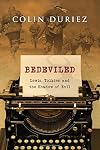
Summary: An exploration of the conflict of good and evil in the works of C.S. Lewis and J.R.R. Tolkien, and how two World Wars influenced their thinking.
This is the second of two books that look at the intersection of war experience and the works of Lewis and Tolkien. The difference, I would say, between Joseph Loconte's A Hobbit, A Wardrobe, and a Great War (reviewed here) and this book is that in Loconte's book, war is foregrounded to a greater degree; in Duriez's book, the nature of evil, show more the evil powers, and the conflict with the good running through their works.
The book opens at the beginning of World War II as Lewis puzzles over the attraction of Hitler. Duriez writes:
"As planned, they tuned in and listened on the radio to a speech by Hitler. The BBC provided a simultaneous translation. A possible answer to a puzzle occurred to Lewis as he listened—how was the German leader so convincing to so many? Though Lewis rarely read the daily newspapers, he of course knew Hitler’s claims were grossly untrue. Making what he blatantly called his 'final appeal to common sense,' Hitler boasted, 'It never has been my intention to wage war, but rather to build up a State with a new social order and the finest possible standard of culture.'
Hitler’s emotive speech may have still tugged at Lewis’s mind in the quietness of his church that Sunday. England faced the very real danger of invasion by Hitler’s forces, driven and maintained like a machine....During the church liturgy and bad hymns (as Lewis regarded them) he found his thoughts turning to the master of evil, Satan. Somehow, the arrogant dictator resembled him—not least in the size of his ego and self-centeredness. In the jumble of thoughts jostling with words of a great tradition, it struck Lewis that a war-orientated bureaucracy was a more appropriate image of hell for people ignorant of the past than a traditional one. Here was Hitler bent on taking over and ruling European countries, including England. There was the devil, who had designs to exert his will systematically over all parts of human life, his ultimate aim being dehumanization—the “abolition of man,” as Lewis later called it." (pp. 21-22).
Duriez proceeds to show how the "war-oriented bureaucracy" that aim to dehumanize was at the heart of Lewis's portrayal of hell and the work of the tempters in The Screwtape Letters. Chapter 3 then shows how much of the work of Lewis and Tolkien during the Second World War focused around devilry, from the decision of Tolkien to begin writing The Lord of the Rings (a new Hobbit book) to Lewis's publication of The Problem of Pain, The Abolition of Man, The Great Divorce, and the Space Trilogy. In addition, there were the BBC broadcasts that formed the core of Mere Christianity, in which Lewis argues for our sense of right and wrong as basic to our search for meaning, and from this to a Christian understanding of God and his work in Christ. In fiction, he explores the same themes in the Space Trilogy as Ransom understands the nature of our fallen planet in Out of the Silent Planet, fights evil in the character of Weston in Edenic Perelandra, and faces the banal but de-humanizing character of evil, so present in Hitlers prison camps, in That Hideous Strength, where technology is de-coupled from human values.
This last idea is one both Loconte and Duriez explore, how a tendency of evil is to pour one's power into objects which are then used to dominate, such as the Ring (or Voldemort's horcruxes in Harry Potter lore). When technology is severed from transcendent values seeking human flourishing, it may then be used to dominate the very humans it was meant to serve. [I sometimes wonder about our smartphones, and the connected world they represent, and how much power we have poured into these devices, and how in turn, they shape, and even dominate our engagement with the world. Is this our culture's "one Ring to rule them all?"]
While the first part of the book explores the problem of evil, particularly laid bare by war, the latter part of the book focuses more on the intersection of good and evil, exploring progress and regress in Lewis's Pilgrim's Regress, the divide between good and evil in Tolkien's "Leaf, by Niggle" and Lewis's The Great Divorce, the power for change, whether good or ill, portrayed throughout the Chronicles of Narnia, and the experiences we have of pain and love in A Grief Observed, The Four Loves, and Till We Have Faces (this last exploring the evil of loving inordinately and possessively, and the hope even here, for redemption).
The final two chapters consider how we become free of the tyranny of self to become who we are truly, and the images of future hope in both Lewis's and Tolkien's writing. The book then concludes with two appendices which return to themes explored throughout the book: "War in Heaven" being concerned with devilry, and "The Spirit of the Age" with subjectivism, the detaching of morality from any transcendent sense of meaning, anticipating both scientism and our post-modern turn.
I found Duriez's exploration of the forms evil can take in modern society chilling--the machine, the soulless bureaucracy, the big lie that they state can make us safe, secure, and usher in a new order of greatness. Against this is the challenge of goodness, that makes no dramatic or inordinate claims, that recognizes that the small choices matter the most and may lead us "imperceptibly toward good or evil, heaven or hell" (p. 145). We see in Lewis and Tolkien, the heroism of the ordinary person, with no pretensions, acting in faith and trusting obedience in the face of threatening evil, and the final victory of the good. They wrote to encourage those facing the great conflict of World War II, and in their words, we might also find the kind of bracing comfort we need to face the challenges of our own day. show less
This is the second of two books that look at the intersection of war experience and the works of Lewis and Tolkien. The difference, I would say, between Joseph Loconte's A Hobbit, A Wardrobe, and a Great War (reviewed here) and this book is that in Loconte's book, war is foregrounded to a greater degree; in Duriez's book, the nature of evil, show more the evil powers, and the conflict with the good running through their works.
The book opens at the beginning of World War II as Lewis puzzles over the attraction of Hitler. Duriez writes:
"As planned, they tuned in and listened on the radio to a speech by Hitler. The BBC provided a simultaneous translation. A possible answer to a puzzle occurred to Lewis as he listened—how was the German leader so convincing to so many? Though Lewis rarely read the daily newspapers, he of course knew Hitler’s claims were grossly untrue. Making what he blatantly called his 'final appeal to common sense,' Hitler boasted, 'It never has been my intention to wage war, but rather to build up a State with a new social order and the finest possible standard of culture.'
Hitler’s emotive speech may have still tugged at Lewis’s mind in the quietness of his church that Sunday. England faced the very real danger of invasion by Hitler’s forces, driven and maintained like a machine....During the church liturgy and bad hymns (as Lewis regarded them) he found his thoughts turning to the master of evil, Satan. Somehow, the arrogant dictator resembled him—not least in the size of his ego and self-centeredness. In the jumble of thoughts jostling with words of a great tradition, it struck Lewis that a war-orientated bureaucracy was a more appropriate image of hell for people ignorant of the past than a traditional one. Here was Hitler bent on taking over and ruling European countries, including England. There was the devil, who had designs to exert his will systematically over all parts of human life, his ultimate aim being dehumanization—the “abolition of man,” as Lewis later called it." (pp. 21-22).
Duriez proceeds to show how the "war-oriented bureaucracy" that aim to dehumanize was at the heart of Lewis's portrayal of hell and the work of the tempters in The Screwtape Letters. Chapter 3 then shows how much of the work of Lewis and Tolkien during the Second World War focused around devilry, from the decision of Tolkien to begin writing The Lord of the Rings (a new Hobbit book) to Lewis's publication of The Problem of Pain, The Abolition of Man, The Great Divorce, and the Space Trilogy. In addition, there were the BBC broadcasts that formed the core of Mere Christianity, in which Lewis argues for our sense of right and wrong as basic to our search for meaning, and from this to a Christian understanding of God and his work in Christ. In fiction, he explores the same themes in the Space Trilogy as Ransom understands the nature of our fallen planet in Out of the Silent Planet, fights evil in the character of Weston in Edenic Perelandra, and faces the banal but de-humanizing character of evil, so present in Hitlers prison camps, in That Hideous Strength, where technology is de-coupled from human values.
This last idea is one both Loconte and Duriez explore, how a tendency of evil is to pour one's power into objects which are then used to dominate, such as the Ring (or Voldemort's horcruxes in Harry Potter lore). When technology is severed from transcendent values seeking human flourishing, it may then be used to dominate the very humans it was meant to serve. [I sometimes wonder about our smartphones, and the connected world they represent, and how much power we have poured into these devices, and how in turn, they shape, and even dominate our engagement with the world. Is this our culture's "one Ring to rule them all?"]
While the first part of the book explores the problem of evil, particularly laid bare by war, the latter part of the book focuses more on the intersection of good and evil, exploring progress and regress in Lewis's Pilgrim's Regress, the divide between good and evil in Tolkien's "Leaf, by Niggle" and Lewis's The Great Divorce, the power for change, whether good or ill, portrayed throughout the Chronicles of Narnia, and the experiences we have of pain and love in A Grief Observed, The Four Loves, and Till We Have Faces (this last exploring the evil of loving inordinately and possessively, and the hope even here, for redemption).
The final two chapters consider how we become free of the tyranny of self to become who we are truly, and the images of future hope in both Lewis's and Tolkien's writing. The book then concludes with two appendices which return to themes explored throughout the book: "War in Heaven" being concerned with devilry, and "The Spirit of the Age" with subjectivism, the detaching of morality from any transcendent sense of meaning, anticipating both scientism and our post-modern turn.
I found Duriez's exploration of the forms evil can take in modern society chilling--the machine, the soulless bureaucracy, the big lie that they state can make us safe, secure, and usher in a new order of greatness. Against this is the challenge of goodness, that makes no dramatic or inordinate claims, that recognizes that the small choices matter the most and may lead us "imperceptibly toward good or evil, heaven or hell" (p. 145). We see in Lewis and Tolkien, the heroism of the ordinary person, with no pretensions, acting in faith and trusting obedience in the face of threatening evil, and the final victory of the good. They wrote to encourage those facing the great conflict of World War II, and in their words, we might also find the kind of bracing comfort we need to face the challenges of our own day. show less
The J. R. R. Tolkien Handbook: A Concise Guide to His Life, Writings, and World of Middle-Earth by Colin Duriez
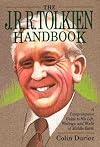
Somebody tell Colin Duriez to read the title of his own book. Observe that the title includes the name "J. R. R. Tolkien" -- and not the name "C. S. Lewis."
This is not really a guide to the writings of Tolkien. For that, you want something like Robert Foster's Guide to Middle-Earth. It's not a biography of Tolkien; there are plenty of those, with Humphrey Carpenter's still perhaps the best. Rather, this is a sort of a hybrid: It has references to some of the items in Tolkien's universe, and show more some details of Tolkien's life, plus some insight into Tolkien's thought and theology.
Or, rather, what Colin Duriez thinks C. S. Lewis would have thought about Tolkien's thought and theology. I'm serious. It seems as if Duriez can't interpret Tolkien except through a C. S. Lewis filter. It is extremely obnoxious. If I wanted a book about C. S. Lewis, I'd read one. Duriez wrote one of them, for pity's sake! (One very similar in format to this one, in fact -- the same sort of overview of life and writings and thought.) I could imagine writing this book in reverse -- Tolkien's theology influenced Lewis, so you could perhaps think about Lewis as Tolkien viewed him (and disagreed with him). But Lewis's only real influence on Tolkien was to encourage him. There is very little Lewis in Tolkien's work, and there shouldn't be so much Lewis in this guide.
If you don't mind the merciless monotony of Duriez's monomania, you may well find this a useful book. It's not as complete as Foster's guide or Carpenter's biography or Tom Shippey's studies of Tolkien's sources, and if you're willing to go for a complete set, you should instead get Foster and Carpenter and Shippey's various works. But if you're only going to get one book, this might be the one you want. show less
This is not really a guide to the writings of Tolkien. For that, you want something like Robert Foster's Guide to Middle-Earth. It's not a biography of Tolkien; there are plenty of those, with Humphrey Carpenter's still perhaps the best. Rather, this is a sort of a hybrid: It has references to some of the items in Tolkien's universe, and show more some details of Tolkien's life, plus some insight into Tolkien's thought and theology.
Or, rather, what Colin Duriez thinks C. S. Lewis would have thought about Tolkien's thought and theology. I'm serious. It seems as if Duriez can't interpret Tolkien except through a C. S. Lewis filter. It is extremely obnoxious. If I wanted a book about C. S. Lewis, I'd read one. Duriez wrote one of them, for pity's sake! (One very similar in format to this one, in fact -- the same sort of overview of life and writings and thought.) I could imagine writing this book in reverse -- Tolkien's theology influenced Lewis, so you could perhaps think about Lewis as Tolkien viewed him (and disagreed with him). But Lewis's only real influence on Tolkien was to encourage him. There is very little Lewis in Tolkien's work, and there shouldn't be so much Lewis in this guide.
If you don't mind the merciless monotony of Duriez's monomania, you may well find this a useful book. It's not as complete as Foster's guide or Carpenter's biography or Tom Shippey's studies of Tolkien's sources, and if you're willing to go for a complete set, you should instead get Foster and Carpenter and Shippey's various works. But if you're only going to get one book, this might be the one you want. show less

C. S. Lewis was a broad-minded man -- except when he wasn't. So, too, with this reference guide.
Let's face it: Author Colin Duriez is clearly a more conservative Christian than Lewis, probably an evangelical, and there are times when it shows. He just doesn't quite get Lewis's point.
Still, this is a fascinating guide, because it doesn't just concentrate on Lewis's writings but on Lewis himself. The other Lewis guide I have, Ford's Companion to Narnia, is formally more complete in its show more coverage of the Chronicles, but it doesn't really let us see C. S. Lewis the man. Duriez tries to supply that, giving us (for instance) a long section on Lewis's notion of friendship, and a bit of a look at Lewis's idea of "transposition."
This is truly useful, because Lewis certainly doesn't supply a complete education on Christianity. His mythology is a hotchpotch (talking beasts make a possible mythology. Centaurs and satyrs make another. But both in the same books? J. R. R. Tolkien was right -- it won't do). Lewis didn't know nearly as much science as he thought he did, and some of what he did know, he got wrong. And yet -- he was, in his way, a genius. Although it would be better if it were written with less of an evangelical axe to grind, this book makes that genius more clear. show less
Let's face it: Author Colin Duriez is clearly a more conservative Christian than Lewis, probably an evangelical, and there are times when it shows. He just doesn't quite get Lewis's point.
Still, this is a fascinating guide, because it doesn't just concentrate on Lewis's writings but on Lewis himself. The other Lewis guide I have, Ford's Companion to Narnia, is formally more complete in its show more coverage of the Chronicles, but it doesn't really let us see C. S. Lewis the man. Duriez tries to supply that, giving us (for instance) a long section on Lewis's notion of friendship, and a bit of a look at Lewis's idea of "transposition."
This is truly useful, because Lewis certainly doesn't supply a complete education on Christianity. His mythology is a hotchpotch (talking beasts make a possible mythology. Centaurs and satyrs make another. But both in the same books? J. R. R. Tolkien was right -- it won't do). Lewis didn't know nearly as much science as he thought he did, and some of what he did know, he got wrong. And yet -- he was, in his way, a genius. Although it would be better if it were written with less of an evangelical axe to grind, this book makes that genius more clear. show less
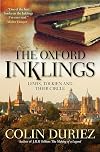
Certainly a well-researched deep dive into the Inklings! However, I found it a bit too deep at times, and as others have mentioned, repetitive. I was skimming by the end, just to legitimately (as best I could) say I finished it. So much information, that often read like a textbook...it’s not for the faint of heart or casual observer of the Inklings.
Awards

You May Also Like


Associated Authors
Statistics
- Works
- 23
- Also by
- 3
- Members
- 2,237
- Popularity
- #11,465
- Rating
- 3.7
- Reviews
- 24
- ISBNs
- 86
- Languages
- 10