
America's Test Kitchen
Author of The America's Test Kitchen Family Cookbook
About the Author
Series
Works by America's Test Kitchen
The America's Test Kitchen Cooking School Cookbook: Everything You Need to Know to Become a Great Cook (2013) 314 copies, 3 reviews
Bread Illustrated: A Step-By-Step Guide to Achieving Bakery-Quality Results At Home (2016) 304 copies, 1 review
Pressure Cooker Perfection: 100 Foolproof Recipes That Will Change the Way You Cook (2013) 254 copies, 5 reviews
The How Can It Be Gluten Free Cookbook: Revolutionary Techniques. Groundbreaking Recipes. (2014) 248 copies, 6 reviews
Vegan for Everybody: Foolproof Plant-Based Recipes for Breakfast, Lunch, Dinner, and In-Between (2017) 243 copies, 4 reviews
Vegetables Illustrated: An Inspiring Guide with 700 Kitchen-Tested Recipes (2019) 193 copies, 1 review
Foolproof Preserving: A Guide to Small Batch Jams, Jellies, Pickles, Condiments & More (2016) 189 copies, 1 review
The Complete Plant-Based Cookbook: 500 Inspired, Flexible Recipes for Eating Well Without Meat (The Complete ATK Cookbook Series) (2020) 142 copies, 1 review
The Best Mexican Recipes: Kitchen-Tested Recipes Put the Real Flavors of Mexico Within Reach (2015) 141 copies
Cook It in Your Dutch Oven: 150 Foolproof Recipes Tailor-Made for Your Kitchen's Most Versatile Pot (2018) 133 copies, 1 review
Just Add Sauce: A Revolutionary Guide to Boosting the Flavor of Everything You Cook (2018) 132 copies
Sous Vide for Everybody: The Easy, Foolproof Cooking Technique That's Sweeping the World (2018) 123 copies
Cooking for One: Scaled Recipes, No-Waste Solutions, and Time-Saving Tips (2020) 117 copies, 1 review
Master of the Grill: Foolproof Recipes, Top-Rated Gadgets, Gear, & Ingredients Plus Clever Test Kitchen Tips & Fascinating Food Science (2016) 115 copies, 1 review
What Good Cooks Know: 20 Years of Test Kitchen Expertise in One Essential Handbook (2016) 113 copies, 1 review
Naturally Sweet: Bake All Your Favorites with 30% to 50% Less Sugar (America's Test Kitchen) (2016) 108 copies
The Complete Salad Cookbook: A Fresh Guide to 200 Vibrant Dishes Using Greens, Vegetables, Grains, Proteins, and More (The Complete ATK Cookbook Series) (2021) 108 copies
The How Can It Be Gluten Free Cookbook Volume 2: New Whole-Grain Flour Blend, 75 Dairy-Free Recipes (2015) 103 copies
Pasta Revolution: 200 Foolproof Recipes That Go Beyond Spaghetti and Meatballs (2012) 103 copies, 1 review
The Ultimate Meal-Prep Cookbook: One Grocery List. A Week of Meals. No Waste. (2021) 98 copies, 1 review
100 Techniques: Master a Lifetime of Cooking Skills, from Basic to Bucket List (ATK 100 Series) (2020) 97 copies
The Complete America’s Test Kitchen TV Show Cookbook 2001–2023: Every Recipe from the Hit TV Show Along with Product Ratings Includes the 2023 Season (2022) 91 copies
America's Test Kitchen Menu Cookbook: More than 250 Recipes and 50 Menus That Guarantee Foolproof Entertaining (2011) 83 copies, 1 review
The Perfect Pie: Your Ultimate Guide to Classic and Modern Pies, Tarts, Galettes, and More (2019) 81 copies, 1 review
Meat Illustrated: A Foolproof Guide to Understanding and Cooking with Cuts of All Kinds (2020) 81 copies
Everything Chocolate: A Decadent Collection of Morning Pastries, Nostalgic Sweets, and Showstopping Desserts (2020) 73 copies, 1 review
Cook's Illustrated Revolutionary Recipes: Groundbreaking techniques. Compelling voices. One-of-a-kind recipes. (2018) 70 copies, 1 review
Nutritious Delicious: Turbocharge Your Favorite Recipes with 50 Everyday Superfoods (2017) 69 copies, 1 review
Food Processor Perfection: 75 Amazing Ways to Use the Most Powerful Tool in Your Kitchen (2017) 63 copies
How Can It Be Gluten Free Cookbook Collection: 350+ Groundbreaking Recipes for All Your Favorites (2020) 61 copies
When Southern Women Cook: History, Lore, and 300 Recipes with Contributions from 70 Women Writers (2024) 59 copies
More Mediterranean: 225 New Plant-Forward Recipes Endless Inspiration for Eating Well (2021) 58 copies
Cook for Your Gut Health: Quiet Your Gut, Boost Fiber, and Reduce Inflammation (2021) 58 copies, 2 reviews
The Complete Cooking for Two Cookbook, 10th Anniversary Edition: 700+ Recipes for Everything You'll Ever Want to Make (2024) 55 copies
The Complete Mediterranean Cookbook Gift Edition: 500 Vibrant, Kitchen-Tested Recipes for Living and Eating Well Every Day (2021) 53 copies
The Best of America's Test Kitchen 2012: The Year's Best Recipes, Equipment Reviews, and Tastings (2011) 48 copies
How to Braise Everything: Classic, Modern, and Global Dishes Using a Time-Honored Technique (2019) 48 copies
The Best of America's Test Kitchen 2016: The Year's Best Recipes, Equipment Reviews, and Tastings (2015) 45 copies, 1 review
The Complete Summer Cookbook: Beat the Heat with 500 Recipes that Make the Most of Summer's Bounty (The Complete ATK Cookbook Series) (2020) 44 copies
Best of America's Test Kitchen 2015 (Best of America's Test Kitchen Cookbook: The Year's Best Recipes) (2014) 43 copies
The Complete America’s Test Kitchen TV Show Cookbook 2001–2024: Every Recipe and Product Rating From the Most-Watched Cooking Show on Public TV (2023) 43 copies
Desserts Illustrated: The Ultimate Guide to All Things Sweet 600+ Recipes (Cook's Illustrated) (2022) 42 copies
America's Test Kitchen Best Vegetable Recipes: 33 Recipes from Artichokes to Zucchini (2017) 41 copies
The Complete Small Plates Cookbook: 300+ Shareable Tapas, Meze, Bar Snacks, Dumplings, Salads, and More (2023) 39 copies
America's Test Kitchen 25th Anniversary Cookbook: 500 Recipes That Changed the Way America Cooks (2024) 38 copies
The Complete Cook's Country TV Show Cookbook 10th Anniversary Edition: Every Recipe and Every Review From All Ten Seasons (2017) 37 copies
The Complete Cook’s Country TV Show Cookbook: Every Recipe and Every Review from All Sixteen Seasons Includes Season 16 (2023) 36 copies
The Complete Cook’s Country TV Show Cookbook 15th Anniversary Edition Includes Season 15 Recipes: Every Recipe and Every Review from All Fifteen Seasons (2022) 27 copies
The Best of America's Test Kitchen 2017: The Year's Best Recipes, Equipment Reviews, and Tastings (2016) 27 copies
The Best of America's Test Kitchen 2021: Best Recipes, Equipment Reviews, and Tastings (2020) 27 copies
The Best of America's Test Kitchen 2018: Best Recipes, Equipment Reviews, and Tastings (2017) 25 copies
Ultimate Air Fryer Perfection: 185 Remarkable Recipes That Make the Most of Your Air Fryer (2023) 24 copies
The Complete Cook’s Country TV Show Cookbook Includes Season 14 Recipes: Every Recipe and Every Review from All Fourteen Seasons (2021) 23 copies
The Everyday Athlete Cookbook: 165 Recipes to Boost Energy, Performance, and Recovery (2022) 23 copies
Cooking with Plant-Based Meat: 75 Satisfying Recipes Using Next-Generation Meat Alternatives (2022) 23 copies, 2 reviews
The Best of America’s Test Kitchen 2022: Best Recipes, Equipment Reviews, and Tastings (2021) 21 copies
The Complete Cook's Country TV Show Cookbook Season 12: Every Recipe and Every Review from all Twelve Seasons (COMPLETE CCY TV SHOW COOKBOOK) (2019) 19 copies
The Complete Cook's Country TV Show Cookbook Season 11: Every Recipe and Every Review from All Eleven Seasons (2018) 18 copies
The Best of America's Test Kitchen 2019: Best Recipes, Equipment Reviews, and Tastings (2018) 16 copies
The Skillet: 200+ Simpler Ways to Make Just About Anything, From Perfect Meals to Breads, Desserts, and More (2024) 16 copies
The Complete Anti-Inflammatory Cookbook: Optimize Health, Boost Your Immune System, Promote Longevity (2025) 15 copies
The Best of America's Test Kitchen 2020: Best Recipes, Equipment Reviews, and Tastings (2019) 13 copies
Instant Pot Ace Blender Cookbook: Foolproof Recipes for the Blender That Also Cooks (2019) 12 copies
The Healthy Back Kitchen: Move Easier, Cook SimplerHow to Enjoy Great Food While Managing Back Pain (2023) 10 copies
America's Test Kitchen Ultimate Burgers: 23 Favorite Burgers from Beef, Pork, and Turkey to Seafood and Veggie (2017) 9 copies
The New Family Cookbook: All-New Edition of the Best-Selling Classic with 1,100 New Recipes (2014) 7 copies
Cocktails Illustrated: 400+ Recipes for the Home Bartender, from Spirit Forward to Zero Proof (2025) 7 copies
Cook's Illustrated 2011 6 copies
Cocktails Illustrated: 400+ Recipes for the Home Bartender, from Spirit Forward to Zero Proof 6 copies
Cook's illustrated #94 6 copies
Fermions and Anomalies in Quantum Field Theories (Theoretical and Mathematical Physics) (2023) 4 copies
America's Test Kitchen Best Summer Desserts Magazine (Foolproof recipes for all our favorite summer treats, 2012) (2012) 4 copies
Cook's illustrated #108 4 copies
Cook's illustrated #109 4 copies
Cook's illustrated #89 4 copies
Cook's illustrated #90 3 copies
The Best Mexican Recipes: Kitchen-Tested Recipes Put the Real Flavors of Mexico Within Reach 3 copies
The best of America's Test Kitchen 2023 : best recipes, equipment reviews, and tastings (2022) 3 copies
Gluten Free Baking 3 copies
Cook's Illustrated Cookbook: 2,000 Recipes from 20 Years of America?s Most Trusted Food Magazine 3 copies
Best-Ever Appetizers 2 copies
Cook's illustrated #85 2 copies
The Chicken Bible: Say Goodbye to Boring Chicken with 500 Recipes for Easy Dinners, Braises, Wings, Stir-Fries, and So Much More (2021) 2 copies
6 Ingredient Recipes 2 copies
When Southern Women Cook: History, Lore, and 300 Recipes with Contributions from 70 Women Writers 2 copies
The Best of America's Test Kitchen 2024: Best Recipes, Equipment Reviews, and Tastings (2023) 2 copies
The America's Test Kitchen: The Companion Cookbooks to the 2002-05 Seasons of the America's Test Kitchen Television Show (2005) 2 copies
Best-Ever Salads 2 copies
The Complete Grilling and Barbecue Cookbook: 400+ Recipes plus Techniques, Tools, and Science (2026) 2 copies
The Complete Cook's Country TV Show Cookbook: Every Recipe, Every Ingredient Testing, Every Equipment Rating From All 6 Seasons (2013) 2 copies
Cook's Country 2023 Annual 1 copy
Pressure Cooker Favorites 1 copy
The Skillet 1 copy
Cook It in Cast Iron: Kitchen-Tested Recipes for the One Pan That Does It All (Cook's Country) 1 copy
Cook's Country 2022 Annual 1 copy
Superfood Recipes 1 copy
The Best Skillet Recipes 1 copy
Best-Ever Casseroles 1 copy
America`s Test Kitchen : Best Summer Deserts , Foolproof Recipes For All Our Favorite Summer Treats (2012) 1 copy
Serving Up Noodles and Rice 1 copy
The America's Test Kitchen DIY Cookbook by Editors at America's Test Kitchen (2012) Paperback 1 copy
The Best of America's Test Kitchen 2014 by Editors at America's Test Kitchen (2013-10-01) (1770) 1 copy
Soups & Stews for Two 1 copy
Cook's Country 2021 Annual 1 copy
The Healthy Back Kitchen: Move Easier, Cook SimplerHow to Enjoy Great Food While Managing Back Pain 1 copy
Cook's illustrated #1 1 copy
Soups & Stews for Two 1 copy
Cook's illustrated #86 1 copy
Cook's illustrated #117 1 copy
Cook's illustrated #93 1 copy
Cook's Illustrated #88 1 copy
Cook's illustrated #110 1 copy
Cook's illustrated #112 1 copy
Step by Step Italian Recipes 1 copy
All-Time Best French Recipes 1 copy
All-Time Best Fruit Desserts 1 copy
Cooking Fresh 1 copy
One-Pan Dinners 1 copy
Complete Cook's Country 1 copy
Christmas Cookies 1 copy
Best Gluten-Free Recipes 1 copy
Tagged
Common Knowledge
- Canonical name
- America's Test Kitchen
- Gender
- n/a
- Relationships
- Cook's Illustrated
Cook's Country - Map Location
- USA
Members
Reviews
Cook's Illustrated Revolutionary Recipes: Groundbreaking techniques. Compelling voices. One-of-a-kind recipes. by America's Test Kitchen
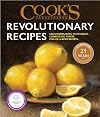
What a terrific surprise: this is not just a collection of recipes, it’s also in-depth food writing -- it’s like a 550-page issue of Cook’s Illustrated Magazine!
America’s Test Kitchen is celebrating the 25th anniversary of Cook’s Illustrated by reprinting feature stories that revolutionized cooking techniques, including 180 recipes. They tend to be for standards (from the small, like all sorts of eggs, to big meats and everything in between, plus sides and desserts), but feel show more completely contemporary. And it’s fun to see writers from before they were famous (hello, J. Kenji Lopez-Alt and Mark Bittman!) Their curiosity leads to fascinating science and technique, which combine on smooth, heavy pages with beautiful photos and well-organized recipes to make this fabulous volume. I will re-read and cook from it for years to come.
(Review based on a copy of the book provided by the publisher.) show less
America’s Test Kitchen is celebrating the 25th anniversary of Cook’s Illustrated by reprinting feature stories that revolutionized cooking techniques, including 180 recipes. They tend to be for standards (from the small, like all sorts of eggs, to big meats and everything in between, plus sides and desserts), but feel show more completely contemporary. And it’s fun to see writers from before they were famous (hello, J. Kenji Lopez-Alt and Mark Bittman!) Their curiosity leads to fascinating science and technique, which combine on smooth, heavy pages with beautiful photos and well-organized recipes to make this fabulous volume. I will re-read and cook from it for years to come.
(Review based on a copy of the book provided by the publisher.) show less

When I subscribed to Cook’s Illustrated magazine, I read each issue cover to cover, enjoying every bit of deconstructing a recipe or technique and evaluating commercial pantry staples and cookery tools. And now I devoured every word of this big volume on the science behind 50 fundamental concepts essential to good cooking.
Each concept is presented as an 8-16 page chapter that begins with the science/theory behind a technique, followed by a cooking experiment that tests the science, and show more then much further exploration of the concept via at least half-a-dozen recipes (for generally familiar, delicious, foods). Note: this is not an “illustrated,” coffee-table book; there are some graphics to help describe the science, and some simple photos of experimental results, but this is a text-heavy book -- lush with information not visuals.
The topics mostly concern meat, eggs, vegetables and baking. All of it feels solid -- the reinforcement of concepts I already knew about, the confidence to try techniques that are new to me, and many “aha” moments about the whys behind the science, some of which come to mind even now:
• when to cut a food with the grain vs. against the grain (answer: onions and tough meats, respectively; cutting across cells breaks them, resulting in a too-pungent onion but a more tender meat);
• the difference between baking soda (which reacts with an acid in the recipe to create CO2 bubbles that leaven) vs. baking powder (which contains baking soda + a powdered acid) vs. double-acting baking powder (which contains a second acid that works later, in the oven’s heat) -- and why you ever even need separate baking soda (it leads to flavorful browning);
• why adding eggs to a batter one at a time, and alternating the addition of wet and dry ingredients, does matter (both cause ingredients to incorporate faster/better and prevent the over-mixing that toughens the batter);
• whether to salt scrambled eggs before or after cooking (before: “Salt affects the electrical charge on the protein molecules in the eggs, reducing the tendency of the proteins to bond with each other. A weaker protein network means eggs are less likely to overcoagulate and will cook up tender, not tough.”)
If you have an opinion about Cook’s Illustrated magazine, that will be your opinion of this book -- multiplied by 50 :) If you’re unfamiliar with the magazine, I highly recommend using e.g. Amazon's “Look Inside” feature to browse the Table of Contents for the concepts/techniques covered, and then read the “First Pages” (which is “Concept 1: Gentle Heat Prevents Overcooking”) and is representative of the book.
Enthusiastically recommended! show less
Each concept is presented as an 8-16 page chapter that begins with the science/theory behind a technique, followed by a cooking experiment that tests the science, and show more then much further exploration of the concept via at least half-a-dozen recipes (for generally familiar, delicious, foods). Note: this is not an “illustrated,” coffee-table book; there are some graphics to help describe the science, and some simple photos of experimental results, but this is a text-heavy book -- lush with information not visuals.
The topics mostly concern meat, eggs, vegetables and baking. All of it feels solid -- the reinforcement of concepts I already knew about, the confidence to try techniques that are new to me, and many “aha” moments about the whys behind the science, some of which come to mind even now:
• when to cut a food with the grain vs. against the grain (answer: onions and tough meats, respectively; cutting across cells breaks them, resulting in a too-pungent onion but a more tender meat);
• the difference between baking soda (which reacts with an acid in the recipe to create CO2 bubbles that leaven) vs. baking powder (which contains baking soda + a powdered acid) vs. double-acting baking powder (which contains a second acid that works later, in the oven’s heat) -- and why you ever even need separate baking soda (it leads to flavorful browning);
• why adding eggs to a batter one at a time, and alternating the addition of wet and dry ingredients, does matter (both cause ingredients to incorporate faster/better and prevent the over-mixing that toughens the batter);
• whether to salt scrambled eggs before or after cooking (before: “Salt affects the electrical charge on the protein molecules in the eggs, reducing the tendency of the proteins to bond with each other. A weaker protein network means eggs are less likely to overcoagulate and will cook up tender, not tough.”)
If you have an opinion about Cook’s Illustrated magazine, that will be your opinion of this book -- multiplied by 50 :) If you’re unfamiliar with the magazine, I highly recommend using e.g. Amazon's “Look Inside” feature to browse the Table of Contents for the concepts/techniques covered, and then read the “First Pages” (which is “Concept 1: Gentle Heat Prevents Overcooking”) and is representative of the book.
Enthusiastically recommended! show less
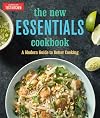
I have a dozen cookery books from America’s Test Kitchen, all of which I’ve rated highly and yet this is one of my favorites. It’s inspiring and also practical for cooks of all skills, whether one is initially setting up a kitchen or setting up a “refresh” in midlife or retirement.
It’s a beautifully produced book, printed on smooth pages with thousands of full-color photographs showing preparation techniques and finished dishes. It’s trademark-ATK with an opening paragraph show more about the science/background of each dish, followed by ingredients and preparation instructions, and then sidebars that delve into ingredients, equipment and how-to techniques. It feels fresh and contemporary in its nutritional and ethnic diversity (while using quite common ingredients). I want to prepare about a third of the recipes tomorrow or sooner :)
(Review based on a copy of the book provided by the publisher.) show less
It’s a beautifully produced book, printed on smooth pages with thousands of full-color photographs showing preparation techniques and finished dishes. It’s trademark-ATK with an opening paragraph show more about the science/background of each dish, followed by ingredients and preparation instructions, and then sidebars that delve into ingredients, equipment and how-to techniques. It feels fresh and contemporary in its nutritional and ethnic diversity (while using quite common ingredients). I want to prepare about a third of the recipes tomorrow or sooner :)
(Review based on a copy of the book provided by the publisher.) show less
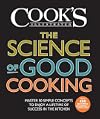
I know how to cook, but baking is my specialty, having had professional training in bread and pastry. From this perspective, I highly recommend "The Science of Good Cooking," by Cook's Illustrated. This isn't your grandma's home cooking, but a study of culinary processes and techniques to create better food products.
Rarely would I read from cover to cover a cookbook or a book on cooking, but I did so with "The Science of Good Cooking." That alone is saying a lot since it's 451 pages show more long.
When reviewing a book, the first thing I notice is the quality of construction - the paper, the binding, the cover, the print and the design. This book gets five stars in these categories, despite the sepia illustrations. This isn't a coffee table picture book, but a scientific approach to best practices in cooking. I particularly like the dust jacket, which has a plastic-type coating. This gives it a nice feel and provides some protection against splatter.
The format of "The Science of Good Cooking" is useful. With clear and precise writing, each chapter presents a concept, describes how it works and reviews the test kitchen methods of analysis. Following, you see the results and "The Takeaway." If you wanted to cut to the chase, you could skip to the results and the takeaway and still benefit from the chapter. After the text, Cook's Illustrated gives you the practical application of the science in the form of fail-proof recipes.
Reading this book and practicing the concepts can substitute for some expensive culinary training for the untutored cook. I skimmed the chapters on bread and pastry, having already learned the content. However, the information is solid. I was especially impressed that Cook's Illustrated included a discussion of the autolyse process, developed by Raymond Calvel, to improve the flavor of bread. Autolyse is a professional technique of allowing hydrated flour to develop prior to using it to make bread dough.
"The Science of Good Cooking" includes a section on kitchen tools, with recommendations from Cook's Illustrated tests. This makes the book a real bargain. You're getting cooking fundamentals, recipes and equipment ratings. Cook's Illustrated has a website that contains this information, but it's expensive and annoying. You can search for information and find that some is free, some is available only to subscribers, and some is available only to premium subscribers.
About half the book is on meat, logical considering the importance of animal protein in cooking. Here is where the full color photos and illustrations would, in my opinion, not be an asset. The descriptions of the scientific analysis in cooking meat tend to make the reader consider being a vegetarian. There are extremely detailed discussions of the muscle fiber, connective tissue, fat, fiber and collagen in meat, and how the age and exercise of the animal affect the meat. Then, we learn how different cooking processes affect these animal parts, in more excruciating detail. Yeah, sepia is okay with me.
Some readers might find the Cook's Illustrated recipes complicated and cumbersome but, with experience, many of the steps become routine and painless. However, this criticism could be valid concerning a few of the recipes. I do think that you can make good scrambled eggs without knowing the correct size of the pan for the number of eggs, precisely timing the cooking on medium and low heat, adding half-and-half instead of milk or cream, adding extra egg yolks (leaving you with extra egg whites) and using chilled, unsalted butter instead of salted butter at any temperature. I think the idea is to understand the concepts and follow them, as precisely or generally as you wish, and the outcome will still be improved.
"The Science of Cooking" is a good for cooks of all levels of knowledge and experience - a solid five-star book. show less
Rarely would I read from cover to cover a cookbook or a book on cooking, but I did so with "The Science of Good Cooking." That alone is saying a lot since it's 451 pages show more long.
When reviewing a book, the first thing I notice is the quality of construction - the paper, the binding, the cover, the print and the design. This book gets five stars in these categories, despite the sepia illustrations. This isn't a coffee table picture book, but a scientific approach to best practices in cooking. I particularly like the dust jacket, which has a plastic-type coating. This gives it a nice feel and provides some protection against splatter.
The format of "The Science of Good Cooking" is useful. With clear and precise writing, each chapter presents a concept, describes how it works and reviews the test kitchen methods of analysis. Following, you see the results and "The Takeaway." If you wanted to cut to the chase, you could skip to the results and the takeaway and still benefit from the chapter. After the text, Cook's Illustrated gives you the practical application of the science in the form of fail-proof recipes.
Reading this book and practicing the concepts can substitute for some expensive culinary training for the untutored cook. I skimmed the chapters on bread and pastry, having already learned the content. However, the information is solid. I was especially impressed that Cook's Illustrated included a discussion of the autolyse process, developed by Raymond Calvel, to improve the flavor of bread. Autolyse is a professional technique of allowing hydrated flour to develop prior to using it to make bread dough.
"The Science of Good Cooking" includes a section on kitchen tools, with recommendations from Cook's Illustrated tests. This makes the book a real bargain. You're getting cooking fundamentals, recipes and equipment ratings. Cook's Illustrated has a website that contains this information, but it's expensive and annoying. You can search for information and find that some is free, some is available only to subscribers, and some is available only to premium subscribers.
About half the book is on meat, logical considering the importance of animal protein in cooking. Here is where the full color photos and illustrations would, in my opinion, not be an asset. The descriptions of the scientific analysis in cooking meat tend to make the reader consider being a vegetarian. There are extremely detailed discussions of the muscle fiber, connective tissue, fat, fiber and collagen in meat, and how the age and exercise of the animal affect the meat. Then, we learn how different cooking processes affect these animal parts, in more excruciating detail. Yeah, sepia is okay with me.
Some readers might find the Cook's Illustrated recipes complicated and cumbersome but, with experience, many of the steps become routine and painless. However, this criticism could be valid concerning a few of the recipes. I do think that you can make good scrambled eggs without knowing the correct size of the pan for the number of eggs, precisely timing the cooking on medium and low heat, adding half-and-half instead of milk or cream, adding extra egg yolks (leaving you with extra egg whites) and using chilled, unsalted butter instead of salted butter at any temperature. I think the idea is to understand the concepts and follow them, as precisely or generally as you wish, and the outcome will still be improved.
"The Science of Cooking" is a good for cooks of all levels of knowledge and experience - a solid five-star book. show less
Lists
Food (2)
Awards


Bread Illustrated: A Step-By-Step Guide to Achieving Bakery-Quality Results At Home (Winner – Baking: Savory or Sweet – 2017)
Cook's Illustrated Revolutionary Recipes: Groundbreaking techniques. Compelling voices. One-of-a-kind recipes. (Winner – Compilations – 2019)
The Complete Diabetes Cookbook: The Healthy Way to Eat the Foods You Love (Finalist – Health & Special Diet – 2019)


You May Also Like


Associated Authors
Statistics
- Works
- 418
- Members
- 18,996
- Popularity
- #1,151
- Rating
- 4.1
- Reviews
- 143
- ISBNs
- 392
- Languages
- 1
- Favorited
- 2