
About the Author
Image credit: photo by Art Streiber
Works by Mark Seal
The Man in the Rockefeller Suit: The Astonishing Rise and Spectacular Fall of a Serial Imposter (2011) 442 copies, 30 reviews
Leave the Gun, Take the Cannoli: The Epic Story of the Making of The Godfather (2021) 217 copies, 10 reviews
What Really Happens in Vegas: True Stories of the People Who Make Vegas, Vegas (2023) 79 copies, 3 reviews
Celebrated Weekends: The Stars' Guide to 50 of the Most Exciting Cities in the World (2007) 7 copies
Love Until Death 1 copy
Associated Works
Without A Badge: Undercover in the World's Deadliest Criminal Organization (2003) — Author — 45 copies
The Gospel of Good Success: A Six-Step Program to Spiritual, Emotional and Financial Success (1999) — Author — 37 copies
Riding Lessons: Everything That Matters in Life I Learned from Horses (2002) — Author — 24 copies, 1 review
Tagged
Common Knowledge
- Gender
- male
- Education
- University of Tennessee
- Occupations
- journalist
- Places of residence
- Aspen, Colorado, USA
- Associated Place (for map)
- Colorado, USA
Members
Reviews
The Man in the Rockefeller Suit: The Astonishing Rise and Spectacular Fall of a Serial Imposter by Mark Seal

I admit it. I’m fascinated by con-men. On one hand I admire what they’re able to do and the mind behind the elaborate lies, false identities and schemes. On the other hand I am appalled by what they get away with and how easily normal people are taken in. Sometimes it’s easy to dismiss their crimes by putting the blame onto their victims; making them into stupid people who somehow deserved to be duped. Sometimes you root for the con-artists and want them to get away clean. This is one show more of those cases to a certain extent, but some of his victims deserve real sympathy. I can’t say that I’ve have spotted him as phony, but I can say that I would have hated his pretentious ass. Anyone who has to go around talking about himself and how great he is all the time certainly has a weak ego that must need constant shoring up. I’ve known a few people like that; not con-men, but low-self-esteem victims who can’t shut up. That seems to be “Clark Rockefeller’s” M.O. Even now he doesn’t admit defeat; maintaining that he IS a Rockefeller in the face of the family’s vehement denials. Fascinating. Is he mentally ill in the sense that he believes his own lies, or is he just keeping up appearances so that he can morph into someone else when this all goes away? Something he seems to devoutly believe will happen.
The sheer intelligence, memory and will is incredible to me. I can barely keep facts straight never mind countless lies upon lies. And the cunning! To be planning and conniving so many steps in advance; it’s mind-boggling. I’d love to know more about exactly when he started planning this, when he started looking for his perfect American dupe. He must have pulled this kind of thing when he was a kid, albeit in a much smaller way. I guess we’ll never know unless he decides to admit what he’s done and write a swaggering tell-all or Impersonating Fake People for Dummies handbook. When that kind of mind plus a total lack of conscience come together, all bets are off and it’s just a matter of whether the person has the guts to really aim high and whether he gets caught. I wonder how many don’t. To us regular people, the sheer guts it takes to pull this off is unreal. Whenever I read about a real-life con-man I’m amazed by what they get away with and how frigging fearless they are. I’d never be able to lie so well and to so many people even if I had the inclination to do so. That’s why so many fall victim; we can’t imagine doing it ourselves so we never think that anyone else can, much less to us. And the bigger the lie, the more we believe it just because we can’t believe anyone would be so fearless and so convincing. Who would go around saying they were a Rockefeller if they weren’t? Not me. I’d get caught. I’m sure I’d get caught, so I never think that anyone else would dare. Flabbergasting.
Overall the story is told well, from an investigative reporter point of view. The author talks to as many people as he can and follows the trail chronologically starting with Gerhartsreiter’s entrance into the US and ending with his conviction of kidnapping in a Massachusetts court. Many people won’t talk to him, probably out of humiliation over having been fooled, but enough people do talk to sketch Gerhartsreiter’s life pretty well. Although this is an interesting and compelling book, I wish the author would have gone into more detail about exactly how he was able to manage one façade after another. With very little effort he appears to go from his real persona, Christian Karl Gerhartsreiter, to Christopher Chichester, to Christopher Crow to Clark Rockefeller. In reality he must have done an immense amount of reading, memorizing, planning and practicing. How did he find the time? How did he find the money? Always with the new clothes and accessories, but never a visible means of support. What other schemes had he going that brought him money? I’d have loved more insight into that. Maybe that’s for the sequel. show less
The sheer intelligence, memory and will is incredible to me. I can barely keep facts straight never mind countless lies upon lies. And the cunning! To be planning and conniving so many steps in advance; it’s mind-boggling. I’d love to know more about exactly when he started planning this, when he started looking for his perfect American dupe. He must have pulled this kind of thing when he was a kid, albeit in a much smaller way. I guess we’ll never know unless he decides to admit what he’s done and write a swaggering tell-all or Impersonating Fake People for Dummies handbook. When that kind of mind plus a total lack of conscience come together, all bets are off and it’s just a matter of whether the person has the guts to really aim high and whether he gets caught. I wonder how many don’t. To us regular people, the sheer guts it takes to pull this off is unreal. Whenever I read about a real-life con-man I’m amazed by what they get away with and how frigging fearless they are. I’d never be able to lie so well and to so many people even if I had the inclination to do so. That’s why so many fall victim; we can’t imagine doing it ourselves so we never think that anyone else can, much less to us. And the bigger the lie, the more we believe it just because we can’t believe anyone would be so fearless and so convincing. Who would go around saying they were a Rockefeller if they weren’t? Not me. I’d get caught. I’m sure I’d get caught, so I never think that anyone else would dare. Flabbergasting.
Overall the story is told well, from an investigative reporter point of view. The author talks to as many people as he can and follows the trail chronologically starting with Gerhartsreiter’s entrance into the US and ending with his conviction of kidnapping in a Massachusetts court. Many people won’t talk to him, probably out of humiliation over having been fooled, but enough people do talk to sketch Gerhartsreiter’s life pretty well. Although this is an interesting and compelling book, I wish the author would have gone into more detail about exactly how he was able to manage one façade after another. With very little effort he appears to go from his real persona, Christian Karl Gerhartsreiter, to Christopher Chichester, to Christopher Crow to Clark Rockefeller. In reality he must have done an immense amount of reading, memorizing, planning and practicing. How did he find the time? How did he find the money? Always with the new clothes and accessories, but never a visible means of support. What other schemes had he going that brought him money? I’d have loved more insight into that. Maybe that’s for the sequel. show less

There's a saying, paraphrased in the book, which tells how working on a difficult and challenging movie set can translate into great art, and conversely a conflict-free movie set tends to produce mediocrity. I was vaguely aware this was true for the making of The Godfather but until I read this book, I had no idea how much.
When working on revising Puzo's script, Director Francis Ford Coppola highlights the similarities between the Corleone family and America itself. Both are inherently show more capitalistic and both institutions are places to turn to for protection when your luck turns bad or to seek justice when wronged. And in a dark twist Coppola further elaborated that although in this comparison you're more likely to get help from the Don than from the American government.
Leave the Gun, Take the Cannoli by Mark Seal is a fantastic book about the making of an extraordinary movie. Don't miss this one if you love behind the scenes accounts as I do. show less
When working on revising Puzo's script, Director Francis Ford Coppola highlights the similarities between the Corleone family and America itself. Both are inherently show more capitalistic and both institutions are places to turn to for protection when your luck turns bad or to seek justice when wronged. And in a dark twist Coppola further elaborated that although in this comparison you're more likely to get help from the Don than from the American government.
Leave the Gun, Take the Cannoli by Mark Seal is a fantastic book about the making of an extraordinary movie. Don't miss this one if you love behind the scenes accounts as I do. show less
The Man in the Rockefeller Suit: The Astonishing Rise and Spectacular Fall of a Serial Imposter by Mark Seal
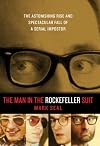
Christian Karl Gerhartsreiter came to the United States at the age of seventeen, and, like many other immigrants and young people, he set about reinventing himself. But he took that idea much further and much more literally than most, concocting for himself a number of socially ambitious alternate identities, including "Christopher Chichester," a member of the British aristocracy, "Christopher Crowe," a big shot Hollywood producer, and "Clark Rockefeller," a member of the Rockefeller show more family.
He inhabited that last identity for a surprisingly long time, ingratiating himself into the highest of high society and marrying a women who -- astonishingly, given that she was an enormously successful financial consultant -- had no idea, for a very long time, that he was not who he claimed to be and did not have access to the immense wealth he pretended to. His true identity was only unmasked when he was subjected to an in-depth police investigation after he kidnapped his seven-year-old daughter, whom he had lost custody of in his divorce. He was then later tried for a murder committed many years earlier. (That trial had not yet begun when this book was published, in 2011, but Wikipedia tells me that he was, in fact, convicted.)
It's a bizarre, and, in broad outline, utterly fascinating story. And, yet, I found this detailed account of what is known of "Rockefeller"'s life, while interesting enough, not nearly as enthralling as I'd hoped. I think there are a couple of reasons for this. One is that, no matter how much digging the author did, ultimately his subject remains a great big enigma, a giant, frustrating question mark at the heart of his narrative. Who is this guy, really? What on Earth was going on in his head? There seems to be no knowing, no way to get a handle on whoever the "real" Clark Rockefeller or Christian Gerhartsreiter is.
Secondly... Well, I'm almost ashamed to admit this, but I think, going into this book, I was hoping to encounter a sort of lovable rogue, that I would find myself at the end saying, "Well, of course, I don't approve of what he did, but, gosh, you have to admire his ability to do it!" But there doesn't seem to be very much about "Rockefeller" to admire. Mostly, he comes across as, well, a great big phony, a man whose only ambition in life was to fake his way into the social circles of the disgustingly over-privileged and the unbearably snooty. And while, by all accounts, he really was a tremendously smart guy, his success in that ambition appears to have not so much to do with intelligence as with the fact that people are predisposed to see what they want or expect to see and are willing to overlook a great deal of bizarre behavior if it comes from someone who appears to be fantastically rich.
I am glad to have read this, anyway, though, if only because it's one of those stories I would never, ever have believed if it were presented in a movie or a novel, and it's always good to be reminded of all the ways in which reality really is just so much weirder than fiction. show less
He inhabited that last identity for a surprisingly long time, ingratiating himself into the highest of high society and marrying a women who -- astonishingly, given that she was an enormously successful financial consultant -- had no idea, for a very long time, that he was not who he claimed to be and did not have access to the immense wealth he pretended to. His true identity was only unmasked when he was subjected to an in-depth police investigation after he kidnapped his seven-year-old daughter, whom he had lost custody of in his divorce. He was then later tried for a murder committed many years earlier. (That trial had not yet begun when this book was published, in 2011, but Wikipedia tells me that he was, in fact, convicted.)
It's a bizarre, and, in broad outline, utterly fascinating story. And, yet, I found this detailed account of what is known of "Rockefeller"'s life, while interesting enough, not nearly as enthralling as I'd hoped. I think there are a couple of reasons for this. One is that, no matter how much digging the author did, ultimately his subject remains a great big enigma, a giant, frustrating question mark at the heart of his narrative. Who is this guy, really? What on Earth was going on in his head? There seems to be no knowing, no way to get a handle on whoever the "real" Clark Rockefeller or Christian Gerhartsreiter is.
Secondly... Well, I'm almost ashamed to admit this, but I think, going into this book, I was hoping to encounter a sort of lovable rogue, that I would find myself at the end saying, "Well, of course, I don't approve of what he did, but, gosh, you have to admire his ability to do it!" But there doesn't seem to be very much about "Rockefeller" to admire. Mostly, he comes across as, well, a great big phony, a man whose only ambition in life was to fake his way into the social circles of the disgustingly over-privileged and the unbearably snooty. And while, by all accounts, he really was a tremendously smart guy, his success in that ambition appears to have not so much to do with intelligence as with the fact that people are predisposed to see what they want or expect to see and are willing to overlook a great deal of bizarre behavior if it comes from someone who appears to be fantastically rich.
I am glad to have read this, anyway, though, if only because it's one of those stories I would never, ever have believed if it were presented in a movie or a novel, and it's always good to be reminded of all the ways in which reality really is just so much weirder than fiction. show less
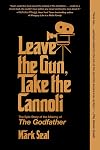
I have become a big fan of the subgenre that can be called “the making of (insert film title).” This includes Glen Frankel’s books on the making of HIGH NOON and THE SEARCHERS along with W.K. Stratton’s account of how THE WILD BUNCH came to be. My favorite is still Chris Nashawaty’s book on the chaotic filming of CADDYSHACK, which really is a deep dive into a special time and place in American popular culture. So of course Mark Seal’s LEAVE THE GUN, TAKE THE CANOLI: The Epic show more Story of the Making of THE GODFATHER would end up on my reading list. With all due respect to CITIZEN KANE, I consider THE GODFATHER to be the greatest film ever made in America. The grand story of Don Vito Corleone, his sons, the men who make up his organized crime family, and all those in the wider world who become entangled in their Mafia Empire to be one of the most compelling pieces of fiction ever created. It is filled with larger than life characters, so vividly rendered that we have come to know them like they are part of our own family. What Seal’s book does is remind us that it took some real larger than life flesh and blood characters to bring the novel to the screen, and in the course of that journey, created a story every bit as compelling as the movie they made.
Among those larger than life characters: Mario Puzo, a financially unsuccessful published novelist who was constantly short of money because of a family to feed and an addiction to gambling; Charles Bluhdorn, the tycoon who bought a failing Paramount Studios with the determination to turn its fortunes around though he knew next to nothing about the film business; Robert Evans, the former actor hired to manage production at Paramount, who had an ego as big as his cocaine habit; Albert Ruddy, formerly employed at the Rand Institute, now a Hollywood producer with a reputation for bringing in films under budget; Francis Ford Coppola, the director and screen writer for a handful of small films whose biggest qualification was his Italian-American heritage; and Marlon Brando, the greatest American actor of the post war era, but now a has-been after a string of box office disappointments and some self inflicted wounds to his career.
Of all these characters, I really came to like Puzo, if only because I am a self-published author and know how hard it can be to get words on paper (or these days, a laptop screen). There is something in Puzo’s determination to be a success that really speaks to any writer, and how he came upon the idea to write a book about the inside workings of a Mafia family is a real tale of circumstances coming together at the right time. Though he always denied having any direct source in the Mafia, Seal’s book recounts how close Puzo walked up to that line; one of my favorite anecdotes is the author’s trip to Las Vegas for “research.” Though the book was a publishing phenomenon in the late ‘60s, and a natural for a screen adaptation, the path it took to become the film classic so many of us love was a rocky one. That is what I like best about these books where we get to see the alchemy of the creative process. Two very contrasting themes emerge in Seal’s book. One is the enormous self-confidence needed to be a success in Hollywood, to sit behind a desk and make decisions that risk millions of dollars just on a hunch and a gut feeling, not to mention the leadership skills it takes to bring a film crew and a cast of actors together and marshal them efficiently to one purpose. Another anecdote of how a young Ruddy got a part-time job at a shoe store to help cover the payments on a Jaguar perfectly illustrates this. But with the striving for success comes self-doubt and second guessing. Coppola was anxiety stricken throughout the production and afterward, convinced (not without reason) that he was about to be fired at every turn, and that he was doing a lousy job, and that the finished film would surely be failure. He was not alone, as many in the front office at Paramount fought every casting decision, the staging of scenes, and the cost of everything. Only a few would admit after all was said and done that they were wrong.
Much has already been written and documented about the production of THE GODFATHER, and Seal leans on some of these old sources, but his book does help put a lot of this into context, and after the passing of time, give it a proper prospective. A lot of the suits at Paramount wanted anybody but Brando as Don Vito, with everybody from Ernest Borgnine to Laurence Olivier touted for the part—Burt Lancaster tried to buy the rights to Puzo’s novel for himself. From a cinephiles standpoint, the portrait of Brando that emerges in these pages is of a legend on the skids who rises to the challenge after years of failure, and commits totally to the role. By all accounts, Brando was a joy to work with on the set of THE GODFATHER, and for a lot of us film lovers this is bittersweet, because this great talent would spend much of the rest of his career squandering his gifts and taking jobs for the money. Al Pacino was almost nobody’s choice to play Michael, and James Caan was far from the first choice to play Sonny, and how they came to get those roles is a fascinating part of the story. With all due respect to Lenny Montana, who made a magnificent Luca Brasi, I would love to have seen what Timothy Carey would have done with the part, and I am disappointed that Seal doesn’t mention Joe Spinell, whose few minutes as Willie Cicci made him a fan favorite. But despite that, I learned so much from this book, including the un-credited contribution Robert Towne made to the script, the background on how the famous horse’s head scene was shot, along with Sonny’s beat down of Carlo (who really had it coming), and Sonny’s subsequent spectacular death scene at the tollbooth. Some of the best remembered dialogue was ad-libbed on the set, including the book’s title by Richard Castellano. Seal also documents just how much the real life Mafia was involved in the film’s production in New York City thanks to Joe Columbo, an organized crime boss who really knew how to play the angles.
Coming in at just over 400 pages, Mark Seal’s book is a quick read and a must read for any true film lover. It left me wanting to know more. THE GODFATHER, both the novel and the movie, were a cultural event, the kind we just don’t see any more in the fractured 21st Century. That is our loss, but we still have this great movie to remember the glory that once was, and this book truly honors the men and women who made it all happen. show less
Among those larger than life characters: Mario Puzo, a financially unsuccessful published novelist who was constantly short of money because of a family to feed and an addiction to gambling; Charles Bluhdorn, the tycoon who bought a failing Paramount Studios with the determination to turn its fortunes around though he knew next to nothing about the film business; Robert Evans, the former actor hired to manage production at Paramount, who had an ego as big as his cocaine habit; Albert Ruddy, formerly employed at the Rand Institute, now a Hollywood producer with a reputation for bringing in films under budget; Francis Ford Coppola, the director and screen writer for a handful of small films whose biggest qualification was his Italian-American heritage; and Marlon Brando, the greatest American actor of the post war era, but now a has-been after a string of box office disappointments and some self inflicted wounds to his career.
Of all these characters, I really came to like Puzo, if only because I am a self-published author and know how hard it can be to get words on paper (or these days, a laptop screen). There is something in Puzo’s determination to be a success that really speaks to any writer, and how he came upon the idea to write a book about the inside workings of a Mafia family is a real tale of circumstances coming together at the right time. Though he always denied having any direct source in the Mafia, Seal’s book recounts how close Puzo walked up to that line; one of my favorite anecdotes is the author’s trip to Las Vegas for “research.” Though the book was a publishing phenomenon in the late ‘60s, and a natural for a screen adaptation, the path it took to become the film classic so many of us love was a rocky one. That is what I like best about these books where we get to see the alchemy of the creative process. Two very contrasting themes emerge in Seal’s book. One is the enormous self-confidence needed to be a success in Hollywood, to sit behind a desk and make decisions that risk millions of dollars just on a hunch and a gut feeling, not to mention the leadership skills it takes to bring a film crew and a cast of actors together and marshal them efficiently to one purpose. Another anecdote of how a young Ruddy got a part-time job at a shoe store to help cover the payments on a Jaguar perfectly illustrates this. But with the striving for success comes self-doubt and second guessing. Coppola was anxiety stricken throughout the production and afterward, convinced (not without reason) that he was about to be fired at every turn, and that he was doing a lousy job, and that the finished film would surely be failure. He was not alone, as many in the front office at Paramount fought every casting decision, the staging of scenes, and the cost of everything. Only a few would admit after all was said and done that they were wrong.
Much has already been written and documented about the production of THE GODFATHER, and Seal leans on some of these old sources, but his book does help put a lot of this into context, and after the passing of time, give it a proper prospective. A lot of the suits at Paramount wanted anybody but Brando as Don Vito, with everybody from Ernest Borgnine to Laurence Olivier touted for the part—Burt Lancaster tried to buy the rights to Puzo’s novel for himself. From a cinephiles standpoint, the portrait of Brando that emerges in these pages is of a legend on the skids who rises to the challenge after years of failure, and commits totally to the role. By all accounts, Brando was a joy to work with on the set of THE GODFATHER, and for a lot of us film lovers this is bittersweet, because this great talent would spend much of the rest of his career squandering his gifts and taking jobs for the money. Al Pacino was almost nobody’s choice to play Michael, and James Caan was far from the first choice to play Sonny, and how they came to get those roles is a fascinating part of the story. With all due respect to Lenny Montana, who made a magnificent Luca Brasi, I would love to have seen what Timothy Carey would have done with the part, and I am disappointed that Seal doesn’t mention Joe Spinell, whose few minutes as Willie Cicci made him a fan favorite. But despite that, I learned so much from this book, including the un-credited contribution Robert Towne made to the script, the background on how the famous horse’s head scene was shot, along with Sonny’s beat down of Carlo (who really had it coming), and Sonny’s subsequent spectacular death scene at the tollbooth. Some of the best remembered dialogue was ad-libbed on the set, including the book’s title by Richard Castellano. Seal also documents just how much the real life Mafia was involved in the film’s production in New York City thanks to Joe Columbo, an organized crime boss who really knew how to play the angles.
Coming in at just over 400 pages, Mark Seal’s book is a quick read and a must read for any true film lover. It left me wanting to know more. THE GODFATHER, both the novel and the movie, were a cultural event, the kind we just don’t see any more in the fractured 21st Century. That is our loss, but we still have this great movie to remember the glory that once was, and this book truly honors the men and women who made it all happen. show less
Lists
Awards


You May Also Like


Associated Authors
Statistics
- Works
- 16
- Also by
- 5
- Members
- 1,013
- Popularity
- #25,447
- Rating
- 3.8
- Reviews
- 53
- ISBNs
- 50
- Languages
- 4