
About the Author
Simon Read is the author of the bestselling Human Game (Constable, 2013), The Case that Foiled Fabian (The History Press, 2014) and Winston Churchill Reporting (Da Capo Press, 2015).
Works by Simon Read
Human Game: The True Story of the 'Great Escape' Murders and the Hunt for the Gestapo Gunmen (2012) 71 copies, 2 reviews
Scotland Yard: A History of the London Police Force's Most Infamous Murder Cases (2024) 43 copies, 2 reviews
Learning Italian in Italy: The Essential Guide to the Best Language Schools and Universities in Italy (2004) 5 copies
Tagged
Common Knowledge
- Birthdate
- 1974-05-17
- Gender
- male
- Birthplace
- London, England, UK
- Associated Place (for map)
- England, UK
Members
Reviews
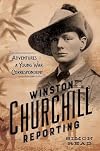
(Reprinted from the Chicago Center for Literature and Photography [cclapcenter.com]. I am the original author of this essay, as well as the owner of CCLaP; it is not being reprinted illegally.)
Most of us know Winston Churchill as the rotund, elderly leader of Great Britain during the tumultuous years of World War Two; but this remarkable man had a long and varied career before that, including being a war correspondent at the end of the Victorian Age who reported from such far-flung show more battlefields as Cuba, India, Egypt, Afghanistan and South Africa. As historian Simon Read points out in his new book Winston Churchill Reporting, there's never been a full-length book this entire time that's been devoted just to this part of Churchill's life alone; and that's too bad, because as Read's lively, action-packed account shows, the twenty-something Churchill led a life in the late 1800s worthy of an Indiana Jones adventure, getting into the kinds of scrapes and charging through the middle of the kinds of massive battles that would be scarcely believable if it all wasn't so heavily documented by multiple sources.
The son of an aristocrat, the young Churchill was actually in the British army himself in those years, although assigned to one of those largely ceremonial divisions like so many other members of the aristocracy were back then (his regiment was mostly only known for being international polo champions); but seeking fame, glory and adventure, he essentially (with the aid of his blue-blood mother) begged anyone who would listen to send him out where the actual action was, eventually realizing that he could put his writing skills from school to good use and become a free-floating war correspondent, able to be assigned willy-nilly to whatever British Empire hotspots happened to be seeing the most fighting on any given year, and happily joining in the fighting while there himself. This led Churchill through a whole series of adventures, not least of which was getting captured as a prisoner during the Second Boer War in South Africa, then actually escaping his POW camp by trekking across enemy territory for three days and eventually hiding in a mine, and somehow managing to telegraph updates on his own escape to the British newspapers in real time through the help of British sympathizers (a fact that blew me away when reading about it here), turning him instantly into a national celebrity back home and providing the kick that let him finally win his first election to public office, an event that he built and built upon until eventually becoming Prime Minister forty years later.
Read conveys it all through the unusual style of an action novel instead of the usual academic history book, a gutsy move that could've badly backfired on him; but in this case it works perfectly, in that there is just such an overwhelming amount of recorded evidence still around about Churchill's very personal thoughts and opinions about this period of his life, allowing Read to portray him like a swashbuckling hero with conflicted inner thoughts about warfare precisely because Churchill actually was a swashbuckling hero with conflicted inner thoughts about warfare. A lively and incredibly fast-paced book, this will be a revelation to people like me who only knew Churchill as the balding, stogie-chewing curmudgeon of 1940s fame, and it comes strongly recommended to the general public.
Out of 10: 9.5 show less
Most of us know Winston Churchill as the rotund, elderly leader of Great Britain during the tumultuous years of World War Two; but this remarkable man had a long and varied career before that, including being a war correspondent at the end of the Victorian Age who reported from such far-flung show more battlefields as Cuba, India, Egypt, Afghanistan and South Africa. As historian Simon Read points out in his new book Winston Churchill Reporting, there's never been a full-length book this entire time that's been devoted just to this part of Churchill's life alone; and that's too bad, because as Read's lively, action-packed account shows, the twenty-something Churchill led a life in the late 1800s worthy of an Indiana Jones adventure, getting into the kinds of scrapes and charging through the middle of the kinds of massive battles that would be scarcely believable if it all wasn't so heavily documented by multiple sources.
The son of an aristocrat, the young Churchill was actually in the British army himself in those years, although assigned to one of those largely ceremonial divisions like so many other members of the aristocracy were back then (his regiment was mostly only known for being international polo champions); but seeking fame, glory and adventure, he essentially (with the aid of his blue-blood mother) begged anyone who would listen to send him out where the actual action was, eventually realizing that he could put his writing skills from school to good use and become a free-floating war correspondent, able to be assigned willy-nilly to whatever British Empire hotspots happened to be seeing the most fighting on any given year, and happily joining in the fighting while there himself. This led Churchill through a whole series of adventures, not least of which was getting captured as a prisoner during the Second Boer War in South Africa, then actually escaping his POW camp by trekking across enemy territory for three days and eventually hiding in a mine, and somehow managing to telegraph updates on his own escape to the British newspapers in real time through the help of British sympathizers (a fact that blew me away when reading about it here), turning him instantly into a national celebrity back home and providing the kick that let him finally win his first election to public office, an event that he built and built upon until eventually becoming Prime Minister forty years later.
Read conveys it all through the unusual style of an action novel instead of the usual academic history book, a gutsy move that could've badly backfired on him; but in this case it works perfectly, in that there is just such an overwhelming amount of recorded evidence still around about Churchill's very personal thoughts and opinions about this period of his life, allowing Read to portray him like a swashbuckling hero with conflicted inner thoughts about warfare precisely because Churchill actually was a swashbuckling hero with conflicted inner thoughts about warfare. A lively and incredibly fast-paced book, this will be a revelation to people like me who only knew Churchill as the balding, stogie-chewing curmudgeon of 1940s fame, and it comes strongly recommended to the general public.
Out of 10: 9.5 show less

On the House tells the sad but undeniably funny story of The Murder Trust, a group of incompetent would-be criminals who hatch a plot to take out insurance on a third party and then kill him to collect the rewards. The time is 1933 and the setting is a low rent speakeasy owned by the Trust's 'mastermind' Anthony Marino. Their chosen victim is Michael Malloy, a vagrant alcholohlic who passes out on the floor of the speakeasy on a nightly basis. The gist of the book then deals with the Trust's show more attempts to secure an insurance policy and their multiple unsuccessful attempts to murder the seemingly invulnerable (and unaware) Michael Malloy.
True Crime is not the section of the bookstore I would normally look to for laughs, but I have to say that I chuckled and laughed out loud during several sections of the book. The members of the Trust have no business being criminals. Even the simplest parts of their plan wind up becoming overly complicated, important details would be entrusted to shady characters and schemes would fall apart at regular intervals.
I have to give credit to Simon Read though. While the book is very funny, he also manages to constantly remind you that Michael Malloy was a very real person. Someone who thought of the members of the Trust as his only real friends in the world. He manages to take a low rent, alchoholic cipher of a person (about whom so little is known that he is never able to be connected to any sort of family) and turn him into a sort of tragic character.
I don't read much true crime, but I thought enough of this book to pick up his next one: In the Dark: The True Story of the Blackout Ripper.
I think On the House would make an excellent Coen Brothers movie. If you like quirky crime stories or stories dealing with simple plans gone awry, I'd recommend this book. show less
True Crime is not the section of the bookstore I would normally look to for laughs, but I have to say that I chuckled and laughed out loud during several sections of the book. The members of the Trust have no business being criminals. Even the simplest parts of their plan wind up becoming overly complicated, important details would be entrusted to shady characters and schemes would fall apart at regular intervals.
I have to give credit to Simon Read though. While the book is very funny, he also manages to constantly remind you that Michael Malloy was a very real person. Someone who thought of the members of the Trust as his only real friends in the world. He manages to take a low rent, alchoholic cipher of a person (about whom so little is known that he is never able to be connected to any sort of family) and turn him into a sort of tragic character.
I don't read much true crime, but I thought enough of this book to pick up his next one: In the Dark: The True Story of the Blackout Ripper.
I think On the House would make an excellent Coen Brothers movie. If you like quirky crime stories or stories dealing with simple plans gone awry, I'd recommend this book. show less
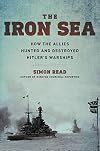
A good job of bringing life to these ultimately sad stories of lives cut short in WWII. I read this during Putins invasion of the Ukraine. Scary similarities to Hitlers strategy of pushing for whatever he could get while the world watched and fretted and delayed getting involved. After all, sane people are not interested in joining war and will do so only when out of alternatives.
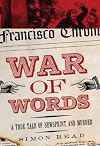
Foreshadowing is a hack writing trick, and this author used it at every turn. I found this distracting and annoying. Aside from this unfortunate writing style I enjoyed the book, especially when things heat up and the guns come out.
Lists
You May Also Like


Statistics
- Works
- 17
- Members
- 409
- Popularity
- #59,483
- Rating
- 3.5
- Reviews
- 13
- ISBNs
- 45
- Languages
- 1