
Paul Cornish
Author of Henry VIII's Army
About the Author
Paul Cornish was, for 32 years, curator of firearms at Imperial War Museums. Additionally, he was Senior Curator on the regeneration projects that created new First and Second World War Galleries for IWM London. He contributed to the related publications, writing The First World War Retold and show more co-authoring Total War. His chief research interest is the material culture of conflict and he has co-edited and contributed to a number of academic publications on this subject. show less
Works by Paul Cornish
Associated Works
Tagged
Common Knowledge
- Gender
- male
- Nationality
- United Kingdom
- Associated Place (for map)
- United Kingdom
Members
Reviews
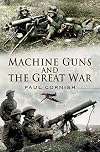
This is a very good book if you are interested in the subject. Aside from the expected presentation of the development of machine guns and some descriptions, there is also discussion of doctrine, procurement and usage during the war. I had some knowledge about WW1 and machine guns, but I was surprised to find that they were used not just as direct fire weapon, but as the war progressed they were grouped en masse and used for barrage and in-direct fire as a sort of light artillery. Towards show more the end of the war they had indeed superseded the rifle as the basic element of infantry use during the last hundred days or so that saw a more mobile conflict. Highly Recommended show less
IWM First World War Galleries book
Not a guide to the galleries as I had first thought but a general book on WW1 illustrated with items from the IWM collections.
One sentence devoted to Mons and Le Cateau and not much more to First Ypres.
Some interesting facts. Good, concise description of tools and techniques and weapons of war, which are set in the context of phases of the war or major Battles - eg deadlock in 1915 - trench mortars, steel helmets, grenades; Loos - gas warfare. Missed show more opportunity to talk about the Lee Enfield and 18pdr in the context of the retreat from Mons/Néry gun. Good, telling use of short quotations embedded in the text, supporting and driving the narrative.
Elements grouped around The Somme and Third Ypres are interesting and capture the effects of changing equipments and tactics clearly and concisely, although the section on the Somme appears to fall back too much on the old "total failure" orthodoxy. Similar with the handling of 'Operation Michael' - also fails to mention contextually the fact that Gough's understrength 5th Army was overextended as a result of Lloyd-George's decision to refuse more manpower to the Western Front whilst simultaneously agreeing to extend the British portion of the front. Interesting fact about the number of shells fired in the German opening bombardment exceeding the British artillery preparation for the week to 1 July 1916.
Good on the global and interlinked nature of WW1 and the grand strategic sweep.
Would have benefitted from more pictures of objects from the museum's collections. show less
Not a guide to the galleries as I had first thought but a general book on WW1 illustrated with items from the IWM collections.
One sentence devoted to Mons and Le Cateau and not much more to First Ypres.
Some interesting facts. Good, concise description of tools and techniques and weapons of war, which are set in the context of phases of the war or major Battles - eg deadlock in 1915 - trench mortars, steel helmets, grenades; Loos - gas warfare. Missed show more opportunity to talk about the Lee Enfield and 18pdr in the context of the retreat from Mons/Néry gun. Good, telling use of short quotations embedded in the text, supporting and driving the narrative.
Elements grouped around The Somme and Third Ypres are interesting and capture the effects of changing equipments and tactics clearly and concisely, although the section on the Somme appears to fall back too much on the old "total failure" orthodoxy. Similar with the handling of 'Operation Michael' - also fails to mention contextually the fact that Gough's understrength 5th Army was overextended as a result of Lloyd-George's decision to refuse more manpower to the Western Front whilst simultaneously agreeing to extend the British portion of the front. Interesting fact about the number of shells fired in the German opening bombardment exceeding the British artillery preparation for the week to 1 July 1916.
Good on the global and interlinked nature of WW1 and the grand strategic sweep.
Would have benefitted from more pictures of objects from the museum's collections. show less
Well illustrated and well-written catalogue to accompany the new WW1 Galleries at the Imperial War Museum, marking the centenary of the outbreak of that sprawling, devastating, game-changing conflict. A dispassionate tone enabled by our detachment from what is now long-off distant history.
You May Also Like


Associated Authors
Statistics
- Works
- 16
- Also by
- 3
- Members
- 224
- Popularity
- #100,171
- Rating
- 3.6
- Reviews
- 3
- ISBNs
- 35