
Melanie Rehak
Author of Girl Sleuth: Nancy Drew and the Women Who Created Her
About the Author
Melanie Rehak's Girl Sleuth: Nancy Drew and the Women Who Created Her earned her both Edgar and Agatha awards. She has written for the New York Times Magazine, Vogue, Real Simple, and others; her column on food books appears in Bookforum.
Image credit: photo by Noah Isenberg
Works by Melanie Rehak
Eating for Beginners: An Education in the Pleasures of Food from Chefs, Farmers, and One Picky Kid (2010) 59 copies, 3 reviews
Girl Sleuth: Nancy Drew 1 copy
Tagged
Common Knowledge
- Birthdate
- unknown
- Gender
- female
- Agent
- United Talent Agency
- Nationality
- USA
- Places of residence
- Brooklyn, New York, New York, USA
- Associated Place (for map)
- New York, USA
Members
Reviews
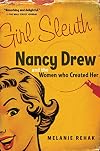
I didn’t really intend to read two non-fiction books about fictional crime back-to-back, but as it turned out I did. Like most women these days and for the last 85 years, I grew up with Nancy Drew. I had my own books, but also read my mom’s. It’s one of those mother-daughter things that can really make a relationship close, especially when it comes to reading, something my mother taught me early to love. For a while there, the best part of going to the library was getting another Nancy show more Drew...or three. And yard sales, too, great places to find new books.
I can’t remember when I realized that Carolyn Keene wasn’t a real person, but a pseudonym, but I did already know and that’s what this book explores; the women who created and kept Nancy alive during hard times like the depression and the 60s and 70s when cultural change threatened to sink our titian-haired heroine. While both of the principal women involved (Mildred Wirt and Harriet Stratemeyer) ended their relationship with each other on somewhat bad terms, neither is vilified nor lionized in the book. Each brought her strength of character and personal vision to the mystique of Nancy Drew and it was fascinating to see who got the upper hand and for how long. I also enjoyed the chapters that talked about how and why the books got updated over the decades.
One thing that hasn’t been updated in the 85 years since Nancy made her debut is that while girls will readily read “boys books”, boys still won’t read “girls books”. Fully ½ of the human race still isn’t part of the human story, instead sidelined into “women’s fiction” or even worse, “chick lit”. Can you imagine J.K. Rowling would have been the same raging success she is had she chosen to use her full name on her books instead of initials? Or if her main character was Hermione instead of Harry? That glaring fact is the very reason the Nancy Drew books exist. That a white man woke up to the fact that girls were reading “boys books” and gee, couldn’t we make some money off them. Sadly, Nancy lost a lot of her independence and smarts and the modern novels are about boys, clothes and the latest styles.
Producing these and many other titles including The Hardy Boys was complex (it’s run by a big eastern syndicate you know) and it was fascinating to see how a book went from concept to manuscript to bound edition. Also the struggles each woman had in making her way in the worlds of publishing and journalism. Harriet Stratemeyer inherited (along with her sister, Edna) her father Edward’s syndicate that produced dozens of children's’ serial books. A woman running a large and successful business is still somewhat of an anomaly today, but in 1930 it was unheard of. Despite some bad decisions made from sheer inexperience, Harriet is successful and fights off the urge to get mad at the people who write to her and her sister as “Gentlemen”.
While the sisters sometimes disagreed about continuing to use the principal writer for the Nancy Drew series, Mildred Wirt, they kept coming back to her until eventually Harriet herself took over writing the books (and much of the rest of the business since Edna basically walked away only communicating to criticize, accuse and collect her share of the profits). Mildred was an awesome person and how I would have liked to have met her. She had her share of heartache and trouble (burying 2 husbands), but never despaired and always kept writing (and flying, she became a pilot when she was something like 60, you go girl!). Harriet, too, is a woman to be admired and one I would also liked to have met if only to thank her for saving Nancy Drew from oblivion so that I could enjoy the books over and over again. show less
I can’t remember when I realized that Carolyn Keene wasn’t a real person, but a pseudonym, but I did already know and that’s what this book explores; the women who created and kept Nancy alive during hard times like the depression and the 60s and 70s when cultural change threatened to sink our titian-haired heroine. While both of the principal women involved (Mildred Wirt and Harriet Stratemeyer) ended their relationship with each other on somewhat bad terms, neither is vilified nor lionized in the book. Each brought her strength of character and personal vision to the mystique of Nancy Drew and it was fascinating to see who got the upper hand and for how long. I also enjoyed the chapters that talked about how and why the books got updated over the decades.
One thing that hasn’t been updated in the 85 years since Nancy made her debut is that while girls will readily read “boys books”, boys still won’t read “girls books”. Fully ½ of the human race still isn’t part of the human story, instead sidelined into “women’s fiction” or even worse, “chick lit”. Can you imagine J.K. Rowling would have been the same raging success she is had she chosen to use her full name on her books instead of initials? Or if her main character was Hermione instead of Harry? That glaring fact is the very reason the Nancy Drew books exist. That a white man woke up to the fact that girls were reading “boys books” and gee, couldn’t we make some money off them. Sadly, Nancy lost a lot of her independence and smarts and the modern novels are about boys, clothes and the latest styles.
Producing these and many other titles including The Hardy Boys was complex (it’s run by a big eastern syndicate you know) and it was fascinating to see how a book went from concept to manuscript to bound edition. Also the struggles each woman had in making her way in the worlds of publishing and journalism. Harriet Stratemeyer inherited (along with her sister, Edna) her father Edward’s syndicate that produced dozens of children's’ serial books. A woman running a large and successful business is still somewhat of an anomaly today, but in 1930 it was unheard of. Despite some bad decisions made from sheer inexperience, Harriet is successful and fights off the urge to get mad at the people who write to her and her sister as “Gentlemen”.
While the sisters sometimes disagreed about continuing to use the principal writer for the Nancy Drew series, Mildred Wirt, they kept coming back to her until eventually Harriet herself took over writing the books (and much of the rest of the business since Edna basically walked away only communicating to criticize, accuse and collect her share of the profits). Mildred was an awesome person and how I would have liked to have met her. She had her share of heartache and trouble (burying 2 husbands), but never despaired and always kept writing (and flying, she became a pilot when she was something like 60, you go girl!). Harriet, too, is a woman to be admired and one I would also liked to have met if only to thank her for saving Nancy Drew from oblivion so that I could enjoy the books over and over again. show less
Ok...first some Nancy Drew fan-girling....then my review of this book.
When I saw this book in my local library, I snapped it right up! Although Trixie Belden is my girl detective of choice ever since my teenage years in the 80's, I also enjoyed Nancy Drew. There's just something about a teenage girl sleuth that draws a young girl in to these books. Back in the day, I had the entire Trixie Belden series in paperback, and dutifully traveled to Waldenbooks in the city to pick up the last two show more books, published in 1986. I remember being so excited that there were new Trixie stories that I actually waited to read them. I had to build up some courage to read the final books. I knew when I finished those last books that it was over....no more Trixie. I still do that sometimes when I'm on the last book of a good series! It's hard to say goodbye to characters when a series is ending.
Trixie and Nancy Drew really started my love of books. Those were the books I CHOSE to read, rather than the books I HAD to read for school. Being forced to read a book just takes a bit of the enjoyment out of it. Laying across your bed with the cat completely engrossed in a story til your Mom yells at you that you're holding up dinner.....then getting lectured for bringing a book to the table....that's enjoying a book! You never would have caught me getting in trouble for bringing The Red Badge of Courage to the dinner table. The exciting adventures of girl amateur sleuths were worth inciting The Wrath of Mom. Classic force-reads...not so much. I babysat my horrendous (he was so naughty and spoiled!) nephew in the summer to earn money to spend on Trixie books. A new $1.25 non-creased, new-book-smell paperback was worth all the whining, coloring on the walls and temper tantrums in the world to me. My whole bookshelf was filled with lovely 80's version tan cover much beloved Trixie paperbacks (that shows how many times I had to babysit that nightmare nephew!). But on the very top....held up with mismatched bookends (one side was a big piece of petrified wood and the other was the piggy bank my dad gave me for my birthday when I was 8. Being between those two prized items (which I still have displayed on my bookshelves even now) was a supreme place of honor!) was a partial row of bright yellow spines (and some blue, too). Nancy Drew! And another series published by the same people -- Hardy Boys!
Now that I have explained how much I loved these books....I can get to my book review. I'm getting there! I'm getting there!
I homed in on this book sitting atop my local library's shelf on display like Trixie jumping on a clue. Gleepers! It's a book about Nancy Drew! It might contain clues about who wrote the books! Egads! :) I was probably one of the only readers who didn't realize Carolyn Keene was a pseudonym used by ghostwriters to churn out this series. In my defense, I was young, naive and didn't realize publishers required some authors to sign away their rights to their work upon payment. Contract work exists to this day. When a paying job comes up, you take it...right? I read a lot of cozy mystery series (probably stemming from my early love of these girl sleuth novels) and cozy authors often contract to write series using another name under contract to a publisher. I don't think it's ever as extreme as with these early series. To this day, I still have never read any information about which authors wrote the Trixie Belden books! I wish I knew!! The in-house writers were all just lumped under the pen-name Kathryn Kenny (after book #6 when Julie Campbell ducked out). It gets complicated! And is still complicated!!!
OK.....Yes, I am finally getting to Melanie Rehak's book. I brought Girl Sleuths home from the library, finished the two books I was reading at the time, and delved into the world of Nancy Drew and early twentieth century syndicate publishing.
Alas, some mysteries are better off left unsolved.
I found this book disappointing. A bit of a let-down. I wanted to the depths of my heart to love, love, love this book --- I naively expected to read about female authors getting to ply their craft and creating this wonderful, beloved girl sleuth and feeling chuffed and fulfilled as each book was published. That couldn't have been further from the truth. In reality, Nancy Drew was created by an early publishing syndicate that churned out many other series aimed at youth. They used ghostwriters, requiring the authors to sign away all rights to their work and paying them a small lump sum for their work. None of the money made from Nancy Drew was ever seen by the woman who penned the first books from 1929-1953, Mildred Wirt. She was paid $125 per book (or less during the depression when the publisher decided the bad economy required them to pay less per book). Working from an outline provided by the publisher and subject to editing of any dialogue or story events that seemed un-ladylike, Wirt churned out many books for the syndicate over the years (not just Nancy Drew), but under her contract was forbidden to claim any of it as her writing or discuss her part in the process. The syndicate was sure that the authors who wrote their books just followed the outlines provided to them without really adding that much to the process.... Really???
Not only was I disappointed to find out the authors of some of my favorite books were victims of blatant publisher contractual mind-rape....but this book is written in a pretty dry format. The book focuses on the founder of the publishing syndicate, Edward Stratemeyer, and his daughter, Harriet, rather than the books, characters or writers of these stories. The book reads like a dissertation....just a spewing forth of facts and dates....rather than a story about the people or books they published. There is very little about creation of the characters or covers for the books, modernization of the books, or what is happening with the series now.....just a lot of mind-numbing facts about the publishing syndicate that kept women at their typewriters for decades with no recognition.....even telling lies about who actually wrote Nancy Drew and other children's series to keep the actual authors identities a secret. It was all a marketing trick.....the books were churned out according to formula outlines and published in such a way to prevent authors from being loved by their readers so that a publishing syndicate could rake in big bucks. What a load of shit.
I love the Nancy Drew books. I love Trixie Belden. But it appears the publishing world that created all of these stories is a mire of greed and just crappy behavior. I'm glad I know the identity of the woman who wrote most of the first Nancy Drew books. But I really couldn't care less about the publishing syndicate that took advantage of her, and others like her, for decades.
Gleepers! What a clue! I know who the crooks are! Egads!
What a let-down.
This book gets a 3 star rating from me.... it's well researched, but presented in a really dry, boring manner and just focuses too much on the Stratemeyers. Just a little bit more about the actual writing and editing process, the popularity of the series and other books based on this formula, how they developed new series, development of the characters over time, the decisions to edit the earlier books to modernize the characters, and where the series is going now would have been so interesting. But the book mostly dwells on the Stratemeyers, their publishing syndicate and its use of contracts to control the books, and their heavy-handed editing to maintain lady-like behavior and talk, etc. Ho, hum. It just ended up making me a mixture of angry and sad. show less
When I saw this book in my local library, I snapped it right up! Although Trixie Belden is my girl detective of choice ever since my teenage years in the 80's, I also enjoyed Nancy Drew. There's just something about a teenage girl sleuth that draws a young girl in to these books. Back in the day, I had the entire Trixie Belden series in paperback, and dutifully traveled to Waldenbooks in the city to pick up the last two show more books, published in 1986. I remember being so excited that there were new Trixie stories that I actually waited to read them. I had to build up some courage to read the final books. I knew when I finished those last books that it was over....no more Trixie. I still do that sometimes when I'm on the last book of a good series! It's hard to say goodbye to characters when a series is ending.
Trixie and Nancy Drew really started my love of books. Those were the books I CHOSE to read, rather than the books I HAD to read for school. Being forced to read a book just takes a bit of the enjoyment out of it. Laying across your bed with the cat completely engrossed in a story til your Mom yells at you that you're holding up dinner.....then getting lectured for bringing a book to the table....that's enjoying a book! You never would have caught me getting in trouble for bringing The Red Badge of Courage to the dinner table. The exciting adventures of girl amateur sleuths were worth inciting The Wrath of Mom. Classic force-reads...not so much. I babysat my horrendous (he was so naughty and spoiled!) nephew in the summer to earn money to spend on Trixie books. A new $1.25 non-creased, new-book-smell paperback was worth all the whining, coloring on the walls and temper tantrums in the world to me. My whole bookshelf was filled with lovely 80's version tan cover much beloved Trixie paperbacks (that shows how many times I had to babysit that nightmare nephew!). But on the very top....held up with mismatched bookends (one side was a big piece of petrified wood and the other was the piggy bank my dad gave me for my birthday when I was 8. Being between those two prized items (which I still have displayed on my bookshelves even now) was a supreme place of honor!) was a partial row of bright yellow spines (and some blue, too). Nancy Drew! And another series published by the same people -- Hardy Boys!
Now that I have explained how much I loved these books....I can get to my book review. I'm getting there! I'm getting there!
I homed in on this book sitting atop my local library's shelf on display like Trixie jumping on a clue. Gleepers! It's a book about Nancy Drew! It might contain clues about who wrote the books! Egads! :) I was probably one of the only readers who didn't realize Carolyn Keene was a pseudonym used by ghostwriters to churn out this series. In my defense, I was young, naive and didn't realize publishers required some authors to sign away their rights to their work upon payment. Contract work exists to this day. When a paying job comes up, you take it...right? I read a lot of cozy mystery series (probably stemming from my early love of these girl sleuth novels) and cozy authors often contract to write series using another name under contract to a publisher. I don't think it's ever as extreme as with these early series. To this day, I still have never read any information about which authors wrote the Trixie Belden books! I wish I knew!! The in-house writers were all just lumped under the pen-name Kathryn Kenny (after book #6 when Julie Campbell ducked out). It gets complicated! And is still complicated!!!
OK.....Yes, I am finally getting to Melanie Rehak's book. I brought Girl Sleuths home from the library, finished the two books I was reading at the time, and delved into the world of Nancy Drew and early twentieth century syndicate publishing.
Alas, some mysteries are better off left unsolved.
I found this book disappointing. A bit of a let-down. I wanted to the depths of my heart to love, love, love this book --- I naively expected to read about female authors getting to ply their craft and creating this wonderful, beloved girl sleuth and feeling chuffed and fulfilled as each book was published. That couldn't have been further from the truth. In reality, Nancy Drew was created by an early publishing syndicate that churned out many other series aimed at youth. They used ghostwriters, requiring the authors to sign away all rights to their work and paying them a small lump sum for their work. None of the money made from Nancy Drew was ever seen by the woman who penned the first books from 1929-1953, Mildred Wirt. She was paid $125 per book (or less during the depression when the publisher decided the bad economy required them to pay less per book). Working from an outline provided by the publisher and subject to editing of any dialogue or story events that seemed un-ladylike, Wirt churned out many books for the syndicate over the years (not just Nancy Drew), but under her contract was forbidden to claim any of it as her writing or discuss her part in the process. The syndicate was sure that the authors who wrote their books just followed the outlines provided to them without really adding that much to the process.... Really???
Not only was I disappointed to find out the authors of some of my favorite books were victims of blatant publisher contractual mind-rape....but this book is written in a pretty dry format. The book focuses on the founder of the publishing syndicate, Edward Stratemeyer, and his daughter, Harriet, rather than the books, characters or writers of these stories. The book reads like a dissertation....just a spewing forth of facts and dates....rather than a story about the people or books they published. There is very little about creation of the characters or covers for the books, modernization of the books, or what is happening with the series now.....just a lot of mind-numbing facts about the publishing syndicate that kept women at their typewriters for decades with no recognition.....even telling lies about who actually wrote Nancy Drew and other children's series to keep the actual authors identities a secret. It was all a marketing trick.....the books were churned out according to formula outlines and published in such a way to prevent authors from being loved by their readers so that a publishing syndicate could rake in big bucks. What a load of shit.
I love the Nancy Drew books. I love Trixie Belden. But it appears the publishing world that created all of these stories is a mire of greed and just crappy behavior. I'm glad I know the identity of the woman who wrote most of the first Nancy Drew books. But I really couldn't care less about the publishing syndicate that took advantage of her, and others like her, for decades.
Gleepers! What a clue! I know who the crooks are! Egads!
What a let-down.
This book gets a 3 star rating from me.... it's well researched, but presented in a really dry, boring manner and just focuses too much on the Stratemeyers. Just a little bit more about the actual writing and editing process, the popularity of the series and other books based on this formula, how they developed new series, development of the characters over time, the decisions to edit the earlier books to modernize the characters, and where the series is going now would have been so interesting. But the book mostly dwells on the Stratemeyers, their publishing syndicate and its use of contracts to control the books, and their heavy-handed editing to maintain lady-like behavior and talk, etc. Ho, hum. It just ended up making me a mixture of angry and sad. show less
It's very rare for me to read books knowing nothing about them, and even rarer for me to buy books I've never heard of. But I was walking home from taking my pediatrics boards (which I passed, by the way...) and I passed by a used bookstore. So I thought to myself: "I deserve to go poke around the bookstore. I just took a huge test." And then I saw this book, and the cover drew me in, so I, of course, decided that I deserved to buy a book, too. I'm really glad I did -- this book is show more excellent!
Did you think Carolyn Keene was a real person? I did -- I remember fighting with my mother about it when I was a kid. Maybe you're less naive than I and realized that even if Carolyn Keene was a person, she wasn't still writing the Nancy Drew books. But it turns out, that not only was Carolyn Keene never a real person, she, Laura Lee Hope, Franklin Dixon and dozens of others were all the figments of the imagination of the same man, Edward Stratemeyer.
This is the story of Edward Stratemeyer and the evolution of pulp fiction for children. Wonderfully, this is also the story of Edward's oldest daughter, Harriet, who took over his estate, as well as the story of Mildred Wirt, the main ghostwriter for the Nancy Drew books. Why is this such a wonderful happenstance? Because this always this book to also be the story of how two strong-willed independent women went to college and held down serious jobs long before that was acceptable. Rehak explores the state of education for women in the 1920's and follows the growth and turns of these two women and their relationship from their college years to their deaths in their 90's.
Rehak is talented no matter her scope -- her minute details are precise and fascinating, but she is not afraid to expand out to big concepts like feminism, literature for children, gendering of children's literature, etc. and she manages to maintain my interest at each level. show less
Did you think Carolyn Keene was a real person? I did -- I remember fighting with my mother about it when I was a kid. Maybe you're less naive than I and realized that even if Carolyn Keene was a person, she wasn't still writing the Nancy Drew books. But it turns out, that not only was Carolyn Keene never a real person, she, Laura Lee Hope, Franklin Dixon and dozens of others were all the figments of the imagination of the same man, Edward Stratemeyer.
This is the story of Edward Stratemeyer and the evolution of pulp fiction for children. Wonderfully, this is also the story of Edward's oldest daughter, Harriet, who took over his estate, as well as the story of Mildred Wirt, the main ghostwriter for the Nancy Drew books. Why is this such a wonderful happenstance? Because this always this book to also be the story of how two strong-willed independent women went to college and held down serious jobs long before that was acceptable. Rehak explores the state of education for women in the 1920's and follows the growth and turns of these two women and their relationship from their college years to their deaths in their 90's.
Rehak is talented no matter her scope -- her minute details are precise and fascinating, but she is not afraid to expand out to big concepts like feminism, literature for children, gendering of children's literature, etc. and she manages to maintain my interest at each level. show less
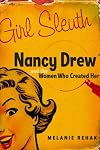
Rating: 4* of five
The Book Description: A plucky "titian-haired" sleuth solved her first mystery in 1930. Eighty million books later, Nancy Drew has survived the Depression, World War II, and the Sixties (when she was taken up with a vengeance by women's libbers) to enter the pantheon of American girlhood. As beloved by girls today as she was by their grandmothers, Nancy Drew has both inspired and reflected the changes in her readers' lives. Now, in a narrative with all the vivid energy and show more page-turning pace of Nancy's adventures, Melanie Rehak solves an enduring literary mystery:
Who created Nancy Drew? And how did she go from pulp heroine to icon?
The brainchild of children's book mogul Edward Stratemeyer, Nancy was brought to life by two women: Mildred Wirt Benson, a pioneering journalist from Iowa, and Harriet Stratemeyer Adams, a well-bred wife and mother who took over as CEO of the pioneering Stratemeyer Syndicate after her father died. In a century-spanning story Rehak traces their roles--and Nancy's--in forging the modern American woman. With ebullience, wit, and a wealth of little-known source material, Rehak celebrates our unstoppable girl detective.
My Review: When I was about nine, I went through a Hardy Boys phase. My mother, who went from buying Oldsmobile-priced cocktail dresses at Henri Bendel and Chevrolet-priced suits at Bonwit Teller to working three jobs to support us, never said no when it came to buying me a book. So I read my way through the catalog, and looked around for more. Mama somewhat diffidently pointed out the Nancy Drew books. I asked if she solved crimes. “Yes, and drives a blue roadster,” said the wily old girl, and I had another school year's reading at a quarter a book. (Used. We most often bought used...Mama said the words didn't wear out and who cared about the cover anyway?)
Ever after, I've had a “thing” for All-American boys and girls who just damn well do it for themselves. From such acorns....
Mystery-reading pleasure was a given. Mother and sister were big consumers of the genre. I got my own books, and they were not mysteries, but good heavens a boy can't survive on a book a week! I mean really! So I read their mysteries. I checked mysteries out of the liberry. I read all the Hardy Boys (always preferred Joe to Frank, Iola be hanged) and Nancy Drew (what a maroon Ned Nickerson was!) a couple times each. They lost their luster about the time I found good SF.
But do you ever forget that first kiss? I know I haven't. Nancy, Frank, and Joe...oh my how I treasured their orderly world. No one behaved badly (my narcissistic parents were astonishingly insensitive and ill-mannered in their divorcing) without consequences, and crimes were punished. I liked that a lot! And I still do.
Melanie Rehak apparently did, too. She set out to tell the story, public since the 1970s at least, of the origins of Nancy Drew, Girl Sleuth. All the ookie bleccchhhy part about families in conflict over Smothers-Brothers-y “dad always liked you best” and “I sit here with mom and you swan about” and so on; all the fish-out-of-water growing up of a major tomboy with a ginormous brain, in a rinky dink dink little wide spot in the road, leading to Iowa State and college degree in the 1920s; all the nasty mean greedy behind-the-scenes moneygrubbing everyone seems to have thought nothing of.
It's as good as a novel. It's as much fun as a Nancy Drew story to unravel. It's not perfect, but it's got a lot of story and it tells the story concisely, yet without leaving annoying holes or piling numbing crap all over the reader.
The focus is on Nancy, her “father” Edward Stratemeyer, her “mother” Midred Wirt, and wicked stepmother Harriet Stratemeyer Adams. That's enough for a 600pp doorstopper, let me assure you! Author Rehak got out her laser, finely cut and carefully etched the truly important bits from these three peoples' lives and then soldered and electroplated the whole thing into a lovely, solid bracelet shaped like Nancy Drew.
Even if you've never read one of these books, THIS book is a very good read, and an intriguing side window onto American culture in the mid-20th century. show less
The Book Description: A plucky "titian-haired" sleuth solved her first mystery in 1930. Eighty million books later, Nancy Drew has survived the Depression, World War II, and the Sixties (when she was taken up with a vengeance by women's libbers) to enter the pantheon of American girlhood. As beloved by girls today as she was by their grandmothers, Nancy Drew has both inspired and reflected the changes in her readers' lives. Now, in a narrative with all the vivid energy and show more page-turning pace of Nancy's adventures, Melanie Rehak solves an enduring literary mystery:
Who created Nancy Drew? And how did she go from pulp heroine to icon?
The brainchild of children's book mogul Edward Stratemeyer, Nancy was brought to life by two women: Mildred Wirt Benson, a pioneering journalist from Iowa, and Harriet Stratemeyer Adams, a well-bred wife and mother who took over as CEO of the pioneering Stratemeyer Syndicate after her father died. In a century-spanning story Rehak traces their roles--and Nancy's--in forging the modern American woman. With ebullience, wit, and a wealth of little-known source material, Rehak celebrates our unstoppable girl detective.
My Review: When I was about nine, I went through a Hardy Boys phase. My mother, who went from buying Oldsmobile-priced cocktail dresses at Henri Bendel and Chevrolet-priced suits at Bonwit Teller to working three jobs to support us, never said no when it came to buying me a book. So I read my way through the catalog, and looked around for more. Mama somewhat diffidently pointed out the Nancy Drew books. I asked if she solved crimes. “Yes, and drives a blue roadster,” said the wily old girl, and I had another school year's reading at a quarter a book. (Used. We most often bought used...Mama said the words didn't wear out and who cared about the cover anyway?)
Ever after, I've had a “thing” for All-American boys and girls who just damn well do it for themselves. From such acorns....
Mystery-reading pleasure was a given. Mother and sister were big consumers of the genre. I got my own books, and they were not mysteries, but good heavens a boy can't survive on a book a week! I mean really! So I read their mysteries. I checked mysteries out of the liberry. I read all the Hardy Boys (always preferred Joe to Frank, Iola be hanged) and Nancy Drew (what a maroon Ned Nickerson was!) a couple times each. They lost their luster about the time I found good SF.
But do you ever forget that first kiss? I know I haven't. Nancy, Frank, and Joe...oh my how I treasured their orderly world. No one behaved badly (my narcissistic parents were astonishingly insensitive and ill-mannered in their divorcing) without consequences, and crimes were punished. I liked that a lot! And I still do.
Melanie Rehak apparently did, too. She set out to tell the story, public since the 1970s at least, of the origins of Nancy Drew, Girl Sleuth. All the ookie bleccchhhy part about families in conflict over Smothers-Brothers-y “dad always liked you best” and “I sit here with mom and you swan about” and so on; all the fish-out-of-water growing up of a major tomboy with a ginormous brain, in a rinky dink dink little wide spot in the road, leading to Iowa State and college degree in the 1920s; all the nasty mean greedy behind-the-scenes moneygrubbing everyone seems to have thought nothing of.
It's as good as a novel. It's as much fun as a Nancy Drew story to unravel. It's not perfect, but it's got a lot of story and it tells the story concisely, yet without leaving annoying holes or piling numbing crap all over the reader.
The focus is on Nancy, her “father” Edward Stratemeyer, her “mother” Midred Wirt, and wicked stepmother Harriet Stratemeyer Adams. That's enough for a 600pp doorstopper, let me assure you! Author Rehak got out her laser, finely cut and carefully etched the truly important bits from these three peoples' lives and then soldered and electroplated the whole thing into a lovely, solid bracelet shaped like Nancy Drew.
Even if you've never read one of these books, THIS book is a very good read, and an intriguing side window onto American culture in the mid-20th century. show less
Lists
Awards


You May Also Like


Associated Authors
Statistics
- Works
- 3
- Members
- 1,071
- Popularity
- #24,021
- Rating
- 3.7
- Reviews
- 48
- ISBNs
- 15
- Languages
- 1