
Erastes
Author of Standish
About the Author
Works by Erastes
"Lifeline" 1 copy
Associated Works
Tagged
Common Knowledge
- Birthdate
- 19xx-10
- Gender
- female
- Organizations
- Erotic Authors' Association
- Short biography
- Lives in Norfolk with 2 ingrate cats. Reads gay romance and attempts to write it. Originally an Essex girl and keeps a pair of white stilletos to remind herself never to go back. Likes videogames but is not terribly good at them.
- Nationality
- England
UK - Places of residence
- Norfolk, England, UK
- Associated Place (for map)
- England, UK
Members
Reviews
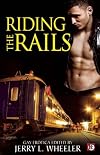
I think I need to start this with the table of content: Highland Sleeper by Jeff Mann, No Mincing Words by Rob Rosen, Elsewhen by ’Nathan Burgoine, Mount Olympus by Jeffrey Ricker, Reunion on the Rails by Hank Edwards, The Blue Train by Erastes, The Train Home by Rick R. Reed, Royal Service by Dale Chase, Resist Me, Please! By Daniel M. Jaffe, Engine of Repression by Gavin Atlas, One Night on the Twentieth Century by Jay Neal, Shadow Mapping by J.D. Barton, Geronimo’s Laughter by Joseph show more Baneth Allen, The Roundhouse Men by Dusty Taylor, The Last Train by William Holden. Why? Because aside for very few names I didn’t know about, this is a collection of la crème de la crème in Gay Fiction. All these authors are bestsellers on their own, and having them all together in one anthology is a treat that make me forget for a moment that anthologies are usually not my cup of tea. It’s also a compliment to the editor, Jerry L. Wheeler, because I think it hadn’t to be simple to put them all together, maintaining by the way the feeling of uniqueness of the collection, all the stories work together for the same target.
Like the majority of these anthologies, Riding the Rails falls into the Erotica category, but I was quite surprise to find out that indeed this is also a Romance collection; some of the stories in it are not even about sex ( see ’Nathan Burgoine’s one), and almost all of them are about love story with an happy ending. Sure there is a bittersweet aftertaste all along the anthology, something that, truth be told, I have always found when reading stories related to trains… there has to be some deep connection between the two things, or maybe the train itself is a metaphor for something you wish but cannot catch. In any case, aside for maybe one or two exceptions (Rick R. Reed and Jay Neal probably), the romance reader will have plenty of happily ever after to enjoy, some of them a little kinky (Jeff Mann), some of them sweet (’Nathan Burgoine) and some of them funny (Daniel M. Jaffe)… to everyone their own.
A collective compliment to all authors go for the high quality of the stories, more little novel than short stories; different in genre, from historical, to sci-fi, to steampunk, but all of them way more than the average you usually are expecting to find in a collection; here the authors sent their best production, not what they had laying around in a forgotten folder.
http://www.amazon.com/dp/1602825866/?tag=elimyrevandra-20 show less
Like the majority of these anthologies, Riding the Rails falls into the Erotica category, but I was quite surprise to find out that indeed this is also a Romance collection; some of the stories in it are not even about sex ( see ’Nathan Burgoine’s one), and almost all of them are about love story with an happy ending. Sure there is a bittersweet aftertaste all along the anthology, something that, truth be told, I have always found when reading stories related to trains… there has to be some deep connection between the two things, or maybe the train itself is a metaphor for something you wish but cannot catch. In any case, aside for maybe one or two exceptions (Rick R. Reed and Jay Neal probably), the romance reader will have plenty of happily ever after to enjoy, some of them a little kinky (Jeff Mann), some of them sweet (’Nathan Burgoine) and some of them funny (Daniel M. Jaffe)… to everyone their own.
A collective compliment to all authors go for the high quality of the stories, more little novel than short stories; different in genre, from historical, to sci-fi, to steampunk, but all of them way more than the average you usually are expecting to find in a collection; here the authors sent their best production, not what they had laying around in a forgotten folder.
http://www.amazon.com/dp/1602825866/?tag=elimyrevandra-20 show less

Erastes is truly gifted in bringing a historical setting to life. The novel overflowed with detailed description, but never felt bogged down by it. And the language was completely on the mark for the time period. Plus, the characters warmed me and the mystery intrigued me. It was not an in-your-face mystery with a dead body on the first page; it was built slowly with subtle clues and misdirection. Philip Smallwood has taken in three orphan teens as his wards, all in disgrace for being show more “inverted.” The three boys were not raised to privilege, so as they learn about what society expects, so does the reader. The author gave the story and the romance some unexpected twists, keeping readers guessing through most of the tale. There is some sex. It is, thankfully, not fade-to-black, but it is also not explicit. (Readers should note that there is also a scene of non-con that is directly tied into the mystery). The story has a refreshing unpredictability that is often missing in gay romance. The story is told by Crispin, the youngest of the three. As he adjusts to his new life as a young gentleman, he begins to feel that something is wrong and wonders just why Smallwood took them in.
This novel easily deserved five stars, but for one major issue. The ending was disappointing. It was unnecessarily rushed into 2-3 pages, and ruined all the carefully built dramatic tension. Not only was I left with unanswered questions, but it also completely shortchanged the romance. I felt a little cheated – this needed an epilogue. Overall though, I enjoyed it so much that I read it through in one day, and I would recommend it to fans of the genre. show less
This novel easily deserved five stars, but for one major issue. The ending was disappointing. It was unnecessarily rushed into 2-3 pages, and ruined all the carefully built dramatic tension. Not only was I left with unanswered questions, but it also completely shortchanged the romance. I felt a little cheated – this needed an epilogue. Overall though, I enjoyed it so much that I read it through in one day, and I would recommend it to fans of the genre. show less
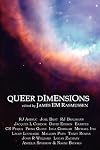
BOOK BLURB:
Visit the unexpected futures ... where queer flowers bloom on strange new worlds even when that world is our own ... Queer Dimensions presents queer futures in an exciting collection of 17 science fiction tales from both new and established authors.
BOOK REVIEW:
After the excellent Queer Wolves collection, I was really looking forward to this science fiction anthology, and Rasmussen and his authors did not disappoint!
The opening story, "The Night Hunters" by Jacques L. Condor, sets show more the bar high, with an endearingly concrete and real-feeling pair of grumpy old Alaskan hunters and some unwelcome visitors. The dialogue, the setting, the whole situation and conceit of the story had me hooked right from the first page, although there were a couple of slightly clunky gear changes (I believed them seeing aliens more than I did them talking about their feelings).
If I had to pick a single word to describe "The Man in the Mirror" by Lacey Louwagie, that word would be 'creepy.' Creepy, excellent, and unsettling. Digging into gender identity and the nature of love, this was really hard to read, but well worth it. Similarly, while being quite different in theme and setting, "The Sister Bush" by Joel Best is an eerie, suggestive, dystopic and disturbing tale.
As with any anthology, though, there were a few stories that didn't entirely delight me, although none that I thought were bad or didn't deserve a place here. "Eurydice" by James E.M. Rasmussen presents a rounded cast, fabulous world, and genuine conflict, but somehow, just didn't set me on fire, and "Plumbing the Depths" by A. Sparrow & N. Brooks never quite took off for me, although it's nicely plotted, and I was rooting for the relationship to flourish.
I must admit that "The Toti" by Michael Itig didn't gel for me at all, and "Off Course" by Logan Zachary struck me as pure 70s space cheese in both setting, tone, and body-types, which just isn't to my taste. The issue, though, is more one of taste than quality ~ it really is me not them! "Whatever the Risk" by Erastes is also quite a traditional sci-fi setting, but managed to hit more of my buttons, and offers a good, solid world, and a very engaging relationship.
"The Visitor" by Fiona Glass seemed to be trying to cram a lot ~ time travel, the engineering of social change, reverse-racism, all while setting up two eras of 'new earth' plus the relationship elements. The ideas were good, but the net effect was unfortunately rushed.
"Zoogarish" by John Randall Williams similarly seemed a bit cramped. Excellent idea, engaging characters (despite the 'new language' sci-fi tropes that are a little off-puttingly Trekish for me) but another one that just stopped ~ would be a great starter to a longer book, or as part of a series of pieces.
"Borrowed" by R.J. Bradshaw I thought was a good, solid, if very brief, story, and had a wonderful way of setting up a relationship!
"Here be Gardens" by David Edison is packed with beautiful language and interesting ideas, but I could not care for any of the characters, who are very distanced, and, well, they're just not that nice. Lines like, "If his heart could hold a razor she'd be smiling straight across her throat" though, kept me reading.
"The Communion Fields" by Trent Roman is built around a truly fascinating idea, delicately and deftly explored. Although both plot and style are quite different, it somehow reminded me of Scarlett Thomas's "The End of Mr. Y." The only black mark I could put against this story was that it felt more like the first chapter of an excellent novel than a fully complete short story.
"The Prettiest Girl in the Room" by Mallory Path is not immediately the kind of story that appeals to me, but the writing was flawless, and this tale of genetic mods, the sex trade, and gender identity grew on me as I read. The story's end is at once a surprise and entirely inevitable ~ beautifully done. To develop not just a pair of main characters but a whole engaging ensemble, along with a world quite different from our own, within a short story takes real craft, which Path clearly possesses in abundance.
"The Future of Dr. Lole San Paulo" by A.J. Astruc is pure brilliance and also creepy as hell ~ genetic mutation and blackmail, and not diluted at all for a happy ending romance, which just made me enjoy it more. Fabulous stuff!
No emotional punches are pulled in "Time Now" by C.S. Fuqua either, which focuses around time travel and inevitability, friendship, love and suicide, and it is uncomfortable and scratchy, exactly as a story dealing with those issues should be.
There are a lot of great stories in this anthology, but I think "Stargazing" by Inga Gorslar was my favorite. It is not only lovely in every way, it's also one of my favorite types of sci-fi, where the science shapes the society, and we see that through the eyes of 'regular guys.' The two main characters ~ ex-military Jack, with his combat mods, and android Andy ~ may not on the surface look that 'regular' but they're delightfully solid, real feeling characters, and the trials they face just trying to make their way back on boring old earth makes its point without ever feeling labored or staged. Their difference is such a beautifully drawn part of them as whole people, and the sparse, taut, language is perfect for them.
The collection as a whole ranges from the strong to the brilliant, and comes highly recommended.
(Originally reviewed for Rainbow Reviews - http://www.rainbow-reviews.com/?p=1932)
Personal notes: Another really strong anthology - not all the stories were to my tastes, but a lot were, and the quality was high throughout. There are a couple of stories I've already been back to re-read, and, as with all good sci-fi, some ideas that will linger on in the back of my mind. show less
Visit the unexpected futures ... where queer flowers bloom on strange new worlds even when that world is our own ... Queer Dimensions presents queer futures in an exciting collection of 17 science fiction tales from both new and established authors.
BOOK REVIEW:
After the excellent Queer Wolves collection, I was really looking forward to this science fiction anthology, and Rasmussen and his authors did not disappoint!
The opening story, "The Night Hunters" by Jacques L. Condor, sets show more the bar high, with an endearingly concrete and real-feeling pair of grumpy old Alaskan hunters and some unwelcome visitors. The dialogue, the setting, the whole situation and conceit of the story had me hooked right from the first page, although there were a couple of slightly clunky gear changes (I believed them seeing aliens more than I did them talking about their feelings).
If I had to pick a single word to describe "The Man in the Mirror" by Lacey Louwagie, that word would be 'creepy.' Creepy, excellent, and unsettling. Digging into gender identity and the nature of love, this was really hard to read, but well worth it. Similarly, while being quite different in theme and setting, "The Sister Bush" by Joel Best is an eerie, suggestive, dystopic and disturbing tale.
As with any anthology, though, there were a few stories that didn't entirely delight me, although none that I thought were bad or didn't deserve a place here. "Eurydice" by James E.M. Rasmussen presents a rounded cast, fabulous world, and genuine conflict, but somehow, just didn't set me on fire, and "Plumbing the Depths" by A. Sparrow & N. Brooks never quite took off for me, although it's nicely plotted, and I was rooting for the relationship to flourish.
I must admit that "The Toti" by Michael Itig didn't gel for me at all, and "Off Course" by Logan Zachary struck me as pure 70s space cheese in both setting, tone, and body-types, which just isn't to my taste. The issue, though, is more one of taste than quality ~ it really is me not them! "Whatever the Risk" by Erastes is also quite a traditional sci-fi setting, but managed to hit more of my buttons, and offers a good, solid world, and a very engaging relationship.
"The Visitor" by Fiona Glass seemed to be trying to cram a lot ~ time travel, the engineering of social change, reverse-racism, all while setting up two eras of 'new earth' plus the relationship elements. The ideas were good, but the net effect was unfortunately rushed.
"Zoogarish" by John Randall Williams similarly seemed a bit cramped. Excellent idea, engaging characters (despite the 'new language' sci-fi tropes that are a little off-puttingly Trekish for me) but another one that just stopped ~ would be a great starter to a longer book, or as part of a series of pieces.
"Borrowed" by R.J. Bradshaw I thought was a good, solid, if very brief, story, and had a wonderful way of setting up a relationship!
"Here be Gardens" by David Edison is packed with beautiful language and interesting ideas, but I could not care for any of the characters, who are very distanced, and, well, they're just not that nice. Lines like, "If his heart could hold a razor she'd be smiling straight across her throat" though, kept me reading.
"The Communion Fields" by Trent Roman is built around a truly fascinating idea, delicately and deftly explored. Although both plot and style are quite different, it somehow reminded me of Scarlett Thomas's "The End of Mr. Y." The only black mark I could put against this story was that it felt more like the first chapter of an excellent novel than a fully complete short story.
"The Prettiest Girl in the Room" by Mallory Path is not immediately the kind of story that appeals to me, but the writing was flawless, and this tale of genetic mods, the sex trade, and gender identity grew on me as I read. The story's end is at once a surprise and entirely inevitable ~ beautifully done. To develop not just a pair of main characters but a whole engaging ensemble, along with a world quite different from our own, within a short story takes real craft, which Path clearly possesses in abundance.
"The Future of Dr. Lole San Paulo" by A.J. Astruc is pure brilliance and also creepy as hell ~ genetic mutation and blackmail, and not diluted at all for a happy ending romance, which just made me enjoy it more. Fabulous stuff!
No emotional punches are pulled in "Time Now" by C.S. Fuqua either, which focuses around time travel and inevitability, friendship, love and suicide, and it is uncomfortable and scratchy, exactly as a story dealing with those issues should be.
There are a lot of great stories in this anthology, but I think "Stargazing" by Inga Gorslar was my favorite. It is not only lovely in every way, it's also one of my favorite types of sci-fi, where the science shapes the society, and we see that through the eyes of 'regular guys.' The two main characters ~ ex-military Jack, with his combat mods, and android Andy ~ may not on the surface look that 'regular' but they're delightfully solid, real feeling characters, and the trials they face just trying to make their way back on boring old earth makes its point without ever feeling labored or staged. Their difference is such a beautifully drawn part of them as whole people, and the sparse, taut, language is perfect for them.
The collection as a whole ranges from the strong to the brilliant, and comes highly recommended.
(Originally reviewed for Rainbow Reviews - http://www.rainbow-reviews.com/?p=1932)
Personal notes: Another really strong anthology - not all the stories were to my tastes, but a lot were, and the quality was high throughout. There are a couple of stories I've already been back to re-read, and, as with all good sci-fi, some ideas that will linger on in the back of my mind. show less
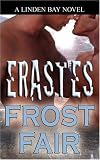
Erastes' third novel (second released but third written) may be short (about 40,000 words) but is certainly not lacking in content. Though I had never heard of them, the Frost Fairs on the Thames River were real-life events that occurred whenever the Thames River froze over, which was usually once every 10 to 20 years. 1814, this story’s setting, was the very last time the river froze. Frost Fair is the story of a struggling printer, Gideon Frost, who sets up business on the ice during the show more fair. Gideon is so far in debt that every so often he has to resort to prostitution in order to make ends meet. When an older, rich businessman, Joshua Redfern, commissions an engraving from him, Gideon is love-struck with the kind and timid man, but holds out little hope that he’d ever be so lucky as to be his lover. Redfern’s best friend, Finbar Thouless, figuring out that Redfern is indeed taken with pretty, young Gideon, then finds out about Gideon's occasional side-job, and having a taste for pretty boys himself, tries to blackmail Gideon into servicing him. Thouless is a wonderfully drawn villain; endowed with charm and charisma while at the same time being despicably vile. He is just as interesting as the main characters, if not more. The way he pulls the strings to manipulate the other characters is sheer genius. The settings are lovingly detailed–the cold, slippery, slimy streets of London; the battered storefronts; the ragged clothing of the poor working-class citizens, contrasted to the plush, elegant styles in the homes of Redfern and Thouless. It's all a feast for the senses and on top of that a well-paced story that moves right along and really has you hanging on in anticipation of the outcome. Needless to say, I'm a fan of Miss Erastes, and in my opinion, her stories just keep getting better show less
Lists
Awards


You May Also Like


Associated Authors
Statistics
- Works
- 15
- Also by
- 6
- Members
- 560
- Popularity
- #44,619
- Rating
- 3.6
- Reviews
- 39
- ISBNs
- 25
- Favorited
- 3
