
Alison McGhee
Author of Countdown to Kindergarten
About the Author
Alison McGhee lives in Minneapolis, Minnesota. She is the recipient of a Loft-McKnight Fellowship, a Minnesota State Arts Board Fellowship, a 1995 Editor's Fiction Prize from Snake nation, and a Pushcart Prize honorable mention. Her title Bink and Gollie, Two for One with Kate DiCamillo made The show more New York Times Best Seller List for 2012. (Publisher Provided) Alison McGhee was born on July 8, 1960 and attended Middlebury College in Vermont. Her first book, Rainlight, won the Great Lakes College Association National Fiction Award and the Minnesota Book Award in 1999. She writes books for all ages including picture books like Countdown to Kindergarten and Mrs. Watson Wants Your Teeth, young adult books like Snap and All Rivers Flow to the Sea, and adult books like Shadow Baby and Was It Beautiful?. Her other awards include four Minnesota Book Awards, the GLCA National Fiction Award, Friends of the American Library Award, Gold Oppenheimer Toy Portfolio Award, ALA Best Books for Children, and Parents' Choice Award, and a City Pages Artist of the Year award. She is currently an associate professor of creative writing at Metropolitan State University. (Bowker Author Biography) show less
Image credit: www.alisonmcghee.com
Series
Works by Alison McGhee
Cher grand frère 1 copy
Chère petite soeur 1 copy
Associated Works
Tagged
Common Knowledge
- Birthdate
- 1960
- Gender
- female
- Occupations
- author
- Agent
- Sara Crowe
- Places of residence
- Minneapolis, Minnesota, USA
- Associated Place (for map)
- Minnesota, USA
Members
Reviews
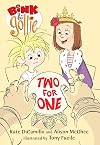
I am officially a Bink & Gollie addict. Two for One is simply hilarious. I love how it catches the guilelessness of children without being sappy. The humor is both subtle and over-the-top. The more sophisticated the reader, the funnier the book becomes. My favorite thing about Bink & Gollie are their sometimes slightly age inappropriate insightful conversations. Below Bink and Gollie are deciding on their last event at state fair.
"What's next" said Bink....
"Destiny," said Gollie.
"Destiny?" show more said Bink. "Is it a ride?"
"In a manner of speaking," said Gollie.
OMG! What 8 year old talks like that? I love it. show less
"What's next" said Bink....
"Destiny," said Gollie.
"Destiny?" show more said Bink. "Is it a ride?"
"In a manner of speaking," said Gollie.
OMG! What 8 year old talks like that? I love it. show less
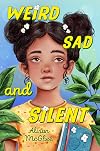
Daisy Johnson, dubbed "Weird Sad and Silent" by grade school bullies Sophie and Tad, "invisibilizes" herself at school, skating along on her friendship with the school custodian and the librarian. But when new kid Austin arrives and stands up to Sophie and Tad, he and Daisy become friends. They reveal some of their histories to each other - Daisy's mom's ex-boyfriend was violent; Austin lives with his parents because he can't live with his parents - and accept each other for who they are. show more Daisy relies on counting as a calming method; Austin draws pictures of Montana. Together, they "futurize": Daisy has a plan to earn the trust of local feral cat "Rumble Paws," and they think about making friends with some of the other "weird, sad, and silent" kids that Sophie and Tad pick on.
Quotes
Instead of visualizing, I've decided to call it futurizing. The future has not yet come. But I'm working on it. (3)
We're the ones who spend the whole school day trying to be quiet. Unnoticed. Only when school's over do we go back to our real lives where we can be ourselves. (63)
I don't like being observed. I like observing. (71)
I wish I was the kind of person who never ever got scared.
But maybe that kind of person doesn't exist. (88)
...being invisible isn't all bad. You can be the real you on the inside, and invisible on the outside except to the people who matter. (104)
Everyone deserves to feel safe, don't they? (139)
Before everything that happens to us and all the ways we change because of the things that happen to us, maybe there are other possible versions of ourselves. (161) show less
Quotes
Instead of visualizing, I've decided to call it futurizing. The future has not yet come. But I'm working on it. (3)
We're the ones who spend the whole school day trying to be quiet. Unnoticed. Only when school's over do we go back to our real lives where we can be ourselves. (63)
I don't like being observed. I like observing. (71)
I wish I was the kind of person who never ever got scared.
But maybe that kind of person doesn't exist. (88)
...being invisible isn't all bad. You can be the real you on the inside, and invisible on the outside except to the people who matter. (104)
Everyone deserves to feel safe, don't they? (139)
Before everything that happens to us and all the ways we change because of the things that happen to us, maybe there are other possible versions of ourselves. (161) show less
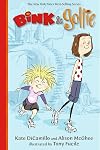
I absolutely loved Bink and Gollie. The author used dialogue to show the quircky personalities of the characters. For example, in the beginning of the book, Bink says, "Greetings Gollie!" Her blunt and over-dramatic manner of speaking help the reader get a better sense of her personality. I loved how the author juxtaposed Bink's little sister personality (always asking questions) with Gollie's big sister personality (imaginative, assertive, yet extremely sensitive). By the end of the book, I show more felt like I knew Bink and Gollie personally. They really leap off the page.
I also liked the structure of the book. Although the book was divided into chapters, the author chose to tell three semi-related short stories. The book was tied together through the recurring theme of the bonds of sisterhood and friendship. show less
I also liked the structure of the book. Although the book was divided into chapters, the author chose to tell three semi-related short stories. The book was tied together through the recurring theme of the bonds of sisterhood and friendship. show less

Beautiful but heart-breaking, this thoughtful examination of sisterly love and loss from co-authors Kathi Appelt and Alison McGhee follows the story of Jules, a young rock-hound whose deep bond with her elder sister Sylvie has been a mainstay in her life, since the death of their mother some time before. When Sylvie, whose 'burning wish' is always to run faster, falls into the Slip - the point at which the local river goes briefly underground - and is never seen again, Jules and her father show more must once again face the terrible grief of losing a family member. Trying to deal with her own guilt - why didn't she stop Sylvie that day, when she disobeyed their father's rules, and sprinted to the forbidden Slip? - Jules must also contend with her best friend Sam, whose elder brother Elk is newly returned from the war in Afghanistan, and her promise to find the 'Grotto,' a legendary local cave where grieving people have been reputed for generations to leave offerings of rocks for their lost loved ones. Parallel to Jules' story, is that of Senna, a young fox who is born one of the 'Kennen' - special animals with a strong bond to the spirits, who come into the world to accomplish some specific purpose, usually involving a human being. As Jules and Senna's paths converge, tragedy and transcendence is not far behind, and the reader learns the significance of Sylvie's burning wish, and just who Senna is...
I finished Maybe a Fox on the uptown A-train, with tears trickling down my face. As is usually the case when I am deeply moved, it took me some time to process my feelings, and to marshal my thoughts for a review. I was attracted to the story initially because of the fox character - the depiction of foxes in children's literature is one of my research areas - but found the humans every bit as compelling. The co-authors here capture the strength of a sister's devotion, and the depth of pain at a sister's loss. They also, through the story of Elk, offer a sensitive depiction of the trauma of returning home from war. I was intrigued (naturally) by the character of Senna, and the idea of the 'Kennen.' Kennan is, of course, the German verb 'to know,' something the authors must surely have been aware of, and Senna is a fox with a heightened sense of knowing - of connection to the natural world, whether that be the forest, the catamount (Sam's obsession) or the bear. She is also a fox with a special connection to one human - Jules - just as the catamount has a special connection to Elk. I had certain preconceptions about what that would turn out to mean - I assumed that Senna was meant to be a kind of guide, something that is becoming more common, in fox stories. Instead, she is a sort ofreincarnated form of Sylvie , and her self-sacrifice at the end of the book has a power and truth that I was not expecting.
A beautiful, beautiful book, Maybe a Fox is a book I will be pondering for some time. I would recommend it to fans of Appelt's other books - apparently some of its themes have also been explored in her previous titles - and to young readers interested in stories featuring family and close friend dynamics, and in the human connection to the natural world. show less
I finished Maybe a Fox on the uptown A-train, with tears trickling down my face. As is usually the case when I am deeply moved, it took me some time to process my feelings, and to marshal my thoughts for a review. I was attracted to the story initially because of the fox character - the depiction of foxes in children's literature is one of my research areas - but found the humans every bit as compelling. The co-authors here capture the strength of a sister's devotion, and the depth of pain at a sister's loss. They also, through the story of Elk, offer a sensitive depiction of the trauma of returning home from war. I was intrigued (naturally) by the character of Senna, and the idea of the 'Kennen.' Kennan is, of course, the German verb 'to know,' something the authors must surely have been aware of, and Senna is a fox with a heightened sense of knowing - of connection to the natural world, whether that be the forest, the catamount (Sam's obsession) or the bear. She is also a fox with a special connection to one human - Jules - just as the catamount has a special connection to Elk. I had certain preconceptions about what that would turn out to mean - I assumed that Senna was meant to be a kind of guide, something that is becoming more common, in fox stories. Instead, she is a sort of
A beautiful, beautiful book, Maybe a Fox is a book I will be pondering for some time. I would recommend it to fans of Appelt's other books - apparently some of its themes have also been explored in her previous titles - and to young readers interested in stories featuring family and close friend dynamics, and in the human connection to the natural world. show less
Lists
Back to School (1)
Awards


You May Also Like


Associated Authors
Statistics
- Works
- 51
- Also by
- 2
- Members
- 8,889
- Popularity
- #2,700
- Rating
- 3.9
- Reviews
- 363
- ISBNs
- 374
- Languages
- 13
- Favorited
- 2