
Bill Griffith
Author of Zippy Stories
About the Author
Image credit: Bill Griffith, 25 March 2012 [source: Karen Green via Wikipedia]
Series
Works by Bill Griffith
Three Rocks: The Story of Ernie Bushmiller: The Man Who Created Nancy (2023) — Author — 60 copies, 2 reviews
Invisible Ink: My Mother's Secret Love Affair With A Famous Cartoonist – A Graphic Memoir (2015) — Author — 54 copies, 3 reviews
The Zippy Annual : A Millennial Melange of Microcephalic Malapropisms & Metaphysical Muzak (2000) 28 copies
Photographic Memory: William Henry Jackson and the American West (2025) — Author — 11 copies, 1 review
Griffith observatory: The classic strips from 1977-1980 : with 16 previously uncollected pages (1993) 5 copies
Zippy Quarterly #10 : A Quarterly Compilation of Sketching, Kvetching and Envelope Stretching (1995) 4 copies, 1 review
Zippy Quarterly #4 : A Quarterly Cluster of Conviction, Quizzification and Embedded Sex Grids (1993) 3 copies, 1 review
Zippy Quarterly #14: A quarterly Quota of Querulousness, Queasiness & Quantum Quixotism (featuring: Starhound Saga) (1996) 3 copies, 1 review
Zippy Quarterly #16 : A Quarterly Concentrate of Culinary Creations for the Comic Connoisseur! (1997) 3 copies
Zippy Quarterly #17: A Quarterly Catalog of Catharsis, Caterwauling and Cascading Crises (1997) 3 copies
Tales of Toad #3 2 copies
Zippy Quarterly #6: A quarterly kaleidoscope of Kooks, Kicks & Kinetic Confusion (The Comic Book with Clauditude, featur (1994) 2 copies, 1 review
The Young Lust Reader 2 copies
Tales of Toad #2 1 copy
Zippy Quarterly #13 1 copy
Alter Alter Almanacco 1984 Supplemento 13 California — Author — 1 copy
Zippy Annual 2005 1 copy
Zippy Stories #1 1 copy
Tales of Toad #2 1 copy
Young Lust No. 6 1 copy
Associated Works
An Anthology of Graphic Fiction, Cartoons, and True Stories (2000) — Contributor — 385 copies, 3 reviews
An Anthology of Graphic Fiction, Cartoons, and True Stories: v. 2 (2008) — Contributor — 169 copies, 2 reviews
The Apex Treasury of Underground Comics / The Best of Bijou Funnies (1981) — Contributor — 78 copies, 2 reviews
Strip AIDS U.S.A.: A Collection of Cartoon Art to Benefit People With AIDS (1988) — Contributor — 65 copies
The Best American Comics 2017 (The Best American Series ®) (2017) — Contributor — 57 copies, 2 reviews
Choices: A Pro-Choice Benefit Comic Anthology for the National Organization for Women (1990) — Contributor — 20 copies
Raw No. 4: The Graphix Magazine for Your Bomb Shelter's Coffee Table (1982) — Contributor — 13 copies
Bijou funnies, No. 8 — Illustrator, some editions — 1 copy
Funny Times: A Monthly Newspaper of Humor, Politics & Fun, Volume 16, Issue 3 (2001) — Contributor — 1 copy
Tagged
Common Knowledge
- Legal name
- Griffith, William Henry Jackson
- Birthdate
- 1944-01-20
- Gender
- male
- Occupations
- cartoonist
- Relationships
- Noomin, Diane (wife)
Jackson, Clarence S. (maternal grandfather)
Jackson, William Henry (great-grandfather) - Nationality
- USA
- Birthplace
- Brooklyn, New York, USA
- Places of residence
- Levittown, New York, USA
- Associated Place (for map)
- New York, USA
Members
Reviews
Photographic Memory: William Henry Jackson and the American West - A Graphic Biography by His Great-Grandson by Bill Griffith
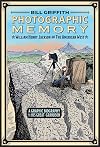
Bill Griffith takes a ramble through the life of his great-grandfather, William Henry Jackson, the man who took some of the earliest photographs of what would become the Yellowstone and Mesa Verde national parks.
With access to Jackson's autobiography, diaries, and letters, Griffith is able to provide an overload of information that is sometimes taxing but almost always engaging. He dramatizes the facts and crams in some of his own quirky interests, even if they were unlikely to have happened show more or outright did not, including a meeting with a certain sideshow performer, a pioneering comic strip cartoonist, and a smarter-than-the-average bear.
In the midst of his love-fest for his famous forebear, Griffith does take a few pages to ponder how Jackson's work may have contributed to the marginalization of Native Americans and to spreading imperialistic propaganda of the superiority of Western civilization.
Jackson led a long and interesting life, and Griffith's enthusiasm for digging into his family history is infectious. This makes for an interesting bookend with Griffith's other autobiographical work, Invisible Ink: My Mother's Secret Love Affair With A Famous Cartoonist – A Graphic Memoir, with several family members appearing in both.
(Best of 2025 Project: I'm reading all the graphic novels that made it onto one or more of these lists:
• Washington Post 10 Best Graphic Novels of 2025
• Publishers Weekly 2025 Graphic Novel Critics Poll
• NPR's Books We Love 2025: Favorite Comics and Graphic Novels
This book made the NPR list.)
FOR REFERENCE:
Contents: Prologue -- Early Days -- Go West -- The First People -- On Assignment -- Yellowstone -- Emilie -- Mesa Verde -- Back in Business -- Family Man -- Have Camera, Will Travel -- The Father of the American Picture Postcard -- Over the Range -- Epilogue -- Sources -- Notes -- Photographs by William Henry Jackson show less
With access to Jackson's autobiography, diaries, and letters, Griffith is able to provide an overload of information that is sometimes taxing but almost always engaging. He dramatizes the facts and crams in some of his own quirky interests, even if they were unlikely to have happened show more or outright did not, including a meeting with a certain sideshow performer, a pioneering comic strip cartoonist, and a smarter-than-the-average bear.
In the midst of his love-fest for his famous forebear, Griffith does take a few pages to ponder how Jackson's work may have contributed to the marginalization of Native Americans and to spreading imperialistic propaganda of the superiority of Western civilization.
Jackson led a long and interesting life, and Griffith's enthusiasm for digging into his family history is infectious. This makes for an interesting bookend with Griffith's other autobiographical work, Invisible Ink: My Mother's Secret Love Affair With A Famous Cartoonist – A Graphic Memoir, with several family members appearing in both.
(Best of 2025 Project: I'm reading all the graphic novels that made it onto one or more of these lists:
• Washington Post 10 Best Graphic Novels of 2025
• Publishers Weekly 2025 Graphic Novel Critics Poll
• NPR's Books We Love 2025: Favorite Comics and Graphic Novels
This book made the NPR list.)
FOR REFERENCE:
Contents: Prologue -- Early Days -- Go West -- The First People -- On Assignment -- Yellowstone -- Emilie -- Mesa Verde -- Back in Business -- Family Man -- Have Camera, Will Travel -- The Father of the American Picture Postcard -- Over the Range -- Epilogue -- Sources -- Notes -- Photographs by William Henry Jackson show less
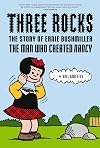
A unique look into the life of a unique cartoonist by another unique cartoonist. Griffith is a great spokesperson for the “Cult of Nancy,” explaining why so many eggheads praise the long-running comic strip.
Personally I appreciate Bushmiller’s work more than enjoy it but this book still “rocks!”
Personally I appreciate Bushmiller’s work more than enjoy it but this book still “rocks!”
A most fitting biography of cartoonist Ernie Bushmiller told in graphic novel form by a passionate fan who supplements his insights into Bushmiller's life and significance with generous portions of Bushmiller's original Nancy comic strips.
I might have preferred a smidge more history and analysis perhaps, as opposed to the many digressions and indulgences Bill Griffith allows himself, but it's all in service to his love of the material, so it's hard to complain.
I'm not a big fan of Nancy Ritz show more myself, but find her easy enough to enjoy in small doses. And as the many samples of Bushmiller's work show, the man would go to some bizarre lengths to get a daily chuckle from his readers. Nancy is not really comparable to Peanuts as the book suggests at one point, but you gotta respect the workmanship and polish -- and that applies to the strip and this biography, both. show less
I might have preferred a smidge more history and analysis perhaps, as opposed to the many digressions and indulgences Bill Griffith allows himself, but it's all in service to his love of the material, so it's hard to complain.
I'm not a big fan of Nancy Ritz show more myself, but find her easy enough to enjoy in small doses. And as the many samples of Bushmiller's work show, the man would go to some bizarre lengths to get a daily chuckle from his readers. Nancy is not really comparable to Peanuts as the book suggests at one point, but you gotta respect the workmanship and polish -- and that applies to the strip and this biography, both. show less
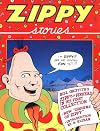
Zippy Stories
By Bill Griffith
Last Gasp (1986)
Review by Karl Wolff
The late journalist Hunter S. Thompson once said, "When the going gets weird, the weird turn pro." Among contemporary comics characters, none are weirder than Zippy the Pinhead. Zippy is the eponymous star of Bill Griffith's long-running newspaper comic. Wearing a polka dot muumuu, a bow tie in his head, and occasionally driving a Nash Metropolitan, Zippy cuts a bizarro profile across our otherwise ordinary lives. Created in show more 1971 by Griffith, Zippy first appeared in Real Pulp Comix #1 and then appeared regularly in The Berkeley Barb. The strip has been in weekly syndication since 1976 and has appeared daily through King Features since 1986.
Among the numerous Zippy the Pinhead collections, I would recommend Zippy Stories (Last Gasp, 1986), Are We Having Fun Yet? (Fantagraphics, 1994), and Zippy Annual No. 1 (Fantagraphics, 2000). Zippy Stories is a kind of "origin story" for Zippy. It includes a funny interview with Griffith. The comics alternate between long-form narratives that run multiple pages and the traditional three-panel comics. The material in the book runs from 1974 to 1986. Are We Having Fun Yet? is a reprint from 1985. Zippy attempts to relate to the '80s through dream sequences, parody, and self-help gurus. The Zippy Annuals collect a year's worth of strips and gags, including full-color Sunday comics.
For a strip that has run for close to four decades, Zippy the Pinhead tries to stay fresh and funny. In the 2014 documentary Stripped many cartoonists talked about the challenges of newspaper syndication. Getting syndicated is incredibly competitive and difficult, but once that goal is achieved, then the cartoonist has another set of challenges. How to be funny on a consistent basis. Once a cartoonist gets syndication, he or she won't have a day off for the next twenty years. And as the old cliche goes, "Drama is easy, comedy is hard." How does Griffith keep it fresh? One part of the answer is Zippy the Pinhead isn't your ordinary run-of-the-mill comic strip. Zippy combines a holy fool's naivete and innocence with the penchant to drop insightful one-liners. His is an American surrealism that simultaneously celebrates our fast food junk culture and pokes fun at it. To help Zippy navigate the treacherous path, Griffith has included numerous other characters, including Mr. Toad, Zippy's wife Zerbina, Zippy's kids Fuelrod and Meltdown, Griffy (the Bill Griffith stand-in), and Claude Funston, a hapless working stiff. While Griffith was inspired by famous freak show performer Zip the Pinhead, Zippy has become a cultural touchstone all his own.
The other aspect keeping the strip new and exciting is Griffith's mastery of parody. Zippy originally appeared in Griffith's true romance parody, "I Gave My Heart To A Pinhead and He Made A Fool Out Of Me." Over the years, Griffith has parodied other comics, famous artists, and subverted the comics medium itself. In a famous strip, Zippy simply shouts, "Tyvek! Tyvek! Tyvek!" over three panels. Griffith will go on riffs, making one strip after another with the same premise. Zippy will talk to roadside attractions for a week or two and then Zippy will be in a true romance magazine parody. The latest iteration, as of September 2015, is Zippy living in Dingburg, New Jersey, a wacky place full of hijinks and surrealism. But Dingburg is next to Prosaic, New Jersey, a place full of ordinary people who don't know what to make of Zippy's antics.
What makes Zippy the Pinhead fun to read is Griffith's anarchic blend of the highbrow and lowbrow aspects of American culture. He'll wax rhapsodic about diners, amusement parks, and roadside attractions, but then make his strip a parody of Cubism or Pop Art or Victorian lithographs. A common mistake is for critics of humorous things to explain the jokes. I'm not going to do that. Read the strips and decide for yourself. Since Zippy's default expressions are surrealistic non-sequiturs, an explanation would simply miss the point. Like The Far Side or Homestar Runner, you either "get it" or you don't. It's not a brand of humor ready-made for the masses based on focus group analysis and what's trending on Buzzfeed.
How is this American Odd? Do I really need to answer that?
http://www.cclapcenter.com/2015/09/american_odd_zippy_stories_by_.html show less
By Bill Griffith
Last Gasp (1986)
Review by Karl Wolff
The late journalist Hunter S. Thompson once said, "When the going gets weird, the weird turn pro." Among contemporary comics characters, none are weirder than Zippy the Pinhead. Zippy is the eponymous star of Bill Griffith's long-running newspaper comic. Wearing a polka dot muumuu, a bow tie in his head, and occasionally driving a Nash Metropolitan, Zippy cuts a bizarro profile across our otherwise ordinary lives. Created in show more 1971 by Griffith, Zippy first appeared in Real Pulp Comix #1 and then appeared regularly in The Berkeley Barb. The strip has been in weekly syndication since 1976 and has appeared daily through King Features since 1986.
Among the numerous Zippy the Pinhead collections, I would recommend Zippy Stories (Last Gasp, 1986), Are We Having Fun Yet? (Fantagraphics, 1994), and Zippy Annual No. 1 (Fantagraphics, 2000). Zippy Stories is a kind of "origin story" for Zippy. It includes a funny interview with Griffith. The comics alternate between long-form narratives that run multiple pages and the traditional three-panel comics. The material in the book runs from 1974 to 1986. Are We Having Fun Yet? is a reprint from 1985. Zippy attempts to relate to the '80s through dream sequences, parody, and self-help gurus. The Zippy Annuals collect a year's worth of strips and gags, including full-color Sunday comics.
For a strip that has run for close to four decades, Zippy the Pinhead tries to stay fresh and funny. In the 2014 documentary Stripped many cartoonists talked about the challenges of newspaper syndication. Getting syndicated is incredibly competitive and difficult, but once that goal is achieved, then the cartoonist has another set of challenges. How to be funny on a consistent basis. Once a cartoonist gets syndication, he or she won't have a day off for the next twenty years. And as the old cliche goes, "Drama is easy, comedy is hard." How does Griffith keep it fresh? One part of the answer is Zippy the Pinhead isn't your ordinary run-of-the-mill comic strip. Zippy combines a holy fool's naivete and innocence with the penchant to drop insightful one-liners. His is an American surrealism that simultaneously celebrates our fast food junk culture and pokes fun at it. To help Zippy navigate the treacherous path, Griffith has included numerous other characters, including Mr. Toad, Zippy's wife Zerbina, Zippy's kids Fuelrod and Meltdown, Griffy (the Bill Griffith stand-in), and Claude Funston, a hapless working stiff. While Griffith was inspired by famous freak show performer Zip the Pinhead, Zippy has become a cultural touchstone all his own.
The other aspect keeping the strip new and exciting is Griffith's mastery of parody. Zippy originally appeared in Griffith's true romance parody, "I Gave My Heart To A Pinhead and He Made A Fool Out Of Me." Over the years, Griffith has parodied other comics, famous artists, and subverted the comics medium itself. In a famous strip, Zippy simply shouts, "Tyvek! Tyvek! Tyvek!" over three panels. Griffith will go on riffs, making one strip after another with the same premise. Zippy will talk to roadside attractions for a week or two and then Zippy will be in a true romance magazine parody. The latest iteration, as of September 2015, is Zippy living in Dingburg, New Jersey, a wacky place full of hijinks and surrealism. But Dingburg is next to Prosaic, New Jersey, a place full of ordinary people who don't know what to make of Zippy's antics.
What makes Zippy the Pinhead fun to read is Griffith's anarchic blend of the highbrow and lowbrow aspects of American culture. He'll wax rhapsodic about diners, amusement parks, and roadside attractions, but then make his strip a parody of Cubism or Pop Art or Victorian lithographs. A common mistake is for critics of humorous things to explain the jokes. I'm not going to do that. Read the strips and decide for yourself. Since Zippy's default expressions are surrealistic non-sequiturs, an explanation would simply miss the point. Like The Far Side or Homestar Runner, you either "get it" or you don't. It's not a brand of humor ready-made for the masses based on focus group analysis and what's trending on Buzzfeed.
How is this American Odd? Do I really need to answer that?
http://www.cclapcenter.com/2015/09/american_odd_zippy_stories_by_.html show less
Lists
LAST GASP (4)
Awards


You May Also Like


Associated Authors
Statistics
- Works
- 73
- Also by
- 35
- Members
- 1,120
- Popularity
- #22,934
- Rating
- 3.8
- Reviews
- 30
- ISBNs
- 43
- Languages
- 2
- Favorited
- 3