
Art Spiegelman
Author of Maus I: My Father Bleeds History
About the Author
Art Spiegelman was born in Stockholm, Sweden on February 15, 1948. He is the son of Polish Jews who survived imprisonment in Auschwitz. His family immigrated to the United States. He became a professional cartoonist at the age of 16. He studied art and philosophy at Harpur College. He became a show more creative consultant, designer, and writer for Topps Chewing Gum, Inc., where he created Wacky Packages, Garbage Pail Kids and other novelty items. The Complete Mr. Infinity was published in 1970 and won the Joel M. Cavior Award for Jewish Writing. In 1980, Spiegelman and his wife, Françoise Mouly founded the avant-garde comics magazine RAW. His best known work Maus: A Survivor's Tale, was published in 1986 and won the Pulitzer Prize in 1992. His other works include Maus: A Survivor's Tale II, In the Shadow of No Towers, Breakdowns, Jack and the Box, Be a Nose, and The Ghosts of Ellis Island. MetaMaus won the 2011 National Jewish Book Award in the Biography, Autobiography, and Memoir category. (Bowker Author Biography) show less
Series
Works by Art Spiegelman
Raw Vol. 2, No. 1: Open Wounds from the Cutting Edge of Commix (1989) — Editor; Translator — 207 copies, 2 reviews
Raw Vol. 2, No. 2: Required Reading for the Post-Literate (1990) — Editor; Contributor; Translator — 153 copies
Raw No. 6: The Graphix Magazine That Overestimates the Taste of the American Public (1984) — Editor; Contributor; Translator — 14 copies
Raw No. 4: The Graphix Magazine for Your Bomb Shelter's Coffee Table (1982) — Editor; Contributor; Translator — 13 copies
Raw No. 3: The Graphix Magazine that Lost Its Faith in Nihilism (1981) — Editor; Translator; Contributor — 13 copies
Sleazy Scandals of the Silver Screen 3 copies
Prisoner on the Hell Planet 2 copies
Swift Premium Comics 2 copies
History of Commix 1 copy
Work and turn 1 copy
Comics 1 copy
Alter Alter Almanacco 1984 Supplemento 13 California — Author — 1 copy
Associated Works
The New York Trilogy (1985) — Cover artist, some editions; Cover artist, some editions — 10,824 copies, 174 reviews
Barefoot Gen: A Cartoon Story of Hiroshima, Volume 1 (1973) — Introduction, some editions — 976 copies, 34 reviews
Daemon Voices: On Stories and Storytelling (2017) — Illustrator, some editions — 732 copies, 9 reviews
An Anthology of Graphic Fiction, Cartoons, and True Stories (2000) — Contributor — 385 copies, 3 reviews
An Anthology of Graphic Fiction, Cartoons, and True Stories: v. 2 (2008) — Contributor — 169 copies, 2 reviews
Krazy! The Delirious World of Anime + Comics + Video Games + Art (2008) — Contributor, some editions — 93 copies, 2 reviews
The Apex Treasury of Underground Comics / The Best of Bijou Funnies (1981) — Contributor — 78 copies, 2 reviews
Nothing Makes You Free: Writings by Descendants of Jewish Holocaust Survivors (2002) — Contributor — 72 copies, 1 review
Gauntlet: Exploring the Limits of Free Expression, No. 2 - Stephen King Special (1991) — Contributor — 31 copies, 1 review
Forgotten Fantasy - Sunday Comics, 1900-1915: Visions from Lyonel Feininger, Winsor McCay and Many More (Giants of the American Comic Strip) (2011) — Contributor — 10 copies
Linus. Giugno 2018 (Linus 2018) — Author — 1 copy
Turned on cuties — Contributor — 1 copy
Tagged
Common Knowledge
- Canonical name
- Spiegelman, Art
- Legal name
- Spiegelman, Itzhak Avraham ben Zeev
- Birthdate
- 1948-02-15
- Gender
- male
- Education
- State University of New York, Binghamton
- Occupations
- editor
illustrator - Organizations
- RAW
Topps
The New Yorker - Awards and honors
- Grand Prix de la Ville d'Angoulême (2011)
National Book Foundation Medal for Distinguished Contribution to American Letters (2022)
American Academy of Arts and Letters (2015)
Pulitzer Prize (1992) - Relationships
- Mouly, Françoise (wife)
Spiegelman, Nadja (daughter) - Nationality
- USA
Poland
Sweden - Birthplace
- Stockholm, Sweden
- Places of residence
- New York, New York, USA
San Francisco, California, USA - Map Location
- USA
Members
Discussions
Spiegelman - Maus in Folio Society Devotees (October 2025)
Group Read: Maus by Art Spiegelman in Book talk (June 2022)
Site Read—Maus? in Talk about LibraryThing (February 2022)
AUGUST READ - SPOILERS - The Complete Maus in The Green Dragon (August 2013)
Reviews

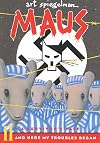
I'm glad to have discovered this story of the Jewish tragedy, based on the artist's recording of his own father's experience. From a distance I didn't know what to make of the swastika cover and cartoon mice; was someone trying to score a quick buck with a macabre comic? Quite the opposite, this is a heralded Pulitzer Prize winning classic among graphic novels. When I sought to borrow it from the library, I discovered it was filed in the non-fiction section. That is indicative of how show more seriously it takes its subject matter, never mind that it features anthropomorphized mice, cats and pigs.
Why animals? Transforming the human characters into animals tips the emphasis from "this happened to Jewish people" toward "this happened to Jewish people." It highlights the very quality the Nazis wished to deny them. Pigs for the Polish seems like an ill-selected choice, but they are unmistakably preferable to the Nazi cats. The distinguishing of one race versus another by animal type is of course meant to be silly, and a commentary itself on the ridiculousness of racism.
The number of times Vladek and his wife escaped death is truly incredible. It's transparent that only the lucky and quick-thinking survived the ordeal of the Holocaust, when so many arbitrary events arose to kill those around them. Painfully few people could be trusted, and virtually all assistance had to be purchased with quickly diminishing funds. This is only the first half of the story, and I'm glad to have the second half ready at hand. show less
Why animals? Transforming the human characters into animals tips the emphasis from "this happened to Jewish people" toward "this happened to Jewish people." It highlights the very quality the Nazis wished to deny them. Pigs for the Polish seems like an ill-selected choice, but they are unmistakably preferable to the Nazi cats. The distinguishing of one race versus another by animal type is of course meant to be silly, and a commentary itself on the ridiculousness of racism.
The number of times Vladek and his wife escaped death is truly incredible. It's transparent that only the lucky and quick-thinking survived the ordeal of the Holocaust, when so many arbitrary events arose to kill those around them. Painfully few people could be trusted, and virtually all assistance had to be purchased with quickly diminishing funds. This is only the first half of the story, and I'm glad to have the second half ready at hand. show less
Rating: Powerfully Moving
Maus is the story of the author / graphic artist and his fraught relationship with his elderly father. It is also the story of his father’s experience growing up in Poland and surviving the horrors of the holocaust.
The reader experiences the harrowing and miraculous life of Art’s father through powerful imagery and metaphor, with the Jews drawn as mice and the Nazis as cats.
It’s a story of history that cannot and should never be forgotten, ESPECIALLY in show more today’s global political landscape. Everyone should make time to pick up this extremely powerful and moving story so that we may learn from the past and remind ourselves to condemn the widespread hate, racism, and bigotry that led to the deaths of millions of innocent people. We cannot let that happen again, but we are seeing the horrors that letting those sentiments fester in modern society can produce.
It’s not an easy read, and there are parts I definitely recommend reading with an adult beverage in hand. But it is a story about the miracle of human ingenuity and the power of hope in the face of unthinkable evil.
Go pick up a copy and read it for yourself.
Part 2 of 2 show less
Maus is the story of the author / graphic artist and his fraught relationship with his elderly father. It is also the story of his father’s experience growing up in Poland and surviving the horrors of the holocaust.
The reader experiences the harrowing and miraculous life of Art’s father through powerful imagery and metaphor, with the Jews drawn as mice and the Nazis as cats.
It’s a story of history that cannot and should never be forgotten, ESPECIALLY in show more today’s global political landscape. Everyone should make time to pick up this extremely powerful and moving story so that we may learn from the past and remind ourselves to condemn the widespread hate, racism, and bigotry that led to the deaths of millions of innocent people. We cannot let that happen again, but we are seeing the horrors that letting those sentiments fester in modern society can produce.
It’s not an easy read, and there are parts I definitely recommend reading with an adult beverage in hand. But it is a story about the miracle of human ingenuity and the power of hope in the face of unthinkable evil.
Go pick up a copy and read it for yourself.
Part 2 of 2 show less
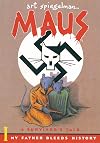
This is a very clever way of presenting not just the horrors of the Holocaust, but the ongoing consequences for the survivors and for the survivors' children. In this graphic novel, Spiegelman recounts the story of his parents' experiences as Polish Jews during the Second World War, using the conceit of representing each character as an animal. Jews are mice, Poles are pigs, Germans are cats, Americans are dogs. For me, at least, the artwork had the curious effect of making what happened show more seem not more remote, but more immediate. Our awareness that the concentration camps existed is something which occasionally is blunted by distance, by time, by the fact that there are fewer and fewer people still around who survived those places. The reader doesn't have that luxury with Maus. Every time the art shows one of the mice being shot, beaten, hanged, gassed, you think, but these were really people. They were really people. show less
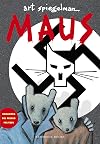
Una historia más sobre el holocausto judío durante la II Guerra Mundial. Sin embargo, su formato: cómic, ofrece un enfoque y unos matices muy sugerentes. Los díbujos no son especialmente artísticos, de líneas sencillas, tan monótonos que en ocasiones el contexto o los diálogos son los que facilitan distinguir entre los personajes. Ésta indiferenciación no es casual, sino metáfora de la humillación y el anonimato a que se vieron sometidos los prisioneros en los campos de show more concentración reducidos a un número grabado en la piel. En cambio, el zoomorfismo de las distintas nacionalidades: gatos alemanes, perros americanos, ratones judíos, cerdos polacos, …; ayuda a la comprensión de las diversas situaciones sociales que se produjeron durante el conflicto bélico.
Si los críticos se empeñan en utilizar la extraña palabreja de metaliteratura, ésta obra sería un metacómic, es decir, el cómic dentro del cómic. Realmente “Maus” es la historia de la elaboración del cómic “Maus”: recopilación de testimonios paternos, documentación, búsqueda de fotografías. reflexión sobre la capacidad del cómic para contar el holocausto, la elección de unos animales u otros para representar a los personajes o exposición autobiográfica de los sentimientos que llevan al autor a escribir la historia: culpa, confrontación paterno-filial, ausencia materna,…
Pero es tal la fuerza de la historia contada por el padre que prevalece sobre cualquier consideración intelectual y literaria. Un relato duro, cruel, en el que los gestos de aparente generosidad esconden un pragmático interés, donde los sentimientos se ven anegados por la realidad de la supervivencia y en fin, donde los supervivientes se plantean si en el fondo han sido ganadores viendo las secuelas que les han acompañado a lo largo de su vida. show less
Si los críticos se empeñan en utilizar la extraña palabreja de metaliteratura, ésta obra sería un metacómic, es decir, el cómic dentro del cómic. Realmente “Maus” es la historia de la elaboración del cómic “Maus”: recopilación de testimonios paternos, documentación, búsqueda de fotografías. reflexión sobre la capacidad del cómic para contar el holocausto, la elección de unos animales u otros para representar a los personajes o exposición autobiográfica de los sentimientos que llevan al autor a escribir la historia: culpa, confrontación paterno-filial, ausencia materna,…
Pero es tal la fuerza de la historia contada por el padre que prevalece sobre cualquier consideración intelectual y literaria. Un relato duro, cruel, en el que los gestos de aparente generosidad esconden un pragmático interés, donde los sentimientos se ven anegados por la realidad de la supervivencia y en fin, donde los supervivientes se plantean si en el fondo han sido ganadores viendo las secuelas que les han acompañado a lo largo de su vida. show less
Lists
Read (5)
Overdue Podcast (1)
Best War Stories (1)
Forced Exposure (1)
Holocaust (1)
1980s (1)
Writers at Risk (1)
Non-Fiction (3)
THE WAR ROOM (2)
Jewish Books (2)
100 New Classics (1)
Favourite Books (1)
scav (1)
Banned Books (1)
Five star books (1)
Awards


You May Also Like


Associated Authors
Statistics
- Works
- 62
- Also by
- 50
- Members
- 36,012
- Popularity
- #519
- Rating
- 4.3
- Reviews
- 819
- ISBNs
- 251
- Languages
- 23
- Favorited
- 43


