
Joe Sacco
Author of Palestine
About the Author
Image credit: Joe Sacco in Pimlico , London. Photograph: Richard Saker
Series
Works by Joe Sacco
The Great War: July 1, 1916: The First Day of the Battle of the Somme: An Illustrated Panorama (2013) 317 copies, 4 reviews
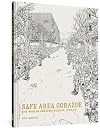
Gorazde: Zona Protegida 3 copies
Hołd dla ziemi 1 copy
Gazan sota 1 copy
Trauma on Loan 1 copy
Requiem for Gaza 1 copy
The Road to Wigan Pier 1 copy
Malta: ... A Guide Book 1 copy
Palestine #8 1 copy
Associated Works
An Anthology of Graphic Fiction, Cartoons, and True Stories (2000) — Contributor — 385 copies, 3 reviews
From the Folks Who Brought You the Weekend: A Short, Illustrated History of Labor in the United States (2003) — Illustrator — 197 copies, 2 reviews
An Anthology of Graphic Fiction, Cartoons, and True Stories: v. 2 (2008) — Contributor — 169 copies, 2 reviews
Drawn & Quarterly: Twenty-five Years of Contemporary Cartooning, Comics, and Graphic Novels (2015) — Contributor — 150 copies, 5 reviews
A Child in Palestine: The Cartoons of Naji al-Ali (2009) — Introduction, some editions — 109 copies, 1 review
The Big Book of Thugs: Tough as Nails True Tales of the World's Baddest Mobs, Gangs, and Ne'er do Wells! (Factoid Books) (1996) — Illustrator — 92 copies
The Best American Comics 2017 (The Best American Series ®) (2017) — Contributor — 57 copies, 2 reviews
MHQ: The Quarterly Journal of Military History — Summer 2014 (2014) — Artist "The First, Worst Day of the Battle of the Somme"" — 4 copies
Tagged
Common Knowledge
- Canonical name
- Sacco, Joe
- Birthdate
- 1960-10-02
- Gender
- male
- Education
- University of Oregon (BA | Journalism)
- Occupations
- comics artist
journalist - Organizations
- National Notary Association
- Agent
- Nicole Aragi
- Nationality
- Malta
- Birthplace
- Kirkop, Malta
- Places of residence
- Malta
Australia
Los Angeles, California, USA
Beaverton, Oregon, USA
Portland, Oregon, USA - Map Location
- Malta
Members
Discussions
Non-fiction graphic novel E. Europe in Name that Book (November 2010)
Reviews
The Great War : July 1, 1916 : the first day of the Battle of the Somme : an illustrated panorama by Joe Sacco

In one accordion folded page, this graphic novel provides a panoramic view, the black and white drawings vividly expressive as it progresses from the assembly of men, weapons, and supplies to the first shots before a shadow falls on the page as bombardment is returned. While Sacco's drawings require no explanation, Hochschild's descriptive essay provides nightmarish detail recalling the horrors of that day when some 21,000 British soldiers were killed or fatally wounded, a day of the show more greatest bloodshed in Britain's military history before or since. Of the 763 Canadians in the 1st Newfoundland Regiment there were 684 casualties including every officer. He quotes [[Vera Brittain]] who was working as a nurse's aide in London: "The hospital received orders to clear out all convalescents and prepare for a great rush of wounded… We knew that already a tremendous bombardment had begun, for we could feel the vibration of the guns… Hour after hour, as the convalescents departed, we added to the long rows of waiting beds, so sinister in their white expectant emptiness." An exceptional work, heartbreaking even after over 100 years. show less

Joe Sacco’s Palestine draws upon the cartoonist’s experiences in Israeli-occupied Palestine near the end of the first Intifada in the early 1990s. Drawing upon both his background in journalism and years of work as a comics creator and commentator, Sacco works to capture the complexity of Palestine and the varying viewpoints among the Palestinians in the West Bank and Gaza, deliberately commenting on himself as an outsider as he seeks to expand the American understanding of the events show more currently occurring in those regions. He not only endeavors to relay the different personal narratives and opinions that people share with him, but shows how his own presence can affect events, either by drawing suspicion or experiencing roadblocks, skirmishes in the streets, funerals and weddings. Sacco uses his work to show how the occupation of the West Bank and Gaza are a form of modern-day colonialism. While some Israelis encourage him to do similar research in their region, he points out that the Israeli narrative dominates the discourse in the West and his goal with the project was to learn about the Palestinian perspective. Sacco concludes, “That’s the thing about coming to the Holy Land or Palestine or Israel or whatever you want to call it… no one who knows what he’s come here looking for leaves without having found it” (pg. 280).
Sacco’s artistic style resembles many of the underground comix artists of the 1960s – 1990s, in particular Robert Crumb, Gary Dumm, Greg Budgett, and Brian Bram. His caricatures of faces successfully capture the emotions of his interview subjects, ranging from suspicion to grief, anger to fatigue, joy to malaise. In addition to focusing on facial emotions, Sacco brings to vivid life the physical conditions of the refugee camps, bombed-out cities, and demolished villages. He represents both the scale of the destruction in large splash-pages and the way people try to eke out some comfort amid the deprivations of soldiers and the weather in tighter panels. His use of black-and-white linework ensures that Tel Aviv’s comparative cleanliness and sleek architecture stand out all the more in juxtaposition to the Palestinian refugee camps when he visits Israel at the end of the graphic novel.
Sacco refers to Edward Said’s “The Question of Palestine” as “one of the reasons” he traveled to Palestine (pg. 177) and, in a nice connection, Said later wrote an introduction for this complete graphic novel edition. This edition collects all nine issues that Sacco originally published individually. show less
Sacco’s artistic style resembles many of the underground comix artists of the 1960s – 1990s, in particular Robert Crumb, Gary Dumm, Greg Budgett, and Brian Bram. His caricatures of faces successfully capture the emotions of his interview subjects, ranging from suspicion to grief, anger to fatigue, joy to malaise. In addition to focusing on facial emotions, Sacco brings to vivid life the physical conditions of the refugee camps, bombed-out cities, and demolished villages. He represents both the scale of the destruction in large splash-pages and the way people try to eke out some comfort amid the deprivations of soldiers and the weather in tighter panels. His use of black-and-white linework ensures that Tel Aviv’s comparative cleanliness and sleek architecture stand out all the more in juxtaposition to the Palestinian refugee camps when he visits Israel at the end of the graphic novel.
Sacco refers to Edward Said’s “The Question of Palestine” as “one of the reasons” he traveled to Palestine (pg. 177) and, in a nice connection, Said later wrote an introduction for this complete graphic novel edition. This edition collects all nine issues that Sacco originally published individually. show less

In War on Gaza, Joe Sacco continues what he began with Footnotes in Gaza (2009), examining the aftermath of Hamas’ October 7th raid into Israel, describing the IDF response as “genocidal self-defense” (p. 3). Sacco argues, “Gaza was where the West went to die. The only truth still held to be self-evident was that the Rules-Based Order weighed 2,000 pounds and could flatten an entire neighborhood” (p. 23). He further notes, “Civilizing has always been the West’s de fault burden show more and mass murder the shiniest tool in its box. Americans had their Manifest Destiny, the French had their Algeria, the British had their Kenya, the Australians had their Tasmania, and the Germans… And now together they have Gaza” (p. 31). Though brief, Sacco uses War on Gaza to link the genocide of the Palestinians with Western colonial-imperialist enterprises, particularly the political actions of the Biden administration. He does not excuse what followed, however, noting that the vote in 2024 was for international genocide or the end of institutional democracy, with “the Lesser of
Two Evils” argument being the “conversation a rotting republic deserves” (p. 20). Sacco is at his most potent in this short volume, though it sadly comes after the genocide is already a fait accompli. show less
Two Evils” argument being the “conversation a rotting republic deserves” (p. 20). Sacco is at his most potent in this short volume, though it sadly comes after the genocide is already a fait accompli. show less
http://nhw.livejournal.com/520565.html
Sacco has a superb portrait here of a community under siege, not actually sure if there is a future, yet alone what it might hold (there were persistent rumours that Goražde might be traded to the Serbs in return for concessions elsewhere). He shows himself as an outsider, both slightly sinister (with his eyes never visible behind his glasses) and slightly absurd (with his lips grotesquely enlarged, giving him literally a big mouth). The inhabitants of show more Goražde, and their assailants, are shown as normal human beings, caught up in scenes of horror and destruction.
As well as providing a narrative of the people of Goražde, Sacco uses the book to make a couple of factual assertions that I have not seen anywhere else in writing about the war. One is that chemical weapons were used by the Serbs against refugees fleeing Srebrenica. He is completely convinced of this, although he concedes that Human Rights Watch, who also looked into the question, were not. I can add a little more supporting, though circumstantial, evidence from our report on Yugoslav arms sales to Iraq published in late 2002: it is a matter of record that the old Yugoslav army had a chemical weapons stockpile in the Sarajevo suburb of Hadžići, and that nobody (at least three years ago) seemed to know precisely what had happened to the stockpile after the army withdrew from Sarajevo in 1992. Quite likely most of it did reach military depots in Serbia, but it is far from impossible that some was diverted into Bosnian Serb hands en route, or subsequently.
Sacco's second factual point is linked to the notorious assertion by General Sir Michael Rose, at the time in charge of British peace-keepers, that a tank attack on the town could have been stopped by "one bloke with a crowbar" and that the defenders of Goražde were asking UN peacekeepers to do their fighting for them. Sacco's depiction of the tank attack on a terrified and poorly armed civilian population is a far more eloquent refutation of Rose's statement than could possibly have been achieved by the written word alone.
Perhaps few people these days will be very interested in the politics and history of Goražde. It is after all ten years after the Dayton negotiations which ended the Bosnian war. The debate about the rights and wrongs of international intervention is now, alas, completely different from the period when President Clinton and the rest of the international community displayed utter spinelessness in the face of warlordism and genocide in Somalia, Rwanda and Bosnia, before finally doing the right thing in Kosovo.
But the book remains very much worth reading as a human story of how people do survive in extreme circumstances, and ought to be celebrated as a classic of its genre. show less
Sacco has a superb portrait here of a community under siege, not actually sure if there is a future, yet alone what it might hold (there were persistent rumours that Goražde might be traded to the Serbs in return for concessions elsewhere). He shows himself as an outsider, both slightly sinister (with his eyes never visible behind his glasses) and slightly absurd (with his lips grotesquely enlarged, giving him literally a big mouth). The inhabitants of show more Goražde, and their assailants, are shown as normal human beings, caught up in scenes of horror and destruction.
As well as providing a narrative of the people of Goražde, Sacco uses the book to make a couple of factual assertions that I have not seen anywhere else in writing about the war. One is that chemical weapons were used by the Serbs against refugees fleeing Srebrenica. He is completely convinced of this, although he concedes that Human Rights Watch, who also looked into the question, were not. I can add a little more supporting, though circumstantial, evidence from our report on Yugoslav arms sales to Iraq published in late 2002: it is a matter of record that the old Yugoslav army had a chemical weapons stockpile in the Sarajevo suburb of Hadžići, and that nobody (at least three years ago) seemed to know precisely what had happened to the stockpile after the army withdrew from Sarajevo in 1992. Quite likely most of it did reach military depots in Serbia, but it is far from impossible that some was diverted into Bosnian Serb hands en route, or subsequently.
Sacco's second factual point is linked to the notorious assertion by General Sir Michael Rose, at the time in charge of British peace-keepers, that a tank attack on the town could have been stopped by "one bloke with a crowbar" and that the defenders of Goražde were asking UN peacekeepers to do their fighting for them. Sacco's depiction of the tank attack on a terrified and poorly armed civilian population is a far more eloquent refutation of Rose's statement than could possibly have been achieved by the written word alone.
Perhaps few people these days will be very interested in the politics and history of Goražde. It is after all ten years after the Dayton negotiations which ended the Bosnian war. The debate about the rights and wrongs of international intervention is now, alas, completely different from the period when President Clinton and the rest of the international community displayed utter spinelessness in the face of warlordism and genocide in Somalia, Rwanda and Bosnia, before finally doing the right thing in Kosovo.
But the book remains very much worth reading as a human story of how people do survive in extreme circumstances, and ought to be celebrated as a classic of its genre. show less
Lists
Awards


You May Also Like


Associated Authors
Statistics
- Works
- 56
- Also by
- 34
- Members
- 7,577
- Popularity
- #3,221
- Rating
- 4.1
- Reviews
- 213
- ISBNs
- 202
- Languages
- 20
- Favorited
- 21
