

Jason Lutes
Author of Berlin: City of Stones
About the Author
Series
Works by Jason Lutes
The Perilous Wilds 7 copies
Freebooters on the Frontier 5 copies
Servants of the Cinder Queen 4 copies
Berlin #22 3 copies
(Red Book) [untitled] 2 copies
A Book of Beasts (Dungeon World) 2 copies
Houdini 2 copies
The Perilous Void 2 copies
Dreams: A Comic Book 1 copy
Perilous Wilds, The 1 copy
Berlin, ville de lumière 1 copy
Bingo Baby 1 copy
Wedgehead 1 copy
Berlin 1-12, 14, 15 1 copy
Funnel World 1 copy
Perilous Deeps 1 copy
Perilous Almanacs 1 copy
Associated Works
An Anthology of Graphic Fiction, Cartoons, and True Stories (2000) — Contributor — 385 copies, 3 reviews
Drawn & Quarterly: Twenty-five Years of Contemporary Cartooning, Comics, and Graphic Novels (2015) — Contributor — 150 copies, 5 reviews
Tagged
Common Knowledge
- Birthdate
- 1967-12-07
- Gender
- male
- Education
- Rhode Island School of Design (BFA | illustration | 1991)
- Occupations
- cartoonist
writer - Nationality
- USA
- Birthplace
- New Jersey, USA
- Places of residence
- New Jersey, USA (birth)
Missoula, Montana, USA
Providence, Rhode Island, USA
Asheville, North Carolina, USA
Hartford, Vermont, USA - Associated Place (for map)
- USA
Members
Reviews
I first started reading this when it debuted and once I learned it was a very long term project decided I’d wait until the whole thing was done to read it. Now here we are at the other end of the telescope and it couldn’t have come at a better time.
On a personal level, I knew almost nothing about the Weimar Republic (Germany between the first two World Wars) when Lutes started the book but since then I’ve learned enough to be genuinely excited based on the content alone, let alone in show more the hands of a master craftsman.
On a real life level, a story about regular Berliners coping with chaos as and struggle to stay afloat while Nazis and Antifa fight in the streets hits home in a way probably unimagined when the project began.
I’m a big fan of Lutes’ crisp inking and use of black and white. show less
On a personal level, I knew almost nothing about the Weimar Republic (Germany between the first two World Wars) when Lutes started the book but since then I’ve learned enough to be genuinely excited based on the content alone, let alone in show more the hands of a master craftsman.
On a real life level, a story about regular Berliners coping with chaos as and struggle to stay afloat while Nazis and Antifa fight in the streets hits home in a way probably unimagined when the project began.
I’m a big fan of Lutes’ crisp inking and use of black and white. show less

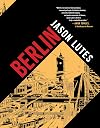
The first book in an ongoing three-volume series, Berlin: City of Stones is a brilliant, loving portrait of the city and its people at the end of the Weimar Republic, just as the Nazi party is rising to power. Readers will immediately draw comparisons between Berlin and Maus, Art Spiegelman’s groundbreaking graphic chronicle of World War II. Where Maus is a memoir concerned with family history and the legacy of terror, Berlin is content to exist in a single moment in history, 1928, digging show more deep into historical detail. Lutes casually weaves his story around the lives of two people: Marthe Muller, a young art student new to the city, and Kurt Severing, a jaded and weary journalist. Berlin is less concerned with the individuals he follows than with their interactions and the web of humanity that they create. It is impossible to write a story of the Weimar Republic without discussing politics, and Lutes does a fine job of putting a human face on the rivalries of disparate political factions without ever seeming heavy-handed. His art is impeccable: spare line drawings that offer just enough detail to set the reader’s imagination on fire. Berlin: City of Stones is followed by the equally enchanting Berlin: City of Smoke in 2008. The third and final installment, though eagerly anticipated, has not yet been released. show less

https://nwhyte.livejournal.com/3253952.html
Well, we had to wait more than ten years, and the third volume is shorter than the other two (149 pages compared to 207 and 210), but it was well worth it. Despite the shorter length, it covers a longer time period, from late 1930 up to Hitler's appointment as Chancellor in January 1933; but the main story isn't the high politics of parliamentary manœuvre, it's the ongoing story of the little people, Marthe and Kurt, the non-fictional journalist show more Carl von Ossietzky, the children of Gudrun who was killed by state violence at the end of the first volume, the Jews seeking to get out before it is too late, Marthe's trans lover, random insights into the thoughts of passers-by. It's a reflection of how ordinary people get caught up in extraordinary events, and in these times of Trump and Brexit it feels an awful lot more relevant than it did ten years ago. The ending of the story is, inevitably, sad but satisfying.
I should say something about Lutes' style, explicitly inspired by Hergé's ligne claire. In the first volume I sometimes found it difficult to differentiate between characters (some of the adult women in particular were a bit too similar in appearance) but I did not find this a problem later on. In fact, I felt that the immediacy of the style made it easier to relate to the characters as real people in a real city, rather than incidental players in a grand historical tragedy. It's a great example of what the graphic medium can be - as I said previously, in the Eisner style, but reflecting also on Hergé and the Drawn and Quarterly tradition. show less
Well, we had to wait more than ten years, and the third volume is shorter than the other two (149 pages compared to 207 and 210), but it was well worth it. Despite the shorter length, it covers a longer time period, from late 1930 up to Hitler's appointment as Chancellor in January 1933; but the main story isn't the high politics of parliamentary manœuvre, it's the ongoing story of the little people, Marthe and Kurt, the non-fictional journalist show more Carl von Ossietzky, the children of Gudrun who was killed by state violence at the end of the first volume, the Jews seeking to get out before it is too late, Marthe's trans lover, random insights into the thoughts of passers-by. It's a reflection of how ordinary people get caught up in extraordinary events, and in these times of Trump and Brexit it feels an awful lot more relevant than it did ten years ago. The ending of the story is, inevitably, sad but satisfying.
I should say something about Lutes' style, explicitly inspired by Hergé's ligne claire. In the first volume I sometimes found it difficult to differentiate between characters (some of the adult women in particular were a bit too similar in appearance) but I did not find this a problem later on. In fact, I felt that the immediacy of the style made it easier to relate to the characters as real people in a real city, rather than incidental players in a grand historical tragedy. It's a great example of what the graphic medium can be - as I said previously, in the Eisner style, but reflecting also on Hergé and the Drawn and Quarterly tradition. show less
I started reading this series over two decades ago as individual comic issues. Somewhere around the middle of the run, I had to stop buying comics for financial reasons, but knew I would return to this story one day. When I saw this all-in-one hardcover edition was being published last year, I immediately requested it for purchase at one of my local libraries. Despite my eagerness to finally get the whole story, I was too daunted to crack this thick, heavy brick until a bad cold kept me on show more the living room sofa for the entirety of the Fourth of July.
The first half was as great as I remembered. So many of the themes and events are timely to what's happening today in America. The second half flags a little bit as the events gets increasingly depressing, Lutes lets his sprawling cast get away from him a little bit, and the ending comes with a true-to-life whimper.
I might have went three stars for the story alone, but Lutes' pacing and art is masterful throughout. Though mostly working with pages using traditional 6-, 9-, or 12-panel frames, he sections and breaks them just so to control the speed of little moments and capture the dynamics of big ones. Just beautiful. show less
The first half was as great as I remembered. So many of the themes and events are timely to what's happening today in America. The second half flags a little bit as the events gets increasingly depressing, Lutes lets his sprawling cast get away from him a little bit, and the ending comes with a true-to-life whimper.
I might have went three stars for the story alone, but Lutes' pacing and art is masterful throughout. Though mostly working with pages using traditional 6-, 9-, or 12-panel frames, he sections and breaks them just so to control the speed of little moments and capture the dynamics of big ones. Just beautiful. show less
Lists
Awards


You May Also Like


Associated Authors
Statistics
- Works
- 56
- Also by
- 7
- Members
- 2,925
- Popularity
- #8,756
- Rating
- 3.9
- Reviews
- 100
- ISBNs
- 89
- Languages
- 13
- Favorited
- 2
