
Pere Gimferrer
Author of Fortuny
About the Author
Works by Pere Gimferrer
Hora foscant 5 copies
Mirall, espai, aparicions 1 copy
Espai desert 1 copy
Poemas 1963 1969 1 copy
Poesia de J.V.Foix , La 1 copy
Sobre la traducción 1 copy
3 i 4 VALÈNCIES 1 copy
Borrasca 1 copy
Mensaje del tetrarca 1 copy
Dietari II 1980-1982 1 copy
Associated Works
Arte Poetica: Seis Conferencias (Letras de Humanidad) (Spanish Edition) (2001) — Foreword, some editions — 55 copies, 2 reviews
El senyal de la pèrdua : escrits inèdits dels últims anys (2014) — Foreword, some editions — 14 copies, 1 review
Palabra De America / Words from America (Los Tres Mundos) (Spanish Edition) (2004) — Afterword, some editions — 10 copies
Tagged
Common Knowledge
- Canonical name
- Gimferrer, Pere
- Legal name
- Gimferrer i Torrens, Pere
- Birthdate
- 1945-06-22
- Gender
- male
- Nationality
- España
- Birthplace
- Barcelona, Catalonia, Spain
- Map Location
- Spain
Members
Reviews

I've always been curious about how artists developed their works and the creative impulse. Initially I assumed that an artist carried some sort of art "thing" in their brains that enabled them to spontaneously produce an original work of art. But the more that I observed and studied artists and read about their sources of inspiration, the more i came to realise that, in most cases, they built on existing foundations. Occasionally there was some sort of revolutionary change ....such as show more cubism. But even then, when you dig into Picasso and Juan Gris you can see how they influenced each other (maybe Picasso taking more from Juan Gris' sculptural work) but their best work seemed to me to be the product of evolution. So it was with considerable interest that I studied the current book which is very much about the development of Jean Miro's works: mainly his paintings and prints but covering some of his sculptural work as well.
Whenever, I visited Barcelona in the course of my work, I made it a mission to visit the Juan Miro Fundacion. Because they rotated the works, I was often rather disappointed with what was on show.....but I guess it also gave me the chance to be exposed to a wide range of his work. I recall a friend from Barcelona explaining to me that much of his work was only slightly disguised erotica with hairy vulvas on prominent display ...and that this was not widely recognised but had been satirised by some performance artists in Barcelona itself. Be that as it may, I like a lot of Miro's art ....especially for his juxtaposition of bold sweeps of colour and black....and what Gimferra tries to bring out in this work is that these rarely sprang directly from the brush of Miro but there were antecedent works. Usually sketches, on paper. And sometimes there was a clear evolution of the work or it could be traced back to a photograph or another drawing. I recall, that when my son was in kindergarten at the American School of Madrid, that his great teacher (Stan) wrote to Miro and asked him to make a sketch that the kids could colour in. And, sure enough, Miro responded so our little five year olds could colour in a copy of an "original" Miro drawing. (I think Stan retained the original for "safekeeping"). I'm not sure if the coloured in version ever survived. But I've always had a soft spot for Miro after that experience. This is not the best collection of Miro's work though it does have some lovely examples of his work but it is really impressive for the way ddthat the author has painstakingly tried to connect the sketches and antecedent works with the finished objects and show the various developments. Yes...sometimes it's a bit too painstaking and boring but one can skip those bits. It's a large Poligrafia edition with high quality printing. Altogether a lovely book and i'm happy to give it five stars. show less
Whenever, I visited Barcelona in the course of my work, I made it a mission to visit the Juan Miro Fundacion. Because they rotated the works, I was often rather disappointed with what was on show.....but I guess it also gave me the chance to be exposed to a wide range of his work. I recall a friend from Barcelona explaining to me that much of his work was only slightly disguised erotica with hairy vulvas on prominent display ...and that this was not widely recognised but had been satirised by some performance artists in Barcelona itself. Be that as it may, I like a lot of Miro's art ....especially for his juxtaposition of bold sweeps of colour and black....and what Gimferra tries to bring out in this work is that these rarely sprang directly from the brush of Miro but there were antecedent works. Usually sketches, on paper. And sometimes there was a clear evolution of the work or it could be traced back to a photograph or another drawing. I recall, that when my son was in kindergarten at the American School of Madrid, that his great teacher (Stan) wrote to Miro and asked him to make a sketch that the kids could colour in. And, sure enough, Miro responded so our little five year olds could colour in a copy of an "original" Miro drawing. (I think Stan retained the original for "safekeeping"). I'm not sure if the coloured in version ever survived. But I've always had a soft spot for Miro after that experience. This is not the best collection of Miro's work though it does have some lovely examples of his work but it is really impressive for the way ddthat the author has painstakingly tried to connect the sketches and antecedent works with the finished objects and show the various developments. Yes...sometimes it's a bit too painstaking and boring but one can skip those bits. It's a large Poligrafia edition with high quality printing. Altogether a lovely book and i'm happy to give it five stars. show less
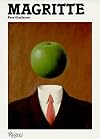
Magritte's work consistently attracts my intellect like few artists and yet, for some reason, I've never paid much attention to his titling. Gimferrer's narrative is short, but he does delve into the imagery, reasoning, and analysis of some of the paintings. Be forewarned, though...it reads like the post-modern intellectualism punked by Alan Sokal in 1996. Still, there is value once deciphered.
It makes me want to learn more about Magritte and his paintings. That's a good thing.
It makes me want to learn more about Magritte and his paintings. That's a good thing.
Another great Green Lake Read! Like eating dessert, best served in small portions
Lists
Awards


You May Also Like


Associated Authors
Statistics
- Works
- 80
- Also by
- 16
- Members
- 568
- Popularity
- #44,050
- Rating
- 4.0
- Reviews
- 12
- ISBNs
- 127
- Languages
- 9