
D.J. Herda
Author of The Dred Scott Case: Slavery and Citizenship
About the Author
Image credit: D. J. Herda
Works by D.J. Herda
Wilma Mankiller: How One Woman United the Cherokee Nation and Helped Change the Face of America (2021) 17 copies, 12 reviews
Tagged
Common Knowledge
- Canonical name
- Herda, D.J.
- Birthdate
- 1948
- Gender
- male
- Nationality
- USA
- Associated Place (for map)
- USA
Members
Discussions
Wilma Mankiller, by D.J. Herda, MARCH 2022 LTER in Reviews of Early Reviewers Books (March 2022)
Reviews
Wilma Mankiller: How One Woman United the Cherokee Nation and Helped Change the Face of America by D.J. Herda
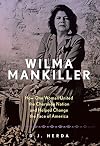
Disclaimer: An electronic copy of the edited first proof of this book was provided in exchange for review by publishers TwoDot/Rowan & Littlefield, via Library Thing.
~ ~ ~ ~ ~
Comprehensive and eminently readable, D.J. Herda’s biography of Wilma Mankiller manages to focus both on Mankiller’s history-making leadership of the Cherokee Nation and also to place it firmly in the context of the civil rights upheavals of the late 1960s and early 1970s.
Born in Oklahoma in 1945, the sixth child in show more a family that would eventually include eleven siblings, Mankiller came into a Native American society in flux. Her father Charles, a full-blood Cherokee, was among those Native children who had been forcibly removed from his home and sent to a boarding school determined to cut students off from their heritage and assimilate them into White culture. Though he ran away from the soul-destroying experience to return to his roots, he again was pressured to abandon traditional ways by a federal program encouraging Native families to move into urban areas, lured by promises of work and other forms of social support. The program was part of the mid-century attempt to de-certify tribes as recognized sovereign nations, and one result was that Mankiller and her siblings wound up in the San Francisco Bay area with few of the government’s glowing promises to the family fulfilled.
Searching for the comfort of the familiar, young Mankiller found the Bay Area’s Indian Center a touchstone, and her involvement there placed her in the right place at the right time and with the right energies to become part of what ultimately became the immense civil rights tsunami of the 1970s. The 18-month-long Native occupation of Alcatraz Island stood alongside the growth of Martin Luther King’s Southern Leadership Conference, the Student Nonviolent Coordinating Committee, the National Organization of Women, the Black Panther party, and even the nascent Gay Activists Alliance as various groups of ignored, oppressed, and marginalized people organized and demonstrated for recognition.
Herda spends a fair amount of time in the narrative sketching the history of and differences between the various Native rights groups that sprang up in this period. He quite accurately notes that “one of the most significant differences [of the Native groups] was that the Native focus was less on integration with the dominant white society and more on maintaining their unique cultural integrity.” The goal, he notes “was less on obtaining civil rights as it was on gaining enforcement of legally binding treaty rights already in place.”
Mankiller’s growth within the movement and the prices she paid in her personal life are covered but not particularly dwelt on as she handles various organizing and support tasks before returning to her native Oklahoma with two small children and “[an awareness] of what needed to be done to let the rest of the world know that Indians had rights, too.” That drive led her into a job with the Cherokee Nation and set her on a course to become its first female chief, a position she held for 11 years until worsening health led her to decline to run for the position again.
Her actions and programs while in that position and her continued work for Native rights and the promulgation of Native culture afterward are covered in broad strokes with much quoted material from writers like Gloria Steinem and from Mankiller’s own writing.
Herda’s biography provides an informative look at an important figure in American civil rights activity of the late 20th and early 21st century, and highlights the contributions of an individual whose gender and ethnicity threaten to keep her out of general public knowledge about the era. As such. It’s a valuable piece of Americana. Historic and contemporary photographs planned for the print release version will enhance the text and help readers new to the subject gain some perspective on the history of the Cherokee Nation. One could wish for a bibliography, but sources listed in the Citations section are available to guide further reading on the topic for the interested reader. show less
~ ~ ~ ~ ~
Comprehensive and eminently readable, D.J. Herda’s biography of Wilma Mankiller manages to focus both on Mankiller’s history-making leadership of the Cherokee Nation and also to place it firmly in the context of the civil rights upheavals of the late 1960s and early 1970s.
Born in Oklahoma in 1945, the sixth child in show more a family that would eventually include eleven siblings, Mankiller came into a Native American society in flux. Her father Charles, a full-blood Cherokee, was among those Native children who had been forcibly removed from his home and sent to a boarding school determined to cut students off from their heritage and assimilate them into White culture. Though he ran away from the soul-destroying experience to return to his roots, he again was pressured to abandon traditional ways by a federal program encouraging Native families to move into urban areas, lured by promises of work and other forms of social support. The program was part of the mid-century attempt to de-certify tribes as recognized sovereign nations, and one result was that Mankiller and her siblings wound up in the San Francisco Bay area with few of the government’s glowing promises to the family fulfilled.
Searching for the comfort of the familiar, young Mankiller found the Bay Area’s Indian Center a touchstone, and her involvement there placed her in the right place at the right time and with the right energies to become part of what ultimately became the immense civil rights tsunami of the 1970s. The 18-month-long Native occupation of Alcatraz Island stood alongside the growth of Martin Luther King’s Southern Leadership Conference, the Student Nonviolent Coordinating Committee, the National Organization of Women, the Black Panther party, and even the nascent Gay Activists Alliance as various groups of ignored, oppressed, and marginalized people organized and demonstrated for recognition.
Herda spends a fair amount of time in the narrative sketching the history of and differences between the various Native rights groups that sprang up in this period. He quite accurately notes that “one of the most significant differences [of the Native groups] was that the Native focus was less on integration with the dominant white society and more on maintaining their unique cultural integrity.” The goal, he notes “was less on obtaining civil rights as it was on gaining enforcement of legally binding treaty rights already in place.”
Mankiller’s growth within the movement and the prices she paid in her personal life are covered but not particularly dwelt on as she handles various organizing and support tasks before returning to her native Oklahoma with two small children and “[an awareness] of what needed to be done to let the rest of the world know that Indians had rights, too.” That drive led her into a job with the Cherokee Nation and set her on a course to become its first female chief, a position she held for 11 years until worsening health led her to decline to run for the position again.
Her actions and programs while in that position and her continued work for Native rights and the promulgation of Native culture afterward are covered in broad strokes with much quoted material from writers like Gloria Steinem and from Mankiller’s own writing.
Herda’s biography provides an informative look at an important figure in American civil rights activity of the late 20th and early 21st century, and highlights the contributions of an individual whose gender and ethnicity threaten to keep her out of general public knowledge about the era. As such. It’s a valuable piece of Americana. Historic and contemporary photographs planned for the print release version will enhance the text and help readers new to the subject gain some perspective on the history of the Cherokee Nation. One could wish for a bibliography, but sources listed in the Citations section are available to guide further reading on the topic for the interested reader. show less
 This review was written for LibraryThing Early Reviewers.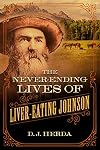
Author D.J. Herda has a difficult task in this semi-fictional biography of old West character John “Liver-Eating” Johnston. The actual facts of Johnston’s life have been clouded so much by “tall tales” of him and his acquaintances that it’s hard to make anything out through the murk.
At any rate, his name was John Johnston. Except later he changed it to Johnson. Except according to some accounts his real name was John Garrison. And in the movie, he’s Jeremiah Johnson. He was show more born in New Jersey in 1824. Except according to some accounts, he was born in England. He ran off to sea when young and worked on a whaler, then joined the US Navy and deserted. He made his way to the Yellowstone country and became a trapper and “mountain man”, marrying a Flathead woman. Except according to one of his letters, he was never married. When the Crow killed his wife and unborn child, he swore revenge and went on a killing spree against them, eating the livers of his victims. Except according to other accounts, he was a friend of the Crow and it was a Lakota whose liver he ate. Except according to another account, it was a Blackfoot and Johnson ate his leg, not his liver. During the Civil War, he joined the Union Army and served under General Blunt as a sharpshooter. Except according to another account, he joined the Confederate Army and served under Sterling Price. He favored a .56 caliber Hawken rifle, or maybe a Sharps or maybe a ‘telescopic rifle” of unknown breed. He served as a scout under General Miles during the Nez Perce war; later as a marshal in Red Lodge, Montana; and finally retired to a home for old soldiers in California. Years later, high school students found his grave, disinterred the body, and shipped him to Cody, Wyoming (after Red Lodge turned him down); Robert Redford, who played Jeremiah Johnson in the film, was a pallbearer for the reinterment.
Herda intersperses his admittedly scanty material with fictionalized accounts of the adventures of Johnson and his various companions – Yellowstone Kelly, Del Gue (there’s some argument over whether Gue was a real person or someone Johnson made up), and X. Beidler (accounts don’t agree if “X” stood for Xenophon or Xavier). These fictional passages are in italics, so you can tell them from the actual history. Interesting enough, even though it’s impossible to tell if Johnson was an actual mountain man and Indian fighter or some old guy who hung around in bars cadging drinks off his stories. Perhaps some of both. Illustrations include three photographs of Johnson – who turned up in photography studios fairly often for a man who supposedly shunned civilization. In one he’s holding a Sharps rifle; in one he has a bull-barreled rifle with a period telescopic sight (which must have been a singularly cumbersome thing to haul around the mountains) and in the third he’s got a rifle I can’t identify. References are mostly period newspaper articles. A sparse index. No recipes. show less
At any rate, his name was John Johnston. Except later he changed it to Johnson. Except according to some accounts his real name was John Garrison. And in the movie, he’s Jeremiah Johnson. He was show more born in New Jersey in 1824. Except according to some accounts, he was born in England. He ran off to sea when young and worked on a whaler, then joined the US Navy and deserted. He made his way to the Yellowstone country and became a trapper and “mountain man”, marrying a Flathead woman. Except according to one of his letters, he was never married. When the Crow killed his wife and unborn child, he swore revenge and went on a killing spree against them, eating the livers of his victims. Except according to other accounts, he was a friend of the Crow and it was a Lakota whose liver he ate. Except according to another account, it was a Blackfoot and Johnson ate his leg, not his liver. During the Civil War, he joined the Union Army and served under General Blunt as a sharpshooter. Except according to another account, he joined the Confederate Army and served under Sterling Price. He favored a .56 caliber Hawken rifle, or maybe a Sharps or maybe a ‘telescopic rifle” of unknown breed. He served as a scout under General Miles during the Nez Perce war; later as a marshal in Red Lodge, Montana; and finally retired to a home for old soldiers in California. Years later, high school students found his grave, disinterred the body, and shipped him to Cody, Wyoming (after Red Lodge turned him down); Robert Redford, who played Jeremiah Johnson in the film, was a pallbearer for the reinterment.
Herda intersperses his admittedly scanty material with fictionalized accounts of the adventures of Johnson and his various companions – Yellowstone Kelly, Del Gue (there’s some argument over whether Gue was a real person or someone Johnson made up), and X. Beidler (accounts don’t agree if “X” stood for Xenophon or Xavier). These fictional passages are in italics, so you can tell them from the actual history. Interesting enough, even though it’s impossible to tell if Johnson was an actual mountain man and Indian fighter or some old guy who hung around in bars cadging drinks off his stories. Perhaps some of both. Illustrations include three photographs of Johnson – who turned up in photography studios fairly often for a man who supposedly shunned civilization. In one he’s holding a Sharps rifle; in one he has a bull-barreled rifle with a period telescopic sight (which must have been a singularly cumbersome thing to haul around the mountains) and in the third he’s got a rifle I can’t identify. References are mostly period newspaper articles. A sparse index. No recipes. show less
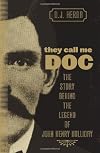
A sort of fictional autobiography. The story is told in Doc Holliday’s “voice;” it’s clear the narrator is in some sort of afterlife – which doesn’t seem that unpleasant. The story agrees with what else I’ve read about Holiday’s life – although there are no references or bibliography. The spirit/ghost/whatever of Holliday does resolve a mystery - what happened to Johnny Ringo? (Although it doesn’t explain why he wasn’t wearing his boots.) The first-person style is show more gimmicky, but works. A quick read, although it doesn’t add much to OK Corral or Wyatt Earp lore. show less
Wilma Mankiller: How One Woman United the Cherokee Nation and Helped Change the Face of America by D.J. Herda
Thank you, D.J. Herda for a timely book (it’s Women’s History Month) about the great Wilma Mankiller.
Mankiller was born into a large but impoverished family in Oklahoma. It was a happy home until her father decided to participate in the Indian Relocation deal offered by the government. They tragically relocated to San Francisco where they learned to their great regret that the government had deceived them in many ways and they were poorer than ever before. Mankiller eventually married show more and became involved in the Occupy Alcatraz movement. This marks the beginning of her work to better the lives of her people, the Cherokee . She was a true trailblazer and accomplished much by dedicating traditional Cherokee values and culture into the modern political situation.
I am glad Mr. Herda calls out her ways of accomplishment and fortitude despite a lifetime of poor health.
I stand in awe of Wilma Mankiller. show less
Mankiller was born into a large but impoverished family in Oklahoma. It was a happy home until her father decided to participate in the Indian Relocation deal offered by the government. They tragically relocated to San Francisco where they learned to their great regret that the government had deceived them in many ways and they were poorer than ever before. Mankiller eventually married show more and became involved in the Occupy Alcatraz movement. This marks the beginning of her work to better the lives of her people, the Cherokee . She was a true trailblazer and accomplished much by dedicating traditional Cherokee values and culture into the modern political situation.
I am glad Mr. Herda calls out her ways of accomplishment and fortitude despite a lifetime of poor health.
I stand in awe of Wilma Mankiller. show less
This review was written for LibraryThing Early Reviewers.Awards

You May Also Like


Statistics
- Works
- 65
- Members
- 465
- Popularity
- #52,882
- Rating
- 3.5
- Reviews
- 19
- ISBNs
- 97
