
Lewis Turco (1934–2024)
Author of The Book of Forms: A Handbook of Poetics
About the Author
Lewis Turco is Emeritus Professor of English at State University of New York
Works by Lewis Turco
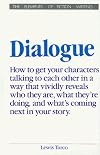
Dialogue: A Socratic Dialogue on the Art of Writing Dialogue in Fiction (1989) 262 copies, 3 reviews
The Book of Forms: A Handbook of Poetics, Including Odd and Invented Forms, Revised and Expanded Edition (2011) 48 copies
The Book of Literary Terms: The Genres of Fiction, Drama, Nonfiction, Literary Criticism, and Scholarship (1999) 37 copies, 1 review
The Book of Dialogue: How to Write Effective Conversation in Fiction, Screenplays, Drama, and Poetry (2004) 19 copies, 1 review
Emily Dickinson, Woman of Letters: Poems and Centos from Lines in Emily Dickinson's Letters (1993) 8 copies, 1 review
The Compleat Melancholick: Being a Sequence of 'Found, Composite, and Composed' Poems, based largely upon Robert Burton' (1985) 6 copies
The Public Poet: Five Lectures on the Art and Craft of Poetry (Writers-in-Residence Series) (1991) 3 copies
Associated Works
Two Worlds Walking: Short Stories, Essays, and Poetry by Writers of Mixed Heritages (1996) — Contributor — 9 copies
Epos : the work of American and British Poets (vol. 10, no. 2 Winter 1958) — Contributor — 1 copy
Tagged
Common Knowledge
- Legal name
- Turco, Lewis Putnam
- Other names
- Court, Wesli (pseudonym for formal verse)
- Birthdate
- 1934-05-02
- Date of death
- 2024-09-25
- Gender
- male
- Education
- University of Connecticut (BA|1959)
University of Iowa (MA|1962) - Occupations
- poet
teacher
writer
bookshop owner - Organizations
- US Navy
Fenn College, Cleveland, Ohio
Cleveland Poetry Center (founder)
State University of New York, Oswego
Mathom Bookshop, Dresden, Maine - Relationships
- McDermott, Alice (student)
- Nationality
- USA
- Birthplace
- Buffalo, New York, USA
- Place of death
- Belfast, Maine, USA
- Associated Place (for map)
- USA
Members
Reviews
The book of dialogue : how to write effective conversation in fiction, screenplays, drama, and poetry by Lewis Turco
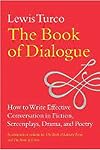
Turco prefers to teach by example rather than lecture, using excerpts from his own, rather strange works and those of others to illustrate different formats, styles, levels of diction, and other elements of creating conversation. The book is aridly funny, informative without being didactic, and a little bit crazy. I wouldn't consider it a reference - though I picked it up thinking it might be - because its internal structure is a little... inscrutable, but it's an engaging illustration of show more the techniques and pitfalls of dialogue writing, and a useful and worthwhile book to re-read every so often while writing.
This would make a great text for a creative writing class. While I can't imagine it being an English lit class text, I would recommend it as a useful read for students of literature, even those who don't plan to write any themselves. show less
This would make a great text for a creative writing class. While I can't imagine it being an English lit class text, I would recommend it as a useful read for students of literature, even those who don't plan to write any themselves. show less
Dialogue: A Socratic Dialogue on the Art of Writing Dialogue in Fiction (Elements of Fiction Writing) by Lewis Turco
This was pretty decent.
I thought the book didn't really deliver what it promised on the cover (i.e. "How to get your characters talking to each other in a way that vividly reveals who they are, what they're doing, and what's coming next in your story"), even if it did have some useful information. Most of the formatting/grammatical issues that it covered I already knew about, which is why I didn't pick out a book on dialogue's structure and where to put quotation marks, etc.
I was very glad show more that it covered things like adverbs and unnecessary words that mark out a newbie writer. There were some concepts and issues very well-explained here, and I was grateful to have read this for those reasons, like how the use of dialect in dialogue has changed over time, and about what's acceptable nowadays. That was so interesting.
And I loved that that the book was written using dialogue. So clever! It was a bit unnerving at first, but I grew to love it, actually. I didn't like the book's slightly sexist tone, though, or its tendency to accentuate stereotypes--especially gender, cultural, and classist stereotypes. That's something you really shouldn't do in your writing . . . maybe he should've mentioned that. Or explained that the book was an example of that as well.
Anyway, it was interesting at times, but I don't think I'd necessarily recommend it. show less
I thought the book didn't really deliver what it promised on the cover (i.e. "How to get your characters talking to each other in a way that vividly reveals who they are, what they're doing, and what's coming next in your story"), even if it did have some useful information. Most of the formatting/grammatical issues that it covered I already knew about, which is why I didn't pick out a book on dialogue's structure and where to put quotation marks, etc.
I was very glad show more that it covered things like adverbs and unnecessary words that mark out a newbie writer. There were some concepts and issues very well-explained here, and I was grateful to have read this for those reasons, like how the use of dialect in dialogue has changed over time, and about what's acceptable nowadays. That was so interesting.
And I loved that that the book was written using dialogue. So clever! It was a bit unnerving at first, but I grew to love it, actually. I didn't like the book's slightly sexist tone, though, or its tendency to accentuate stereotypes--especially gender, cultural, and classist stereotypes. That's something you really shouldn't do in your writing . . . maybe he should've mentioned that. Or explained that the book was an example of that as well.
Anyway, it was interesting at times, but I don't think I'd necessarily recommend it. show less
Emily Dickinson, Woman of Letters: Poems and Centos From Lines in Emily Dickinson's Letters, Selected, Arranged, and Augmented by Lewis Turco, Together with Essays on the Subject by Various Hands by Lewis Turco
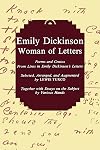
Buried in Emily Dickinson's letters are many lines that are stunningly beautiful, as beautiful as any to be found in her poems. Lewis Turco has taken some of these lines and written poems from them, on them, and around them. This volume, then, is a collaboration between two writers, one a 19th-century woman whose work became known to most readers only in the 20th century, and the other a post-modernist man of letters—an award-winning poet, critic, and scholar.
In addition to the poems show more collected here, Turco has written an informative introduction and included several essays by feminist critics and other scholars who discuss various aspects of Emily Dickinson's letters.
Emily Dickinson, Woman of Letters is therefore at once an addition to the Dickinson canon, a distinguished collection of contemporary poems, an important volume of critical scholarship in American literature, and a fascinating reading experience that will appeal to a wide audience of professionals and non-professionals alike. - from the publisher show less
In addition to the poems show more collected here, Turco has written an informative introduction and included several essays by feminist critics and other scholars who discuss various aspects of Emily Dickinson's letters.
Emily Dickinson, Woman of Letters is therefore at once an addition to the Dickinson canon, a distinguished collection of contemporary poems, an important volume of critical scholarship in American literature, and a fascinating reading experience that will appeal to a wide audience of professionals and non-professionals alike. - from the publisher show less
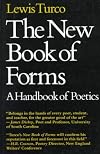
Interesting. Though this is an incredibly useful handbook for the poet with intermediate level training in metrics, I have a few bones to pick with Mr. Turco. First--I have no problem with an author using his own poems as illustrations of forms, especially when other illustrations are scarce. However, it seems a little pompous to provide illustrations written both by oneself and one's pseudonym. In fact, for one who is willing to publish under his own name, the idea of having a pseudonym is, show more in itself, a little wankety. Second--If one is going to illustrate a poetic form with a poem of his own composition, it seems fairly important to FOLLOW THE FORM, instead of just providing a gloss stating what elements of the example do not belong to the form being illustrated. It would make the book considerably less cumbersome, and considerably more useful. Third--Though I got the impression from the book that Mr. Turco is very proud of his copyrighted code for building models of verse forms, it is significantly more complicated than it has to be. It also demands of the experienced metrician a difficult shift of mindset that would not be necessary if he had simply used the old, tried-and-true scansion symbols that everyone else uses.
Now the good news:
1. It is quite complete.
2. It has a VERY useful and interesting several chapters on rhetorical devices that are of use to the poet.
3. It forces on writers of "free verse" the much less respectable epithet of "prose poets."
4. Though many of Turco's examples come from his own work (see note above), the ones that do not are from respectable sources (Although in the section on "Rubaiyat," he somehow neglects even to mention Fitzgerald's translations of Omar Khayyam.
In summary: If you write metrical poetry, pick it up. It's goods outweigh its bads, and if you happen to be a complainer, it'll give you plenty to talk about. show less
Now the good news:
1. It is quite complete.
2. It has a VERY useful and interesting several chapters on rhetorical devices that are of use to the poet.
3. It forces on writers of "free verse" the much less respectable epithet of "prose poets."
4. Though many of Turco's examples come from his own work (see note above), the ones that do not are from respectable sources (Although in the section on "Rubaiyat," he somehow neglects even to mention Fitzgerald's translations of Omar Khayyam.
In summary: If you write metrical poetry, pick it up. It's goods outweigh its bads, and if you happen to be a complainer, it'll give you plenty to talk about. show less
Awards

You May Also Like


Associated Authors
Statistics
- Works
- 33
- Also by
- 5
- Members
- 957
- Popularity
- #26,916
- Rating
- 3.7
- Reviews
- 11
- ISBNs
- 46
